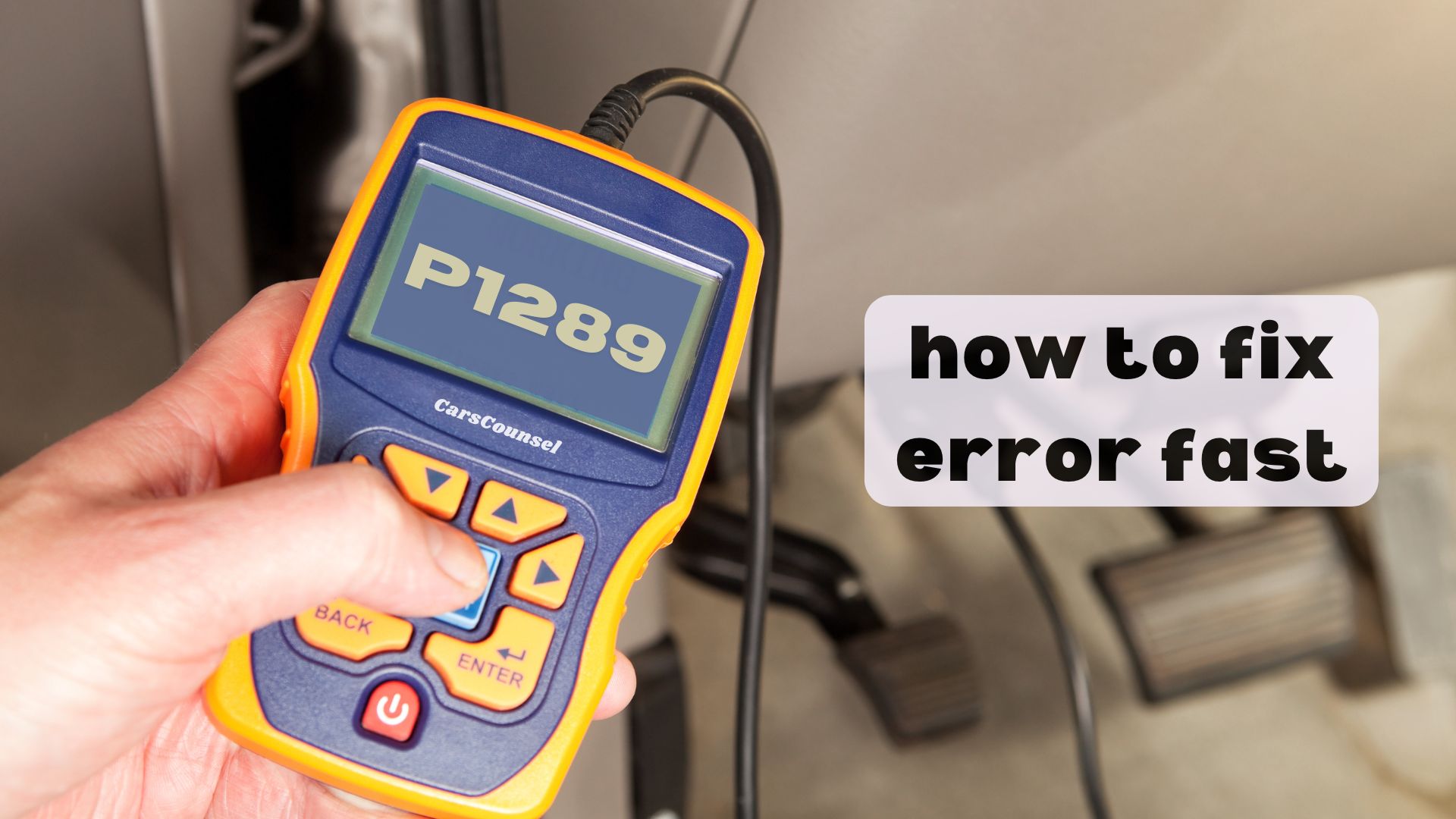
Diagnostic trouble code P1289 is a manufacturer-specific powertrain fault code. Because it is manufacturer-specific, its exact definition depends entirely on the vehicle make, model, and application.
Exact vehicle application must be verified before diagnosis. The code identifies a detected condition in a specific subsystem, but further testing is required to identify the root cause.
Quick Navigation
Key Takeaways
- P1289 is a manufacturer-specific code, meaning its definition varies between automakers like Ford, BMW, and Chrysler.
- On Ford applications, it indicates a high input or open circuit in the cylinder head temperature sensor circuit.
- On BMW applications, it points to an air assisted injection valve switching solenoid circuit fault.
- Diagnosis requires verifying the exact factory definition and testing the relevant sensor or solenoid circuits.
P1289 Code Description and Implications
Because P1289 is manufacturer-specific, there is no single universal definition. This trouble code identifies a detected condition, but the exact monitored system depends on the vehicle make and model.
Some Ford, Lincoln, and Mercury applications: P1289 indicates a “Cylinder Head Temperature Sensor Circuit High Input” fault. The powertrain control module detects a voltage greater than expected, indicating an open circuit in the sensor wiring or a failed sensor.
Some BMW applications: P1289 indicates a “Switching Solenoid for Air Assisted Injection Valves Bank 2 Control Circuit Signal High” fault. The module detects an electrical fault in the secondary air injection system.
Some Chrysler and Dodge applications: P1289 may indicate a “Manifold Tune Valve Solenoid Circuit” fault or a cylinder head temperature sensor issue, depending on the specific engine and model year.
Common Causes of the P1289 Code
For Ford applications, possible causes include a failed cylinder head temperature sensor, an open circuit in the sensor wiring harness, or poor electrical connections at the sensor or control module.
For BMW applications, causes may involve a failing air assisted injection switching solenoid, damaged wiring in the secondary air system, or a blown fuse.
For Chrysler applications, causes may involve a failing manifold tune valve solenoid, damaged wiring, or a vacuum leak in the manifold tuning system.
Symptoms Associated With P1289
On Ford applications, symptoms can include an illuminated Check Engine Light, an inaccurate temperature gauge reading, and the engine entering a fail-safe cooling mode if the module cannot verify engine temperature.
On BMW applications, symptoms may include a cold-start emissions failure, an illuminated Check Engine Light, and reduced engine performance during warm-up.
On Chrysler applications, symptoms may include reduced low-end torque, an illuminated Check Engine Light, and rough idling.
Diagnosing the P1289 Trouble Code
Diagnosis must begin by confirming the exact factory definition for the specific make, model, and year.
For Ford applications, technicians inspect the cylinder head temperature sensor wiring for opens, check the sensor resistance, and compare the live data temperature reading with an infrared thermometer reading on the cylinder head.
For BMW applications, technicians test the air injection switching solenoid circuits for opens or shorts and verify the solenoid operation using a scan tool.
For Chrysler applications, technicians test the manifold tune valve solenoid circuits and verify vacuum supply to the manifold runners.
Repairing the P1289 Issue
If a cylinder head temperature sensor circuit fault is confirmed on a Ford application, the damaged wiring must be repaired, or the confirmed failed sensor must be replaced.
If an air injection solenoid fault is confirmed on a BMW application, the damaged wiring must be repaired, or the confirmed failed switching solenoid must be replaced.
If a manifold tune valve fault is confirmed on a Chrysler application, the damaged wiring or vacuum lines must be repaired, or the confirmed failed solenoid must be replaced.
Cost Considerations for P1289 Repairs
Cost depends on diagnostic time, component accessibility, required parts, programming requirements, and labor.
Replacing a cylinder head temperature sensor or an air injection solenoid involves standard component replacement times, though accessing the sensor may require removing intake components on some engines.
Prevention Strategies for Future Occurrences
Some electrical and mechanical failures cannot be reliably prevented.
Inspecting exposed engine wiring harnesses and sensor connectors for chafing, heat damage, or moisture intrusion can help prevent intermittent circuit faults in high-temperature areas.
Troubleshooting Tips and Best Practices
Never assume P1289 is a universal temperature sensor code. Always verify the exact definition for the specific vehicle before purchasing parts.
Do not ignore related codes. A temperature sensor fault may appear alongside overheat codes, while an air injection fault may appear alongside other secondary air system codes.
Check for technical service bulletins applicable to your exact vehicle application, as manufacturers frequently release updated wiring harnesses or revised sensors for recurring faults.
More OBD-II Codes
| P1288 | P1290 | P1299 | P1117 |
| P1287 | P1291 | P0117 | P1118 |
| P1286 | P1292 | P0118 | P1119 |
| P1285 | P1293 | P1114 | P1121 |
| P1284 | P1294 | P1115 | P1122 |
| P1283 | P1295 | P1116 | P1123 |
Frequently Asked Questions
Is P1289 a generic or manufacturer-specific code?
No. P1289 is a manufacturer-specific code. Its exact definition varies significantly between automakers, so the factory service information for the specific vehicle must be consulted.
Can I drive my car with a P1289 code?
It depends on the application. If P1289 indicates a cylinder head temperature sensor fault, the engine may enter a fail-safe cooling mode and severely limit power to prevent damage.
Will disconnecting the battery clear the P1289 code?
Disconnecting the battery may temporarily clear the code, but it does not repair the underlying electrical or mechanical fault. It also resets readiness monitors and module adaptations.
Can a bad coolant temperature sensor cause a P1289 code?
No. The coolant temperature sensor and the cylinder head temperature sensor are distinct components. A fault in the cylinder head temperature circuit will not be caused by a failing coolant sensor.
Does P1289 always mean the temperature sensor is bad?
No. While a failing sensor is a cause on specific Ford applications, the code can also indicate an air injection solenoid fault on BMW or a manifold tune valve fault on Chrysler.
What Should You Do About the P1289 Code?
Confirm the exact factory definition and diagnostic procedure for your specific vehicle application. Because P1289 is manufacturer-specific, identifying whether it relates to a cylinder head temperature sensor, an air injection solenoid, or a manifold tune valve is mandatory.
Follow the applicable manufacturer diagnostic steps to test the relevant system and components. Once the root cause is confirmed, complete the necessary repairs and verify that the system operates correctly and the code does not return.

