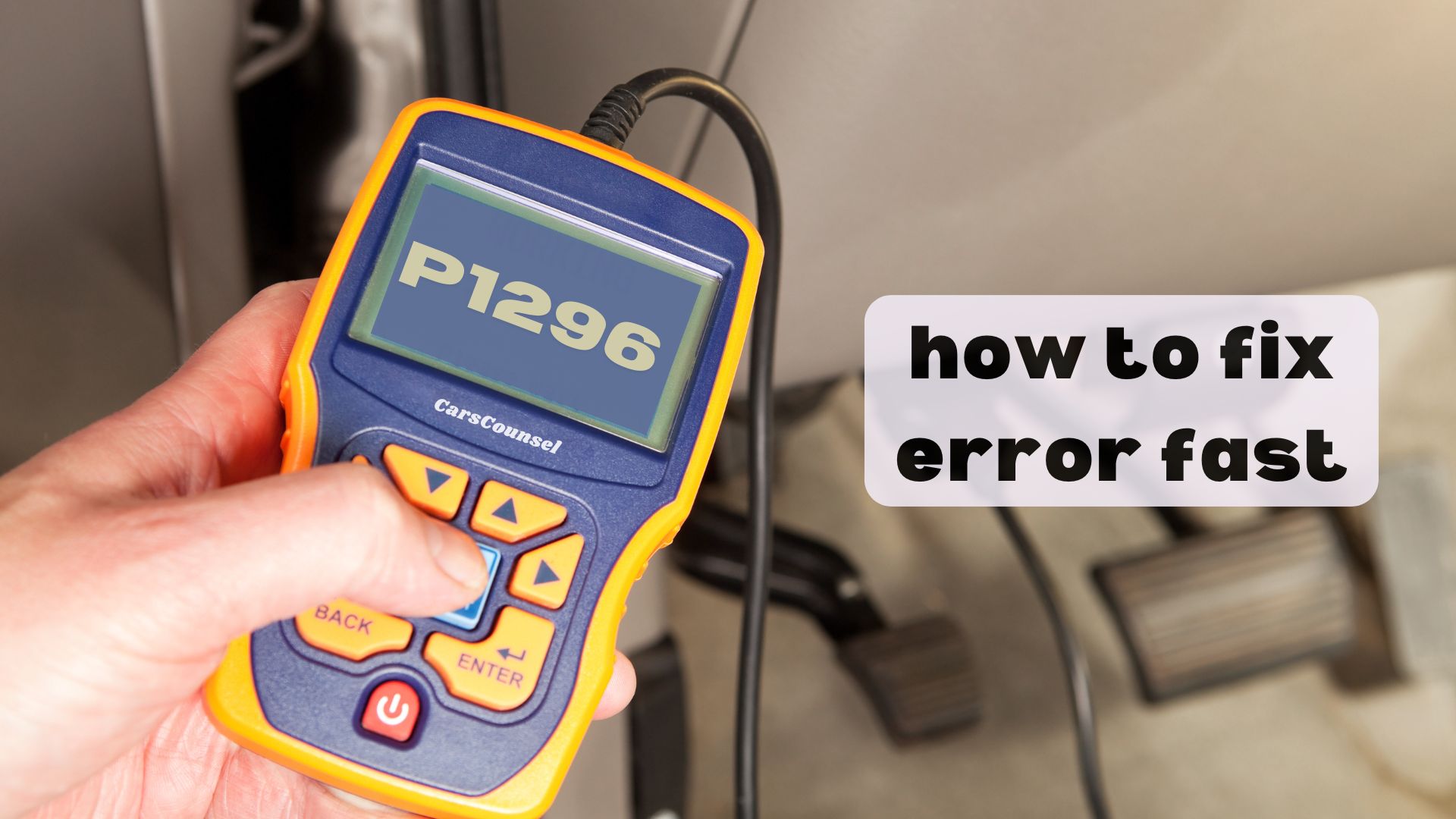
Diagnostic trouble code P1296 is a manufacturer-specific powertrain fault code. Because it is manufacturer-specific, its exact definition depends entirely on the vehicle make, model, and application.
Exact vehicle application must be verified before diagnosis. The code identifies a detected condition in a specific subsystem, but further testing is required to identify the root cause.
Quick Navigation
Key Takeaways
- P1296 is a manufacturer-specific code, commonly indicating a cooling system malfunction on Volkswagen and Audi applications.
- The control module detects that the engine cooling system is not performing within the expected parameters, such as failing to reach operating temperature.
- Possible causes include a stuck-open thermostat, a failing coolant temperature sensor, or low coolant levels.
- Symptoms may include an illuminated Check Engine Light, poor heater performance, or extended engine warm-up times.
- Diagnosis requires verifying the exact factory definition and testing the cooling system components and sensor circuits.
P1296 Code Description and Implications
Because P1296 is manufacturer-specific, there is no single universal definition. This trouble code identifies a detected condition, but the exact monitored system depends on the vehicle make and model.
Some Volkswagen, Audi, SEAT, and Skoda applications: P1296 indicates a “Cooling System Malfunction” or “Engine Cooling System Performance” fault. The engine control module detects that the coolant temperature is not rising as expected during warm-up.
Other manufacturer applications may use P1296 to indicate faults in different thermal management, fuel delivery, or emission control systems. Always verify the specific factory definition for your vehicle.
Common Causes of the P1296 Code
For Volkswagen and Audi applications, possible causes include a thermostat stuck in the open position, preventing the engine from reaching normal operating temperature.
A failing engine coolant temperature sensor or damaged sensor wiring can also send inaccurate temperature data to the control module.
Other causes involve low coolant levels, air pockets in the cooling system, or a failing water pump that is not circulating coolant properly.
Symptoms Associated With P1296
On Volkswagen and Audi applications, the most common symptom is an illuminated Check Engine Light.
Drivers may also notice poor cabin heater performance, extended engine warm-up times, or slightly reduced fuel efficiency due to the engine running in a cold-enrichment mode.
The engine temperature gauge may read lower than normal or fluctuate while driving.
Diagnosing the P1296 Trouble Code
Diagnosis must begin by confirming the exact factory definition for the specific make, model, and year.
For Volkswagen and Audi applications, technicians use a scan tool to monitor the live coolant temperature data while the engine warms up.
If the temperature rises too slowly or drops while driving at highway speeds, the thermostat is likely stuck open.
Technicians also compare the scan tool temperature data with an infrared thermometer reading on the engine block to verify the coolant temperature sensor is reading accurately.
Repairing the P1296 Issue
If a stuck-open thermostat is confirmed, the thermostat and housing must be replaced, and the cooling system must be properly bled of air.
If the coolant temperature sensor fails testing or the wiring is damaged, the confirmed failed sensor must be replaced or the wiring repaired.
If low coolant is the cause, the system must be pressure tested to find and repair any external or internal leaks before refilling.
Cost Considerations for P1296 Repairs
Cost depends on diagnostic time, component accessibility, required parts, programming requirements, and labor.
Replacing a thermostat or coolant temperature sensor involves standard labor times, though accessing the thermostat may require removing intake components on some engines.
Repairing a coolant leak or replacing a water pump requires significant disassembly and labor.
Prevention Strategies for Future Occurrences
Inspecting the cooling system for leaks and maintaining the correct coolant level and mixture can help prevent air pockets and circulation issues.
Replacing the coolant at the manufacturer-recommended intervals helps prevent corrosion that can cause thermostats to stick or water pumps to fail.
Troubleshooting Tips and Best Practices
Never assume the coolant temperature sensor has failed just because a cooling system code is present. The engine may genuinely be running too cold due to a mechanical thermostat fault.
Do not ignore cooling system faults. Running an engine perpetually cold increases wear, reduces fuel efficiency, and can cause carbon buildup.
Check for technical service bulletins related to updated thermostat housings or revised coolant temperature sensors for your specific model year and engine configuration.
More OBD-II Codes
| P1295 | P1297 | P0117 | P1227 |
| P1290 | P1298 | P0118 | P1389 |
| P1289 | P1299 | P1117 | P1479 |
| P1288 | P1300 | P1118 | P1480 |
| P1287 | P1305 | P1119 | P1481 |
| P1286 | P1310 | P1121 | P1482 |
Frequently Asked Questions
Is P1296 a generic or manufacturer-specific code?
No. P1296 is a manufacturer-specific code. Its exact definition varies between automakers, so the factory service information for the specific vehicle must be consulted.
Can I drive my car with a P1296 code?
It depends on the application. If the engine is running too cold, it is generally safe to drive to a repair facility, but fuel efficiency and heater performance will be compromised.
Will disconnecting the battery clear the P1296 code?
Disconnecting the battery may temporarily clear the code, but it does not repair the underlying mechanical or electrical fault. It also resets readiness monitors and module adaptations.
Can a bad coolant temperature sensor cause a P1296 code?
Yes. On specific applications, a failing coolant temperature sensor can send inaccurate data to the control module, triggering this cooling system performance fault.
Does P1296 always mean the thermostat is bad?
No. While a stuck-open thermostat is a common cause on specific applications, the code can also be triggered by a failing temperature sensor, low coolant, or wiring issues.
What Should You Do About the P1296 Code?
Confirm the exact factory definition and diagnostic procedure for your specific vehicle application. Because P1296 is manufacturer-specific, identifying whether it relates to a cooling system performance fault or another system is mandatory.
Follow the applicable manufacturer diagnostic steps to test the cooling system and relevant components. Once the root cause is confirmed, complete the necessary repairs and verify that the engine reaches normal operating temperature correctly.

