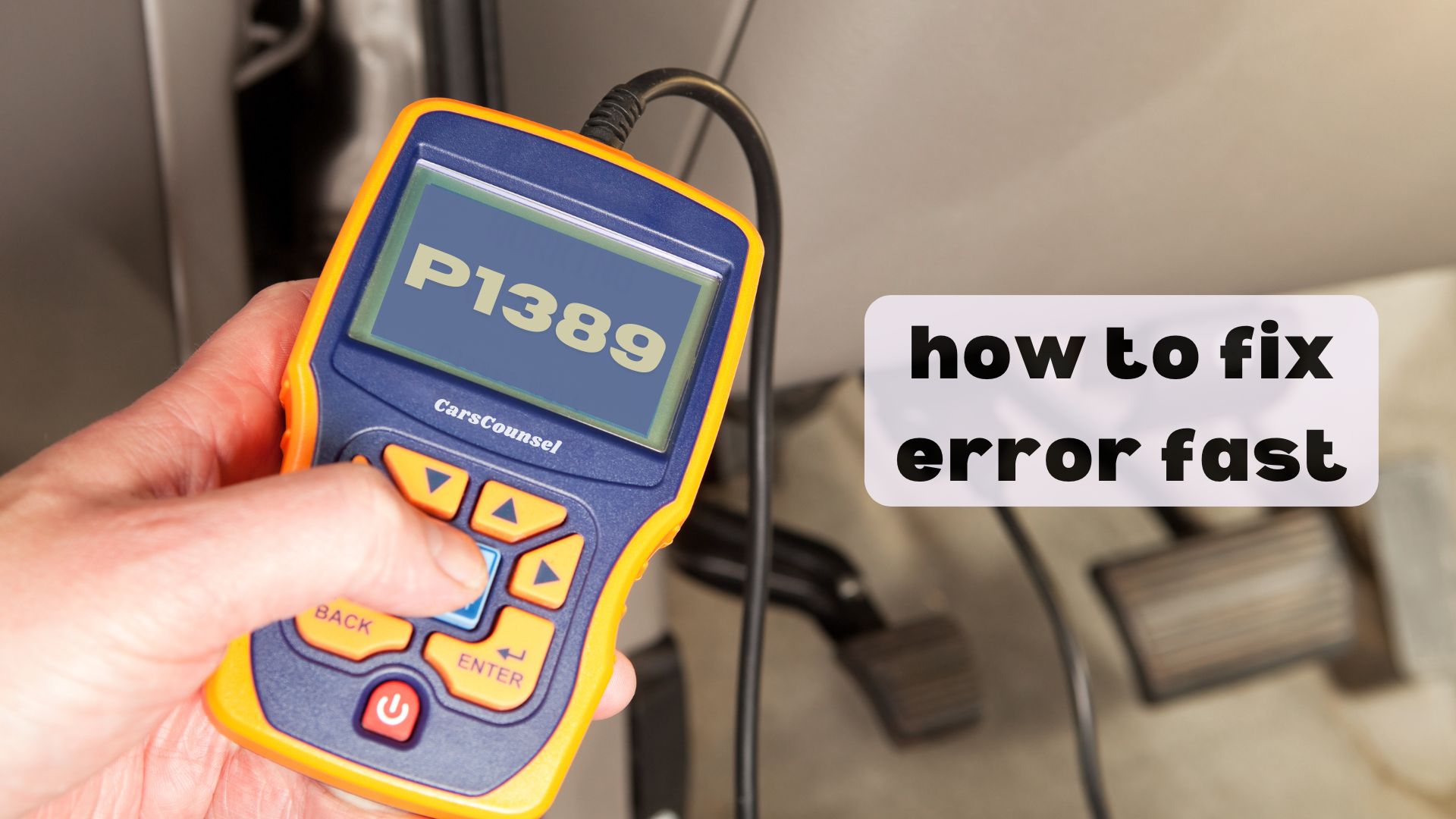
Diagnostic trouble code P1389 is a manufacturer-specific powertrain fault code, primarily found on Chrysler, Dodge, and Jeep vehicles. It indicates that the powertrain control module does not detect the expected voltage from the auto shutdown relay sense circuit.
Because this code relates to the main power relay for critical engine components, it results in a no-start condition. Accurate diagnosis requires testing the relay circuit rather than immediately replacing the control module or engine components.
Quick Navigation
Key Takeaways
- P1389 is a manufacturer-specific code indicating the control module does not see voltage from the auto shutdown relay sense circuit when commanded on.
- The auto shutdown relay provides power to essential components like fuel injectors, ignition coils, and oxygen sensor heaters.
- Expected causes include a blown fuse, a failed relay, or damaged wiring in the sense circuit.
- The definitive symptom is an engine that cranks but will not start, or stalls immediately after starting.
- Diagnosis involves verifying fuse integrity, testing the relay, and checking the sense circuit wiring for continuity and voltage.
P1389 Code Description and Implications
Because P1389 is manufacturer-specific, its exact definition depends on the vehicle application. On Chrysler, Dodge, and Jeep applications, this code indicates a “No ASD Relay Output Voltage At PCM” fault.
The powertrain control module energizes the auto shutdown relay to supply power to the fuel injectors, ignition coils, and heated oxygen sensors. The module monitors a dedicated sense circuit to confirm the relay has closed.
If the module commands the relay on but detects zero or low voltage on the sense circuit, this code is stored. Without this voltage, the engine management system cannot function, resulting in a no-start condition.
Common Causes of the P1389 Code
Possible causes include a blown auto shutdown relay fuse in the integrated power module or fuse box. A failed auto shutdown relay can also prevent the sense circuit from receiving voltage.
Other causes involve open or shorted wiring in the sense circuit between the relay and the control module. Corroded, loose, or damaged electrical connectors at the relay or module can also interrupt the signal.
An internal control module driver or monitoring circuit failure is possible, but this should only be considered after ruling out all external circuits and the relay itself.
Symptoms Associated With P1389
The definitive symptom is an engine that cranks but will not start due to a lack of fuel injector or ignition coil power. The engine may also start but stall immediately.
An illuminated Check Engine Light will be present. Related codes for multiple misfires or oxygen sensor heater circuit faults may also be stored alongside this fault.
Diagnosing the P1389 Trouble Code
Diagnosis must begin by confirming the exact factory definition and checking for related codes. Inspect the auto shutdown relay fuse and replace it if blown. If the new fuse blows immediately, a short to ground exists.
Swap the auto shutdown relay with a known good, identical relay from another circuit to test the component. Use a multimeter to verify battery voltage at the sense circuit pin while the relay is energized.
Perform continuity and resistance tests on the sense circuit wiring to identify opens or high resistance. Compare all readings with the manufacturer specifications for the exact vehicle.
Repairing the P1389 Issue
If a blown fuse is the cause, replace the fuse and repair any short to ground that caused it to blow. If the relay fails testing, replace it with a component meeting the correct vehicle specification.
If wiring issues are found, repair or replace the damaged harness sections and clean any corroded connectors. If all external circuits and the relay test correctly, follow the manufacturer diagnostic procedure to evaluate the control module.
Cost Considerations for P1389 Repairs
Cost depends on diagnostic time, component accessibility, required parts, programming requirements, and labor. Replacing a relay or fuse involves minimal parts cost and standard labor times.
Tracing an intermittent wiring fault or replacing a control module requires additional diagnostic time, specialized equipment, and potential programming.
Prevention Strategies for Future Occurrences
Some electrical failures cannot be reliably prevented. Keeping the fuse box and relay centers sealed against moisture intrusion can help prevent corrosion on the relay terminals and sense circuit pins.
Troubleshooting Tips and Best Practices
Never assume the control module has failed just because a sense circuit code is present. The expected causes are a simple blown fuse or a worn-out relay.
Always verify the physical condition of the fuse and swap the relay before performing complex wiring diagnostics. Check for technical service bulletins related to the integrated power module for your specific model year.
More OBD-II Codes
| P1388 | P1390 | P0300 | P1360 |
| P1386 | P1391 | P0302 | P1361 |
| P1378 | P1392 | P0303 | P1362 |
| P1377 | P1393 | P0304 | P1363 |
| P1376 | P1394 | P1364 | P1365 |
| P1375 | P1395 | P1366 | P1367 |
Frequently Asked Questions
Is P1389 a generic or manufacturer-specific code?
No. P1389 is a manufacturer-specific code used by Chrysler, Dodge, and Jeep to indicate an auto shutdown relay sense circuit fault.
Can I drive my car with a P1389 code?
No. The auto shutdown relay powers the fuel injectors and ignition coils. A loss of voltage on this circuit prevents the engine from starting or causes immediate stalling.
Will disconnecting the battery clear the P1389 code?
Disconnecting the battery may temporarily clear the code, but it does not repair the underlying electrical fault. The code will return as soon as the control module runs its self-test.
Can a bad crankshaft position sensor cause a P1389 code?
No. While a bad crankshaft sensor can prevent the module from energizing the relay, this code specifically indicates the module commanded the relay on but did not see the return voltage.
Does P1389 always mean the control module is bad?
No. A blown fuse, a failed relay, or damaged wiring are the expected causes. Control module failure should only be considered after all external circuits are verified.
What Should You Do About the P1389 Code?
Confirm the exact factory definition and diagnostic procedure for your specific vehicle application. Because this code relates to the main power supply for engine management components, identifying whether the fault lies in the fuse, relay, or wiring is mandatory.
Follow the applicable manufacturer diagnostic steps to test the relevant system and components. Once the root cause is confirmed, complete the necessary repairs and verify that the engine starts and runs correctly without the code returning.

