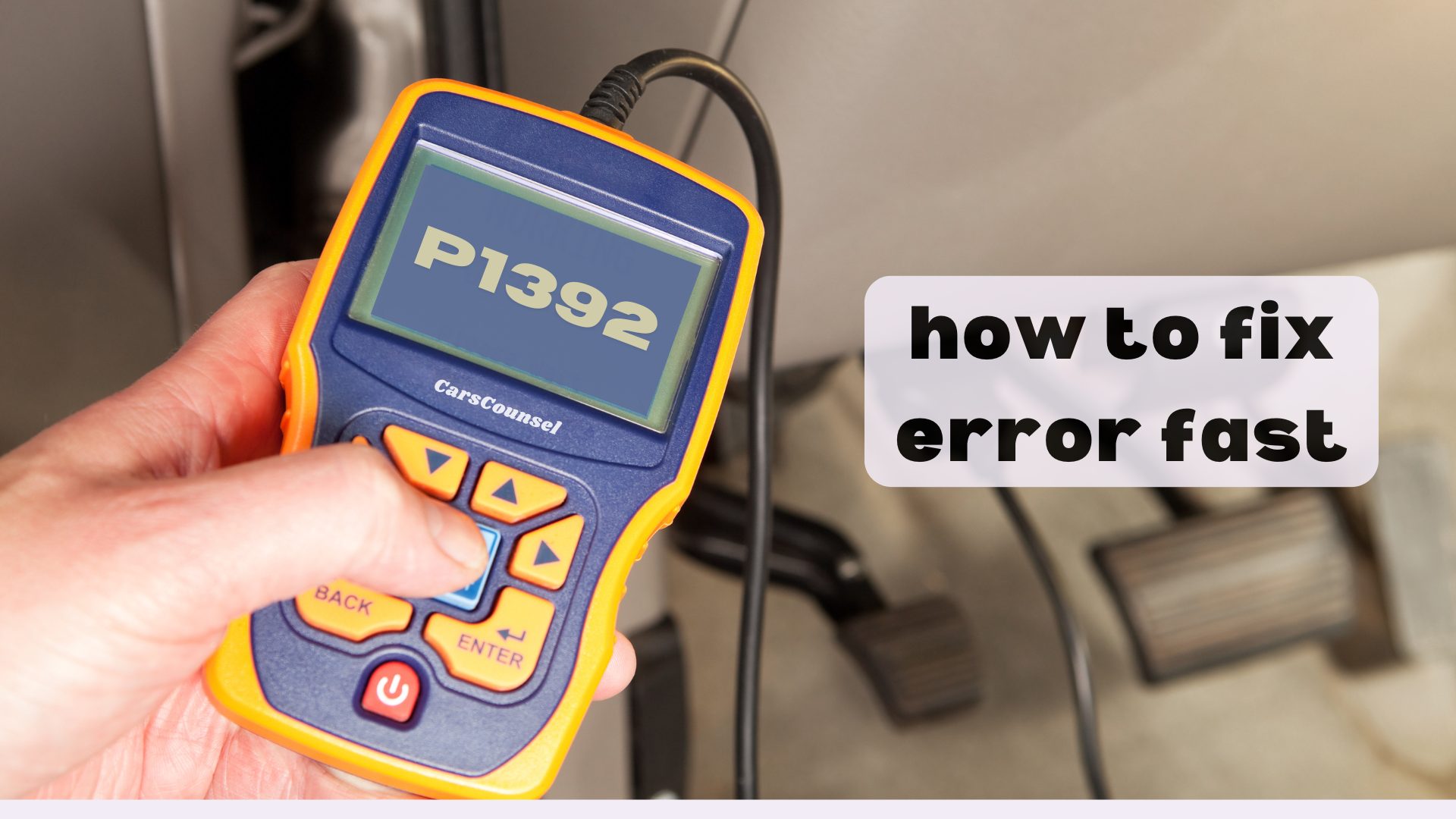
Diagnostic trouble code P1392 is a manufacturer-specific powertrain fault code. Because it is manufacturer-specific, its exact definition depends entirely on the vehicle make, model, and application.
Exact vehicle application must be verified before diagnosis. The code identifies a detected condition in a specific subsystem, but further testing is required to identify the root cause.
Quick Navigation
Key Takeaways
- P1392 is a manufacturer-specific code, meaning its definition varies between automakers like Volkswagen, Audi, and Ford.
- On certain applications, it indicates a camshaft position sensor circuit fault on bank two, such as a short to voltage.
- Possible causes include damaged wiring, corroded connectors, or a failed sensor, but testing is required to confirm.
- Symptoms vary by application but can include an illuminated Check Engine Light, rough idling, or engine misfires.
- Repairs depend on the confirmed root cause and may involve repairing wiring or replacing the specific sensor.
P1392 Code Description and Implications
Because P1392 is manufacturer-specific, there is no single universal definition. The exact monitored system and fault condition depend on the vehicle make and model.
Some Volkswagen and Audi applications: P1392 typically indicates a “Camshaft Position Sensor Bank 2” circuit fault, specifically a short to positive or an open circuit.
Certain Ford applications: P1392 may refer to a lateral acceleration sensor (G-sensor) circuit malfunction or an ignition system fault.
Common Causes of the P1392 Code
The underlying cause depends entirely on the verified factory definition for the specific vehicle application.
For applications monitoring the bank two camshaft position sensor, possible causes include a failed sensor element, damaged wiring harnesses, or corroded electrical connectors causing a short to voltage.
For applications monitoring a lateral acceleration sensor, causes often involve a failed sensor, damaged wiring near the chassis, or poor electrical grounds.
Symptoms Associated With P1392
Symptoms vary widely depending on the underlying system fault and the vehicle manufacturer.
On applications with a camshaft position sensor fault, symptoms can include an illuminated Check Engine Light, rough idling, engine misfires, or extended cranking times during startup.
On applications with a lateral acceleration sensor fault, the vehicle may experience disabled stability control systems or an illuminated traction control warning light.
Diagnosing the P1392 Trouble Code
Diagnosis must begin by confirming the exact factory definition for the specific make, model, and year. Attempting to diagnose a camshaft sensor on a vehicle where P1392 indicates a G-sensor will lead to misdiagnosis.
For camshaft sensor applications, technicians typically inspect the wiring harness for damage and measure the sensor circuit for shorts to voltage or open circuits using a multimeter.
For lateral acceleration sensor applications, diagnosis involves checking the sensor reference voltage, signal circuit, and ground, while reviewing live data during vehicle movement.
Repairing the P1392 Issue
Repairs must follow confirmed diagnosis based on the specific vehicle application.
If testing confirms a failed camshaft position sensor or damaged wiring, the sensor or harness must be replaced, and the circuit must be retested to verify proper signal operation.
If a lateral acceleration sensor or wiring fault is confirmed, the sensor or damaged wires must be replaced, and the stability control system may require a calibration reset.
Cost Considerations for P1392 Repairs
Repair costs depend entirely on the confirmed root cause, component accessibility, and local labor rates.
Replacing an external camshaft sensor or repairing a section of wiring may require minimal parts and labor. Conversely, replacing a chassis-mounted lateral acceleration sensor and performing system calibrations requires more diagnostic time and specialized equipment.
Prevention Strategies for Future Occurrences
Some electrical or mechanical failures cannot be reliably prevented. However, inspecting exposed engine wiring harnesses for chafing, heat damage, or oil contamination can help prevent sensor circuit shorts.
Ensuring that electrical connectors remain sealed and free of moisture intrusion helps reduce the likelihood of corrosion-related circuit faults.
Troubleshooting Tips and Best Practices
Never assume P1392 is a universal camshaft sensor code. Always verify the exact definition for the specific vehicle before purchasing parts or beginning electrical testing.
Do not ignore related codes. A camshaft position sensor fault frequently appears alongside crankshaft position sensor codes or misfire codes, which help pinpoint the exact timing correlation issue.
Check for technical service bulletins applicable to your exact vehicle application, as manufacturers frequently release updated wiring harnesses or sensor revisions for recurring circuit faults.
More OBD-II Codes
| P1386 | P1393 | P0340 | P0300 |
| P1387 | P1394 | P0335 | P0301 |
| P1388 | P1395 | P0339 | P0302 |
| P1389 | P1396 | P0320 | P0303 |
| P1390 | P1397 | P0325 | P0304 |
| P1391 | P1398 | P0330 | P0305 |
Frequently Asked Questions
Is P1392 a generic or manufacturer-specific code?
No. P1392 is a manufacturer-specific code. Its exact definition varies significantly between automakers, so the factory service information for the specific vehicle must be consulted.
Can I drive my car with a P1392 code?
It depends on the application. If P1392 indicates a camshaft position sensor fault, driving could cause misfires or stalling. If it indicates a G-sensor fault, stability control may be disabled.
Will disconnecting the battery clear the P1392 code?
Disconnecting the battery may temporarily clear the code, but it does not repair the underlying electrical fault. The code will return once the module runs its self-test.
Can a bad camshaft sensor cause other codes?
Yes. On applications where P1392 indicates a camshaft sensor fault, the lost signal can trigger additional misfire codes or crankshaft correlation codes as the engine control module struggles to synchronize timing.
Does P1392 always mean the sensor is bad?
No. While a failed sensor can cause this code, damaged wiring, corroded connectors, or shorts to voltage in the harness are frequent causes that must be ruled out first.
What Should You Do About the P1392 Code?
Confirm the exact factory definition and diagnostic procedure for your specific vehicle application. Because P1392 is manufacturer-specific, identifying whether it relates to the camshaft position sensor or a lateral acceleration sensor is the mandatory first step.
Follow the applicable manufacturer diagnostic steps to test the relevant system and components. Once the root cause is confirmed, complete the necessary repairs and verify that the system operates correctly and the code does not return.

