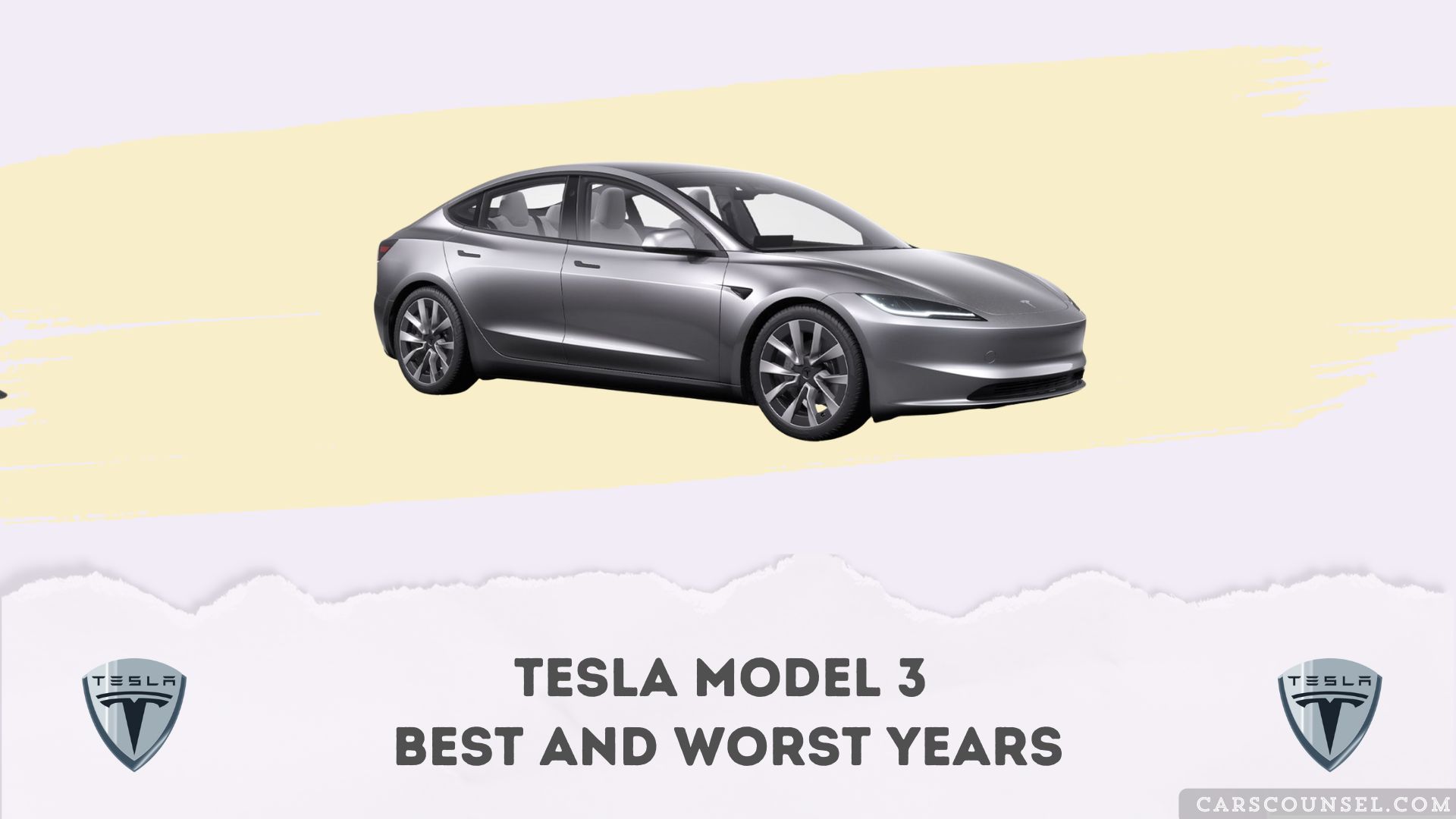
The best used Tesla Model 3 years are 2021 through 2023. These models offer mature build quality, proven battery range, and fewer early-production issues. The 2024 model is also a strong pick for its updated interior and quieter ride.
Buyers should approach 2018 and 2019 models carefully due to higher rates of early-production build quality quirks and suspension complaints. However, no single model year is entirely flawless, and maintenance history remains critical.
Differences in hardware versions, battery chemistry, and the major 2024 refresh mean that trim levels and production dates heavily influence the ownership experience. Always verify the specific configuration before purchasing.
Quick Navigation
Best and Worst Tesla Model 3 Years at a Glance
| Model Year | Verdict | Main Reason | Buyer Guidance |
|---|---|---|---|
| 2018-2019 | Approach Carefully | Early production build quality and suspension concerns | Inspect panel gaps and suspension components |
| 2020 | Mixed | Improved manufacturing but still pre-refresh | Verify service history and hardware version |
| 2021-2023 | Best Choice | Mature platform, excellent range, and better build | Check for open OTA recalls and tire wear |
| 2024 | Best Late-Generation Choice | Highland refresh with improved ride and interior | Limited long-term reliability data available |
| 2025 | Too New to Judge | Latest iteration with minimal ownership history | Wait for long-term reliability patterns |
Key Takeaways
- The 2021 through 2023 model years represent the best overall choices for used buyers.
- Early 2018 and 2019 models require careful inspection for build quality and suspension wear.
- The 2024 Highland refresh brings significant improvements but lacks long-term ownership data.
- Many Tesla recalls are addressed via Over-The-Air software updates, though some require service center visits.
- Always check the vehicle’s service history, battery health, and open recall status before purchasing.
How We Evaluated the Tesla Model 3 Model Years
Our analysis considers official recalls, manufacturer programs, consumer complaints, and powertrain differences. We also evaluate generation changes, issue severity, and repair complexity to determine long-term ownership costs.
Consumer complaints are not confirmed failure rates, and a recall does not automatically make a year unreliable. Recent models have less ownership history, and our best ratings indicate comparatively stronger options, not flawless vehicles.
Best Tesla Model 3 Years
2021-2023: Best Choice
The 2021 through 2023 model years represent the sweet spot for used buyers. Tesla had resolved most early assembly line inconsistencies by this period, resulting in noticeably better panel gaps and interior fitment.
These years also benefit from mature battery management software and proven Hardware 3.0 or 4.0 computer systems. Range estimates are highly accurate, and the charging infrastructure compatibility is fully established.
2024: Best Late-Generation Choice
The 2024 model year introduced the highly anticipated Highland refresh. This update brought a significantly quieter cabin, improved suspension tuning, and a modernized interior with ambient lighting and ventilated seats.
While the driving experience is vastly improved, long-term reliability data remains limited. It is an excellent choice for buyers prioritizing modern features and comfort over established long-term ownership patterns.
Best Tesla Model 3 Year by Buyer Type
Best Overall: 2022
The 2022 model year offers an excellent balance of mature build quality, proven battery longevity, and strong used-market availability. It avoids the earliest production quirks while remaining more affordable than the refreshed models.
Best Modern Alternative: 2024
Buyers seeking the latest technology, superior noise insulation, and updated styling should target the 2024 Highland refresh. It provides a much more refined daily driving experience compared to earlier iterations.
Best Budget Option: 2020
The 2020 model year serves as a reasonable budget option. Build quality improved over the 2018 and 2019 models, though buyers must still carefully inspect the vehicle and verify its complete service history.
Years to Approach Carefully
2018-2019: Approach Carefully
The 2018 and 2019 model years were the first to reach mass production. Consequently, they suffer from the highest rates of early-production build quality issues, including uneven panel gaps and interior rattles.
These early models also generated more consumer complaints regarding suspension components, particularly the upper control arms. Buyers should only consider these years if maintenance records prove that known issues were addressed.
2020: Mixed
The 2020 model year shows noticeable manufacturing improvements over the launch years. However, it still predates the major refinements seen in later production runs and the comprehensive 2024 Highland refresh.
Tesla Model 3 Reliability by Generation
First Generation (2018-2023)
The original Model 3 generation established the brand’s mass-market footprint. Early years struggled with assembly inconsistencies, but build quality steadily improved through 2023. The powertrain proved highly reliable across this entire span.
Highland Refresh (2024-Present)
The Highland generation introduced a heavily revised chassis, new interior materials, and updated lighting. While it addresses previous noise and ride quality complaints, its long-term mechanical reliability is still being established.
Common Tesla Model 3 Problems
Suspension and Steering
Early model years, particularly 2018 and 2019, generated complaints regarding premature suspension wear. The upper control arms were a known weak point, often causing clunking noises over bumps before being revised in later production.
Build Quality and Trim
Mass-production launch years frequently exhibited uneven panel gaps, paint imperfections, and interior rattles. While Tesla improved its assembly processes significantly by 2021, buyers of older models must inspect the exterior and cabin closely.
Phantom Braking and Autopilot
Some owners have reported phantom braking events where the adaptive cruise control unexpectedly applies the brakes. This issue is heavily dependent on the specific hardware version and current software calibration rather than a single model year.
What to Check Before Buying a Used Tesla Model 3
- Verify the VIN for any open Over-The-Air or physical recalls.
- Review the battery health report and degradation history.
- Inspect the suspension components, especially the upper control arms on older models.
- Check the tire tread depth, as electric vehicles tend to wear tires faster.
- Examine the exterior panel gaps and paint quality for early-production inconsistencies.
- Test all infotainment features, cameras, and driver-assistance sensors.
- Arrange an independent pre-purchase inspection with an EV specialist.
Related Buying Guides
- Tesla Model Y best and worst years: Explore the crossover sibling that shares the Model 3 platform but offers more cargo space.
- Tesla Model S best and worst years: Investigate the flagship luxury sedan for buyers needing more range and premium features.
- BMW 3 Series best and worst years: Compare the Model 3 against its traditional German sport-sedan rival.
Frequently Asked Questions
What is the best year for a used Tesla Model 3?
The 2021 through 2023 model years are the best choices. They offer mature build quality, proven battery range, and fewer early-production issues compared to the initial launch years.
Are early Tesla Model 3 years reliable?
The 2018 and 2019 models require careful inspection. While the electric powertrain is generally robust, these early years suffered from higher rates of build quality quirks and suspension component wear.
Did Tesla fix the Model 3 build quality issues?
Yes, Tesla significantly improved its assembly processes by 2021. Later models exhibit much better panel gaps, paint quality, and interior fitment compared to the 2018 and 2019 launch years.
How long do Tesla Model 3 batteries last?
Tesla designs its batteries to retain a high percentage of their original capacity over hundreds of thousands of miles. Actual longevity depends heavily on charging habits, climate, and overall vehicle maintenance.
Are Tesla Model 3 recalls expensive to fix?
Many Tesla recalls are addressed via free Over-The-Air software updates. Physical recalls, such as suspension fastener or trunk harness inspections, are also performed at no cost to the owner at authorized service centers.
Is the 2024 Model 3 refresh worth the premium?
The 2024 Highland refresh offers a quieter cabin, better suspension tuning, and a modernized interior. It is worth the premium for buyers prioritizing comfort, though long-term reliability data is still limited.
Choosing the Right Tesla Model 3 Model Year
The 2021 through 2023 model years remain the strongest recommendations for used buyers. They provide a proven balance of range, mature manufacturing quality, and established ownership patterns.
Buyers on a stricter budget can consider 2020 models with a thorough inspection, while those seeking modern luxury should target the 2024 Highland refresh. Always avoid rushed purchases.
Regardless of the year, verify the vehicle’s complete service history, check for open recalls, and arrange an independent inspection to ensure your electric vehicle is ready for the road.

