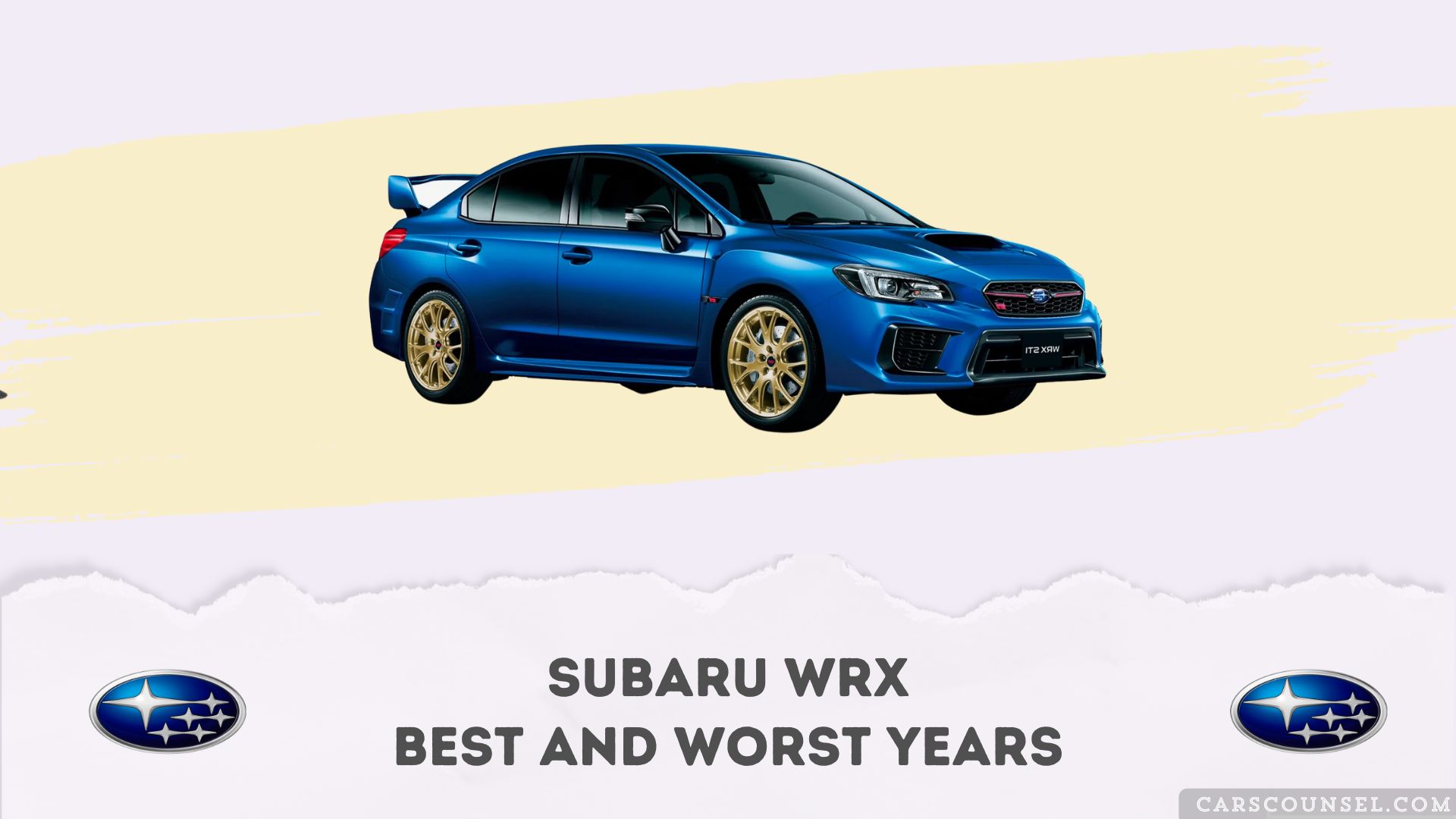
The best Subaru WRX years are 2018 through 2021, offering a mature turbocharged engine and updated technology. Buyers should avoid 2006 through 2014 models due to severe internal engine vulnerabilities.
Rankings are comparative, and no used performance car is flawless. Maintenance history, modifications, and driving condition heavily influence reliability.
Reliability differs significantly between the older 2.5-liter engines and newer turbocharged motors, as well as between manual and automatic transmissions.
Quick Navigation
Best and Worst Subaru WRX Years at a Glance
| Model Year Range | Verdict | Main Reason | Buyer Guidance |
|---|---|---|---|
| 2002–2005 | Approach Carefully | Age and turbo maintenance needs | Inspect for modifications and boost leaks |
| 2006–2014 | Avoid | Piston ringland failures and spun bearings | High risk of catastrophic engine failure |
| 2015–2017 | Mixed | Early first-generation VA teething issues | Check for carbon buildup and clutch wear |
| 2018–2021 | Best Choice | Refined FA20 engine and updated infotainment | Strongest overall reliability for modern buyers |
| 2022–2024 | Best Late-Generation Choice | New VB chassis with 2.4-liter turbo | Verify ECU software updates and clutch operation |
Key Takeaways
- 2018 through 2021 models represent the best overall choice for used buyers.
- Avoid 2006 through 2014 models equipped with the 2.5-liter EJ25 engine.
- The WRX STI was discontinued after 2021, changing the performance landscape.
- Engine ringland failure is a major concern for older 2.5-liter models.
- Always verify if a used example has been heavily modified or tuned.
- Check for open recalls and complete service history before purchasing.
How We Evaluated the Subaru WRX Model Years
Our analysis reviews official recalls, NHTSA complaints, and manufacturer service campaigns.
We separate owner complaints from confirmed mechanical defects and track generation changes.
Complaints are not failure rates, and a recall does not automatically make a vehicle unreliable.
Recent models have less long-term ownership data. Best means comparatively stronger, not flawless.
Best Subaru WRX Years
2018–2021 (Best Choice)
The late VA generation uses the 2.0-liter FA20DIT engine.
This motor features forged internals and avoids the catastrophic ringland failures of the older 2.5-liter.
The 2018 refresh brought improved infotainment and better sound insulation.
2022–2024 (Best Late-Generation Choice)
The current VB generation introduced a larger 2.4-liter FA24DIT engine.
It provides more low-end torque and standard wireless connectivity.
Long-term evidence is still developing, but the powertrain is fundamentally sound.
Best Year by Buyer Type
The 2019 through 2021 models offer a mature platform and reliable engine.
The 2002 through 2004 models provide a lightweight chassis and raw analog feel.
The 2022 and newer models deliver daily drivability with modern safety tech.
Years to Approach Carefully
2002–2005 (Approach Carefully)
These early US-market models used a 2.0-liter engine.
While they avoid later head gasket issues, they are now over two decades old.
Turbochargers, suspension bushings, and the fragile five-speed manual require intense scrutiny.
2015–2017 (Mixed)
The first years of the VA generation introduced the new FA20 engine.
Some owners reported clutch master cylinder failures and excessive carbon buildup.
A thorough pre-purchase inspection is mandatory for these early models.
Worst Subaru WRX Years
2006–2014 (Avoid)
This era is plagued by the 2.5-liter EJ255 engine.
It is notorious for piston ringland failure, spun rod bearings, and head gasket leaks.
The risk of catastrophic engine failure is high, especially on modified examples.
Subaru WRX Reliability by Generation
GD/GG (2002–2007)
The turbocharged pioneer features early 2.0-liter models that are robust but aging.
The 2006 and 2007 switch to the 2.5-liter introduced severe internal weaknesses.
GE/GV (2008–2014)
Available as a hatchback or sedan, this generation suffers heavily from engine issues.
The WRX STI was discontinued after 2021, making these older models the only option.
VA (2015–2021)
This sedan-only generation switched to the 2.0-liter FA20 engine.
This resolved major engine fragility, making it the most reliable modern era.
VB (2022–Present)
The current generation uses the 2.4-liter FA24 motor.
It is too new for definitive verdicts, but early reports are generally favorable.
Common Subaru WRX Problems
Engine Problems (EJ25 Ringlands)
The 2006 through 2014 models suffer from weak cast pistons.
High cylinder pressures or aggressive tuning can crack the piston ringlands.
This leads to total engine failure and requires a complete short block replacement.
Engine Problems (FA20 Carbon)
The 2015 through 2021 direct-injection engines are prone to intake valve carbon buildup.
This causes rough idling and misfires, requiring manual walnut blasting to clean.
Transmission Problems
The older five-speed manuals are fragile when launched hard.
The newer CVT automatic is reliable but disliked by enthusiasts for its simulated feel.
Repair-Cost Overview
| Problem | Commonly Affected Years | Approximate Repair Range | Important Notes |
|---|---|---|---|
| Short Block Replacement (EJ25) | 2006–2014 | $4,500 – $7,000 | Required after ringland failure |
| Walnut Blasting (Carbon Cleaning) | 2015–2021 | $400 – $700 | Needed every 60,000 miles |
| Turbocharger Replacement | 2002–2014 | $1,500 – $2,500 | Varies by OEM or aftermarket choice |
Costs vary by region, labor rate, parts choice, and vehicle configuration.
Damage severity and whether you use a dealer or independent shop also change prices.
What to Check Before Buying a Used Subaru WRX
- Verify the VIN for open recalls and warranty extensions.
- Inspect for aftermarket downpipes, tunes, or boost controllers.
- Perform a compression and leak-down test on 2006 through 2014 models.
- Check for blue smoke on cold starts, indicating turbo or ring wear.
- Inspect the clutch pedal feel and master cylinder operation.
- Review service records for frequent oil changes.
Related Buying Guides
- Subaru WRX STI best and worst years – Explore the track-focused sibling that was discontinued after 2021.
- Subaru BRZ years to avoid – A naturally aspirated, rear-wheel-drive alternative for handling purists.
- Subaru Impreza years to avoid – The non-turbo platform sibling that shares the WRX chassis.
Frequently Asked Questions
What is the most reliable Subaru WRX year?
The 2018 through 2021 model years are the most reliable.
They feature the robust FA20 engine and updated technology.
Why should I avoid the 2008 Subaru WRX?
The 2008 model uses the 2.5-liter EJ25 engine.
It is highly prone to catastrophic piston ringland failure and spun bearings.
Did Subaru fix the WRX engine problems?
Yes, switching to the 2.0-liter FA20 engine in 2015 eliminated notorious ringland failures.
Is the WRX CVT transmission reliable?
The Subaru CVT is mechanically reliable.
However, it lacks the engagement of the manual and can overheat on tracks.
Are modified WRX models safe to buy?
Modified examples carry high risk.
Aftermarket tunes and bolt-ons frequently cause premature engine and transmission failure.
Does the WRX hold its value well?
Yes, clean and unmodified examples hold value exceptionally well.
This is due to strong enthusiast demand and limited supply.
Choosing the Right Subaru WRX Model Year
Target the 2018 through 2021 models for the best balance of reliability and performance.
Avoid the 2006 through 2014 era entirely due to severe engine fragility.
Always prioritize unmodified examples with strict maintenance records.
An independent pre-purchase inspection and a VIN check are mandatory before purchasing.

