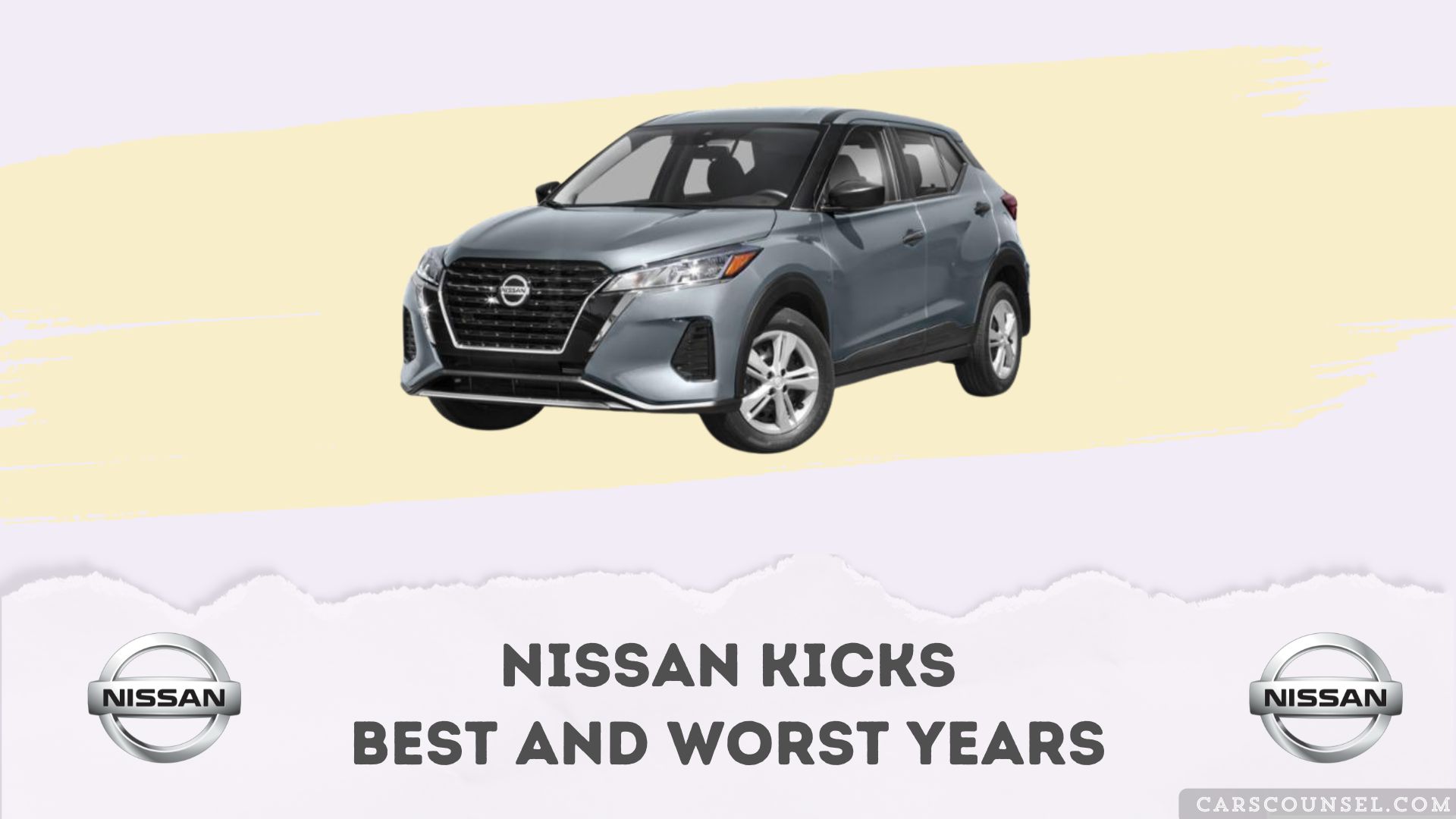
The best Nissan Kicks model years are 2021 through 2024. These later first-generation models feature updated safety technology and improved build quality. Buyers should approach the 2018 and 2019 model years carefully due to higher rates of sensor and electrical complaints.
Rankings are comparative, and no used vehicle is entirely flawless. Maintenance history, overall condition, and rust prevention matter just as much as the model year when evaluating long-term dependability.
Meaningful differences exist between the first and second generations. The 2025 redesign introduces a larger engine and available all-wheel drive, while earlier models remain strictly front-wheel drive with a smaller displacement motor.
Quick Navigation
Best and Worst Nissan Kicks Years at a Glance
| Model Year | Verdict | Main Reason | Buyer Guidance |
|---|---|---|---|
| 2025 | Too New to Judge | Second generation redesign | Wait for long-term data |
| 2021-2024 | Best Choice | Facelift and refined safety tech | Prioritize models with service records |
| 2020 | Good Choice | Carryover year with fewer sensor issues | Verify backup camera operation |
| 2018-2019 | Approach Carefully | First-year teething issues and phantom braking | Inspect forward collision sensors |
Key Takeaways
- Strongest choices: 2021 through 2024 models with updated safety features.
- Caution years: 2018 and 2019 due to phantom braking and electrical gremlins.
- Powertrain: First generation uses a 1.6L engine and FWD; 2025 adds a 2.0L and AWD.
- Major concern: Continuously Variable Transmission (CVT) fluid maintenance is critical.
- Recent limitation: The 2025 redesign lacks long-term ownership data.
- Always verify open recalls and check the VIN before purchasing.
- Arrange an independent pre-purchase inspection for any used example.
How We Evaluated the Nissan Kicks Model Years
Our analysis considers official recalls, manufacturer service campaigns, and consumer complaint databases. We weigh problem severity, recurrence rates, and repair complexity against the vehicle’s overall ownership costs.
Complaints are not confirmed defects or failure rates. A recall does not automatically make a year unreliable. Recent models have less ownership history, and “best” means comparatively stronger, not flawless.
Best Nissan Kicks Years
2021-2024 Nissan Kicks (Best Choice)
The 2021 model year introduced a mid-cycle refresh with upgraded LED lighting and an electronic parking brake. Nissan also enhanced the Safety Shield 360 suite, addressing earlier sensor vulnerabilities.
These later first-generation models benefit from resolved assembly-line inconsistencies. Owners report fewer electrical gremlins and improved transmission calibration. Routine CVT fluid maintenance remains essential for longevity.
2020 Nissan Kicks (Good Choice)
The 2020 model serves as a bridge between the problematic launch years and the refreshed models. It retains the original front fascia but exhibits fewer forward collision sensor complaints than earlier versions.
Buyers should verify that all software updates have been applied at the dealership. Inspect the infotainment system and backup camera for proper operation before finalizing a purchase.
Years to Approach Carefully
2018-2019 Nissan Kicks (Approach Carefully)
As the initial North American launch years, the 2018 and 2019 models experienced typical first-year assembly inconsistencies. Owners frequently reported phantom braking from the automatic emergency braking system and backup camera display failures.
While not universally defective, these years require thorough pre-purchase inspections. Verify that the dealership has applied all technical service benchmarks for the forward collision sensors and electrical modules.
Nissan Kicks Reliability by Generation
First Generation (2018-2024)
The first-generation Kicks replaced the Juke in the United States, utilizing a 1.6-liter four-cylinder engine and a continuously variable transmission. This generation remained strictly front-wheel drive across all trims.
Early production models faced software calibration issues with driver-assistance features. Later models from 2021 onward feature revised sensor programming and improved interior materials, making them substantially more dependable.
Second Generation (2025-Present)
Nissan completely redesigned the Kicks for the 2025 model year, increasing its overall footprint and wheelbase. This generation introduces a 2.0-liter four-cylinder engine and offers available all-wheel drive for the first time.
Because this platform is entirely new, long-term reliability data remains unavailable. Early adopters may encounter first-year software bugs or assembly inconsistencies common to fresh redesigns.
Common Nissan Kicks Problems
Forward Collision Sensor Malfunctions
Some 2018 and 2019 models experience phantom braking, where the automatic emergency braking system activates without an obstacle present. This issue typically stems from radar calibration errors or software glitches.
Dealerships can often resolve this concern through software updates or sensor realignment. Buyers should test the system in a safe environment and check for open technical service bulletins.
Continuously Variable Transmission (CVT) Maintenance
Nissan’s continuously variable transmissions require strict adherence to maintenance schedules. While the Kicks uses a lighter-duty CVT than larger Nissan SUVs, neglected fluid changes can lead to shuddering or hesitation.
Inspect the transmission fluid condition during a test drive. Dark or burnt-smelling fluid indicates deferred maintenance and increases the risk of premature transmission failure.
Backup Camera Display Failures
Owners of early first-generation models occasionally report blank or flickering backup camera displays. This issue usually traces back to faulty wiring harnesses or failing head unit connections rather than the camera itself.
Test the reverse camera multiple times during your inspection. Ensure the display remains stable and free of visual artifacts when shifting into reverse.
What to Check Before Buying a Used Nissan Kicks
- Verify the VIN for any open safety recalls or service campaigns.
- Review maintenance records to confirm regular CVT fluid inspections or changes.
- Test the automatic emergency braking system for phantom activation or warning lights.
- Shift into reverse to verify the backup camera display remains stable.
- Inspect the brake pads and rotors for premature wear or uneven grinding.
- Scan the vehicle for lingering diagnostic trouble codes in the electrical modules.
- Arrange an independent pre-purchase inspection to evaluate the suspension and undercarriage.
Related Buying Guides
- Nissan Juke best and worst years: The quirky predecessor to the Kicks in the North American market.
- Nissan Rogue years to avoid: A larger family alternative for buyers needing more cargo space and standard all-wheel drive availability.
- Nissan Versa best and worst years: A practical sedan alternative for buyers who prefer a traditional trunk over a hatchback.
Frequently Asked Questions
Is the Nissan Kicks reliable?
The Nissan Kicks demonstrates average reliability for the subcompact crossover segment. Later first-generation models from 2021 through 2024 show better dependability than the initial launch years. Routine maintenance heavily influences longevity.
What year of the Nissan Kicks is most dependable?
The 2022 through 2024 model years represent the most dependable options. These vehicles benefit from the 2021 mid-cycle refresh, which resolved earlier sensor vulnerabilities and improved overall build quality.
What year should you avoid?
No model year strictly earns an avoid verdict, but buyers should approach the 2018 and 2019 models carefully. These launch years experienced higher rates of phantom braking and electrical gremlins.
What are the most common problems?
The most frequently reported issues involve forward collision sensor malfunctions and backup camera display failures. Continuously variable transmission shuddering can also occur if previous owners neglected regular fluid maintenance.
How long does a Nissan Kicks last?
A properly maintained Nissan Kicks can reach high mileage, though individual outcomes vary based on driving conditions and rust prevention. Consistent CVT maintenance and timely software updates are critical for maximizing lifespan.
Does the Nissan Kicks have all-wheel drive?
First-generation models from 2018 through 2024 are strictly front-wheel drive. Nissan introduced an available all-wheel-drive system with the complete redesign for the 2025 model year.
Choosing the Right Nissan Kicks Model Year
The best Nissan Kicks model years are 2021 through 2024, offering refined safety technology and improved build quality. Buyers should approach the 2018 and 2019 models carefully due to early sensor and electrical issues.
Always verify open recalls using the VIN and review service records for CVT maintenance. An independent pre-purchase inspection remains the best way to ensure long-term dependability.

