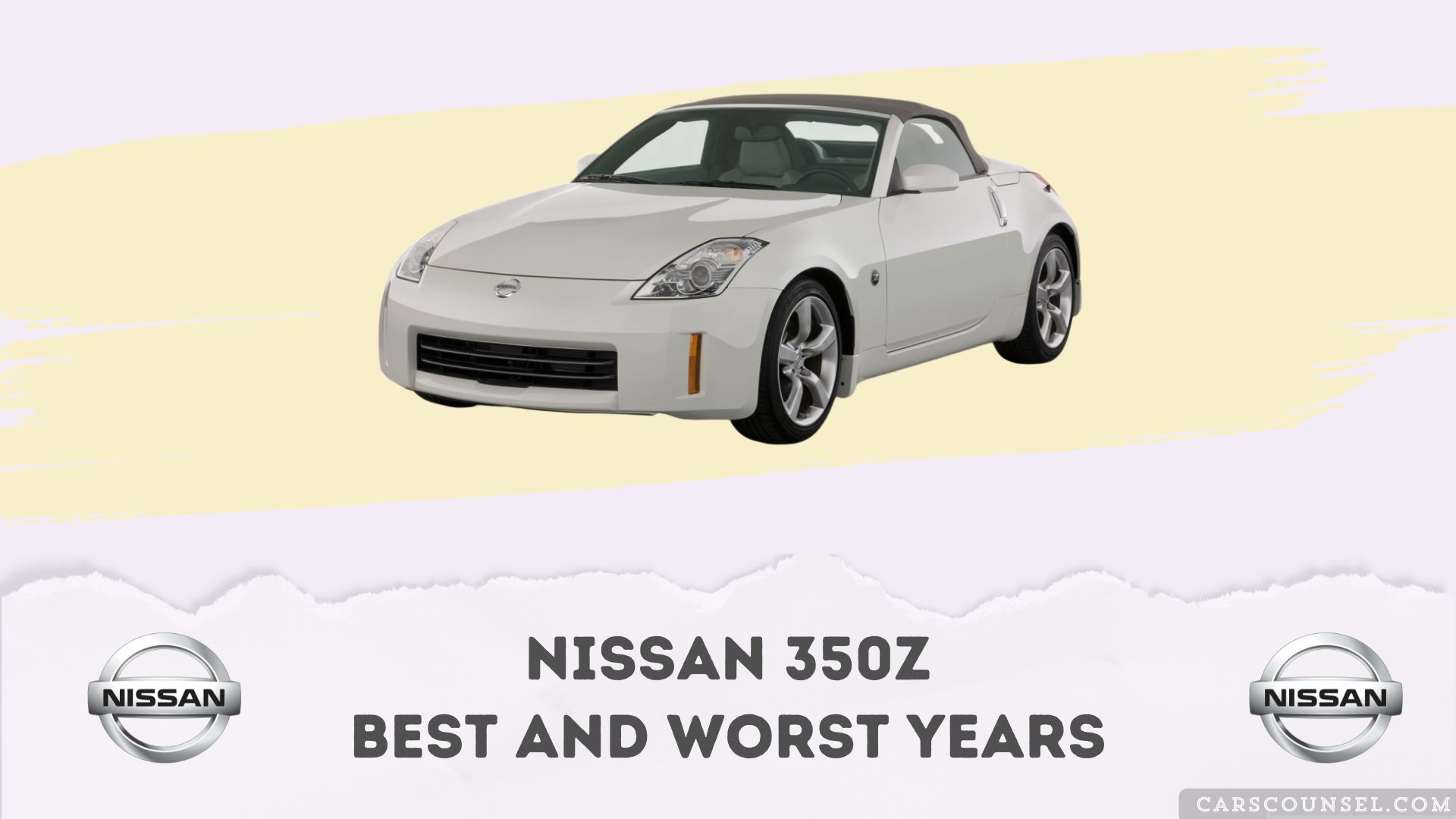
The best Nissan 350Z model years are 2007 through 2009. These later models feature the revised VQ35HR engine, offering improved power and fewer major mechanical complaints compared to earlier versions.
Buyers should approach the 2003 through 2005 model years with caution. These early production vehicles experienced higher rates of sensor failures, excessive oil consumption, and interior material defects.
Reliability varies significantly depending on the specific engine variant and transmission. Maintenance history, previous modifications, and overall vehicle condition remain critical factors when evaluating any used sports coupe.
Quick Navigation
Best and Worst Nissan 350Z Years at a Glance
| Model Year | Verdict | Main Reason | Buyer Guidance |
|---|---|---|---|
| 2007–2009 | Best Choice | Revised VQ35HR engine and improved build quality. | Prioritize examples with documented maintenance. |
| 2006 | Good With Inspection | Rev-Up engine offers more power but consumes oil. | Verify oil consumption and service records. |
| 2004–2005 | Approach Carefully | Persistent sensor and fuel damper issues. | Inspect for stalling history and ticking noises. |
| 2003 | Avoid | First-year teething issues and high oil consumption. | Seek later model years for better dependability. |
Key Takeaways
- The 2007–2009 models represent the strongest choices for used buyers.
- Early 2003–2005 models carry higher risks of engine and electrical faults.
- The transition from the VQ35DE to the VQ35HR engine significantly changed reliability patterns.
- Throttle body carbon buildup remains a common maintenance requirement across all years.
- Always verify open recalls and complete a thorough pre-purchase inspection.
How We Evaluated the Nissan 350Z Model Years
Our analysis considers official manufacturer records, safety recalls, and long-term ownership data. We evaluate powertrain revisions, generation changes, and the severity of recurring mechanical faults.
Consumer complaints indicate potential trouble spots but do not represent confirmed failure rates. A recall or service campaign does not automatically render a specific model year unreliable.
Recent production years generally show fewer complaints due to limited road exposure. The term “best” indicates comparatively stronger ownership experiences rather than absolute perfection or guaranteed longevity.
Best Nissan 350Z Years
2007–2009 (Best Choice)
Nissan introduced the updated VQ35HR engine for the 2007 model year. This dual-intake powertrain produced more horsepower and featured improved internal oiling passages.
Owners report fewer catastrophic engine failures during this period. Build quality improved, and interior materials were upgraded to address earlier complaints regarding melting dashboards.
While generally dependable, these models still require regular throttle body cleaning. Buyers should verify that previous owners addressed any outstanding camshaft or crankshaft position sensor campaigns.
2006 (Good With Inspection)
The 2006 model year introduced the higher-revving VQ35DE Rev-Up engine. This configuration delivered increased performance but brought new challenges regarding oil consumption and bearing wear.
Examples with meticulous service records can be rewarding sports cars. However, buyers must monitor oil levels closely and listen for unusual valvetrain noises during cold starts.
Best Year by Buyer Type
Best Overall: 2008
The 2008 model year benefits from the proven VQ35HR engine and mid-cycle refinements. It offers an excellent balance of modern reliability, performance, and enthusiast appeal.
Best Enthusiast Choice: 2007–2009 Manual
The six-speed manual transmission paired with the VQ35HR engine provides the most engaging driving experience. These later manual models suffer fewer synchro complaints than earlier versions.
Years to Approach Carefully
2004–2005 (Approach Carefully)
These middle-generation years improved upon the initial 2003 launch but still utilized the early VQ35DE engine. Owners frequently report fuel damper squeals and intermittent stalling.
Camshaft and crankshaft position sensor failures remain a notable concern. A thorough diagnostic scan and verification of sensor replacements are essential before purchasing these specific years.
Worst Nissan 350Z Years
2003 (Avoid)
As the inaugural model year, the 2003 Nissan 350Z experienced significant teething issues. High oil consumption, premature tire wear, and early transmission synchro problems plague many examples.
Electrical gremlins and interior material degradation are also more prevalent. Unless an example possesses an exhaustive, documented restoration history, buyers are better served by later model years.
Nissan 350Z Reliability by Generation
Z33 Generation (2003–2009)
The fifth-generation Z-car relies on the robust FM platform. While the chassis and suspension components are generally durable, the powertrain evolved significantly during its production run.
The early VQ35DE engines require strict maintenance to prevent oil starvation. The later VQ35HR engines resolved many internal lubrication concerns, making late-generation examples substantially more dependable for daily use.
Common Nissan 350Z Problems
Throttle Body Carbon Buildup
Drive-by-wire throttle bodies accumulate carbon over time, causing erratic idling and hesitation. Routine cleaning is necessary to maintain smooth acceleration and prevent limp-mode triggers across all model years.
Sensor Failures
Camshaft and crankshaft position sensors are known weak points, particularly in 2003–2006 models. Failure causes sudden stalling or no-start conditions, requiring immediate replacement to restore drivability.
Interior Material Degradation
Early model years suffer from dashboard materials that melt or become excessively sticky in warm climates. Door handle mechanisms and interior trim pieces also frequently break or detach.
What to Check Before Buying a Used Nissan 350Z
- Verify the VIN for open safety recalls and sensor campaigns.
- Review service records for consistent oil changes and throttle body cleanings.
- Inspect the engine bay for signs of excessive oil leaks or burned wiring.
- Test the manual transmission for grinding during third and fourth gear shifts.
- Check the dashboard and interior plastics for melting or severe cracking.
- Scan for stored diagnostic trouble codes related to camshaft or crankshaft sensors.
- Arrange an independent pre-purchase inspection focusing on suspension bushings and differential health.
Related Buying Guides
- Nissan 370Z best and worst years: Explore the direct successor to the 350Z for updated styling and modern features.
- Nissan Z best and worst years: Review the latest generation of the iconic Z-car lineage for contemporary performance metrics.
- Nissan Altima best and worst years: Consider this practical sedan alternative if daily comfort is prioritized over sports coupe dynamics.
Frequently Asked Questions
Is the Nissan 350Z a reliable sports car?
Later model years offer solid reliability for a sports coupe. Early production versions require more frequent maintenance and carry higher risks of sensor and oiling issues.
Which Nissan 350Z engine is most dependable?
The VQ35HR engine found in 2007–2009 models is the most dependable. It features improved internal oiling and resolves many consumption problems found in earlier VQ35DE variants.
Do all Nissan 350Z models consume excessive oil?
Not all models suffer from severe oil consumption. The early VQ35DE and the 2006 Rev-Up engines are most prone to burning oil, while the VQ35HR is much improved.
What causes the ticking noise in a Nissan 350Z?
A common cause is a worn fuel damper or injector tick. While often harmless, it should be verified by a mechanic to rule out valvetrain or bearing issues.
Are manual transmissions problematic in the 350Z?
Early manual transmissions experienced some synchro wear, but the gearbox is generally robust. Proper fluid changes and smooth shifting significantly extend the lifespan of the manual transmission.
How long can a well-maintained Nissan 350Z last?
Longevity depends heavily on maintenance and driving conditions. Well-maintained examples can reach high mileage, though sports cars often face harsher use that impacts long-term component survival.
Choosing the Right Nissan 350Z Model Year
The 2007–2009 model years provide the best ownership experience, combining the robust VQ35HR engine with improved interior quality. These later examples minimize the risks associated with early production faults.
Buyers targeting earlier years must budget for potential sensor replacements and strict oil monitoring. Always verify the VIN, demand comprehensive service records, and secure an independent mechanical inspection before purchasing.


Comments are closed.