The Mitsubishi 3000GT was produced from 1990 to 2000 as a front-engine grand touring sports car. Known as the GTO in Japan, this 2+2 coupe featured front-wheel drive in base models and all-wheel drive in the high-performance VR-4 variants.
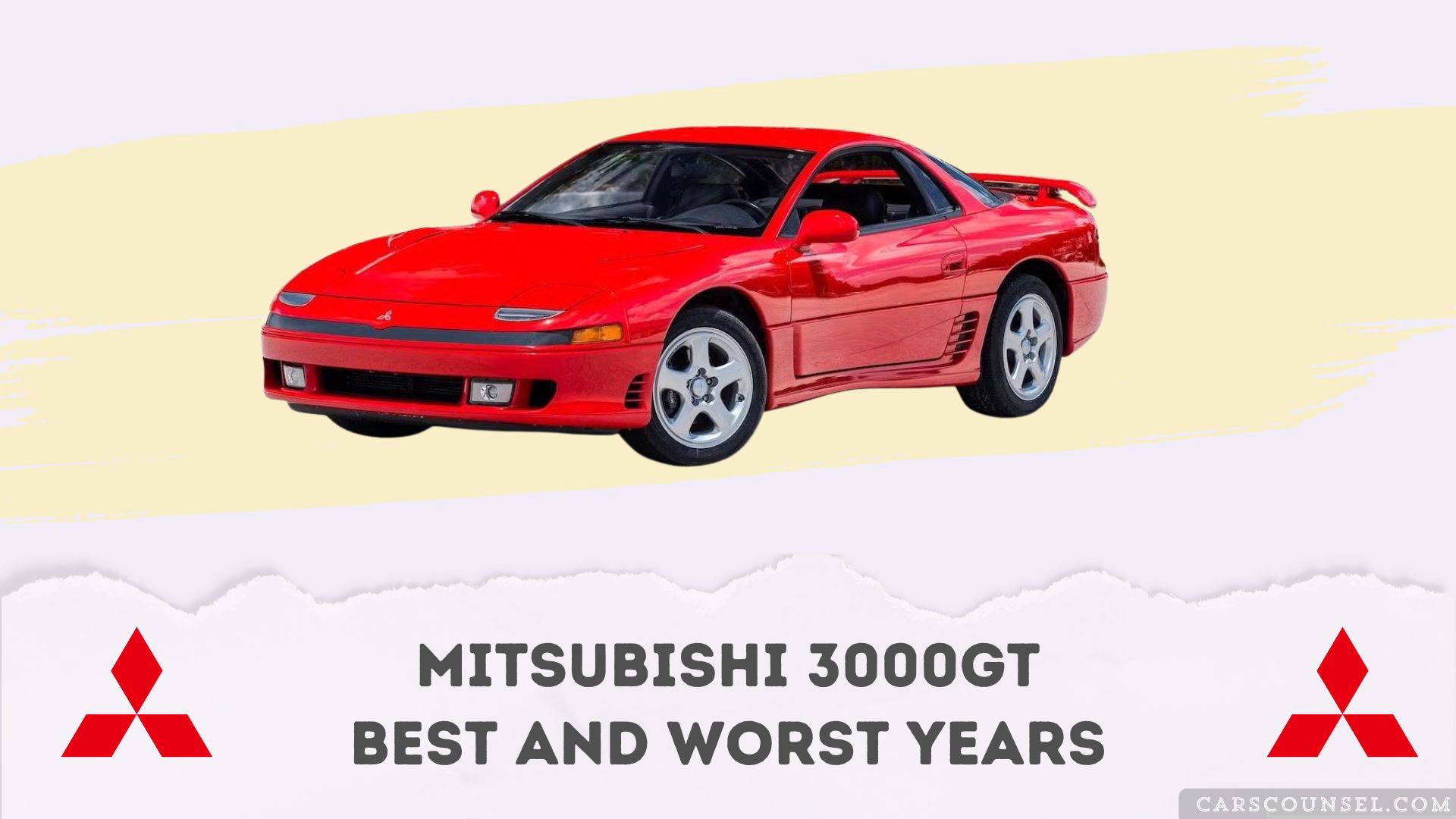
This article breaks down the best and worst model years of the Mitsubishi 3000GT based on reliability, owner complaints, common mechanical failures, and long-term dependability. Understanding which years to target and which to avoid helps buyers make informed decisions about this complex Japanese sports car.
Quick Navigation
Mitsubishi 3000GT Generational Overview
First Generation (1991-1993)
The first generation 3000GT debuted in 1991 following the 1989 Tokyo Motor Show concept. This generation featured the full suite of advanced technology including active aerodynamics, adjustable suspension, and a valved exhaust system on VR-4 models. The VR-4 trim came equipped with a twin-turbocharged 3.0-liter V6 producing 300 horsepower with all-wheel drive.
Base models used naturally aspirated versions of the same engine with front-wheel drive. These early years are considered the most feature-complete versions before cost-cutting measures began in later generations.
Second Generation (1994-1996)
The second generation introduced a refreshed exterior design and continued offering both naturally aspirated and twin-turbo VR-4 variants. However, Mitsubishi began removing features to reduce production costs during this period. The 1995 model year eliminated the valved exhaust system, and 1996 removed the adjustable suspension.
The limited edition Spyder convertible variant launched in 1995 and 1996, though only in VR-4 trim. This generation maintained similar performance specifications but with reduced technological features compared to the first generation.
Third Generation (1997-1999)
The third generation continued through 1999 with further feature deletions. After 1997, the active aerodynamics system was completely removed from the lineup. This generation represented the most streamlined and cost-reduced version of the 3000GT.
The Dodge Stealth, which was mechanically identical to the 3000GT, was discontinued after 1996, leaving only the Mitsubishi-badged version for the final years. Production ended in 1999 for the VR-4 and 2000 for base models.
Best Years for the Mitsubishi 3000GT
1991-1993
The 1991-1993 model years represent the best overall choice for 3000GT buyers. These first-generation models came with the complete feature set including active aerodynamics, electronically adjustable suspension, and valved exhaust on VR-4 models. The twin-turbo VR-4 delivered 300 horsepower and featured all-wheel drive with advanced electronics that later generations lacked.
1991
The 1991 model year launched the 3000GT with all planned features intact and no cost-cutting measures. Early production examples benefited from Mitsubishi’s full investment in the platform before reliability issues became apparent in later years. This year serves as the baseline for what the 3000GT was intended to be.
1992-1993
The 1992 and 1993 models maintained the same feature content as 1991 while incorporating minor production refinements. These years still offered the complete technological package before the feature deletions began in 1994. VR-4 models from these years remain the most sought-after by enthusiasts due to their comprehensive equipment levels.
Worst Years for the Mitsubishi 3000GT
1997-1999
The 1997-1999 model years represent the worst period for the 3000GT lineup. By 1997, Mitsubishi had removed active aerodynamics entirely from the vehicle. These final years suffered from accumulated cost-cutting while still carrying the complexity and maintenance demands of earlier models.
1995
The 1995 model year marked the beginning of feature deletions when the valved exhaust system was eliminated. This year also introduced the Spyder convertible, which added structural complexity and weight without addressing existing reliability concerns. The 1995 VR-4 represents a transitional year with reduced features but no improvements in dependability.
1996
The 1996 model lost the electronically adjustable suspension system. This removal further reduced the technological advantages that distinguished the 3000GT from competitors. The 1996 model maintained the same maintenance costs and complexity as earlier years but delivered less functionality.
Common Problems Across the Mitsubishi 3000GT Lineup
Oil Pan Denting and Bearing Failure
The oil pan features a dimple where the oil pickup tube is located, making it vulnerable to damage during maintenance. When this dimple is dented inward by improper jacking, oil flow becomes restricted at high RPM, causing oil starvation and spun rod bearings. This represents the most catastrophic mechanical failure in 3000GT models and requires careful inspection before purchase.
Transfer Case Oil Leaks
VR-4 models with all-wheel drive suffered from transfer case oil leakage that could lead to complete transfer case failure. This defect was serious enough to warrant a recall covering 1991-1999 VR-4 models. Transfer case failure can cause the drive wheels to lock up, creating a significant safety hazard and expensive repair.
Transmission Control Unit Failures
Automatic transmission models experienced failures of the transmission control unit, particularly in first-generation vehicles. These control units are extremely difficult to source as replacements are no longer manufactured. Manual transmissions exhibited notchy shifting and worn synchros, though these issues were less severe than automatic transmission problems.
Electrical System Complexity
The 3000GT featured complex electrical systems controlling the engine, transmission, active aerodynamics, and adjustable suspension. Engine and gearbox ECUs are prone to failure and expensive to replace due to their location and labor costs. Active aerodynamics systems on pre-facelift models frequently stop working, though many owners choose not to repair them.
Suspension Wear and Deterioration
Suspension bushings wear out regularly, producing rattling and knocking noises. Struts suffer from accelerated wear that impacts handling and ride quality. The complexity of the adjustable suspension system in early models makes repairs more expensive than conventional suspension components.
Brake Hose Cracking
A recall addressed front brake hose cracking under conditions of full lock steering and full suspension travel. This defect caused brake fluid leakage and affected 1991-1993 models. While recalls should have addressed this issue, buyers should verify the recall work was completed.
Turbocharger and Intercooler Hose Issues
VR-4 models experienced problems with turbocharger and intercooler hoses popping off, especially in modified vehicles with increased boost pressure. While engine internals are generally reliable, excessive boost modifications can create reliability problems. These hose failures can lead to sudden loss of power and potential engine damage.
Age-Related Component Degradation
As vehicles produced between 1990 and 2000, all 3000GT models suffer from age-related deterioration. Plastics degrade, rubber components perish, and electrical wiring fails over time. The 3000GT occupies an awkward age where components are old enough to fail but not old enough that everything has already been replaced.
Reliability Breakdown by Year
1999 Mitsubishi 3000GT Reliability Rating
The 1999 model year represented the final year for VR-4 production with reduced features and accumulated reliability issues. By this point, the active aerodynamics and adjustable suspension had been eliminated, leaving fewer components to fail. However, these models still suffered from transfer case leaks, transmission problems, and electrical issues common to all generations.
1998 Mitsubishi 3000GT Reliability Rating
The 1998 model continued without significant changes from 1997. Owners reported expensive maintenance requirements averaging over $1,000 annually. The complexity of the platform meant that even minor repairs required extensive labor, and the 20-year-old vehicles began experiencing widespread age-related failures.
1997 Mitsubishi 3000GT Reliability Rating
The 1997 model year eliminated active aerodynamics entirely from the lineup. This simplification reduced potential failure points but did not address fundamental issues with oil pan design, transfer case leaks, or transmission problems. The third-generation models offered less value than earlier feature-complete versions.
1996 Mitsubishi 3000GT Reliability Rating
The 1996 model lost electronically adjustable suspension. Transfer case oil leaks remained a significant problem requiring inspection and potential replacement. This was the final year for the Dodge Stealth variant. Transmission control unit failures in automatic models created sourcing challenges for replacement parts.
1995 Mitsubishi 3000GT Reliability Rating
The 1995 model introduced the Spyder convertible while eliminating the valved exhaust system. This year marked the beginning of cost-cutting measures that reduced the 3000GT’s appeal. Spyder models added structural complexity without addressing existing reliability concerns, making hardtop versions preferable.
1994 Mitsubishi 3000GT Reliability Rating
The 1994 model began the second generation with a refreshed design but started the trend of feature deletions. Brake hose recalls affected this year, requiring inspection of front brake hoses for cracking. Transfer case leaks in VR-4 models necessitated careful inspection and maintenance.
1993 Mitsubishi 3000GT Reliability Rating
The 1993 model represented the final year with the complete feature set intact. Multiple recalls affected this year including brake hoses and transfer case issues. Despite recalls, the 1993 model offered the full technological package that defined the 3000GT platform.
1992 Mitsubishi 3000GT Reliability Rating
The 1992 model maintained all features including active aero, adjustable suspension, and valved exhaust. Three recalls affected this year covering brake hoses, transfer case leaks, and automatic transmission linkage. The first-generation models remained the most feature-complete despite emerging reliability patterns.
1991 Mitsubishi 3000GT Reliability Rating
The 1991 launch year introduced the 3000GT with its full complement of advanced features. Oil pan denting issues could occur during maintenance if technicians used improper jacking points. Transfer case leaks began appearing in VR-4 models, eventually leading to the recall program.
Warranty and Ownership Costs
Annual maintenance costs for the Mitsubishi 3000GT average between $487 and $1,106 depending on the service provider and model year. These costs are significantly higher than typical Japanese sports cars due to the complexity of the twin-turbo all-wheel-drive system and advanced electronics.
Major repairs can range from $105 for basic services to over $4,700 for complex work like fuel injector replacement or steering rack replacement. VR-4 owners should budget approximately $5,000 for unexpected repairs due to the age of these vehicles and the cost of specialized parts. Transfer case repairs or replacements represent one of the most expensive maintenance items, particularly if damage has occurred from oil leakage.
Original warranty coverage has long expired on all 3000GT models, leaving buyers dependent on independent mechanics familiar with the platform. Parts availability varies, with some electronic components like transmission control units becoming difficult or impossible to source. These ownership costs make the 3000GT expensive to maintain compared to contemporary sports cars.
Buying Guide: What to Look For
The 1991-1993 model years offer the best value with complete feature sets and more justifiable ownership costs. Avoid 1997-1999 models that lack features but maintain the same complexity and repair expenses. VR-4 models provide the full performance experience but require significantly higher maintenance budgets than base models.
Inspect the oil pan carefully for denting near the oil pickup tube dimple, as this causes catastrophic bearing failures. Verify that transfer case recall work was completed on VR-4 models and check for any signs of oil leakage. Test the active aerodynamics and adjustable suspension on 1991-1993 models, understanding that repairs may be expensive if non-functional.
Check transmission operation carefully, avoiding automatic models with control unit failures that cannot be repaired. Manual transmissions should shift smoothly without excessive notchiness or grinding. Expect to find examples with mileage-appropriate wear on suspension bushings and struts.
Budget at least $1,000 annually for routine maintenance and set aside $5,000 for unexpected repairs. Vehicles with comprehensive service records and documented recall completion represent the safest purchases. Examples with working active systems are preferable to those with inoperative features, though repair costs should factor into purchase price negotiations.
When looking at performance cars, make sure to check out our guides on models like the Mitsubishi Lancer Evolution, Mitsubishi I-Miev, Mitsubishi Pajero and Mitsubishi outlander. Knowing which model years to target and which to avoid is crucial. Our expert reviews break down these models, providing insights into the years that are celebrated for their engineering excellence and driving satisfaction, as well as those that are best to avoid due to potential issues.
FAQs
Is the Mitsubishi 3000GT reliable?
The Mitsubishi 3000GT has below-average reliability due to complex electrical systems, transfer case leaks, and transmission problems. Age-related deterioration of 25-35 year old components contributes to frequent failures and expensive repairs. The platform requires dedicated owners willing to invest significant time and money in maintenance.
What year of the Mitsubishi 3000GT is most dependable?
The 1991-1993 model years are most dependable because they came with complete feature sets that justify the high maintenance costs. These first-generation models offer the best balance of performance, technology, and value. Later years removed features without reducing complexity or improving reliability.
What year should you avoid?
Avoid 1997-1999 model years that eliminated active aerodynamics and other features while maintaining the same reliability issues. The 1995 model should also be avoided as it began the cost-cutting trend by removing the valved exhaust. These later years offer diminished value compared to feature-complete early models.
What are the most common problems?
The most common problems include oil pan denting causing bearing failure, transfer case oil leaks, transmission control unit failures, electrical system malfunctions, suspension wear, and age-related component deterioration. These issues require expensive repairs and can be difficult to diagnose due to the vehicle’s complexity.
How long does a Mitsubishi 3000GT last?
With proper maintenance and careful attention to oil pan protection, a Mitsubishi 3000GT can last over 200,000 miles. However, this requires significant financial investment in preventive maintenance and immediate repair of issues like transfer case leaks. Most examples require major repairs every few years due to the complexity of systems and age of components.
How much does it cost to maintain a Mitsubishi 3000GT?
Annual maintenance costs range from $487 to $1,106 for routine service, with major repairs adding $2,000 to $5,000 in unexpected expenses. VR-4 twin-turbo all-wheel-drive models cost significantly more to maintain than base models due to additional complexity. Owners should budget accordingly for the high cost of ownership.
Conclusion
The Mitsubishi 3000GT delivers the best value in 1991-1993 model years when the complete feature set was intact. These first-generation models justify their high maintenance costs with active aerodynamics, adjustable suspension, and valved exhaust systems.
The worst years are 1997-1999 when features were deleted but complexity and repair costs remained unchanged. The 1995-1996 period should also be avoided due to progressive feature elimination.
Overall dependability is below average due to transfer case leaks, oil pan design flaws, transmission problems, and complex electrical systems. Buyers should target early VR-4 models with complete service records and verified recall completion while budgeting $1,000-$6,000 annually for maintenance and repairs.

