The Dodge Magnum is a full-size station wagon produced across two separate generations, with the modern version spanning from 2005 to 2008. The first generation appeared briefly from 1978 to 1979, while the second generation station wagon became Dodge’s first wagon since the 1991 Colt.
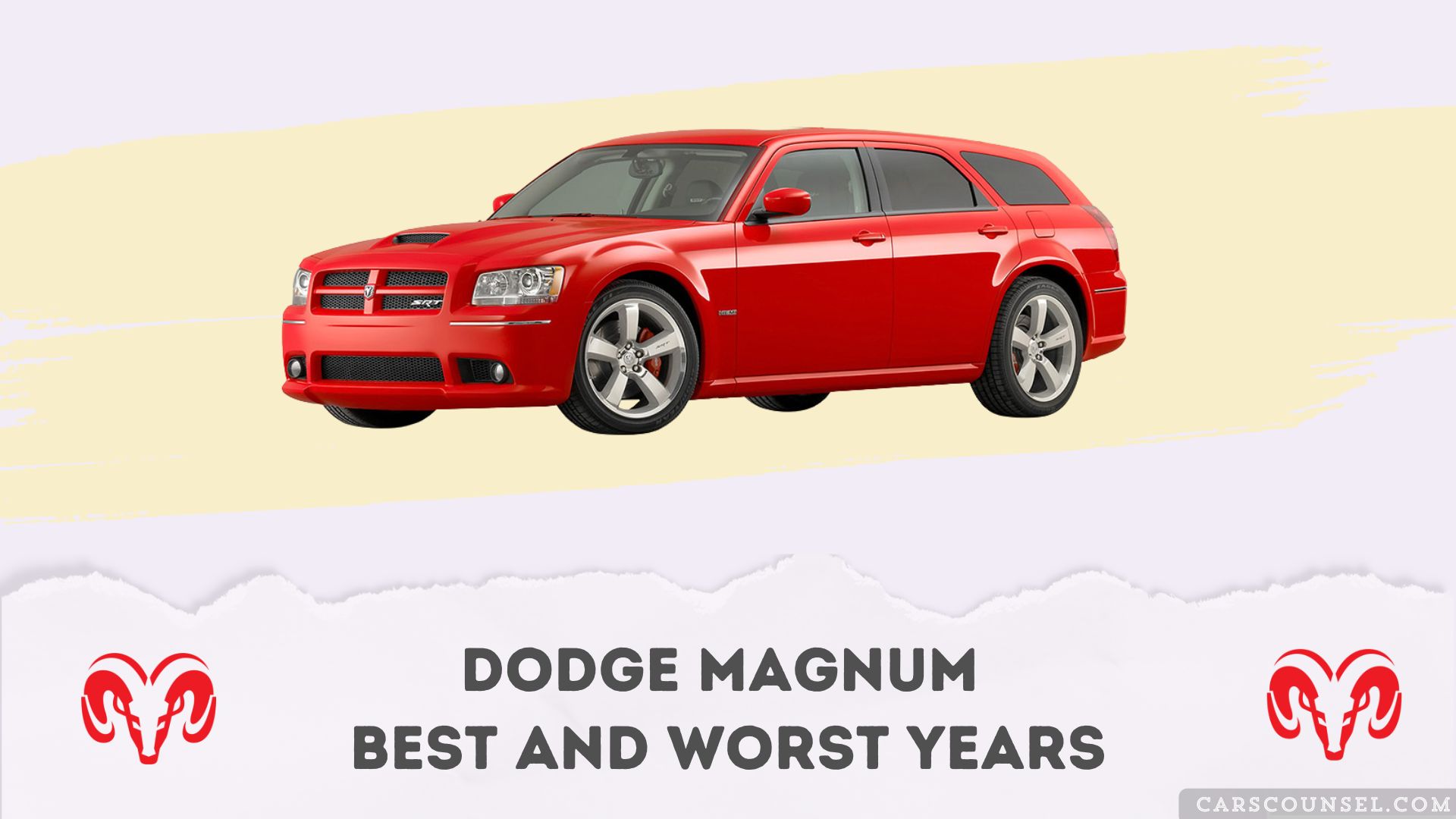
This article breaks down the best and worst model years based on reliability, performance, owner complaints, and long-term dependability. Understanding which years to pursue and which to avoid can save you from costly repairs and frustration.
Quick Navigation
Dodge Magnum Generational Overview
First Generation (1978-1979)
The first generation Magnum was introduced for 1978 to supplement the Dodge Charger and was sold in two forms, the XE and the GT. It was the last vehicle to use the long-running Chrysler B platform. The model was a complete failure with only 80,000 units sold in two years of production, criticized as a muscle car with no muscle.
Second Generation (2005-2008)
The modern Magnum debuted for 2005, becoming the first full-size American station wagon produced since the Chevrolet Caprice and Buick Roadmaster Estate wagons in 1996. Built at the Brampton Assembly Plant in Ontario, Canada, the Magnum was offered with multiple engine options including a 2.7-liter V6, 3.5-liter V6, 5.7-liter HEMI V8, and a 6.1-liter HEMI V8 in the SRT8 model. All-wheel drive became an option in 2005 on SXT and RT models. The SRT8, AWD SXT, and RT models used a Mercedes-Benz-derived 5-speed automatic transmission, while other models used a four-speed automatic. A total of 184,299 units were sold across all four model years.
Best Years for the Dodge Magnum
The 2007 and 2008 Dodge Magnum models represent the most refined versions of this sports wagon.
2008 Dodge Magnum
The 2008 model year benefited from three years of production refinements and improvements. RepairPal gives it a reliability rating of 4 out of 5 stars, ranking it sixth out of 13 among fullsize cars. The 2008 Dodge Magnum came with a basic 3-year/36,000-mile warranty and a lifetime powertrain warranty for non-SRT trims. Used models have demonstrated durability, with owners reporting 50,000 miles with minimal issues.
2007 Dodge Magnum
The 2007 model year offered improved build quality compared to earlier years and maintained the full range of engine options. This year avoided many of the early production issues that plagued the 2005 model while offering better overall refinement.
2006 Dodge Magnum SRT8
The 2006 model year introduced the SRT8 variant with a 425-horsepower 6.1-liter HEMI engine. The bulk of SRT8 production occurred in 2006, with 2,970 units built, representing 71.9 percent of total SRT8 production. This year offered peak performance without the recalls that affected some later models.
Worst Years for the Dodge Magnum
2005 Dodge Magnum
The 2005 model year was the worst Dodge Magnum year produced. It logged more than 600 consumer complaints and seven recalls according to NHTSA.gov. The most-reported problem for 2005 was that the gear shift would stick in park. As the first year of production, the 2005 model suffered from initial build quality issues and unresolved engineering problems.
2008 Dodge Magnum (Specific Issues)
While the 2008 model year showed overall improvement, it still received five NHTSA recalls and a JD Power reliability rating of only 2.5 out of 5.0. Certain 2008 models manufactured between December 19, 2007 and March 12, 2008 had missing torque retention crimps on rear axle hub nuts. This defect could cause the halfshaft to disengage from the wheel hub.
Common Problems Across the Dodge Magnum Lineup
Gear Shifter Problems
The gear shift sticking in park was the most-reported problem for the 2005 model year. The gearshift cable may become disengaged from the steering column mounting bracket on models built with the police package, causing an incorrect transmission gearshift position display. This problem can cause the vehicle to move on its own, increasing collision risk.
Ignition Problems
Certain Dodge Magnum models manufactured between May 23, 2007 and May 12, 2008 were recalled due to ignition problems. The ignition key (FOBIK) may become stuck between two operating modes or independently move from one position to the next. If the ignition goes to the accessory position while the vehicle is in motion, the engine may shut down along with safety systems such as air bags, power steering, and power braking.
Transmission Slipping
After initial start and for about five minutes afterwards, the transmission may slip in any gear from 1 to 3. The most noticeable symptom occurs when in third gear and accelerating lightly, where RPMs gradually increase but speed does not increase. When driving in overdrive and stomping on the gas, the RPMs may redline without appropriate acceleration.
Airbag Deployment Issues
Certain model year 2005-2007 Dodge Magnum vehicles were recalled because upon deployment of the driver side frontal air bag, excessive internal pressure may cause the inflator to rupture. This defect affects safety during collisions and requires immediate attention.
Suspension and Brake Issues
Suspension clunks and brake pedal vibration degrade comfort and safety, typically due to worn chassis parts or warped brake components. These issues become more common as the vehicle accumulates mileage.
Cooling System and Oil Consumption
Cooling system leaks and high oil consumption signal wear or neglect, potentially leading to overheating, emissions issues, or engine failure. Regular maintenance is necessary to prevent these problems from escalating.
Rear Axle Hub Problems
The 2008 models with missing torque retention crimps may experience loose rear axle hubs. This allows the halfshaft to disengage from the wheel hub, which can depower the vehicle and lead to a collision.
Reliability Breakdown by Year
2008 Dodge Magnum Reliability Rating
The 2008 Dodge Magnum received a JD Power reliability rating of 2.5 out of 5.0, which is low. RepairPal gives it a reliability rating of 4 out of 5 stars, ranking it sixth out of 13 among fullsize cars. The model had five NHTSA recalls but impressed many drivers with how easy it was to maintain. Rear axle hub issues affected models manufactured between December 19, 2007 and March 12, 2008.
2007 Dodge Magnum Reliability Rating
The 2007 model year showed improved reliability over earlier years but still faced recalls related to gearshift cable disengagement on police package models. Ignition problems affected models manufactured between May 23, 2007 and May 12, 2008, where the ignition key could become stuck or independently move between positions. The 2007 model year also faced the airbag inflator rupture recall that affected multiple Dodge models.
2006 Dodge Magnum Reliability Rating
The 2006 model year introduced the SRT8 variant and showed improvements over the problematic 2005 launch year. This year faced fewer recalls than 2005 but still experienced gearshift cable issues on police package models. The 2006 model year also fell under the airbag inflator rupture recall affecting 2005-2007 Magnum vehicles.
2005 Dodge Magnum Reliability Rating
The 2005 model year was the worst for reliability, logging more than 600 consumer complaints and seven recalls. The gear shift sticking in park was the most-reported problem. As the first year of production, the 2005 model suffered from initial build quality issues and unresolved engineering problems that were later addressed in subsequent years.
Warranty & Ownership Costs
The 2008 Dodge Magnum came with a basic 3-year/36,000-mile warranty, a lifetime powertrain warranty for non-SRT trims, and a 5-year/100,000-mile rust-through warranty. Despite receiving low reliability ratings, the Magnum impressed many drivers with how easy it was to maintain.
Used Dodge Magnum prices for the second generation range from $2,780 to $29,947, depending on condition, mileage, and trim level. Maintenance costs remain reasonable compared to other performance wagons, though transmission and electrical repairs can be expensive when they occur.
The Mercedes-Benz-derived 5-speed automatic transmission used in SRT8, AWD SXT, and RT models may require specialized service and higher repair costs than the four-speed automatic. Buyers should budget for potential transmission work, especially on higher-mileage examples.
Buying Guide: What to Look For
Best Years to Buy
The 2007 and 2008 model years offer the best value for used buyers, with improved reliability and fewer initial production issues. The 2006 SRT8 represents the best performance option with 71.9 percent of total SRT8 production occurring that year.
Years to Avoid
Avoid the 2005 model year due to more than 600 consumer complaints and seven recalls. The gear shift sticking in park issue makes this year particularly problematic.
Key Components to Inspect
Check the gear shifter operation carefully, ensuring it does not stick in park or display incorrect transmission positions. Inspect the ignition system, particularly on 2007-2008 models manufactured between May 23, 2007 and May 12, 2008. Test drive the vehicle for at least five minutes to check for transmission slipping in gears 1 through 3.
Expected Mileage Thresholds
Used Dodge Magnums have demonstrated durability, with owners reporting 50,000 miles with minimal issues when properly maintained. Check for suspension wear, brake pedal vibration, cooling system leaks, and high oil consumption on higher-mileage examples.
Known Trouble Spots
Run an internet search for Dodge Magnum recalls and verify that all necessary modifications were performed on the vehicle. Obtain a vehicle history report using the VIN to check for accident damage, previous repairs, and maintenance records. Have a trusted professional perform a pre-purchase inspection to identify potential issues before buying.
When looking at performance cars, make sure to check out our guides on models like the Dodge Caliber, Dodge Avenger, Dodge Challenger and Dodge Nitro. Knowing which model years to target and which to avoid is crucial. Our expert reviews break down these models, providing insights into the years that are celebrated for their engineering excellence and driving satisfaction, as well as those that are best to avoid due to potential issues.
FAQs
Is the Dodge Magnum reliable?
The Dodge Magnum has mixed reliability, with RepairPal giving the 2008 model a 4 out of 5 star rating while JD Power rates it 2.5 out of 5.0. Despite low reliability ratings, many drivers found the Magnum easy to maintain when properly cared for.
What year of the Dodge Magnum is most dependable?
The 2008 model year is the most dependable, benefiting from three years of production refinements and receiving a RepairPal reliability rating of 4 out of 5 stars. The 2007 model year also offers good dependability with improved build quality over earlier years.
What year should you avoid?
Avoid the 2005 Dodge Magnum, which logged more than 600 consumer complaints and seven recalls. The gear shift sticking in park was the most-reported problem for this first production year.
What are the most common problems?
The most common problems include gear shifter issues, transmission slipping, ignition problems, airbag deployment defects, suspension clunks, brake pedal vibration, cooling system leaks, and high oil consumption. The 2005 model year experienced the highest number of these issues.
How long does a Dodge Magnum last?
With proper maintenance, Dodge Magnums have demonstrated durability beyond 50,000 miles with minimal issues. Non-SRT trims came with a lifetime powertrain warranty, indicating Dodge’s confidence in the drivetrain longevity.
What engine options were available in the Dodge Magnum?
The Dodge Magnum was offered with four engine options: a 2.7-liter V6 producing 178 horsepower, a 3.5-liter V6 producing 250 horsepower, a 5.7-liter HEMI V8 producing 340 horsepower, and a 6.1-liter HEMI V8 in the SRT8 producing 425 horsepower.
Conclusion
The Dodge Magnum offers a unique combination of wagon practicality and performance, with the 2007 and 2008 model years representing the best choices for reliability and refinement. The 2005 model year should be avoided due to extensive complaints and recalls.
The 2006 SRT8 provides the best performance option for enthusiasts, while the 2008 model offers the most dependable overall package with a RepairPal rating of 4 out of 5 stars. Buyers should carefully inspect transmission operation, ignition systems, and verify all recalls have been addressed before purchase.