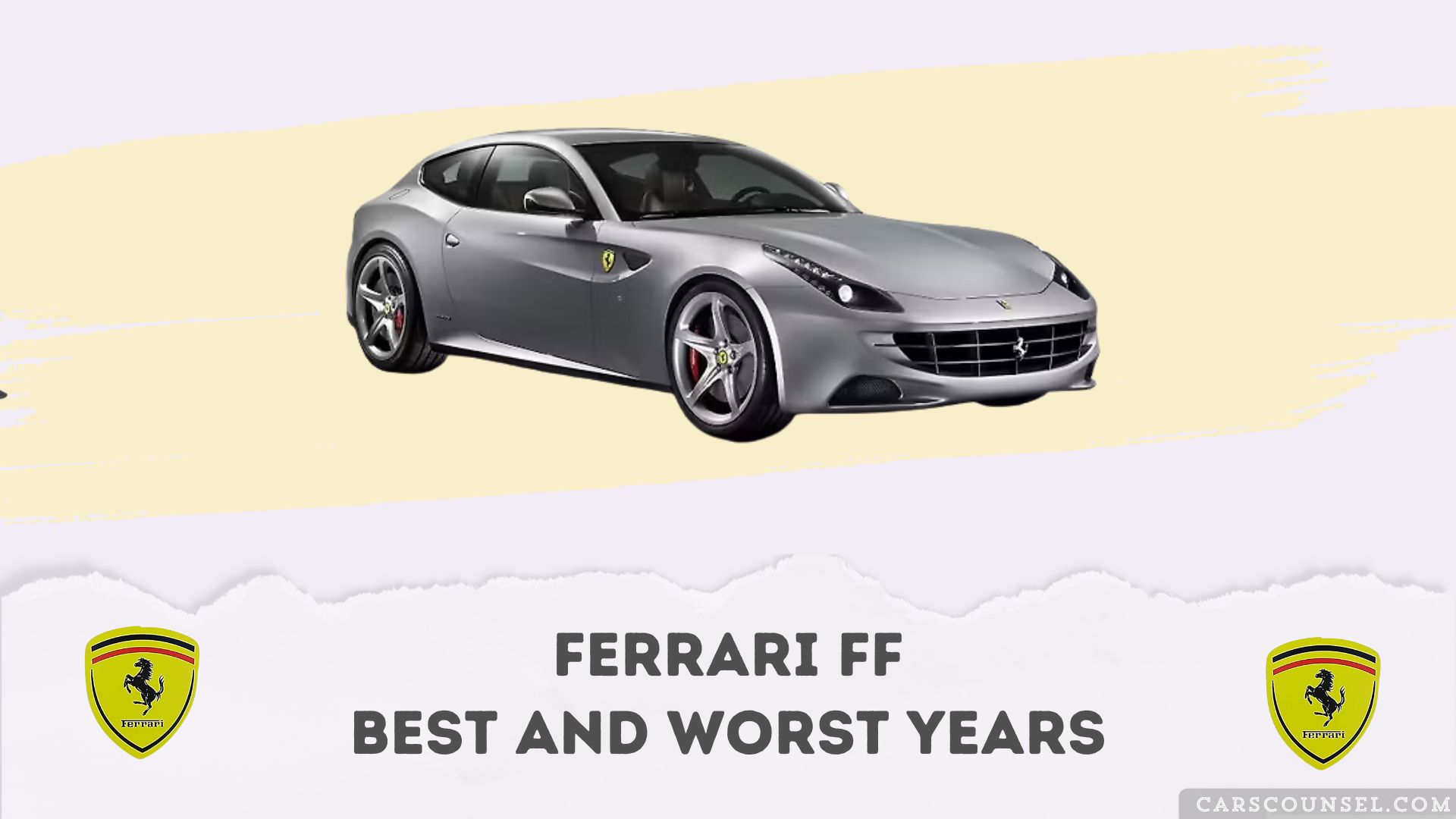
The best Ferrari FF model years are 2014 through 2016, offering refined build quality and sorted early-production quirks. Buyers should approach 2012 models carefully due to first-year manufacturing variations and specific safety recalls.
Rankings are comparative, meaning no exotic grand tourer is flawless. Maintenance history, storage conditions, and specialist care matter far more than the badge or model year when evaluating long-term dependability.
The FF features a single generation with a 6.3-liter V12 and unique all-wheel-drive system. Mechanical differences between years are minimal, making service records and pre-purchase inspections the most critical buying factors.
Quick Navigation
Best and Worst Ferrari FF Years at a Glance
| Model Year | Verdict | Main Reason | Buyer Guidance |
|---|---|---|---|
| 2015-2016 | Best Choice | Most refined late-production examples | Verify PTU and DCT service history |
| 2014 | Best Choice | Sorted mid-cycle production | Check for recall completion |
| 2013 | Good With Inspection | Past launch issues but verify PTU | Requires specialist pre-purchase inspection |
| 2012 | Approach Carefully | First-year quirks and safety recalls | Confirm Takata and brake recalls are fixed |
Key Takeaways
- 2014-2016 models represent the strongest choices for this grand tourer.
- 2012 models require careful inspection due to early-production risks and recalls.
- The 4RM all-wheel-drive system relies on a Power Transfer Unit (PTU) that is expensive to repair.
- Lithium-ion batteries require specialized maintenance to prevent costly replacements.
- Always verify that open safety recalls have been completed by a Ferrari dealer.
- A specialized pre-purchase inspection is mandatory for any used FF.
How We Evaluated the Ferrari FF Model Years
We analyze official recalls, manufacturer service campaigns, and long-term ownership data.
Consumer complaints help identify patterns, but they are not confirmed failure rates.
A recall does not automatically make a vehicle unreliable if the remedy is available.
Exotic cars require evaluating maintenance history and specialist repair complexity over raw complaint volume.
Best means comparatively stronger within a specific generation, not entirely trouble-free.
Best Ferrari FF Years
2015-2016 Ferrari FF
These final production years benefit from five years of manufacturing refinements. Ferrari addressed early assembly inconsistencies, making these the most sorted examples available.
The 6.3-liter V12 and 4RM all-wheel-drive system remain complex, but late-build quality is generally superior.
2014 Ferrari FF
Mid-cycle 2014 models avoided first-year teething issues while offering better market availability than final-year examples.
The mechanical specifications remain identical to later years. Buyers should prioritize examples with documented fluid services and climate-controlled storage history.
2013 Ferrari FF
As the second full production year, 2013 models moved past initial launch challenges. These cars offer strong value compared to later examples.
However, the Power Transfer Unit and dual-clutch transmission still require strict verification of maintenance and operating condition.
Best Year by Buyer Type
Best Overall Choice
The 2015 and 2016 model years provide the most refined ownership experience.
These late-production examples minimize first-year risks while delivering the full grand touring capability of the V12 shooting brake design.
Years to Approach Carefully
2012 Ferrari FF (Approach Carefully)
First-year 2012 models carry typical launch-production risks and were subject to notable safety recalls.
While many issues were resolved under warranty, buyers must verify that the Takata airbag and brake fluid reservoir cap recalls were properly completed.
Worst Ferrari FF Years
The FF does not have a universally bad year, but 2012 models present the highest risk profile.
Early production examples may exhibit build variations, and the concentration of safety recalls requires diligent VIN verification.
Buyers unwilling to verify extensive service histories should look to later years.
Ferrari FF Reliability by Generation
Single Generation (2012-2016)
The FF spans a single generation, replacing the 612 Scaglietti. It introduced Ferrari’s 4RM all-wheel-drive system.
This system uses a Power Transfer Unit mounted to the front of the engine. The 6.3-liter V12 and seven-speed dual-clutch transmission remained consistent throughout production.
Reliability depends heavily on maintenance rather than model-year redesigns.
Common Ferrari FF Problems
Power Transfer Unit (PTU) Failure
The 4RM all-wheel-drive system relies on a PTU that is prone to failure if engine oil leaks past the rear main seal.
Fluid contamination destroys the unit. Because the PTU is integrated into the engine block, repairs often require engine removal and cost well over $15,000.
Lithium-Ion Battery Vulnerability
The FF uses a lightweight lithium-ion battery to save weight. If the vehicle sits idle and the voltage drops, the battery can suffer permanent damage.
Replacements are highly expensive, making a specialized trickle charger mandatory for stored vehicles.
Brake Fluid Reservoir Cap Recall
Ferrari issued a recall because the brake fluid reservoir cap might not vent properly. This can create a vacuum, leading to brake fluid leaks.
This defect risks a potential loss of braking power. Ensure this specific recall has been addressed on any used example.
Dual-Clutch Transmission Sensors
While the Getrag seven-speed transmission is robust, sensors and hydraulic components can fail as mileage climbs.
Rough shifting or warning lights require immediate specialist diagnosis, as internal clutch pack replacements are labor-intensive and costly.
Repair-Cost Overview
| Problem | Commonly Affected Years | Approximate Repair Range | Important Notes |
|---|---|---|---|
| PTU Replacement | 2012-2016 | $15,000 – $30,000+ | Requires extensive labor, often engine-out |
| Lithium Battery | 2012-2016 | $2,000 – $4,000 | Preventable with proper maintenance charger |
| DCT Sensor/Service | 2012-2016 | $3,000 – $8,000 | Requires specialized Ferrari diagnostic tools |
Repair costs vary significantly by region, labor rates, and whether a dealer or independent specialist performs the work.
Exotic car repairs often require proprietary parts, making estimates approximate. Always obtain a specific quote for your vehicle’s configuration.
What to Check Before Buying a Used Ferrari FF
- Verify the VIN for open safety recalls, especially the brake cap and airbag campaigns.
- Inspect the PTU and engine mating surfaces for any signs of oil weeping or fluid contamination.
- Confirm the lithium battery holds a proper charge and has not suffered deep-discharge damage.
- Review service records for consistent annual fluid changes and clutch adaptation resets.
- Test the dual-clutch transmission for smooth engagement and seamless shifts under load.
- Check the Manettino switch and all steering wheel controls for proper electronic response.
- Arrange a pre-purchase inspection with a certified Ferrari technician or recognized exotic car specialist.
Related Buying Guides
- Ferrari 812 best and worst years – Explore Ferrari’s later front-engine V12 grand tourer.
- Ferrari California best and worst years – A look at the hardtop convertible alternative in the lineup.
- Ferrari 488 best and worst years – Research the mid-engine twin-turbo V8 successor era.
- Ferrari F40 best and worst years – Discover the legendary analog predecessor to modern supercars.
Frequently Asked Questions
Is the Ferrari FF reliable?
The FF is an exotic grand tourer requiring meticulous, expensive maintenance. While the V12 engine is robust, the complex 4RM system demands specialist care and substantial repair budgets.
What year of the Ferrari FF is most dependable?
The 2015 and 2016 model years are the most dependable. These late-production examples benefited from manufacturing refinements, offering the most reliable ownership experience within the generation.
What year should you avoid?
No year is strictly forbidden, but 2012 models require the most caution. First-year production carries higher risks, and buyers must rigorously verify that all safety recalls were completed.
What are the most common problems?
The most severe issue is Power Transfer Unit failure caused by oil seal leaks. Other concerns include lithium battery damage from improper storage and dual-clutch transmission sensor faults.
How long does a Ferrari FF last?
Longevity depends entirely on meticulous maintenance and climate-controlled storage. Well-maintained examples can accumulate high mileage, but major services make long-term ownership a significant financial commitment.
What is the price range for a used Ferrari FF?
Prices vary by mileage and condition. Early 2012 models generally start around $140,000, while pristine 2016 examples can exceed $200,000. Complete service history heavily influences market value.
Choosing the Right Ferrari FF Model Year
The 2014 through 2016 model years offer the strongest balance of refined build quality and sorted production processes.
Late-generation examples minimize first-year risks while delivering the unique V12 shooting brake experience.
Avoid 2012 models unless you have verified complete recall remediation and an impeccable service history.
The complex 4RM all-wheel-drive system and sensitive electronics require strict adherence to maintenance schedules.
Always secure a specialized pre-purchase inspection before buying. Verify the VIN for open campaigns and check the PTU for seal leaks.

