The Alfa Romeo Stelvio entered production in 2017 as the Italian automaker’s first luxury SUV. This compact crossover has been manufactured continuously since its debut, remaining in a single generation with ongoing updates and refinements through 2025.
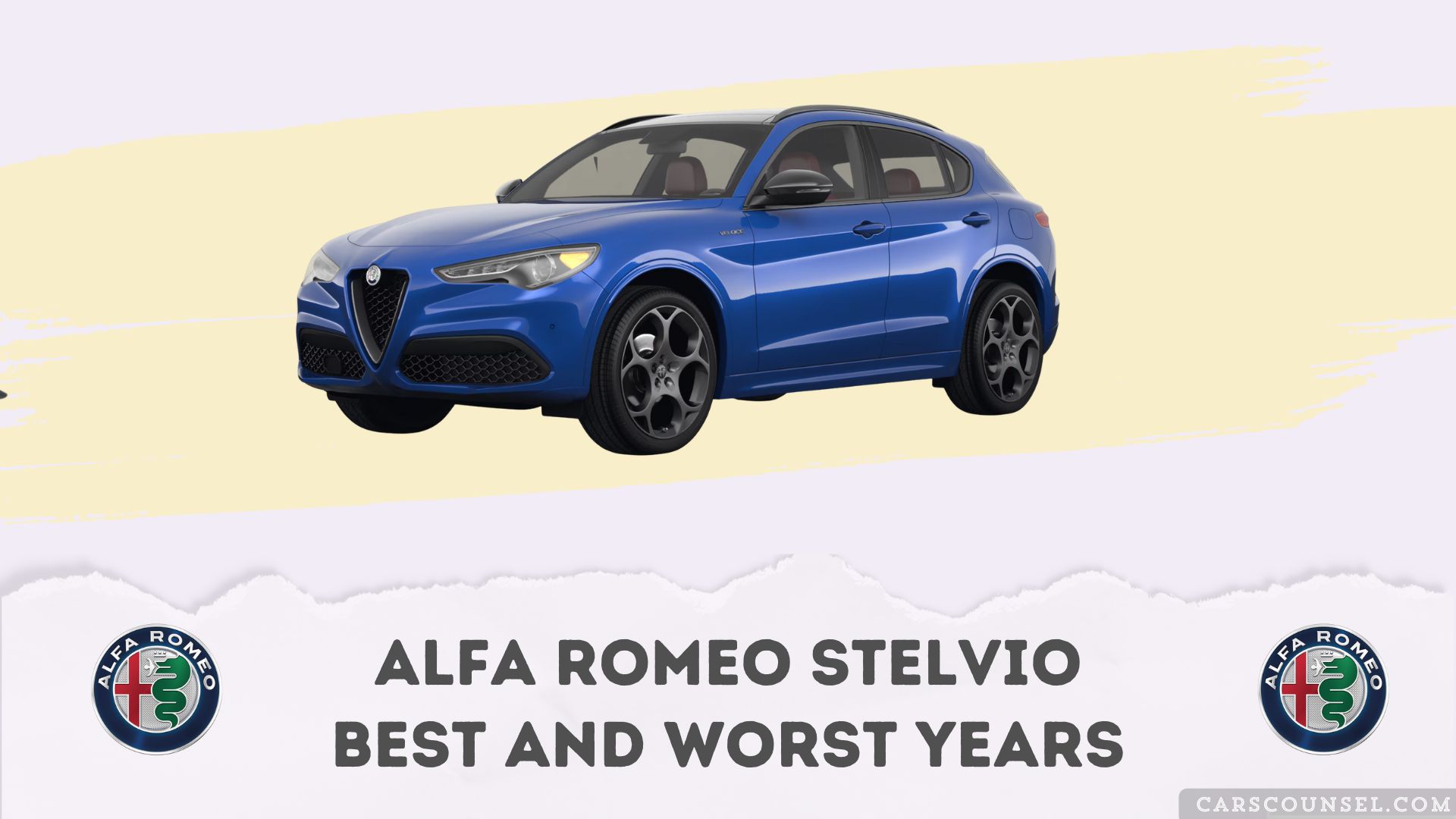
This article breaks down the best and worst model years of the Stelvio based on reliability ratings, owner complaints, recall history, and long-term dependability. Understanding which years to target and which to avoid will help buyers make informed decisions when purchasing a used or new Alfa Romeo Stelvio.
Quick Navigation
Alfa Romeo Stelvio Generational Overview
First Generation (2017 – Present)
The Stelvio debuted at the 2016 Los Angeles Auto Show with sales beginning in 2017. Built on the same platform as the Alfa Romeo Giulia sedan, it shares a rear-wheel-drive layout with an active transfer case for all-wheel-drive capability. The base model features a turbocharged 2.0-liter four-cylinder engine producing 280 horsepower and 306 lb-ft of torque.
The high-performance Quadrifoglio variant was introduced alongside the base model, featuring a twin-turbocharged 2.9-liter V6 engine producing 505 horsepower. This generation has received multiple mid-cycle updates including new trim levels, technology enhancements, and safety features. For 2025, the lineup was reduced significantly with the discontinuation of the Quadrifoglio variant.
Mid-Cycle Updates (2020 – 2024)
The 2020 model year introduced the Veloce trim level and special edition models. Interior refinements, updated infotainment systems, and enhanced driver assistance features were added across subsequent years. The 2023 and 2024 models received improved quality control measures, resulting in better reliability ratings.
Best Years for the Alfa Romeo Stelvio
The most reliable Stelvio model years offer strong performance with fewer reported problems and better long-term dependability.
2017: The inaugural model year established a solid foundation with fewer electronic issues compared to later years. First-year production models benefited from extensive pre-launch testing and received positive reviews for handling and performance characteristics.
2020: This model year showed significant improvement in build quality and reliability. The 2020 Stelvio addressed many early production issues and featured updated software for various vehicle systems, reducing complaints related to electronic malfunctions.
2021: Owners reported fewer problems with the Body Control Module and electrical systems. The 2021 model benefited from continued refinements to manufacturing processes and quality control standards.
2023: This model year received a high reliability score, indicating great reliability. The 2023 Stelvio demonstrated measurable improvements in initial quality and reduced warranty claims compared to earlier production years.
2024: Continuing the upward reliability trend, the 2024 model maintained its high reliability score. This year benefits from seven years of production experience and ongoing quality improvements across the manufacturing process.
Worst Years for the Alfa Romeo Stelvio
Certain model years experienced higher failure rates, more frequent recalls, and increased owner complaints.
2018: This model year recorded the highest number of owner complaints and reliability issues. Common problems included engine misfires causing heat damage, Body Control Module failures affecting multiple systems, coolant hose leaks, and adaptive cruise control malfunctions. The 2018 Stelvio was subject to multiple recalls addressing brake system software and electrical system defects.
2019: The second production year continued experiencing Body Control Module problems and received low reliability ratings. Brake system recalls affected 2019 models due to potential ABS Hydraulic Control Unit rotor shaft separation. Owners reported cruise control deactivation failures and ongoing electrical system malfunctions.
2022: This model year saw a dip in reliability scores. The 2022 Stelvio experienced brake failure complaints and continued issues with electronic systems. Multiple owners reported recurring problems that required extended repair times and dealer visits.
Common Problems Across the Alfa Romeo Stelvio Lineup
Body Control Module Failures
The Body Control Module manages various electrical functions including lights, wipers, and sensors. Failures cause inaccurate fuel gauge readings, malfunctioning indicators, and erratic behavior of multiple vehicle systems. This problem primarily affected 2018 and 2019 models but has been reported across other years.
Brake System Defects
Hard braking can cause the Anti-Lock Brake System Hydraulic Control Unit rotor shaft to separate. This defect reduces braking assist and eliminates ABS functionality, creating a significant safety concern. Models from 2019 through 2021 were recalled for this issue, requiring replacement of the HCU assembly.
Engine Misfires and Heat Damage
Engine misfires generate excessive heat that damages components including the catalytic converter. Affected vehicles experience sudden loss of power and failure to accelerate properly. The Power Control Module may require replacement to resolve misfiring issues.
Coolant and Fuel Leaks
Faulty coolant hoses cause leaks that lead to corrosion of electrical connectors. The 2020 and 2021 models experienced fuel line sensor housing cracks, creating fuel leaks and fire risks. These leaks require immediate attention to prevent further damage and safety hazards.
Adaptive Cruise Control Malfunctions
Brake System Module software prevents drivers from disabling adaptive cruise control after the traction control system detects specific wheel slip. This defect affects 2018 and 2019 models, requiring a software update to resolve. The malfunction creates dangerous situations when drivers cannot regain manual control.
Electrical System Problems
Windshield wipers malfunction intermittently, and headlights shut off randomly. The infotainment system experiences freezing and unresponsive touchscreen behavior. Electrical issues stem from corroded connections, faulty modules, and software glitches affecting multiple vehicle systems.
Liftgate Failures
The power liftgate fails to open or close properly due to mechanical and electrical faults. Owners report complete liftgate inoperability requiring expensive repairs or replacements. This problem appears most frequently in 2018 models.
12-Volt Battery Issues
The 12-volt battery experiences premature failure, representing a notable percentage of reported faults. Battery problems cause starting difficulties and trigger various electrical system warnings. Affected vehicles may require battery replacement more frequently than expected.
Reliability Breakdown by Year
2024 Alfa Romeo Stelvio Reliability Rating
The 2024 model maintains strong reliability with a high score. Build quality improvements and refined manufacturing processes contribute to better long-term dependability. Owners report satisfaction with performance and fewer warranty claims compared to earlier production years.
2023 Alfa Romeo Stelvio Reliability Rating
This model year received a high reliability score, indicating great reliability. This model year benefited from addressing issues identified in previous years. The 2023 Stelvio shows improved electrical system stability and reduced Body Control Module complaints.
2022 Alfa Romeo Stelvio Reliability Rating
Reliability declined in 2022 with a lower score. Owners reported brake system concerns and recurring electrical problems. This year represents a setback in the overall reliability improvement trend.
2021 Alfa Romeo Stelvio Reliability Rating
The 2021 model is considered one of the most reliable years with fewer complaints and recalls. Fuel leak recalls affected some units but were promptly addressed through service campaigns. Overall dependability improved significantly compared to 2018 and 2019 models.
2020 Alfa Romeo Stelvio Reliability Rating
The 2020 Stelvio ranks among the best years for reliability and owner satisfaction. This model year introduced quality improvements and addressed many early production defects. Brake system recalls affected 2020 models but represented isolated issues rather than widespread failures.
2019 Alfa Romeo Stelvio Reliability Rating
This year received low reliability ratings. Body Control Module failures plagued this year, causing problems with sensors, lights, and wipers. Multiple recalls addressed brake system software and hydraulic control unit defects.
2018 Alfa Romeo Stelvio Reliability Rating
The 2018 model year experienced the most problems and lowest reliability ratings. Engine troubles, cruise control issues, and liftgate malfunctions were frequently reported. This year should be avoided by used car buyers seeking dependable transportation.
2017 Alfa Romeo Stelvio Reliability Rating
The first production year established decent reliability despite being new to market. The 2017 Stelvio avoided many of the Body Control Module issues that affected 2018 and 2019 models. This year benefits from thorough pre-production testing and validation.
Warranty & Ownership Costs
The Alfa Romeo Stelvio includes a three-year unlimited-mileage warranty from new. Maintenance and repair costs total approximately $9,521 during the first 10 years of ownership. This figure beats the luxury SUV segment average.
Annual maintenance costs range from $408 in year one to $874 by year five. The probability of requiring a major repair within 10 years stands at 26.57%, which is better than similar vehicles. Extended warranty coverage is recommended for models outside the factory warranty period.
Five-year total ownership costs including depreciation, insurance, fuel, and maintenance reach $72,456. Repair costs vary significantly based on the specific issue, with some owners reporting bills between $301 and $750. Alfa Romeo covered 67% of repair costs for vehicles under warranty.
Buying Guide: What to Look For
Target the 2017, 2020, 2021, 2023, or 2024 model years for the best reliability and value. These years demonstrate fewer complaints and better long-term dependability than problematic model years.
Avoid 2018, 2019, and 2022 models due to documented reliability issues and higher repair frequencies. The 2018 year in particular should be passed over unless thoroughly inspected and priced accordingly to reflect potential problems.
Inspect the Body Control Module functionality by testing all lights, wipers, sensors, and gauge readings. Request maintenance records showing any BCM replacement or software updates addressing known defects.
Check for brake system recalls and verify completion of all service campaigns. Test brake pedal feel and listen for unusual noises during hard braking that might indicate hydraulic control unit problems.
Examine coolant hoses and fuel system components for signs of leaks or repairs. Look for corrosion around electrical connectors that might indicate previous coolant leak damage.
Review the complete service history for recurring electrical problems or repeated dealer visits. Multiple repair attempts for the same issue suggest underlying problems that may persist.
Consider models with lower mileage when purchasing 2018 or 2019 years, as age-related problems compound existing design defects. High-mileage examples of problematic years should be avoided entirely.
Request a pre-purchase inspection from an independent mechanic familiar with Alfa Romeo vehicles. Professional inspection identifies hidden problems and provides leverage for price negotiations.
When looking at performance cars, make sure to check out our guides on models like the Alfa Romeo 4C, Alfa Romeo Giulietta, Alfa Romeo Giulia Quadrifoglio and Alfa Romeo MiTo. Knowing which model years to target and which to avoid is crucial. Our expert reviews break down these models, providing insights into the years that are celebrated for their engineering excellence and driving satisfaction, as well as those that are best to avoid due to potential issues.
FAQs
Is the Alfa Romeo Stelvio reliable?
The Stelvio demonstrates good reliability in recent model years. Earlier production years, particularly 2018 and 2019, experienced more problems and lower reliability ratings.
What year of the Alfa Romeo Stelvio is most dependable?
The 2017, 2020, 2021, 2023, and 2024 model years offer the best dependability. The 2023 and 2024 years benefit from manufacturing improvements and receive the highest reliability scores.
What year should you avoid?
Avoid the 2018 model year due to widespread engine, electrical, and brake system problems. The 2019 and 2022 years also experienced higher failure rates and should be approached with caution.
What are the most common problems?
Common problems include Body Control Module failures, brake system defects, engine misfires, coolant leaks, and electrical malfunctions. The 12-volt battery experiences premature failure in a notable percentage of cases.
How long does an Alfa Romeo Stelvio last?
With proper maintenance, the Stelvio can provide reliable service over its ownership period. The probability of major repairs within 10 years is better than average for luxury SUVs. Regular servicing and addressing recalls promptly extends vehicle lifespan.
Are Stelvio Quadrifoglio models more reliable?
The Quadrifoglio variant shares similar reliability characteristics with base models but features more complex mechanical systems. The high-performance V6 engine requires more frequent maintenance and higher repair costs. The Quadrifoglio was discontinued after the 2024 model year.
Conclusion
The Alfa Romeo Stelvio offers strong performance and Italian styling in the compact luxury SUV segment. The best years for reliability are 2017, 2020, 2021, 2023, and 2024, with recent models showing significant quality improvements reflected in high reliability scores.
Buyers should avoid 2018 and 2019 model years due to documented Body Control Module failures, brake system defects, and electrical problems that generated numerous owner complaints and recalls. The 2022 year also represents a decline in dependability.
Overall, the Stelvio demonstrates better-than-average reliability for luxury SUVs when targeting the right model years. Proper maintenance and addressing all recalls ensures the best ownership experience. Used buyers should prioritize 2020 and newer models for optimal reliability and reduced repair risks.

