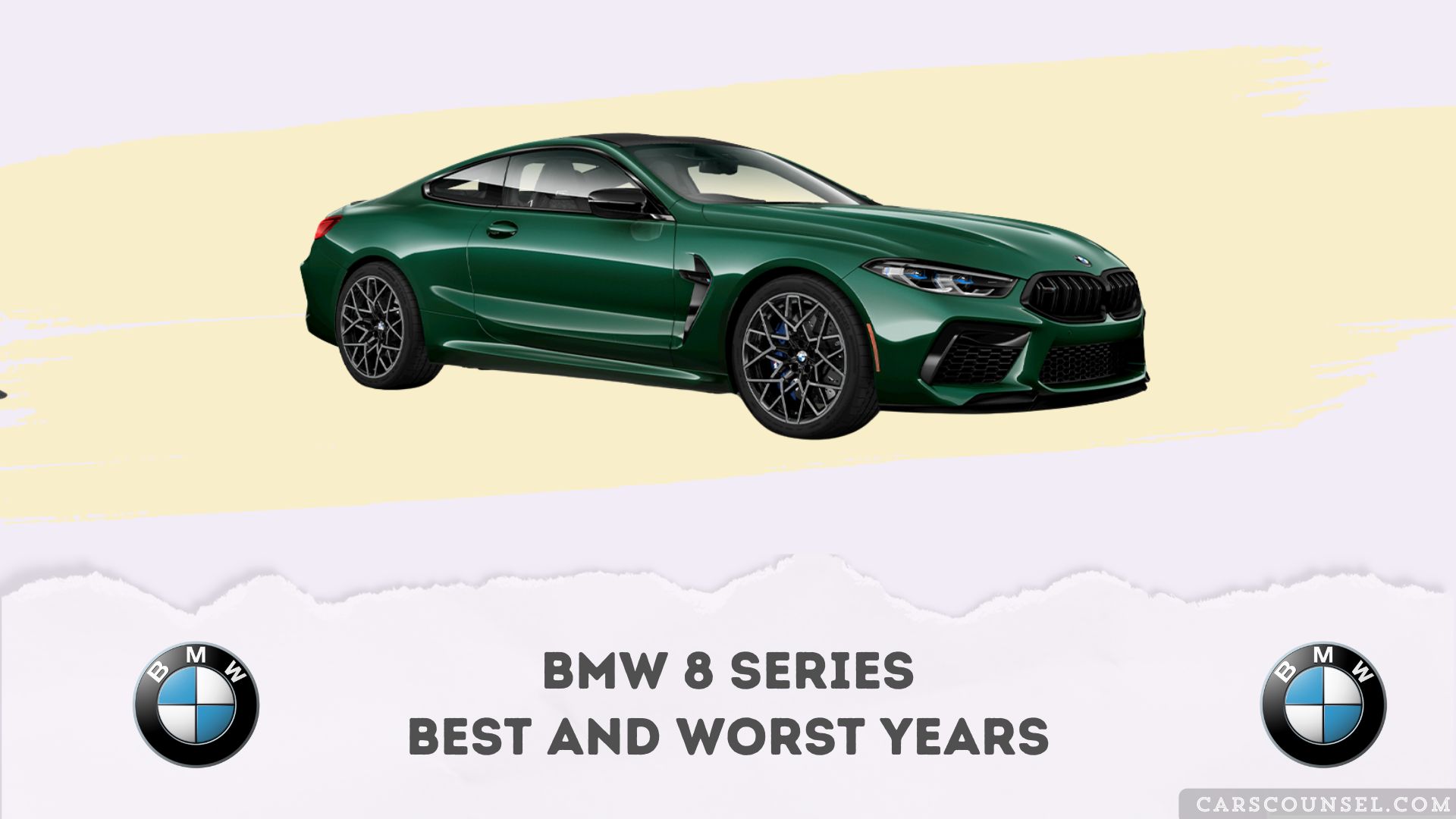
The 2024 BMW 8 Series is the best late-generation choice, offering top-tier reliability scores and refined production. The 2022 and 2023 models are also good choices, provided all recall work is completed.
Model years from 2019 through 2021 require a careful approach due to higher recall volumes, including brake booster and electrical concerns.
Rankings are comparative, and no luxury grand tourer is flawless. Maintenance history, condition, and verified recall completion matter more than mileage alone.
Meaningful differences exist between the inline-six 840i and the twin-turbo V8 M850i. The Gran Coupe four-door offers more practicality, while the coupe and convertible prioritize traditional grand touring style.
Quick Navigation
Best and Worst BMW 8 Series Years at a Glance
| Model Year | Verdict | Main Reason | Buyer Guidance |
|---|---|---|---|
| 2024 | Best Late-Generation Choice | Top J.D. Power segment ranking | Strongest modern option |
| 2022–2023 | Good Choice | Improved production maturity | Verify recall completion |
| 2019–2021 | Approach Carefully | Higher recall volume | Inspect brake and electrical systems |
| 2025–2026 | Too New to Judge | Limited long-term ownership data | Wait for reliability patterns |
Key Takeaways
- Best Choice: 2024 models rank highest in their luxury segment for initial quality.
- Caution Years: 2019 through 2021 models have more recalls, including brake components.
- Rollaway Risk: Certain 2021–2023 models were recalled for driveshaft and transmission issues.
- Powertrain: The inline-six 840i is generally less complex than the V8 M850i.
- VIN Check: Always verify that all NHTSA recalls are completed before purchasing.
How We Evaluated the BMW 8 Series Model Years
Our analysis reviews official NHTSA recalls, manufacturer service campaigns, and verified owner complaints.
We separate confirmed mechanical defects from isolated owner reports and evaluate powertrain differences across the lineup.
Complaints are not failure rates, and a recall does not automatically make a vehicle unreliable if repaired properly.
Recent model years have less ownership history, so long-term durability remains unproven for the newest releases.
Best BMW 8 Series Years
2024: Best Late-Generation Choice
The 2024 model year represents the most mature version of the modern grand tourer.
J.D. Power ranked it first in the Large Premium Car segment for initial quality.
Most early-production electrical and software gremlins were resolved by this point in the generation cycle.
Buyers should still verify that any outstanding service campaigns are addressed by a BMW dealer.
2022–2023: Good Choice
These model years offer a strong balance of modern technology and improved build maturity.
They avoid some of the first-year growing pains seen in the 2019 launch models.
However, certain 2022 and 2023 vehicles are included in a driveshaft wear recall.
Confirming the completion of this specific safety repair is mandatory before finalizing a purchase.
Best Year by Buyer Type
Best Overall: 2024
The 2024 model year provides the most dependable ownership experience based on current industry quality studies.
It suits buyers who want modern luxury without the higher risk of early-generation software faults.
Best Performance Configuration: M850i xDrive
The twin-turbo V8 M850i offers exceptional grand touring performance when properly maintained.
Buyers prioritizing driving dynamics should seek low-mileage examples with complete dealership service records.
Years to Approach Carefully
2019–2021: Approach Carefully
The first three years of the modern generation experienced a higher volume of official recalls.
Issues include the integrated brake booster, 48-volt starter-generator connections, and early software bugs.
These model years are not strictly forbidden, but they demand rigorous pre-purchase inspections.
Ensure every recall has been performed and test the braking system thoroughly during a cold start.
BMW 8 Series Reliability by Generation
Modern Generation (2019–Present)
The modern 8 Series shares underlying architecture with the BMW 7 Series sedan.
While the platform is sophisticated, the complex electronics require strict adherence to BMW software updates.
Later production years within this generation show noticeably better reliability than the 2019 debut models.
Classic Generation (1991–1997)
The original E31 generation is now a collectible classic rather than a daily driver.
Parts availability and specialized knowledge are required to maintain these older V8 and V12 models.
For practical used-car buyers, the modern generation is the only realistic option.
Common BMW 8 Series Problems
Integrated Brake Booster
Several model years between 2019 and 2024 were recalled for the integrated brake booster.
A manufacturing defect can lead to reduced braking power or a complete loss of power assist.
BMW dealers replace the faulty component free of charge if the vehicle is covered by the campaign.
Driveshaft and Rollaway Risk
Certain 2021 through 2023 models face a recall regarding the transmission parking lock and driveshaft.
Improperly engaged parking mechanisms can allow the vehicle to roll away on inclines.
A software update and physical inspection of the drivetrain components resolve this safety concern.
48-Volt Electrical System
Early models experienced issues with the 48-volt mild-hybrid starter-generator system.
Poor connections could cause electrical resistance, potentially leading to a loss of propulsion or stalling.
This issue was primarily addressed through targeted recalls and revised assembly procedures at the factory.
What to Check Before Buying a Used BMW 8 Series
- Run the 17-character VIN to verify all NHTSA recalls are completed.
- Confirm the integrated brake booster recall has been addressed by an authorized dealer.
- Review the service history for regular oil changes and differential fluid maintenance.
- Test the transmission for smooth shifting and ensure the parking pawl engages firmly.
- Scan the iDrive infotainment system for pending software updates or frozen modules.
- Inspect the 48-volt battery system for any stored fault codes.
- Arrange an independent pre-purchase inspection with a BMW specialist.
Related Buying Guides
- BMW 4 Series Best and Worst Years: A more compact and accessible coupe alternative for buyers who do not need six-figure grand touring prestige.
- BMW M5 Best and Worst Years: Offers similar twin-turbo V8 performance to the M8 but with the practicality of a four-door sports sedan.
Frequently Asked Questions
What is the most reliable BMW 8 Series year?
The 2024 model year is currently the most reliable, ranking first in its luxury segment for initial quality.
Are BMW 8 Series models expensive to maintain?
Yes, as a flagship luxury grand tourer, routine maintenance and out-of-warranty repairs are significantly more expensive than average.
Did the BMW 8 Series have a 2018 model year?
No, the modern 8 Series debuted in the United States for the 2019 model year.
What is the main difference between the 840i and M850i?
The 840i uses a turbocharged inline-six, while the M850i features a more complex and powerful twin-turbo V8.
Is the BMW 8 Series Gran Coupe a four-door?
Yes, the Gran Coupe body style adds two extra doors and more rear passenger space compared to the standard coupe.
How do I check for open recalls?
Enter the vehicle’s VIN on the official NHTSA website to see if any safety campaigns remain incomplete.
Which BMW 8 Series Year Should You Buy?
The 2024 BMW 8 Series is the strongest choice for used buyers seeking top-tier initial quality and refined production.
Model years from 2022 and 2023 are also good options, provided all driveshaft and software recalls are verified.
Buyers should approach 2019 through 2021 models carefully, ensuring all brake and electrical recalls are fully resolved.
Always secure a comprehensive pre-purchase inspection and verify the complete service history before finalizing your purchase.

