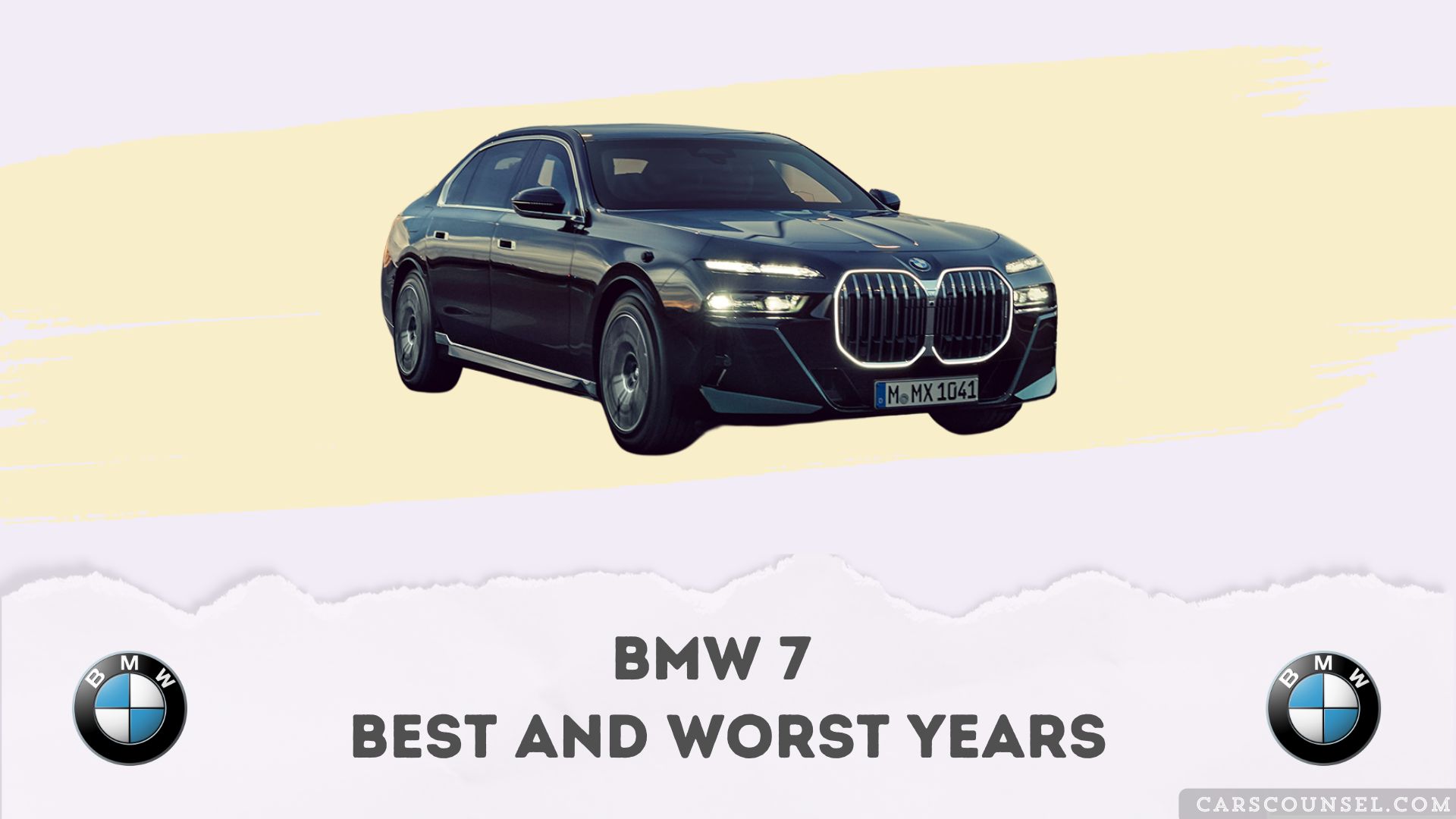
The best BMW 7 Series years for most used buyers are 2016 to 2022, specifically the 740i models equipped with the reliable B58 inline-six engine. These years offer modern luxury with comparatively lower powertrain risk.
Conversely, buyers should avoid the 2002 to 2008 models. These years are plagued by expensive V8 engine failures, early iDrive glitches, and complex electrical issues that lead to massive repair bills.
Rankings are comparative, and no luxury flagship is flawless. Maintenance history, configuration, and current condition matter more than mileage alone. Always verify open recalls before purchasing.
Meaningful differences exist between engine configurations. The inline-six models generally offer superior longevity, while the V8 variants introduce severe reliability risks and high repair costs across multiple generations.
Quick Navigation
Best and Worst BMW 7 Series Years at a Glance
| Model Year | Verdict | Main Reason | Buyer Guidance |
|---|---|---|---|
| 2023–Present | Too New to Judge | Limited long-term data | Wait for reliability patterns to emerge. |
| 2016–2022 | Best Late-Generation Choice | B58 inline-six is robust | Prioritize 740i models; inspect air suspension. |
| 2013–2015 | Mixed | Updated V8s are better but complex | 740i remains the safer used option. |
| 2009–2012 | Approach Carefully | Early N63 V8 is problematic | Avoid 750i; demand extensive service records. |
| 2002–2008 | Avoid | Severe V8 and electrical flaws | Look at newer or older alternatives. |
| 1995–2001 | Best Enthusiast Choice | Classic E38 driving dynamics | Buy only with strict maintenance proof. |
| 1977–1994 | Good With Inspection | Collector-grade classics | Require a specialist pre-purchase inspection. |
Key Takeaways
- The 2016–2022 models are the strongest modern choices, especially with the inline-six engine.
- Avoid the 2002–2008 generation due to catastrophic V8 engine and transmission repair costs.
- Engine choice dictates reliability: the B58 inline-six is vastly superior to the N62 and early N63 V8s.
- The 1995–2001 generation is an enthusiast favorite but requires a dedicated maintenance budget.
- Recent models lack sufficient long-term ownership data for a definitive reliability verdict.
- Always check the VIN for open recalls and air suspension service history before buying.
How We Evaluated the BMW 7 Series Model Years
Our analysis reviews official NHTSA recalls, manufacturer service campaigns, and verified owner complaint patterns. We separate genuine mechanical defects from normal luxury-car maintenance.
Complaints are not confirmed failure rates. A recall does not automatically make a year unreliable, and recent models simply have less road exposure. Best means comparatively stronger, not flawless.
Best BMW 7 Series Years
2016–2022 (G11/G12 Generation)
The sixth generation marks a significant return to form for BMW reliability. The 740i models equipped with the B58 turbocharged inline-six engine are exceptionally robust. This powertrain avoids the severe heat and timing issues of the V8s.
Buyers should still budget for potential air suspension and electronic sensor replacements. However, compared to earlier V8 flagships, the inline-six models offer a much safer ownership experience.
1995–2001 (E38 Generation)
The E38 is widely celebrated as the ultimate driver’s luxury sedan. The inline-six and early V8 configurations offer analog feedback that modern cars lack. It remains a top choice for dedicated enthusiasts.
Long-term survival depends entirely on meticulous upkeep. Cooling systems, aging wiring harnesses, and early cylinder liner issues require immediate attention. Buy only from collectors with exhaustive service records.
Best Year by Buyer Type
Best Overall: 2019 BMW 740i
The 2019 model year benefits from the G11 mid-cycle refresh and a mature B58 engine assembly. It balances modern technology with proven inline-six durability, making it the smartest modern flagship purchase.
Best Enthusiast Choice: 1999 BMW 740i (E38)
The late-production E38 resolves early V8 timing chain guide issues. It offers legendary handling and timeless styling, provided the buyer accepts the reality of maintaining a 25-year-old German luxury car.
Years to Approach Carefully
2013–2015 (F01/F02 LCI)
BMW introduced the N63TU update to address earlier V8 failures. While improved, the twin-turbo V8 still runs extremely hot, leading to premature battery, injector, and gasket wear.
The 740i models from these years use the N55 inline-six, which is considerably more reliable. If you must buy this generation, prioritize the six-cylinder variants and verify cooling system service.
2009–2012 (F01/F02 Early Production)
The debut years of the fifth generation introduced the original N63 V8. This engine is notorious for excessive oil consumption, timing chain failures, and hot-start issues.
Repairing these engines often requires removal from the engine bay, leading to astronomical labor costs. Unless the engine has been fully rebuilt with updated parts, these years carry substantial financial risk.
Worst BMW 7 Series Years
2002–2008 (E65/E66 Generation)
This generation represents the lowest point in 7 Series reliability. The N62 V8 suffers from catastrophic coolant transfer tube leaks and valve stem seal failure. Oil consumption is often severe.
Additionally, the early iDrive infotainment system and complex fiber-optic networks are prone to failure. A single module fault can disable multiple vehicle systems, making diagnosis incredibly difficult.
The automatic transmissions also experience mechatronic sleeve leaks and valve body wear. Combined, these flaws make these years a strict avoid for anyone without a massive repair reserve.
BMW 7 Series Reliability by Generation
G70 (2023–Present)
The current generation features advanced mild-hybrid systems and the new S68 V8. Long-term durability remains unproven. Buyers should lease or rely on certified pre-owned warranties until reliability patterns emerge.
G11/G12 (2016–2022)
This generation restored the brand’s engineering reputation. The CLAR platform is stiff, and the B58 inline-six is arguably BMW’s most reliable modern engine. V8 models remain complex, but the six-cylinder variants are excellent daily drivers.
For those needing more space, the related BMW X7 shares this excellent architecture.
F01/F02 (2009–2015)
A turbulent era defined by the troubled N63 V8. The late-cycle refresh improved matters, but the inline-six models are the only truly sensible used purchases from this generation.
E65/E66 (2002–2008)
A styling and technology reset that introduced severe mechanical vulnerabilities. The integration of early network electronics and hot-running V8s created a perfect storm of reliability issues.
E38 (1995–2001)
The golden era of BMW luxury. While aging gracefully, these vehicles require specialist knowledge to maintain. They are best suited for weekend use rather than daily commuting.
Common BMW 7 Series Problems
V8 Engine Timing and Oil Issues
The N62 and early N63 V8 engines suffer from timing chain guide failure and excessive oil consumption. Repairs often require engine-out service, leading to thousands of dollars in labor.
Air Suspension Failures
Most modern 7 Series models use two-axle air suspension. The air struts and compressors typically fail between 80,000 and 120,000 miles. Replacement is expensive, though aftermarket options exist.
Coolant Transfer Tube Leaks
The N62 V8 features an internal coolant transfer tube made of plastic. It becomes brittle and leaks coolant into the engine valley, which can destroy the engine if not caught early.
iDrive and Electrical Gremlins
Early generations suffer from iDrive module failures and fiber-optic network loops. A single failing amplifier or Bluetooth module can cause the entire infotainment system to shut down.
What to Check Before Buying a Used BMW 7 Series
- Verify the VIN for open safety recalls and service campaigns.
- Demand exhaustive maintenance records, especially for V8 timing chains and cooling systems.
- Test the air suspension by raising and lowering the vehicle in all corners.
- Scan for hidden module codes using a BMW-specific diagnostic tool.
- Inspect the engine valley for coolant residue or oil sludge.
- Check for active transmission adaptation faults or harsh shifting.
- Arrange an independent pre-purchase inspection with a European specialist.
Related Buying Guides
- BMW 5 Series best and worst years: A smaller, more practical alternative that shares many powertrains with the 7 Series but often at a lower maintenance cost.
- BMW X5 years to avoid: If you prefer SUV utility over sedan luxury, this guide covers the mid-size sibling that shares the CLAR platform and B58 engine.
- BMW 8 Series best and worst years: For buyers who want flagship performance and grand-touring style without the four-door footprint.
Frequently Asked Questions
Which BMW 7 Series year is the most reliable?
The 2019 BMW 740i is among the most reliable. It features the mature B58 inline-six engine and avoids the severe V8 complications found in other configurations and older generations.
Is the BMW 7 Series expensive to maintain?
Yes, maintenance and repair costs are high. Air suspension, complex electronics, and specialized V8 engine repairs require premium parts and specialist labor, leading to significant ownership expenses.
Should I avoid the V8 BMW 7 Series models?
For most used buyers, yes. The N62 and early N63 V8 engines carry severe financial risks. The inline-six models offer a much safer and more predictable ownership experience.
Do all BMW 7 Series models have air suspension?
Most modern generations feature standard or optional air suspension. It provides a smooth ride but requires expensive replacements as the rubber air bags and compressors age.
Is the E38 7 Series a good daily driver?
The E38 is a legendary enthusiast car, but it is not ideal for daily driving. Aging plastics, cooling systems, and electronics require constant attention and a dedicated maintenance budget.
How long do BMW 7 Series engines last?
Longevity depends entirely on the engine and maintenance. The modern B58 inline-six can reach high mileage with proper care, while neglected V8s often require major rebuilds before 100,000 miles.
Choosing the Right BMW 7 Series Model Year
The smartest used 7 Series purchase is a 2016 to 2022 model equipped with the inline-six engine. These years deliver modern luxury without the catastrophic V8 repair bills of earlier decades.
Avoid the 2002 to 2008 models entirely. If you desire a classic, the E38 is a rewarding project car, but it demands strict upkeep. Always secure a specialist inspection before signing any paperwork.

