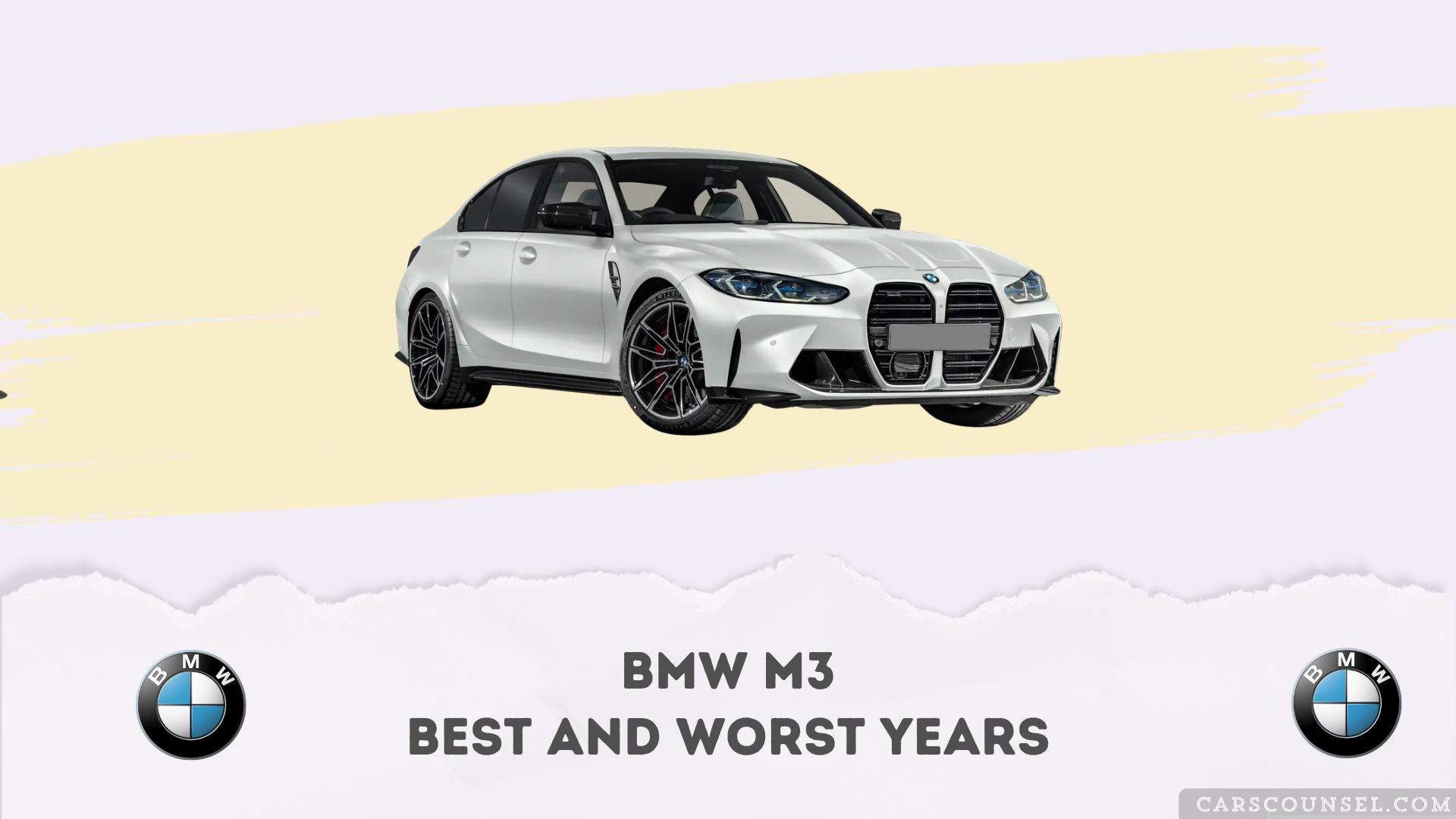
The best BMW M3 years include the 2011–2013 E92 V8 and the 2018 F80. These models offer sorted powertrains and engaging dynamics. Buyers should approach early 2001–2003 E46 and 2008–2010 V8 models carefully due to specific engine and transmission vulnerabilities.
Our rankings are comparative. No high-performance sports car is flawless, and the M3 requires strict maintenance. A thorough pre-purchase inspection and complete service history are essential for any used example.
Verdicts vary significantly by generation and powertrain. Naturally aspirated engines demand different maintenance than modern twin-turbo setups. Manual transmissions generally offer better long-term reliability than early automated manuals.
Quick Navigation
Best and Worst BMW M3 Years at a Glance
| Model Year or Range | Verdict | Main Reason | Buyer Guidance |
|---|---|---|---|
| 2011–2013 | Best Choice | Mature V8 platform with updated components | Seek manual transmission and service records |
| 2018 | Best Late-Generation Choice | Final, sorted year of the F80 twin-turbo | Verify cooling system and crank hub health |
| 2004–2006 | Good With Inspection | Iconic inline-six, but requires proactive maintenance | Inspect rod bearings, VANOS, and rear subframe |
| 2008–2010 | Approach Carefully | Early V8 models prone to expensive engine faults | Check throttle actuators and rod bearing replacement |
| 2001–2003 | Avoid | High risk of subframe, bearing, and SMG failures | Only for dedicated enthusiasts with repair budgets |
| 2021–Present | Too New to Judge | Modern performance with limited long-term data | Rely on warranty and certified pre-owned programs |
Key Takeaways
- The 2011–2013 and 2018 model years rank as our top choices for reliability and performance.
- Early E46 and E92 generations require strict inspection of rod bearings and chassis mounts.
- Manual transmissions are generally preferred over early SMG automated manuals for long-term durability.
- Recent G80 models remain too new to judge for long-term ownership costs.
- Always verify open recalls and complete service history before purchasing any M3.
How We Evaluated the BMW M3 Model Years
Our analysis reviews official recalls, manufacturer service campaigns, and long-term ownership data. We weigh powertrain differences, generation changes, and repair complexity.
Consumer complaints are not confirmed failure rates. A recall does not automatically make a year unreliable. Recent models have less ownership history, meaning long-term evidence remains limited. Best means comparatively stronger, not flawless.
Best BMW M3 Years
2011–2013 (E90/E92 Generation)
The late-production V8 models represent the peak of the naturally aspirated era. By 2011, the factory had addressed many early S65 engine teething issues. These years offer a spine-tingling exhaust note and sharp handling.
Buyers should prioritize examples with documented rod bearing and throttle actuator replacements. A manual transmission is highly recommended to avoid dual-clutch maintenance costs. When properly maintained, these are exceptional sports cars.
2018 (F80 Generation)
As the final model year of the F80 generation, the 2018 M3 benefits from several years of factory refinements. The twin-turbo S55 inline-six delivers massive horsepower and modern daily drivability.
While early F80 models struggled with cooling and crank hub concerns, the 2018 iteration is largely sorted. Verify that the crank hub has been inspected or upgraded, especially if the car was previously tuned.
Best BMW M3 Year by Buyer Type
Best Overall: 2012
The 2012 model year hits the sweet spot for the V8 generation. It balances modern usability with raw, naturally aspirated thrills, provided the critical engine components have been serviced.
Best Enthusiast Choice: 2006
The final year of the E46 generation remains a legend. The S54 inline-six is a masterpiece, but buyers must budget for immediate preventative maintenance, including rod bearings and subframe reinforcement.
Years to Approach Carefully
2008–2010 (Early E90/E92 V8)
The first years of the V8 M3 introduced the S65 engine, which suffered from premature rod bearing wear and failing throttle actuators. Repairs for these issues are expensive and require engine-out service.
If you choose these years, demand proof that the rod bearings and actuators were replaced with updated factory parts. Without this documentation, the financial risk is substantial.
2004–2006 (Late E46)
While better than the early E46 models, these years still require vigilant care. The rear subframe mounting points can crack under stress, and the VANOS system requires specialized attention.
These cars are rewarding but demand an owner who views engine oil changes and maintenance as a hobby. Budget for immediate baseline maintenance upon purchase to ensure safety.
Worst BMW M3 Years
2001–2003 (Early E46)
The earliest US-market E46 M3 models combine several expensive vulnerabilities. The early S54 engine is prone to catastrophic rod bearing failure, and the rear subframe is highly susceptible to cracking.
Additionally, the early SMG automated manual transmission suffers from frequent and costly pump failures. Unless you are a dedicated enthusiast with a massive repair budget, these years are best avoided.
BMW M3 Reliability by Generation
E30 (1986–1991)
The original legend is now a collector car. Reliability depends entirely on meticulous preservation. Parts are expensive, and finding a specialist is mandatory. It is a garage-kept weekend toy, not a daily driver.
E36 (1995–1999)
The US-market E36 is generally robust, though aging electronics and cooling systems require attention. It lacks the extreme maintenance demands of later generations, making it a solid entry-level classic.
E46 (2001–2006)
Famous for its steering feel and high-revving inline-six, this generation requires strict adherence to service intervals. The rear subframe and VANOS system are known weak points that must be addressed proactively.
E90/E92/E93 (2008–2013)
The only V8 M3 offers an incredible soundtrack but demands expensive preventative maintenance. Rod bearings and throttle actuators are the primary concerns that separate a great buy from a financial disaster.
F80 (2015–2018)
The return to the inline-six with twin turbos brought massive torque. Early cooling system flaws, including radiator and water pump concerns, are the main issues for prospective buyers.
G80 (2021–Present)
The current BMW generation offers immense grip and technology. Long-term reliability data is still developing, making certified pre-owned examples the safest route for modern buyers.
Common BMW M3 Problems
Engine Rod Bearings
Both the S54 inline-six and S65 V8 engines are notorious for premature rod bearing wear. Failure leads to catastrophic engine damage. Replacement is a mandatory preventative measure for high-mileage examples.
Rear Subframe Cracking
The E46 generation is prone to cracking at the rear subframe mounting points. This structural issue occurs due to failed bushings and stress from the drivetrain, requiring expensive welding to correct.
Throttle Actuator Failure
The E92 V8 models frequently experience throttle actuator failures. This triggers limp mode and requires replacing all eight actuators, a labor-intensive and costly repair that affects early production years.
SMG Transmission Faults
Early E46 models equipped with the SMG automated manual suffer from hydraulic pump and relay failures. Converting to a true manual or rebuilding the SMG system requires significant investment.
Repair-Cost Overview
| Problem | Commonly Affected Years | Approximate Repair Range | Important Notes |
|---|---|---|---|
| Rod Bearing Replacement | 2001–2013 | $2,500 – $4,500 | Essential preventative maintenance for S54 and S65 engines. |
| Rear Subframe Reinforcement | 2001–2006 | $1,500 – $3,000 | Requires specialized welding and chassis inspection. |
| Throttle Actuators | 2008–2010 | $2,000 – $3,500 | Usually replaced as a complete set of eight. |
Repair costs vary significantly by region, labor rates, parts choice, and whether you use a dealership or an independent specialist. These estimates are approximate and do not include secondary damage or diagnostic fees.
What to Check Before Buying a Used BMW M3
- Verify the VIN for open recalls and factory service campaigns.
- Demand documentation for rod bearing and throttle actuator replacements.
- Inspect the rear subframe mounting points for stress cracks or fresh welds.
- Check for VANOS system operation and listen for cold-start engine rattles.
- Review the cooling system maintenance, including water pumps and expansion tanks.
- Arrange an independent pre-purchase inspection with a dedicated specialist.
Related Buying Guides
- BMW M4 best and worst years: The modern two-door sibling to the M3, sharing the same twin-turbo powertrain and chassis dynamics.
- BMW M5 best and worst years: For buyers seeking similar M-division performance but requiring four doors and executive sedan comfort.
Frequently Asked Questions
What is the most reliable BMW M3 generation?
The E36 generation is generally considered the most robust for daily use, though it is aging. Modern turbocharged models like the late F80 are reliable but demand strict adherence to maintenance schedules.
Are BMW M3s expensive to maintain?
Yes. The M3 is a high-performance machine requiring premium fluids, specialized labor, and frequent preventative maintenance. Budget significantly more than you would for a standard luxury sedan.
Which M3 years have the rod bearing issue?
The S54 inline-six and S65 V8 engines are both known for premature rod bearing wear. Proactive replacement is highly recommended before 80,000 miles to prevent catastrophic engine failure.
Is the F80 M3 crank hub issue common?
Crank hub slipping primarily affects F80 models that have been heavily tuned or modified. Stock examples driven normally rarely experience this failure, but it remains a known concern for modified cars.
Should I buy an M3 with the SMG transmission?
Early SMG automated manuals are prone to expensive pump and relay failures. A traditional manual transmission is generally preferred for long-term reliability, driving engagement, and resale value.
Do recent G80 M3 models have major problems?
Early G80 models had some isolated coolant loss complaints, but no widespread catastrophic failures. Because they are new, long-term durability remains unproven compared to older generations.
Which BMW M3 Year Should You Buy?
The 2011–2013 and 2018 model years offer the best balance of performance and sorted engineering. The V8 E92 and late F80 represent high points in their respective eras.
Avoid the earliest E46 models unless you are prepared for extensive chassis and engine repairs. Regardless of the year, a thorough inspection by a specialist is mandatory.
Prioritize examples with complete service records and documented preventative maintenance. The M3 rewards meticulous owners with an unmatched driving experience, but it severely punishes deferred maintenance.