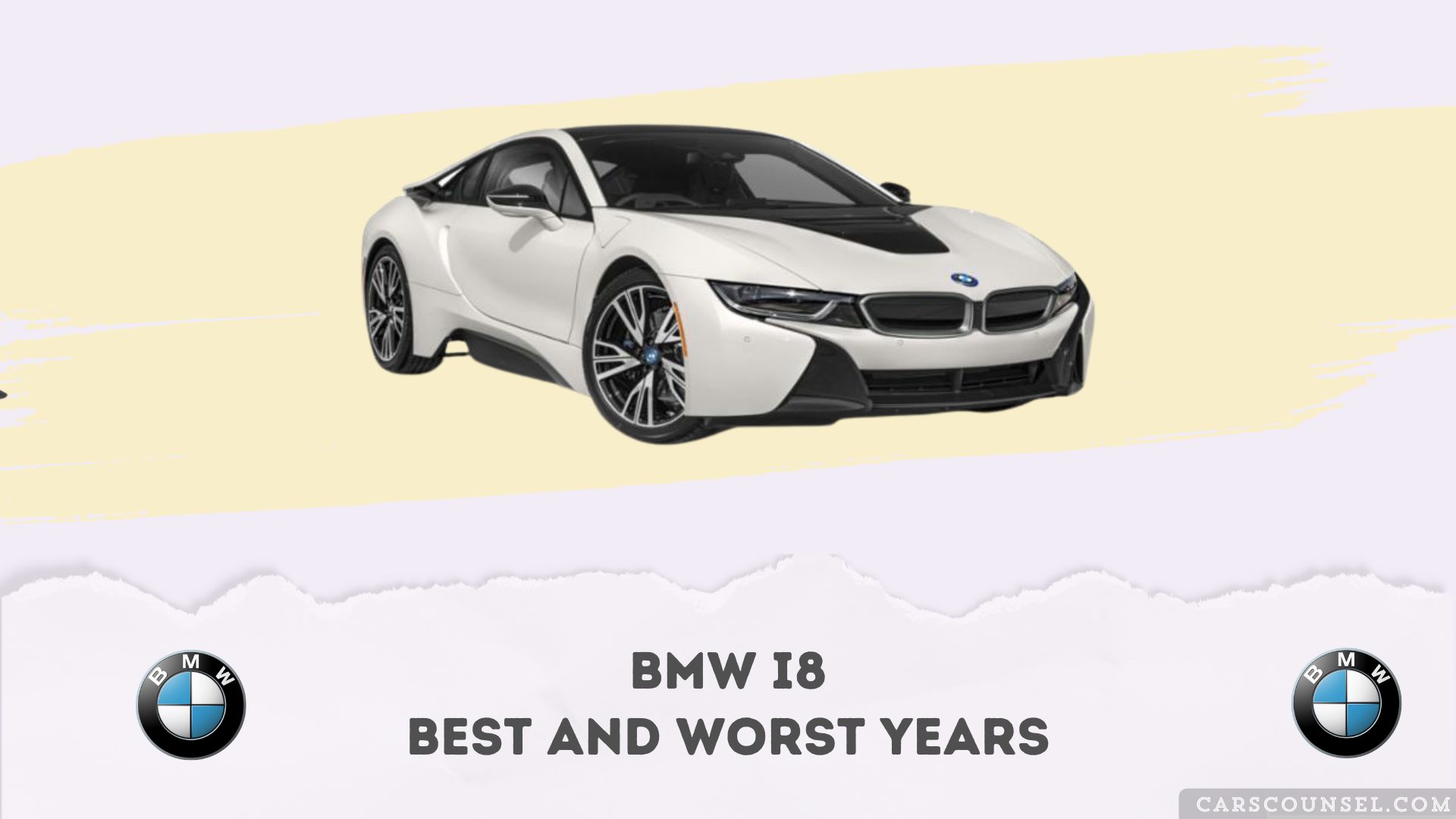
The 2019 BMW i8 is the best model year, offering an updated hybrid powertrain with 369 horsepower and the introduction of the Roadster body style. The 2014 model year requires careful inspection due to its first-year production status and a specific fuel tank recall.
Rankings are comparative, and no plug-in hybrid sports car is entirely flawless. Long-term reliability depends heavily on consistent maintenance, battery health, and the completion of all open safety recalls.
Meaningful differences exist between the early 357-horsepower models and the updated 369-horsepower versions. The 2019 refresh also brought a larger high-voltage battery, improving electric-only driving range for daily commuting.
Quick Navigation
Best and Worst BMW i8 Years at a Glance
| Model Year | Verdict | Main Reason | Buyer Guidance |
|---|---|---|---|
| 2019 | Best Choice | LCI update, 369 hp, larger battery | Top pick for performance and range |
| 2020 | Best Late-Generation Choice | Final production year, refined | Check high-voltage battery recall status |
| 2015–2018 | Good Choice | Lower used prices, 357 hp | Verify recall completion and service history |
| 2014 | Approach Carefully | First-year production, fuel tank recall | Inspect fuel tank weld and electrical systems |
Key Takeaways
- The 2019 model year is the strongest choice due to its powertrain and battery upgrades.
- The 2014 model year demands extra scrutiny because of a fuel tank weld recall.
- Early models (2015–2018) offer good value but require strict adherence to service schedules.
- The high-voltage battery carries an 8-year or 100,000-mile warranty, but replacement costs are high.
- Always verify the VIN to ensure all NHTSA and manufacturer recalls have been performed.
How We Evaluated the BMW i8 Model Years
Our analysis reviews official NHTSA recalls, manufacturer service campaigns, and owner complaint patterns. We evaluate powertrain changes, generation updates, and repair complexity.
Complaints are not failure rates, and a single recall does not automatically make a vehicle unreliable. Recent models have less long-term ownership data available. Our verdicts identify comparatively stronger years, not flawless vehicles.
Best BMW i8 Years
2019: Best Choice
The 2019 model year represents the peak of the i8’s development. BMW introduced a Life Cycle Impulse update that enlarged the high-voltage battery to 11.6 kWh. This upgrade increased the electric-only range and boosted total system output to 369 horsepower.
The 2019 lineup also introduced the i8 Roadster alongside the traditional coupe. The refresh included updated LED headlights and revised aerodynamic elements.
Buyers seeking the most refined and capable version of this plug-in hybrid sports car should target the 2019 model year.
2020: Best Late-Generation Choice
As the final production year, the 2020 BMW i8 carries over the mechanical improvements introduced in 2019. It remains a highly desirable collector item, particularly in Roadster form.
However, a small number of 2020 models were subject to a high-voltage battery recall related to potential debris in the battery modules. Buyers must verify the VIN to confirm this specific recall was addressed before purchase.
Best Year by Buyer Type
- Best Overall: 2019 (Superior battery capacity and power output)
- Best Budget Option: 2015–2017 (Lower entry prices with similar core technology)
- Best Enthusiast Choice: 2019–2020 Roadster (Open-air driving with the updated powertrain)
Years to Approach Carefully
2014: Approach Carefully
The 2014 BMW i8 was the inaugural production year for this groundbreaking platform. While visually striking, early examples experienced typical first-year teething issues, particularly with complex electrical systems and sensors.
More importantly, BMW issued a safety recall for certain 2014 models due to an inadequate weld on a bolt attached to the fuel tank. This defect could cause a fuel leak and present a fire risk.
Buyers must confirm the fuel tank was inspected and replaced if necessary under the recall. Strict service history verification is essential for any first-year example.
BMW i8 Reliability by Generation
The BMW i8 was produced across a single generation from 2014 to 2020, but it is distinctly divided into pre-LCI and post-LCI eras.
The pre-LCI models feature a 7.1 kWh battery and 357 total horsepower. These early cars share related BMW i sub-brand architecture with the BMW i3, though their hybrid powertrain configurations differ entirely.
The post-LCI models received significant software and hardware updates. The larger battery improved daily usability, making the later generation noticeably more reliable for regular commuting.
Common BMW i8 Problems
Fuel System and Recall Concerns
The most significant documented issue affects early 2014 models. A fuel tank weld defect prompted a safety recall due to the risk of leakage. Later model years do not share this specific manufacturing flaw.
Electrical and Sensor Faults
Owners of early models occasionally report warning lights related to stability control sensors and electrical gremlins. A 2015 recall addressed specific electronic stability control software issues. Ensuring all software updates are applied at a certified dealer mitigates most concerns.
High-Voltage Battery Degradation
While the high-voltage battery is generally robust and covered by an 8-year or 100,000-mile warranty, out-of-warranty replacements are extremely expensive. Buyers should request a battery health report before purchasing any high-mileage example.
What to Check Before Buying a Used BMW i8
- Verify the VIN for open NHTSA and manufacturer recalls.
- Confirm the fuel tank recall was completed on 2014 models.
- Request a high-voltage battery health and capacity report.
- Review service records for regular engine oil and brake fluid changes.
- Inspect the complex butterfly door hinges and struts for wear.
- Test all driving modes for seamless powertrain transitions.
- Scan for hidden diagnostic trouble codes using a BMW-specific tool.
- Arrange a pre-purchase inspection with a certified BMW technician.
Related Buying Guides
- BMW M4 best and worst years (A traditional performance alternative without hybrid complexity)
- BMW 8 Series best and worst years (A grand touring alternative for buyers prioritizing luxury over hybrid tech)
Frequently Asked Questions
Which BMW i8 year is the best choice?
The 2019 model year is the strongest choice. It features the updated 11.6 kWh battery, increased horsepower, and the resolution of early production electrical gremlins found in older models.
Is the BMW i8 expensive to maintain?
Maintenance costs are higher than average due to its complex hybrid powertrain and carbon-fiber construction. Routine services require specialized BMW training, and out-of-warranty hybrid component repairs can be very costly.
Did BMW fix the 2014 fuel leak issue?
BMW issued a recall for certain 2014 models to inspect and replace the fuel tank if the weld was defective. Buyers must verify the VIN to ensure this specific repair was completed by a dealer.
How long does the i8 hybrid battery last?
The high-voltage battery is covered by an 8-year or 100,000-mile warranty. Well-maintained examples often retain good capacity, but an out-of-warranty replacement is a major financial expense.
Are 2015 to 2018 models good used buys?
These years offer good value and lower entry prices compared to the updated models. They are solid choices provided the buyer verifies complete service history and confirms all open recalls are resolved.
Why did BMW discontinue the i8?
BMW ended i8 production in 2020 to transition toward newer electric vehicle architectures. The 2020 models remain highly sought after by collectors and enthusiasts seeking the final iteration of the platform.
Choosing the Right BMW i8 Model Year
The 2019 BMW i8 stands out as the best overall choice, delivering the most refined powertrain and improved electric range. Buyers on a budget can find good value in the 2015 to 2018 models, provided they verify strict maintenance records.
Avoid purchasing a 2014 model without concrete proof that the fuel tank recall was performed. Regardless of the year, always check the VIN for open recalls and arrange an independent inspection to evaluate the high-voltage battery health.

