The Ferrari California was produced from 2008 to 2017 as a hardtop convertible grand touring sports car. This article breaks down the best and worst model years based on reliability, performance, owner complaints, and long-term dependability.
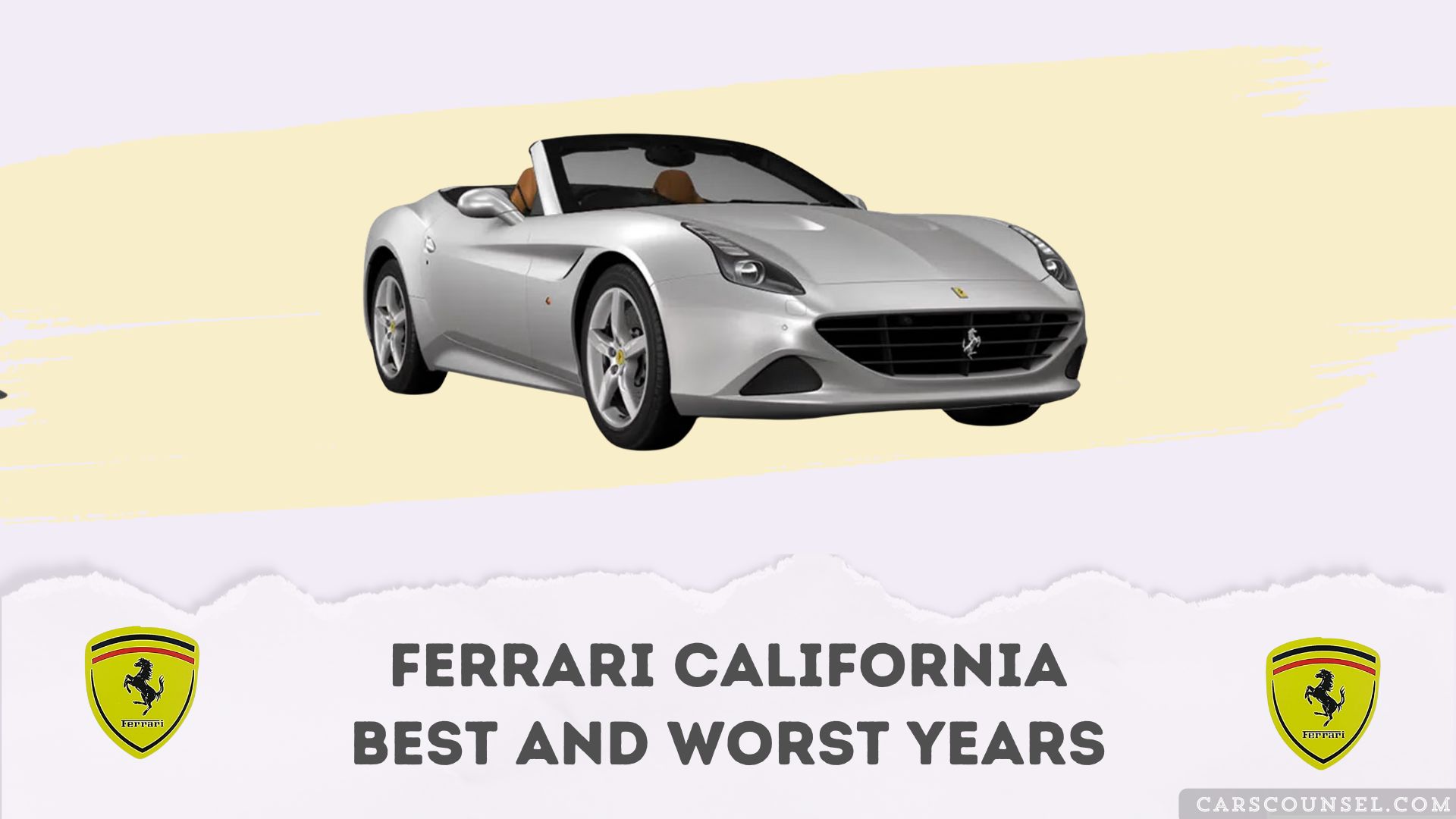
The California marked Ferrari’s entry into the folding hardtop convertible segment with a front-mounted V8 engine. Production spanned two distinct generations with total output reaching 17,349 vehicles.
Quick Navigation
Ferrari California Generational Overview
First Generation (2008-2013)
The original Ferrari California debuted at the 2008 Paris Motor Show featuring a 4.3-liter naturally aspirated V8 engine producing 454 horsepower. This generation introduced several firsts for Ferrari, including a direct fuel injection system and a seven-speed dual-clutch transmission. The retractable hardtop mechanism operated in 14 seconds. Production of the first generation amounted to approximately 8,000 units between 2008 and 2012.
A mid-cycle refresh called the California 30 arrived for 2012 models in Europe and 2013 models in North America. This update increased power to 483 horsepower and reduced weight through aluminum construction.
Second Generation – California T (2014-2017)
The California T launched in 2014 with a new twin-turbocharged 3.9-liter V8 engine producing 553 horsepower. This generation featured improved gearbox software, fewer roof mechanism issues, and refined engine tuning. The California T represented significant engineering upgrades over the original model. Production continued through 2017 with 2,247 vehicles manufactured in 2016 and approximately 1,600 in 2017.
Best Years for the Ferrari California
The most reliable and desirable Ferrari California model years offer better engineering and fewer reported problems.
2012-2013 (California 30): These models represent the refined first generation with increased power output and weight reduction improvements. The California 30 addressed early production issues while maintaining the naturally aspirated V8 sound.
2015-2017 (California T): The California T models offer the most reliable ownership experience with improved gearbox software and fewer roof mechanism failures. The turbocharged engine delivers stronger performance with better mechanical refinement.
2016-2017: The final production years benefit from all engineering updates and refinements implemented throughout the California T production run. These later models represent the most sorted versions available.
Worst Years for the Ferrari California
Early production years experienced the most reliability issues and owner complaints.
2009-2011: These early models suffered from transmission problems, worn engine mounts, and frequent hardtop mechanism failures. The dual-clutch transmission experienced sensor issues and required costly repairs.
2009: The inaugural model year had the most unresolved issues as Ferrari worked through initial production problems. A crankshaft recall affected early production due to improper manufacturing causing thermal and dynamic stress.
2010: This year continued experiencing roof mechanism problems with plastic guide failures in the roof slider assembly. Replacement costs reached $26,000 before labor for complete roof assemblies.
Common Problems Across the Ferrari California Lineup
Dual-Clutch Transmission Issues
The seven-speed dual-clutch transmission experienced sensor failures and software glitches causing rough shifting and warning lights. Early models from 2009-2011 suffered the most transmission problems requiring software updates and component replacements.
Retractable Hardtop Mechanism Failures
The complex three-piece roof system developed failures in the plastic guide components within the aluminum sliders. The roof and rear glass panels would collide during operation due to broken guides. Sensor malfunctions also prevented proper roof operation requiring reset procedures.
Sticky Interior Switches
The rubberized coating on interior buttons and switches degraded over time, becoming sticky or melting from heat exposure. Replacement or refinishing of affected switches costs between £200-£600 depending on extent.
Battery Drain and Electrical Problems
Parasitic battery drain from alarm systems, infotainment modules, and proximity sensors caused starting issues after periods of sitting. Random warning lights appeared due to electrical glitches. Installing a trickle charger prevents battery drain with costs ranging £50-£100.
Engine Oil Leaks
Valve cover gaskets and timing cover seals developed leaks over time causing oil drips and burning oil smells. Repair costs range from £800-£1,500 depending on labor and parts.
Worn Engine Mounts
Engine mounts wore prematurely requiring replacement to maintain performance and proper handling characteristics. This issue affected both generations but appeared most frequently in higher mileage examples.
Crankshaft Manufacturing Defect
A recall addressed improperly manufactured crankshafts that could suffer thermal and dynamic stress. Buyers should verify this recall work was completed on affected vehicles.
Reliability Breakdown by Year
2017 Ferrari California T Reliability Rating
The final production year represents the most refined California with all engineering improvements implemented. No major issues reported for this model year with improved gearbox software and roof mechanism reliability.
2016 Ferrari California T Reliability Rating
This year maintains strong reliability with 2,247 units produced. The California T continued offering dependable performance with fewer mechanical issues than first generation models.
2015 Ferrari California T Reliability Rating
The first year of the California T introduced significant upgrades including the twin-turbocharged engine producing 553 horsepower. Improved gearbox software and fewer roof issues made this a more reliable option.
2014 Ferrari California Reliability Rating
The final year of first generation production before the California T launch. This model year received refinements from years of production experience improving overall reliability.
2013 Ferrari California 30 Reliability Rating
The California 30 delivered 483 horsepower with improved aluminum construction reducing weight. This mid-cycle refresh addressed earlier issues making it a solid choice from the first generation.
2012 Ferrari California 30 Reliability Rating
The California 30 debuted for 2012 European models featuring power increases and weight reductions. This refresh improved reliability over earlier model years.
2011 Ferrari California Reliability Rating
This year continued experiencing transmission problems and hardtop mechanism failures common to early production. Engine mount wear remained a concern requiring replacement on higher mileage examples.
2010 Ferrari California Reliability Rating
The second production year still suffered from roof mechanism problems with plastic guide failures. Transmission issues and sensor malfunctions required dealer attention.
2009 Ferrari California Reliability Rating
The inaugural model year experienced the most issues including crankshaft manufacturing defects requiring recall. Transmission problems, roof mechanism failures, and engine mount wear plagued early examples.
Warranty & Ownership Costs
Annual maintenance costs for a Ferrari California range from $500-$2,000 for general repairs and oil changes. Oil changes at independent mechanics cost approximately $500-$800. Major repairs carry significant expenses with dual-clutch transmission repairs ranging $18,000-$35,000 and complete roof mechanism replacements reaching $26,000 before labor.
Ferrari typically provided a three-year warranty on new vehicles. Used buyers should budget for unexpected repairs as exotic car parts and specialized labor drive costs higher than mainstream vehicles. Regular maintenance prevents many common problems when performed on schedule.
Buying Guide: What to Look For
The California T models from 2015-2017 offer the best value with improved reliability and stronger performance. Avoid 2009-2011 models which experienced the most transmission and roof mechanism problems.
Inspect the retractable hardtop thoroughly by operating it multiple times checking for unusual noises or binding. Check for sticky interior switches and degraded rubber coatings. Verify the crankshaft recall was completed on 2009 models.
Test the dual-clutch transmission for smooth shifts without warning lights or rough engagement. Look for oil leaks around valve covers and timing covers. Consider models with full service history showing regular maintenance at authorized dealers or qualified specialists.
California T models command a premium but deliver significantly better reliability than early first generation examples. The 2012-2013 California 30 represents the best value from the naturally aspirated generation.
When looking at performance cars, make sure to check out our guides on models like the Ferrari F40, Ferrari 812, Ferrari FF and Ferrari Testarossa. Knowing which model years to target and which to avoid is crucial. Our expert reviews break down these models, providing insights into the years that are celebrated for their engineering excellence and driving satisfaction, as well as those that are best to avoid due to potential issues.
FAQs
Is the Ferrari California reliable?
The California T from 2014-2017 is more reliable due to improved gearbox software and fewer roof issues. Both generations are reliable when properly maintained and driven regularly.
What year of the Ferrari California is most dependable?
The 2015-2017 California T models represent the most dependable years with significant engineering improvements. The 2016-2017 models benefit from all production refinements.
What year should you avoid?
Avoid 2009-2011 models which suffered from transmission problems, roof mechanism failures, and engine mount wear. The 2009 model year also had crankshaft manufacturing defects requiring recall.
What are the most common problems?
The most common problems include dual-clutch transmission sensor failures, retractable hardtop mechanism issues, sticky interior switches, battery drain, and engine oil leaks. Roof mechanism repairs can exceed $26,000.
How long does a Ferrari California last?
With proper maintenance and regular driving, a Ferrari California can provide reliable service. Avoiding long storage periods and following service schedules prevents many common issues.
How much does Ferrari California maintenance cost?
Annual maintenance costs range from $500-$2,000 including oil changes and general repairs. Major repairs like transmission rebuilds cost $18,000-$35,000 while complete roof replacements reach $26,000 before labor.
Conclusion
The Ferrari California offers accessible exotic car ownership with the California T models from 2015-2017 representing the best years for reliability and performance. The 2012-2013 California 30 provides a solid naturally aspirated option from the first generation.
Avoid early 2009-2011 models which experienced significant transmission and roof mechanism problems. The California T addressed major reliability concerns making it the preferred choice for dependable ownership.
Buyers should prioritize examples with complete service records and verified recall work. Regular maintenance and proper storage prevent most common issues ensuring years of reliable exotic car enjoyment.

