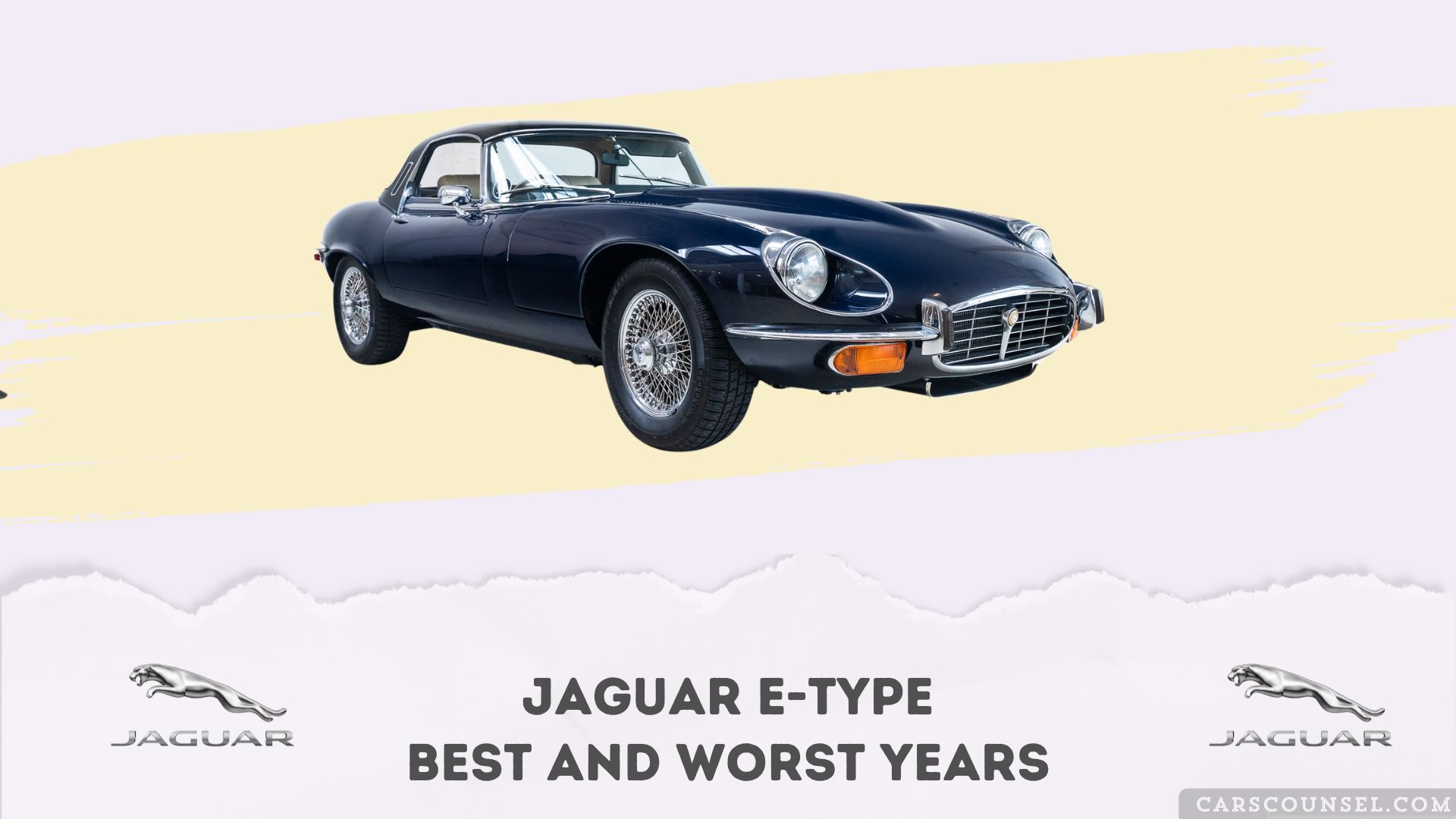
The best Jaguar E-Type years are the 1965–1967 4.2-liter Series 1 models, offering the ideal blend of classic styling and improved drivability. Buyers should approach the 1971–1974 V12 models carefully due to heavy US bumpers and complex maintenance.
These rankings are comparative for classic sports cars. No 50-year-old vehicle is flawless, and long-term survival depends entirely on meticulous mechanical maintenance, rust prevention, and climate-controlled storage.
Meaningful differences exist between the early 3.8-liter, the torquey 4.2-liter, and the heavy 5.3-liter V12 engines. US safety and emissions regulations also drastically altered the styling and weight of later models.
Quick Navigation
Best and Worst Jaguar E-Type Years at a Glance
| Model Year or Range | Verdict | Main Reason | Buyer Guidance |
|---|---|---|---|
| 1965–1967 (4.2L S1) | Best Choice | Perfect blend of S1 styling and 4.2L torque | Verify rust and cooling system |
| 1961–1964 (3.8L S1) | Best Enthusiast Choice | Purest design, highly collectible | Inspect early Moss gearbox and engine |
| 1968 (S1.5) | Good Choice | Transitional year, slightly more affordable | Check for mixed S1/S2 parts |
| 1969–1971 (S2) | Approach Carefully | US safety regs altered styling, heavier | Inspect emissions equipment and rust |
| 1971–1974 (S3 V12) | Mixed | Smooth V12, but complex and heavy | Demand flawless service history |
Key Takeaways
- The 1965–1967 4.2-liter Series 1 models are the strongest choices, combining iconic covered headlights with a fully synchronized gearbox.
- Approach the 1969–1971 Series 2 models with caution, as US safety regulations compromised the front-end styling and added weight.
- The 1971–1974 Series 3 V12 offers incredible smoothness but requires a massive maintenance budget and suffers from heavy 5-mph bumpers.
- Structural rust in the monocoque chassis is the ultimate enemy, particularly in the floor pans, sills, and rear suspension mounts.
- Buyers researching years to avoid should note that heavily modified or rusted examples present the highest financial risk.
How We Evaluated the Jaguar E-Type Model Years
Our analysis considers historical production data, US-market regulatory changes, and classic car ownership patterns. We weigh the impact of the 3.8-liter, 4.2-liter, and 5.3-liter V12 powertrains alongside the evolving Series 1, 2, and 3 body styles.
Consumer complaints are not relevant for classic vehicles. Rust and maintenance history dictate survival, while original sales figures and auction results highlight the most desirable configurations for today’s collectors.
Best Jaguar E-Type Years
1965–1967 (4.2-Liter Series 1): Best Choice
These years represent the sweet spot of E-Type ownership. The 4.2-liter engine provides significantly more low-end torque than the earlier 3.8-liter, making it much more tractable for modern traffic.
Crucially, these models retain the highly desirable Series 1 styling cues, including the iconic covered headlights and sleek interior. They also feature a fully synchronized gearbox, eliminating the notoriously difficult first-gear engagement found on earlier cars.
1961–1964 (3.8-Liter Series 1): Best Enthusiast Choice
The earliest 3.8-liter models are the purest expression of the E-Type design and command the highest collector values. The engine is incredibly responsive and rev-happy, offering a raw, visceral driving experience.
However, these early cars use a Moss gearbox with a non-synchronized first gear, requiring careful rev-matching. The 3.8-liter engine is also more prone to overheating and requires meticulous cooling system maintenance to survive in traffic.
Best Year by Buyer Type
Best Overall: The 1965–1967 4.2-liter Series 1 offers the ultimate balance of classic beauty and daily drivability.
Best Modern Alternative: The Jaguar XK provides modern reliability and grand touring comfort for buyers who want the heritage without the classic car maintenance.
Years to Approach Carefully
1969–1971 (Series 2): Approach Carefully
The Series 2 was heavily altered to comply with US safety regulations. The beautiful covered headlights were removed, and the front grille was enlarged, compromising the original sleek profile.
While the 4.2-liter engine remains reliable, the added emissions equipment and heavier bumpers make these cars less desirable to purists. Purchase only if the price reflects the styling compromises and the car is completely rust-free.
1971–1974 (Series 3 V12): Mixed
The Series 3 introduced the magnificent 5.3-liter V12 engine, offering effortless high-speed cruising and incredible smoothness. However, the V12 is highly complex, runs hot, and is incredibly expensive to rebuild.
US-market 1973–1974 models are burdened with massive 5-mph bumpers that ruin the car’s lines and add significant weight. Demand a flawless, documented service history before considering any V12 example.
Jaguar E-Type Reliability by Generation
Series 1 (1961–1967)
The original Series 1 is the most desirable and valuable generation. It features the iconic monocoque chassis and independent rear suspension. While the inline-six engines are robust, they require strict attention to cooling and oiling systems.
Series 1.5 (1968)
This single-year transitional model bridges the gap between Series 1 and 2. It features open headlights and different carburetors to meet early US emissions standards, offering a compromise between Series 1 value and Series 2 affordability.
Series 2 (1969–1971)
The Series 2 features a wider grille, larger bumpers, and relocated ignition switches. While mechanically similar to the late Series 1, the styling changes make it less collectible, though it remains a solid driver’s car if properly maintained.
Series 3 (1971–1974)
The Series 3 is defined by its V12 engine and flared wheel arches. While visually distinct and incredibly smooth, the V12’s complexity and the heavy US bumpers make it a challenging ownership proposition compared to the inline-six models.
Common Jaguar E-Type Problems
Corrosion Problems
Rust is the most critical threat to any surviving E-Type. The monocoque chassis traps moisture in the floor pans, door sills, and rear suspension mounting points.
The boot floor and front frame rails are also highly vulnerable. A professional lift inspection and magnet test are mandatory to ensure the structural integrity remains intact.
Cooling System Problems
The inline-six and V12 engines are notorious for overheating in slow traffic. The original radiators and cooling fans are often inadequate for modern summer conditions.
Many owners upgrade to aluminum radiators and electric fans to prevent catastrophic engine damage. Verify that the cooling system has been modernized or meticulously maintained.
Electrical Problems
The original Lucas electrical systems are infamous for poor grounding and failing connections. The alternator and voltage regulators are common failure points on early cars.
Inspect the wiring harness for brittle insulation and verify that all gauges and lights function correctly. Many surviving examples have been converted to modern alternators for improved reliability.
What to Check Before Buying a Used Jaguar E-Type
Verify the monocoque chassis for severe structural rust in the floor pans and rear suspension mounts. Inspect the front frame rails and boot floor for signs of poor repair or filler.
Check the engine for excessive oil leaks and verify the cooling system operates without overheating. Test the gearbox for smooth synchromesh engagement and ensure the clutch operates without slipping.
Related Buying Guides
- Jaguar XK best and worst years: A grand touring alternative for buyers wanting classic styling with modern V8 power and daily-driver reliability.
- Jaguar S-Type best and worst years: A retro-styled sedan alternative for buyers wanting luxury and heritage without the cramped sports car cabin.
- Jaguar I-Pace best and worst years: A modern electric alternative for buyers wanting cutting-edge performance and zero emissions in a premium package.
Frequently Asked Questions
What is the most desirable Jaguar E-Type year?
The 1965–1967 4.2-liter Series 1 models are the most desirable, offering the perfect blend of iconic covered-headlight styling, increased torque, and a fully synchronized manual transmission.
Did the US market get different Jaguar E-Types?
Yes, US-market E-Types received sealed-beam headlights, different bumpers, and restrictive emissions equipment. Later US models also received heavy 5-mph bumpers that compromised the original styling.
Is the Jaguar E-Type reliable for daily driving?
A fully restored and upgraded E-Type can serve as a weekend driver, but it is not a modern daily driver. The heavy steering, lack of safety equipment, and cooling issues require careful planning.
How expensive is the V12 E-Type to maintain?
The 5.3-liter V12 is incredibly complex and expensive to maintain. Rebuilding the engine, tuning the multiple carburetors, or repairing the complex cooling system can easily cost tens of thousands of dollars.
What should I look for when buying a classic E-Type?
Prioritize structural condition over mileage or original paint. A rust-free monocoque chassis with intact floor pans and suspension mounts is always the safest and most valuable investment.
Are Jaguar E-Type parts hard to find?
Mechanical parts for the inline-six engines and suspension components are widely available through classic Jaguar specialists. However, pristine Series 1 trim, glass, and interior pieces are becoming increasingly scarce.
Which Jaguar E-Type Year Should You Buy?
Target the 1965–1967 4.2-liter Series 1 models for the ultimate classic ownership experience, blending iconic styling with improved drivability. The 1961–1964 3.8-liter models remain the ultimate prize for serious collectors.
Approach the Series 2 and V12 Series 3 models with realistic expectations regarding styling compromises and complex maintenance. Always arrange a professional inspection by a classic specialist before finalizing any purchase.

