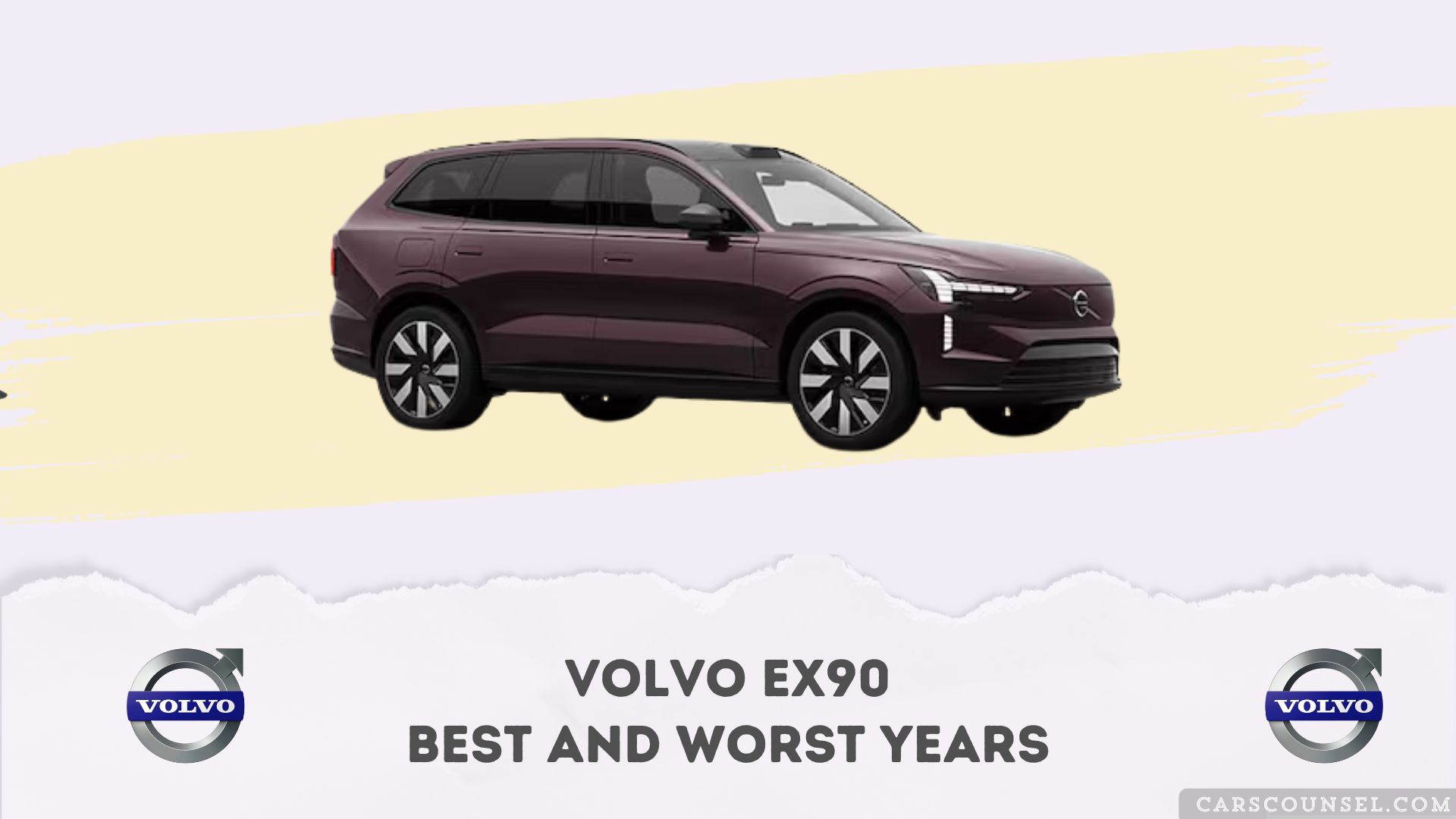
The best U.S.-market Volvo XC90 years are the 2009 through 2014 first-generation models and the 2020 through 2021 second-generation models. Buyers should approach the early 2003 through 2005 models carefully due to severe automatic transmission vulnerabilities.
Rankings for this three-row luxury SUV remain strictly comparative. No XC90 is flawless, and individual maintenance history, rust prevention, and recall completion matter far more than the factory build year.
Meaningful differences exist across the generations. The first generation used robust inline-six and V8 engines, while the modern second generation relies on complex turbocharged, supercharged, and electrified four-cylinder powertrains.
Quick Navigation
Best and Worst Volvo XC90 Years at a Glance
| Model Year Range | Verdict | Main Reason | Buyer Guidance |
|---|---|---|---|
| 2003-2005 | Avoid | Premature automatic transmission failure. | Seek later first-generation models instead. |
| 2006-2008 | Mixed | V8 timing chain and 3.2L oil consumption. | Verify engine maintenance and timing components. |
| 2009-2014 | Best Older Choice | Refined first generation with robust inline-six. | Inspect for aging electronics and suspension wear. |
| 2016 | Approach Carefully | First-year SPA platform and Drive-E teething. | Verify software updates and coolant system health. |
| 2017-2019 | Good With Inspection | Improved powertrain but Sensus infotainment bugs. | Test all digital displays and scan for codes. |
| 2020-2021 | Good Choice | Mature second-generation platform and safety tech. | Check for open recalls and mild-hybrid function. |
| 2022-2026 | Too New to Judge | Google OS transition and limited long-term data. | Rely on factory warranty and dealer support. |
Key Takeaways
- The 2009 through 2014 models are the strongest older choices, offering a mature platform and reliable naturally aspirated inline-six engines.
- The 2020 and 2021 models provide the best balance of updated technology and improved second-generation reliability.
- Buyers must strictly avoid the 2003 through 2005 models due to widespread and expensive automatic transmission failures.
- The modern four-cylinder Drive-E engines require strict adherence to oil change intervals to prevent premature wear.
- Always verify the VIN for open NHTSA recalls and arrange an independent pre-purchase inspection.
How We Evaluated the Volvo XC90 Model Years
Our analysis considers NHTSA recall records, manufacturer service campaigns, and long-term ownership patterns. We evaluate powertrain vulnerabilities, electrical system reliability, and structural integrity across both generations.
Consumer complaints highlight recurring flaws. Complaints are not failure rates or confirmed defects. A recall does not automatically make a year unreliable. Recent years have less ownership history. Best means comparatively stronger, not flawless.
Best Volvo XC90 Years
2009-2014: Best Older Choice
The late first-generation models represent the most mature iteration of the original P2 platform. The 3.2-liter naturally aspirated inline-six engine is generally robust, avoiding the severe timing chain issues found in the V8.
Buyers must prioritize examples with extensive service records. Aging electronics, worn suspension components, and PCV system failures remain concerns for any vehicle of this age.
2020-2021: Good Choice
The second-generation XC90 matured significantly by the 2020 model year. Volvo resolved many early Drive-E powertrain teething issues, and the Sensus infotainment system became noticeably more stable than in the launch year.
These models offer excellent safety technology and comfortable seating for three rows. Buyers should still verify that all software updates and suspension warranty repairs have been completed by a dealer.
Best Year by Buyer Type
Best Older Choice: 2011-2014 XC90 3.2L
For buyers seeking a depreciated luxury SUV with straightforward mechanicals, the late first-generation inline-six models offer the best balance of reliability and value.
Best Modern Alternative: 2020-2021 XC90 T6
Families wanting modern luxury, advanced safety features, and strong acceleration should target the 2020 and 2021 T6 models before the transition to mild-hybrid powertrains.
Years to Approach Carefully
2006-2008: Mixed
These years introduced the Yamaha-developed 4.4-liter V8 and the new 3.2-liter inline-six. While the V8 offers excellent performance, it is prone to expensive timing chain guide and balance shaft failures.
The early 3.2-liter engines also suffer from excessive oil consumption due to faulty piston ring designs. Buyers must verify engine health and maintenance history before purchasing.
2017-2019: Good With Inspection
The mid-cycle second-generation models improved upon the 2016 launch year but still suffer from frustrating Sensus infotainment glitches and occasional coolant leaks in the Drive-E engines.
An independent pre-purchase inspection is mandatory. Technicians must pressure-test the cooling system and verify that the transmission shifts smoothly without hesitation.
2016: Approach Carefully
The inaugural year of the modern SPA platform suffers from typical first-year assembly inconsistencies. Early Drive-E four-cylinder engines experienced oil consumption, and the eight-speed automatic transmission exhibited rough shifting.
Worst Volvo XC90 Years
2003-2005: Avoid
The early first-generation models are plagued by catastrophic automatic transmission failures. The Aisin five-speed automatic transmission frequently fails well before 100,000 miles, requiring extremely expensive replacements.
Additionally, these early years suffer from numerous electrical gremlins, failing control modules, and premature suspension wear. The financial risk associated with these model years remains exceptionally high.
Volvo XC90 Reliability by Generation
First Generation (2003-2014)
The original XC90 established Volvo’s footprint in the luxury three-row SUV segment. While the exterior styling aged gracefully, the early powertrains and electronics were troublesome.
The platform shares underlying architecture with the Volvo S80. However, buyers must remember that shared architecture does not guarantee identical reliability patterns across different body styles.
Second Generation (2016-Present)
The modern XC90 transitioned to the Scalable Product Architecture (SPA), sharing related underpinnings with the Volvo XC60.
This generation abandoned larger engines in favor of complex turbocharged, supercharged, and electrified four-cylinder Drive-E powertrains. While efficient, these engines demand strict maintenance and are costly to repair out of warranty.
Common Volvo XC90 Problems
Transmission and Drivetrain Problems
The 2003 through 2005 models are notorious for premature automatic transmission failure. Owners frequently report harsh shifting, slipping gears, and complete loss of drive.
Modern second-generation models occasionally exhibit hesitation from the eight-speed automatic transmission, often requiring software updates from the dealer to resolve the shifting logic.
Engine and Cooling System Problems
The first-generation V8 engines suffer from timing chain guide failures, which can lead to catastrophic engine damage if ignored. Early 3.2-liter inline-six engines are prone to excessive oil consumption.
Modern Drive-E four-cylinder engines have experienced cracked cylinder heads and coolant leaks. Buyers should monitor coolant levels closely and inspect for sweet-smelling exhaust vapor.
Electrical and Infotainment Problems
Aging first-generation models frequently experience failing central electronic modules, causing erratic gauge clusters and accessory malfunctions.
The second-generation Sensus infotainment system, used from 2016 through 2021, is frequently criticized for lagging, freezing, and dropping smartphone integration. The 2022 transition to Google Built-in largely resolved these issues.
What to Check Before Buying a Used Volvo XC90
- Verify the VIN for open NHTSA recalls and manufacturer service campaigns.
- Inspect the automatic transmission for smooth shifting and harsh engagements.
- Demand physical proof of rigorous, dealer-stamped maintenance history for modern Drive-E engines.
- Pressure-test the cooling system on 2016 and newer models to check for leaks.
- Test the Sensus infotainment system for freezing and verify all digital displays.
- Inspect the first-generation V8 for timing chain rattle on cold starts.
- Arrange an independent pre-purchase inspection with a technician familiar with European vehicles.
Related Buying Guides
- Lexus GX best and worst years: A rugged, body-on-frame Japanese alternative that prioritizes extreme off-road capability and long-term durability over Scandinavian styling.
- Audi Q7 best and worst years: A direct German three-row competitor that offers a more performance-oriented driving experience and a premium virtual cockpit interior.
Frequently Asked Questions
Which Volvo XC90 year is the most desirable?
The 2009 through 2014 first-generation models are the most desirable older choices. For modern buyers, the 2020 and 2021 models offer the best balance of updated technology and improved reliability.
Is the Volvo XC90 reliable?
The XC90 has mixed mechanical reliability. Early first-generation and 2016 models have significant powertrain issues, while later years are much stronger. Modern models require strict maintenance to prevent expensive repairs.
What is the most common Volvo XC90 problem?
Premature automatic transmission failure is the most severe problem in early models. For modern versions, Sensus infotainment glitches and Drive-E engine coolant leaks are the most frequent complaints.
Do Volvo XC90s hold their value?
Luxury SUVs typically experience steep initial depreciation. Well-maintained first-generation models hold niche enthusiast value, while modern models depreciate normally but remain expensive to repair out of warranty.
Does the modern XC90 share parts with other Volvos?
The modern SPA platform shares related architecture with the Volvo XC60 and S90. However, its specific air suspension tuning and three-row interior components remain unique to the XC90.
Should I buy a used Volvo XC90?
You should only buy an XC90 if you accept the high maintenance costs and can verify a flawless service history. Always check the VIN for open recalls and arrange an independent specialist inspection.
Choosing the Right Volvo XC90 Model Year
The 2009 through 2014 first-generation models offer mature reliability, while the 2020 and 2021 modern models provide the ultimate blend of luxury and safety. Buyers must avoid the 2003 through 2005 models.
Because these are complex luxury vehicles, individual condition and comprehensive dealer maintenance dictate the vehicle’s true value. Never finalize a purchase without verifying the recall status and arranging an independent inspection.