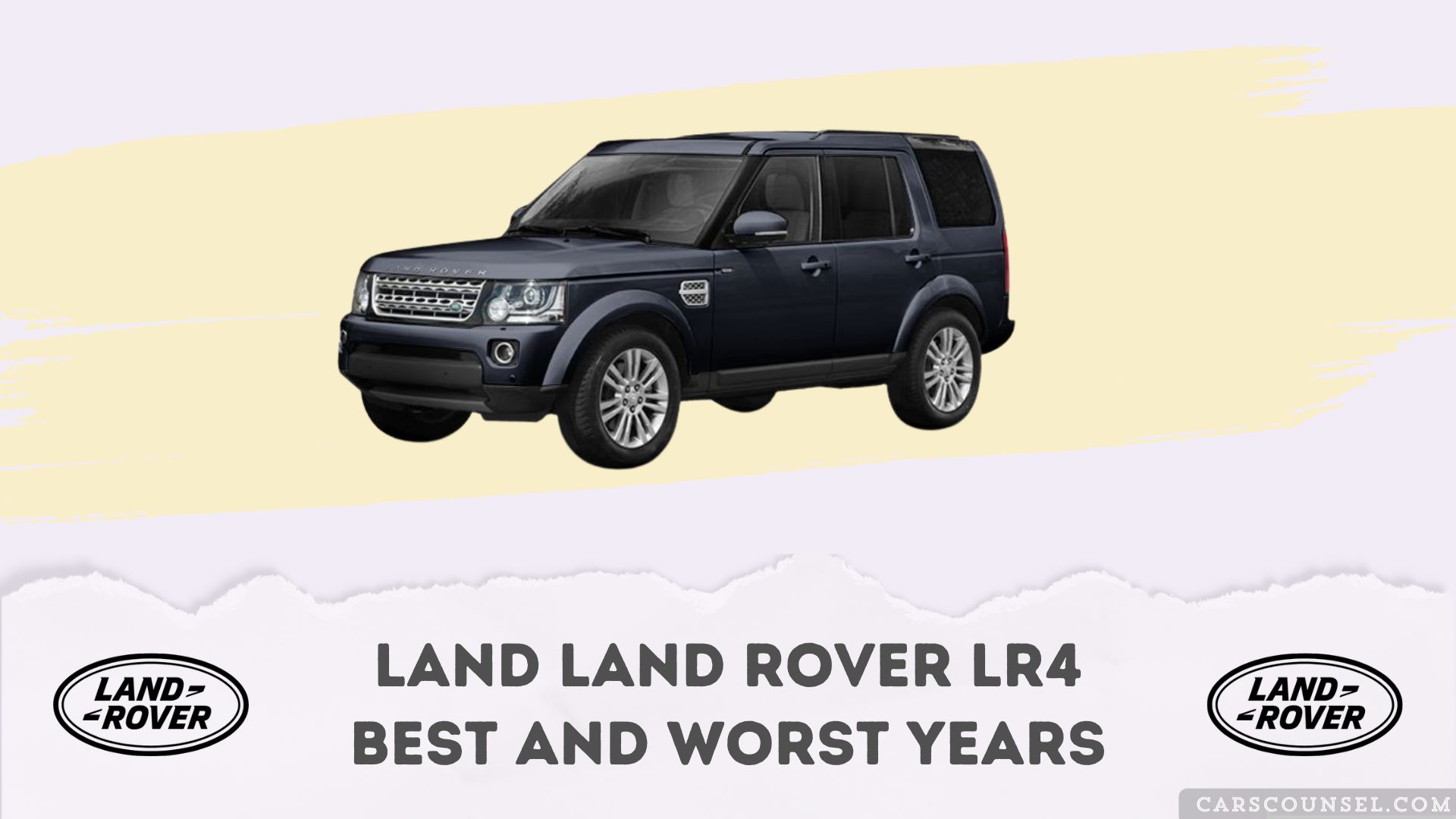
The Land Rover LR4 is a full-size luxury SUV produced from 2010 to 2015. It replaced the LR3 and was known for its off-road capability, advanced air suspension, and Terrain Response system. This guide covers the best and worst years for the LR4 based on reliability, owner complaints, mechanical strength, and long-term dependability. Each section provides a factual overview to help buyers make informed decisions.
Quick Navigation
Land Rover LR4 Generational Overview
2010–2015 LR4
The LR4 was introduced in 2010 as a successor to the LR3. It featured a 5.0-liter V8 engine, updated styling, and a more refined interior. All model years included full-time four-wheel drive, air suspension, and Terrain Response. Minor updates occurred each year, including infotainment improvements and exterior styling tweaks. Known issues across generations include timing chain guide failure, air suspension leaks, and electronic faults.
Best Years for the Land Rover LR4
The most reliable Land Rover LR4 years are generally considered to be the later models, which benefited from fixes and refinements.
2013–2015
These years saw fewer mechanical issues and improved reliability compared to earlier models.
The timing chain guide problems common in 2010–2011 were largely resolved.
Electronic gremlins and air suspension issues persisted but were less frequent than in earlier years.
Better engineering and fewer owner complaints make these years stand out for dependability.
Worst Years for the Land Rover LR4
2010–2011
The 2010 and 2011 models are known for timing chain guide failure, which can cause catastrophic engine damage if not addressed.
These years had more frequent recalls, including issues with the electrical system and service brakes.
Owners reported higher repair costs and more frequent breakdowns compared to later years.
Avoid these years unless maintenance records show preventative timing chain work.
Common Problems Across the Land Rover LR4 Lineup
Timing Chain Guide Failure
Most common in 2010–2011 models.
Failure can result in severe engine damage and expensive repairs.
Regular oil changes and inspection can help prevent this issue.
Air Suspension Issues
All model years are prone to air strut leaks, compressor failures, and sensor malfunctions.
Symptoms include sagging suspension, warning lights, and reduced ride quality.
Replacement parts are expensive and require professional installation.
Electronic Gremlins
Intermittent electrical faults affect various sensors and systems.
Issues can range from minor inconveniences to major drivability problems.
A thorough pre-purchase inspection is recommended.
Water Pump Leaks
Some models, especially 2014, have reported water pump leaks.
Leaks can lead to engine overheating if not addressed promptly.
Replacement is a common repair.
Reliability Breakdown by Year
2015 Land Rover LR4 Reliability Rating
Generally considered the most reliable year.
Most early issues were resolved, but air suspension and electronics remain a concern.
Fewer owner complaints and recalls.
2014 Land Rover LR4 Reliability Rating
Improved infotainment and styling.
Still prone to air suspension and electronic issues.
Higher purchase price due to being the last model year.
2013 Land Rover LR4 Reliability Rating
No major changes, but fewer mechanical complaints.
Air suspension issues still possible.
2012 Land Rover LR4 Reliability Rating
Minor infotainment updates.
Air suspension and electronic issues remain.
2011 Land Rover LR4 Reliability Rating
Minor improvements over 2010.
Timing chain guide failure and air suspension issues are common.
2010 Land Rover LR4 Reliability Rating
First year of production, prone to timing chain guide failure.
Highest number of recalls and owner complaints.
Warranty & Ownership Costs
The factory warranty covers 4 years or 50,000 miles, whichever comes first, including bumper-to-bumper and powertrain protection.
Extended warranties are available up to 7 years or 100,000 miles.
Typical annual maintenance costs range from $800 to $1,200, with major parts replacements costing $1,000–$2,000 every few years.
Repairs for air suspension, timing chain, and electronics can be expensive due to the complexity and cost of parts.
Buying Guide: What to Look For
The best value years are 2013–2015, with fewer reliability issues and better engineering.
Avoid 2010–2011 models unless maintenance records show preventative timing chain work.
Inspect air suspension, electronics, and engine for leaks or warning lights.
Expect average mileage thresholds of 124,845 miles or about 9.4 years, with some vehicles reaching 200,000 miles with proper care.
Pre-purchase inspection by a qualified mechanic is highly recommended.
When looking at performance cars, make sure to check out our guides on models like the Land Rover Discovery 4, Land Rover Freelander, Land Rover Defender and Land Rover Discovery. Knowing which model years to target and which to avoid is crucial. Our expert reviews break down these models, providing insights into the years that are celebrated for their engineering excellence and driving satisfaction, as well as those that are best to avoid due to potential issues.
FAQs
Is the Land Rover LR4 reliable?
The LR4 has a reliability rating of 7.4 out of 10. Later years (2013–2015) are generally more dependable than earlier models.
What year of the Land Rover LR4 is most dependable?
The 2013–2015 years are considered the most reliable, with fewer mechanical and electronic issues.
What year should you avoid?
Avoid 2010–2011 due to timing chain guide failures and higher recall rates.
What are the most common problems?
Timing chain guide failure, air suspension leaks, electronic faults, and water pump leaks are the most frequently reported issues.
How long does a Land Rover LR4 last?
With proper maintenance, an LR4 can last for 200,000 miles or more.
Conclusion
The Land Rover LR4 offers strong off-road capability and luxury, but reliability varies significantly by model year. The best years are 2013–2015, while 2010–2011 should be avoided due to timing chain and electronic issues. Owners should budget for higher maintenance and repair costs, especially for air suspension and electronics. A thorough inspection and strong maintenance history are key for a positive ownership experience.