The Nissan 370Z was produced from 2009 to 2020 as a two-door sports coupe. It succeeded the 350Z and featured a 3.7-liter V6 engine with rear-wheel drive.
This article breaks down the best and worst model years of the Nissan 370Z based on reliability data, owner complaints, common mechanical issues, and long-term dependability. Understanding which years to target and which to avoid helps buyers make informed decisions when shopping for a used 370Z.
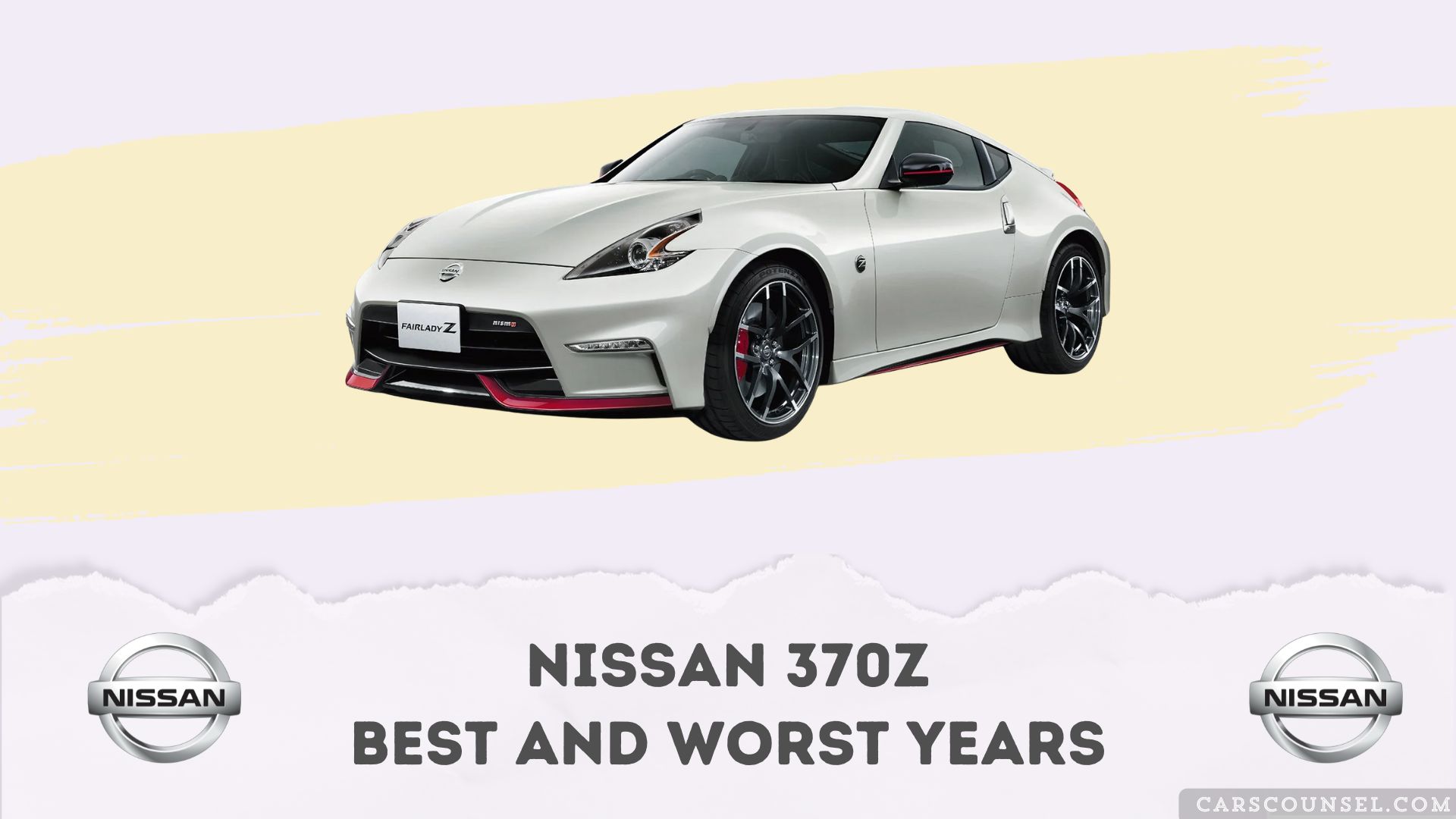
The 370Z earned a reliability rating above average among sports cars. However, certain model years experienced more problems than others, particularly the early production models.
Quick Navigation
Nissan 370Z Generational Overview
Z34 Generation (2009 – 2020)
The Nissan 370Z represented the sixth generation of the Z-car line and was sold as a single generation throughout its production run. The 370Z debuted in December 2008 as a 2009 model with a 3.7-liter VQ37VHR V6 engine producing 332 horsepower.
In June 2009, Nissan introduced the Nismo 370Z variant, followed by the 370Z Roadster convertible in late 2009. The platform remained largely unchanged throughout its 12-year production run, with updates focused on trim packages, technology features, and minor cosmetic changes. The 370Z came with either a 6-speed manual transmission or a 7-speed automatic, with the manual being the preferred choice among enthusiasts.
Best Years for the Nissan 370Z
The most reliable Nissan 370Z model years offer improved build quality and fewer mechanical complaints. These years benefited from production refinements and resolved early issues.
2017 Nissan 370Z
The 2017 model stands out as the most reliable year. It achieved an excellent dependability rating and has a lower-than-average annual maintenance cost. This year offers solid mechanical reliability despite lacking modern technology features.
2015 Nissan 370Z
The 2015 370Z receives positive reliability ratings. It has only minor issues such as paint flaking and clutch sticking, with minimal complaints reported. This model year represents a mature production run with most early bugs resolved.
2013-2014 Nissan 370Z
These mid-production years benefited from manufacturing improvements while maintaining the proven VQ37VHR engine. Fewer complaints were reported compared to earlier models, making these years solid choices for reliability-focused buyers.
2019-2020 Nissan 370Z
The final production years offered the most refined version of the 370Z platform. These models incorporated all previous improvements and typically have lower mileage when shopping used, providing better long-term value.
Worst Years for the Nissan 370Z
Early production model years experienced more mechanical problems and owner complaints. These years should be approached with caution when shopping used.
2009 Nissan 370Z
The inaugural model year suffered from first-year production issues. The 2009 and early 2010 models experienced steering wheel lock mechanism failures that prevented the car from starting. This was a known defect that affected many early owners. The 2009 model also saw higher rates of other early production bugs.
2010 Nissan 370Z
The 2010 model continued to experience steering lock problems, particularly in early production units. While mid-year 2010 models saw improvements, the first half of the production run shared similar issues with the 2009 model year.
2011 Nissan 370Z
The 2011 370Z was subject to a recall for power window switch controller programming errors affecting vehicles manufactured from July through August 2011. While not as problematic as 2009-2010, this year still experienced more complaints than later models.
Common Problems Across the Nissan 370Z Lineup
Concentric Slave Cylinder Failure
The CSC is the most notorious problem on manual transmission 370Z models. The clutch pedal stays depressed and the transmission cannot shift gears when the CSC fails. Brake and clutch fluid levels drop and leak from the driver side of the transmission housing. This failure is more common with track use but can affect daily drivers as well.
High Oil Consumption
The VQ37VHR engine consumes oil quickly, especially when driven hard. Frequent low oil readings and burning oil smells are common symptoms. High oil temperatures are another issue, leading many owners to install aftermarket oil coolers.
Gearbox Synchro Wear
Manual transmission 370Z models develop synchro wear in 2nd and 3rd gear after 60,000 miles. Aggressive shifting or poor gearbox oil maintenance causes this problem. Symptoms include crunching when shifting gears, stiff gear engagement, and grinding sounds.
Steering Lock Mechanism Failure
Early 2009 and 2010 models experienced steering lock mechanism failures that prevented the vehicle from starting. This was a known defect specific to early production units. The issue was largely resolved in later model years.
Rear Axle Click
A clicking noise from the rear axle is a common complaint across multiple model years. This issue typically occurs during low-speed turns and is often caused by worn rear axle components.
Noisy Manual Gearbox
The manual transmission is known to be noisy, particularly in first gear and when idling. While some noise is normal, excessive grinding or crunching indicates worn synchros requiring attention.
Uneven Tire Wear
Uneven tire wear suggests the suspension is out of alignment. Alignment adjustments typically cost around $300. Regular alignment checks help prevent premature tire replacement.
Exhaust Rust
Exhaust systems on the 370Z are prone to rust, particularly in humid or salt-exposed environments. Regular inspections help identify rust damage before it leads to exhaust failure.
Reliability Breakdown by Year
2020 Nissan 370Z Reliability Rating
The final production year offered a refined and mature platform. With all previous improvements incorporated, the 2020 model provides solid reliability and typically features lower mileage on the used market. This year represents the culmination of 12 years of production refinements.
2019 Nissan 370Z Reliability Rating
The 2019 model continued the reliability improvements seen in mid-production years. Annual maintenance costs remained consistent. This year offers strong dependability without the higher prices of the 2020 final edition models.
2018 Nissan 370Z Reliability Rating
The 2018 370Z maintained the proven mechanical formula with minimal changes. Common issues like CSC failure remained but occurred less frequently than in early models. This year provides good reliability at a lower price point than 2019-2020 models.
2017 Nissan 370Z Reliability Rating
The 2017 model earned the highest reliability ratings of any 370Z year. With a high reliability score and a long-term quality score, this year represents the sweet spot for reliability. Lower-than-average maintenance costs make it an attractive choice for enthusiast buyers.
2016 Nissan 370Z Reliability Rating
The 2016 370Z offered strong reliability similar to the 2017 model. This year benefited from production maturity while avoiding the price premium of the highly-rated 2017 model. Common problems remained minimal compared to early years.
2015 Nissan 370Z Reliability Rating
The 2015 model received positive reliability ratings. Only minor issues such as paint flaking and clutch sticking were reported. This year marked a turning point where production quality stabilized.
2014 Nissan 370Z Reliability Rating
The 2014 370Z continued the reliability improvements seen from 2013 onward. This mid-production year avoided early production problems while maintaining the proven VQ37VHR engine. Fewer owner complaints make it a dependable choice.
2013 Nissan 370Z Reliability Rating
The 2013 model year represented a maturation point in 370Z production. By this point, most early production issues were resolved. The 2013 model offers good reliability at a lower price than newer years.
2012 Nissan 370Z Reliability Rating
The 2012 370Z saw improvements over the problematic early years but still experienced some issues. A recall affected certain 2012 models for power window switch controller errors. Overall reliability improved compared to 2009-2011.
2011 Nissan 370Z Reliability Rating
The 2011 model was subject to a recall for power window controller programming errors. While better than 2009-2010, this year still experienced more complaints than later models. Buyers should verify recall work was completed.
2010 Nissan 370Z Reliability Rating
The 2010 370Z continued to suffer from steering lock mechanism failures, particularly in early production units. Mid-year 2010 models saw some improvements, but this year should be approached cautiously. Higher complaint rates make it less desirable.
2009 Nissan 370Z Reliability Rating
The inaugural model year experienced the most problems. Steering lock mechanism failures that prevented starting were common. As the first production year, various early bugs affected reliability. This is the year to avoid when shopping for a used 370Z.
Warranty & Ownership Costs
The Nissan 370Z has an average annual repair cost that is lower than average for sports cars. Regular servicing every 5,000 to 7,500 miles costs approximately $100 to $150 per service. Over five years, maintenance costs average around $6,482, with repairs adding approximately $2,746.
Spark plugs should be changed every five years or 54,000 miles. Gearbox and differential oils require changes every three years or 36,000 miles. Performance parts such as brake pads and tires cost more than standard vehicles due to the sports car nature of the 370Z.
Major issues are less frequent than average for the 370Z, making it a relatively affordable sports car to maintain. However, CSC replacement on manual transmission models can be an expensive repair if it fails. Buyers should budget for higher-than-average tire and brake costs due to performance-oriented driving.
Buying Guide: What to Look For
When shopping for a used Nissan 370Z, target 2013-2017 model years for the best balance of reliability and value. The 2017 model offers the highest reliability ratings, while 2015 provides strong dependability at a lower price point.
Avoid 2009-2011 model years due to steering lock problems, higher complaint rates, and early production issues. If considering these early years, verify all recall work was completed and the steering lock mechanism functions properly.
For manual transmission models, inspect the clutch operation carefully and ask about CSC replacement history. Test drive the vehicle through all gears, listening for synchro grinding or difficult engagement. Check maintenance records to confirm gearbox and differential oil changes were performed every 36,000 miles.
Examine the exhaust system for rust damage, particularly in humid or salt-exposed regions. Check for uneven tire wear indicating alignment issues. Listen for rear axle clicking during low-speed turns.
Review service records for oil consumption patterns and verify oil changes were performed regularly. High-mileage examples over 60,000 miles are more likely to experience synchro wear and other age-related issues. Manual transmission models are preferred by enthusiasts and typically hold value better than automatics.
When looking at performance cars, make sure to check out our guides on models like the Nissan 350Z, Nissan Qashqai, Nissan KICKS and Nissan Versa. Knowing which model years to target and which to avoid is crucial. Our expert reviews break down these models, providing insights into the years that are celebrated for their engineering excellence and driving satisfaction, as well as those that are best to avoid due to potential issues.
FAQs
Is the Nissan 370Z reliable?
The Nissan 370Z has a reliability rating above average among sports cars. The average annual repair cost is lower than average. Later model years from 2013 onward offer better reliability than early production models.
What year of the Nissan 370Z is most dependable?
The 2017 Nissan 370Z is the most dependable year, earning a high reliability rating and a strong long-term quality score. The 2015 model year also offers strong reliability with minimal complaints.
What year should you avoid?
Avoid the 2009 and 2010 Nissan 370Z due to steering lock mechanism failures and first-year production issues. The 2011 model also experienced more problems than later years, including a power window controller recall.
What are the most common problems?
The most common problems include Concentric Slave Cylinder failure on manual transmissions, high oil consumption, gearbox synchro wear, steering lock failures on early models, rear axle clicking, and noisy manual gearboxes. Exhaust rust and uneven tire wear are also reported issues.
How long does a Nissan 370Z last?
With proper maintenance, a Nissan 370Z can last over 150,000 miles. Regular oil changes, transmission fluid services every 36,000 miles, and addressing common issues promptly contribute to longevity. Later model years from 2013 onward typically offer better long-term durability.
Are manual or automatic 370Z models more reliable?
Manual transmission 370Z models are preferred by enthusiasts but are prone to CSC failure and synchro wear. Automatic transmission models avoid these specific issues but are less engaging to drive. Both transmissions offer similar overall reliability when properly maintained.
Conclusion
The Nissan 370Z offers above-average reliability for a sports car, with the 2013-2017 model years providing the best combination of dependability and value. The 2017 model stands out as the most reliable year, while the 2015 offers strong performance at a lower price point.
Buyers should avoid 2009-2011 model years due to steering lock problems and early production issues. Common problems include CSC failure on manual transmissions, oil consumption, and synchro wear, but these are manageable with proper maintenance.
With an average annual repair cost and major issues occurring less frequently than average, the 370Z represents a relatively affordable sports car to own. Target 2013 or newer models, verify maintenance records, and inspect common trouble areas for the best ownership experience.