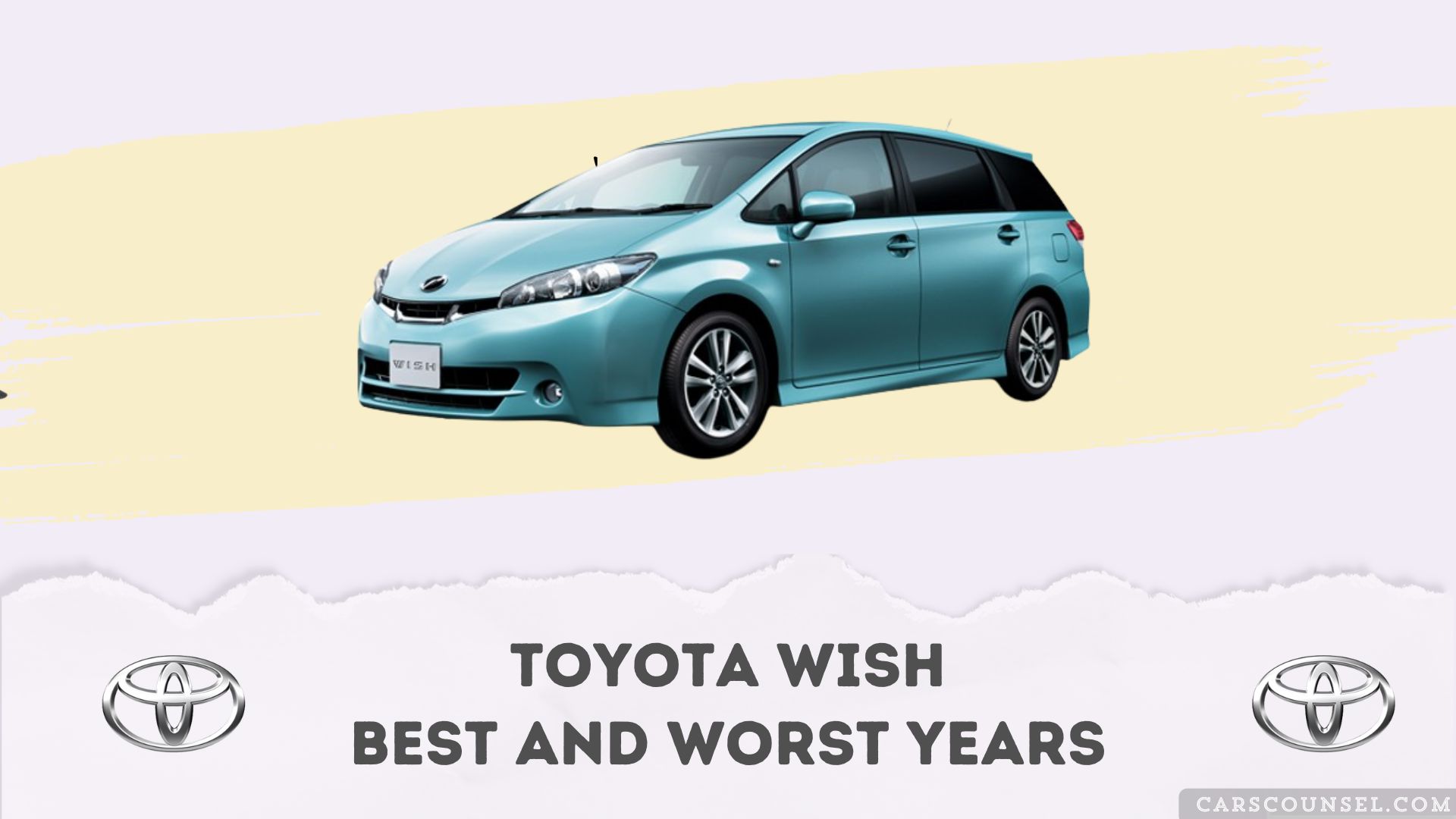
The Toyota Wish is a compact MPV produced from 2003 to 2017, known for its practicality and spacious interior. This guide breaks down the best and worst model years based on reliability, performance, owner complaints, and long-term dependability. The Wish was offered with 1.8L and 2.0L petrol engines, paired with CVT or automatic transmissions, and targeted buyers seeking a versatile family vehicle.
Quick Navigation
Toyota Wish Generational Overview
First Generation (2003–2008)
The first-generation Wish debuted in 2003, featuring a 1.8L or 2.0L petrol engine and a choice of CVT or 4-speed automatic transmission. It offered FWD or 4WD options, foldable rear seats, and a practical interior layout. The 2005 facelift brought minor exterior updates, including a revised front bumper and grille, updated headlights, and improved suspension tuning for a smoother ride. However, early models had fewer advanced safety features and less refined engine options compared to later generations.
Second Generation (2009–2017)
The second-generation Wish launched in 2009 with notable improvements. Exterior updates included a redesigned front bumper, grille, and LED rear lamps. Interior enhancements featured upgraded materials, seat fabrics, and infotainment systems. Safety was bolstered with VSC and traction control as standard on more trims. The 2017 model received the most advanced features, such as active headrests, a premium sound system, and dust mite-resistant seat covers. The Wish was discontinued in 2017 due to declining sales and shifting market preferences.
Best Years for the Toyota Wish
The best years for the Toyota Wish are generally the second-generation models, particularly those from 2012 to 2017. These years benefit from improved engineering, updated features, and fewer reliability complaints.
2012–2017
These models feature more advanced safety systems, improved interior quality, and better infotainment. The 1.8L engine remains reliable, and transmission issues are less common than in earlier models. Owners report fewer complaints and smoother long-term ownership, with mechanical strength and upgraded components contributing to better dependability.
Worst Years for the Toyota Wish
The worst years for the Toyota Wish are the early first-generation models, especially 2003–2005.
2003–2005
These models lack advanced safety features and have less refined engine options. The 2.0L D4 engine is known for rough running and surging issues, particularly if not maintained with premium fuel. Owners report more frequent transmission problems and electrical faults, with higher repair costs and durability concerns.
Common Problems Across the Toyota Wish Lineup
Engine Problems
The 2.0L D4 engine is prone to rough running and surging, especially with low-quality fuel. The 1.8L engine is generally reliable but can develop timing chain wear or sludge buildup if not maintained with clean oil.
Transmission Issues
Early models and some 2003–2008 cars may experience transmission fluid leaks or control module failures. Fluid servicing is essential to prevent costly repairs.
Electrical Faults
Owners frequently report issues with warning lights, battery and alternator problems, and occasional failures in the radio or navigation systems.
Suspension or Steering Problems
Some owners note suspension wear, particularly in the constant velocity joints, which can cause clicking noises when turning at slow speeds.
Fuel System Problems
Fuel injectors on 2.0L engines may fail around 100,000 km, requiring replacement.
Rust Concerns
Rust is not widely reported, but owners should check for signs in high-mileage or coastal-market vehicles.
Reliability Breakdown by Year
2017 Toyota Wish Reliability Rating
Excellent reliability, with advanced features and few owner complaints. The 1.8L engine is robust, and transmission issues are rare.
2012–2016 Toyota Wish Reliability Rating
Very good reliability. Minor issues are reported, but overall dependability is high. Upgraded safety and infotainment systems improve ownership experience.
2009–2011 Toyota Wish Reliability Rating
Good reliability. Some early transmission and electrical complaints, but major failures are uncommon.
2006–2008 Toyota Wish Reliability Rating
Fair reliability. More frequent transmission and engine complaints, especially with the 2.0L D4 engine.
2003–2005 Toyota Wish Reliability Rating
Poor reliability. Numerous engine, transmission, and electrical issues. Durability concerns and expensive repairs are common.
Warranty & Ownership Costs
Toyota typically offers a 3-year/100,000 km warranty on new vehicles, with powertrain coverage extending to 5 years/60,000 miles in some regions. Extended warranties are available for added protection. Annual maintenance costs average around $600–$900, including routine services and occasional repairs. Transmission fluid changes and spark plug replacements can add to these costs, especially for high-mileage vehicles.
Buying Guide: What to Look For
Prioritize 2012–2017 models for the best value and dependability.
Avoid 2003–2005 models due to frequent reliability issues.
Inspect the engine for sludge or oil leaks, especially on 2.0L D4 engines.
Check transmission fluid condition and look for warning lights or electrical faults.
Expect mileage thresholds of 150,000–200,000 km for well-maintained examples.
Key trouble spots include the transmission, engine injectors, and electrical systems.
When looking at performance cars, make sure to check out our guides on models like the Toyota Land Cruiser, Toyota iQ, Toyota C-HR and Toyota GR86. Knowing which model years to target and which to avoid is crucial. Our expert reviews break down these models, providing insights into the years that are celebrated for their engineering excellence and driving satisfaction, as well as those that are best to avoid due to potential issues.
FAQs
Is the Toyota Wish reliable?
The Toyota Wish is generally reliable, especially 2012–2017 models. The 1.8L engine is durable, but the 2.0L D4 engine requires careful maintenance.
What year of the Toyota Wish is most dependable?
2017 is the most dependable year, followed by 2012–2016. These models feature improved reliability and fewer owner complaints.
What year should you avoid?
Avoid 2003–2005 models due to frequent engine, transmission, and electrical issues.
What are the most common problems?
Common problems include engine sludge, transmission leaks, electrical faults, and fuel injector failure on 2.0L engines.
How long does a Toyota Wish last?
With proper maintenance, a Toyota Wish can last 200,000 km or more. Early models may require more repairs as they age.
Conclusion
The Toyota Wish is a practical MPV with a mixed reliability record. The best years are 2012–2017, offering improved engineering and fewer complaints. The worst years are 2003–2005, with frequent engine, transmission, and electrical issues. Overall, the Wish is dependable for well-maintained examples, especially from its second generation. Buyers should prioritize later models and inspect key components for trouble spots.

