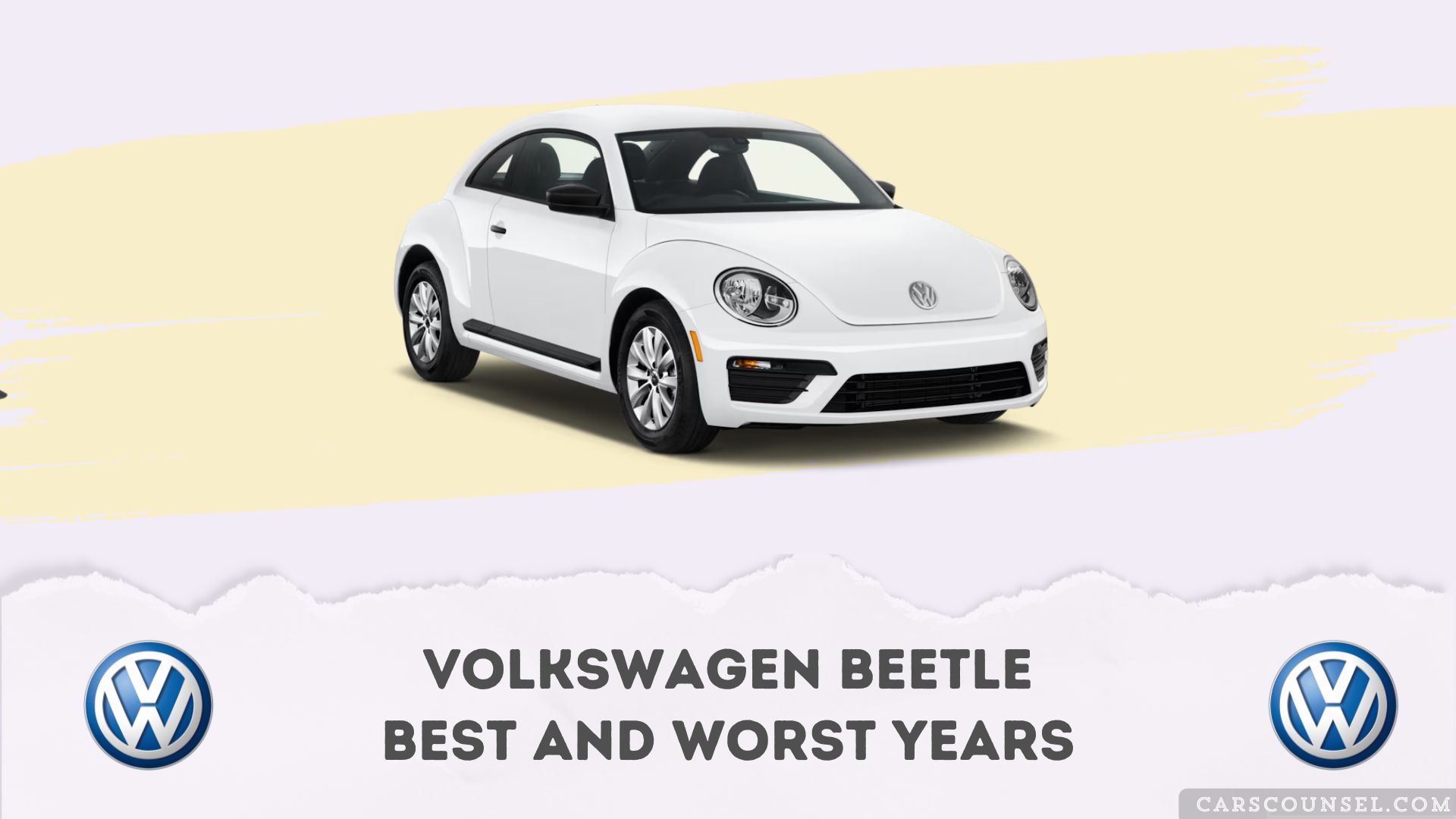
The best Volkswagen Beetle years are the 2015–2019 models with modern turbocharged engines and the 2008–2010 models with the reliable 2.5-liter five-cylinder. Buyers should avoid 1999–2005 automatic models due to severe transmission failures.
These rankings are comparative, and no used Beetle is entirely flawless. Long-term reliability depends heavily on strict maintenance, rust prevention, and verifying the completion of any open recalls.
Meaningful differences exist between the classic air-cooled models, the New Beetle, and the modern A5 generation. Engine choices and transmission types dramatically impact the ownership experience across all eras.
Quick Navigation
Best and Worst Volkswagen Beetle Years at a Glance
| Model Year or Range | Verdict | Main Reason | Buyer Guidance |
|---|---|---|---|
| 2015–2019 | Best Late-Generation Choice | Mature EA888 engines, modern features | Verify DSG service history |
| 2008–2010 | Best Older Choice | Robust 2.5L five-cylinder engine | Check for timing chain wear |
| 1967 | Best Enthusiast Choice | Upgraded 12-volt electrics, classic styling | Inspect for structural rust |
| 2012–2014 | Mixed | Early A5 generation teething issues | Test window regulators and electronics |
| 2006–2007 | Mixed | First years of the 2.5L engine | Demand strict maintenance records |
| 1971–1979 | Approach Carefully | Super Beetle suspension quirks | Inspect MacPherson strut components |
| 1998–2005 (Manual) | Good With Inspection | Avoids fragile automatic transmission | Check 1.8T coil packs and 2.0L oil |
| 1998–2005 (Automatic) | Avoid | Notorious 01M transmission failures | Skip automatic models from this era |
Key Takeaways
- The 2015–2019 models offer the most refined and reliable modern ownership experience.
- Avoid 1999–2005 models equipped with the four-speed automatic transmission due to widespread failures.
- The 2.5-liter five-cylinder engine found in 2006–2010 models is generally robust but requires strict maintenance.
- Classic air-cooled models require specialized knowledge and thorough rust inspections.
- Always verify the VIN for open recalls and arrange an independent pre-purchase inspection.
How We Evaluated the Volkswagen Beetle Model Years
Our analysis examines official safety recalls, government investigations, and consumer complaint patterns across three distinct generations. We also weigh powertrain differences, transmission reliability, and the impact of age on classic models.
Consumer complaints are not confirmed defects or failure rates. A recall does not automatically make a vehicle unreliable, and classic car reliability depends heavily on previous owner care and storage conditions.
Best Volkswagen Beetle Years
2015–2019: Best Late-Generation Choice
The final years of the modern Beetle benefit from the updated EA888 Gen 3 turbocharged engines. These powerplants resolved earlier timing chain tensioner issues and offer excellent performance and efficiency.
Buyers should still verify that the DSG automatic transmission has received its scheduled fluid services. Electrical accessories and infotainment systems are much more stable than the initial 2012 launch models.
2008–2010: Best Older Choice
These New Beetle models feature the mature 2.5-liter inline-five engine. This naturally aspirated powerplant is widely considered one of the most reliable engines Volkswagen produced during this era.
While the engine is robust, buyers must inspect for timing chain wear and ensure the water pump is not leaking. The six-speed automatic transmission is significantly more durable than the earlier four-speed.
1967: Best Enthusiast Choice
The 1967 classic air-cooled Beetle is highly sought after by collectors. It was the final year of the sloping hood design but introduced crucial upgrades like a 12-volt electrical system and dual-circuit brakes.
Finding a rust-free example with matching numbers is essential. These vehicles require specialized mechanical knowledge and are best suited for weekend driving rather than daily commuting.
Best Year by Buyer Type
The 2017 model is the Best Overall choice for modern daily driving, offering a great balance of reliability and technology. The 1967 classic is the Best Enthusiast Choice for collectors seeking the ultimate vintage experience.
Years to Approach Carefully
2012–2014: Mixed
The first three years of the modern A5 generation experienced typical first-year redesign quirks. Owners frequently report issues with power window regulators and early keyless entry modules.
The 2.5-liter five-cylinder engine remains reliable, but buyers should thoroughly test all electronic accessories before purchasing.
2006–2007: Mixed
These years introduced the 2.5-liter engine to the New Beetle lineup. While the block is strong, early models had some teething issues with engine mounts and accessory belts.
Purchase only if you have comprehensive records proving frequent oil changes and proper cooling system maintenance.
1971–1979: Approach Carefully
This era introduced the Super Beetle with MacPherson strut front suspension. Early strut components are prone to wear, and the addition of heavy US safety bumpers and smog equipment complicated the air-cooled engine.
These classics require careful inspection of the front suspension and exhaust system.
Worst Volkswagen Beetle Years
1998–2005 (Automatic): Avoid
The early New Beetle models equipped with the 01M four-speed automatic transmission are notoriously unreliable. This transmission is prone to slipping, harsh shifting, and complete failure, often requiring expensive replacements.
The 1.8T engines from this era also suffer from fragile coil packs and vacuum leaks. Unless you are buying a manual transmission model, skip these years entirely.
Volkswagen Beetle Reliability by Generation
Classic Type 1 (1950–1979)
The original air-cooled Beetle is an automotive icon known for its simple mechanics. However, age and structural rust are the primary concerns, and parts availability varies depending on the exact year.
New Beetle (1998–2010)
Built on the Golf Mk4 platform, this generation revived the classic shape. The 2.0-liter and 1.8T engines are adequate, but the 2.5-liter five-cylinder introduced in 2006 is the clear reliability winner.
Modern Beetle (2012–2019)
The final generation uses the Golf Mk6 platform, offering vastly improved driving dynamics and safety. The transition to turbocharged engines in 2015 significantly improved long-term reliability and performance.
Common Volkswagen Beetle Problems
Transmission Problems
The 01M four-speed automatic in 1998–2005 models is a major failure point. Later six-speed automatics and DSG units are much stronger but require strict fluid maintenance.
Electrical and Accessory Faults
Power window regulators frequently fail across all modern generations, causing the glass to drop into the door. Early 2012–2014 models also suffer from keyless entry module failures.
Engine Cooling and Oil Leaks
The 2.5-liter five-cylinder is prone to water pump failures and plastic thermostat housing cracks. The 1.8T engines require strict adherence to timing belt service intervals to prevent catastrophic failure.
What to Check Before Buying a Used Volkswagen Beetle
Verify the VIN to ensure all open recalls are completed, especially for airbag inflators on older models. Test every power window and door lock to rule out regulator and switch failures.
Inspect the headlights and turn signals to rule out ground wire issues. For classic models, use a magnet to check the lower fenders and running boards for hidden body filler.
Related Buying Guides
- Volkswagen Karmann Ghia best and worst years: A stylish classic alternative for buyers wanting vintage Volkswagen charm without the utilitarian nature of the original Beetle.
- Volkswagen Eos best and worst years: A modern retractable hardtop alternative for buyers seeking open-air driving with more contemporary reliability and comfort.
- Volkswagen CC best and worst years: A sleek four-door coupe alternative for buyers needing more passenger space and modern luxury features.
Frequently Asked Questions
What is the most reliable Volkswagen Beetle engine?
The 2.5-liter inline-five found in 2006–2010 models is widely considered the most reliable. It avoids the complex turbocharging and timing chain issues that plagued other Volkswagen engines of that era.
Why are 1999–2005 automatic Beetles problematic?
These years use the 01M four-speed automatic transmission, which is notorious for premature failure. It frequently slips, enters limp mode, and requires expensive replacements or rebuilds.
Is the modern Volkswagen Beetle a good daily driver?
The 2015–2019 models with the EA888 turbocharged engines make excellent daily drivers. They offer modern safety features, reliable performance, and better fuel economy than older generations.
Do classic Volkswagen Beetles rust easily?
Yes, structural rust is the biggest threat to classic air-cooled models. The floor pans, heater channels, and running boards are highly vulnerable and expensive to repair correctly.
What should I look for when buying a used Beetle?
Prioritize maintenance records over low mileage. Verify that the transmission fluid has been changed on schedule and that the timing chain or belt service is up to date.
Are Volkswagen Beetles expensive to maintain?
Modern Beetles have average maintenance costs for European compact cars, but parts can be pricier than Japanese rivals. Classic models require specialized mechanic knowledge, which can increase labor costs.
Which Volkswagen Beetle Year Should You Buy?
Target the 2015–2019 models for the most reliable modern experience, or the 2008–2010 models for a robust naturally aspirated engine. The 1967 classic remains the top choice for serious collectors.
Avoid 1998–2005 automatic models due to severe transmission defects. Always verify the VIN for open recalls and arrange an independent pre-purchase inspection before finalizing your purchase.