
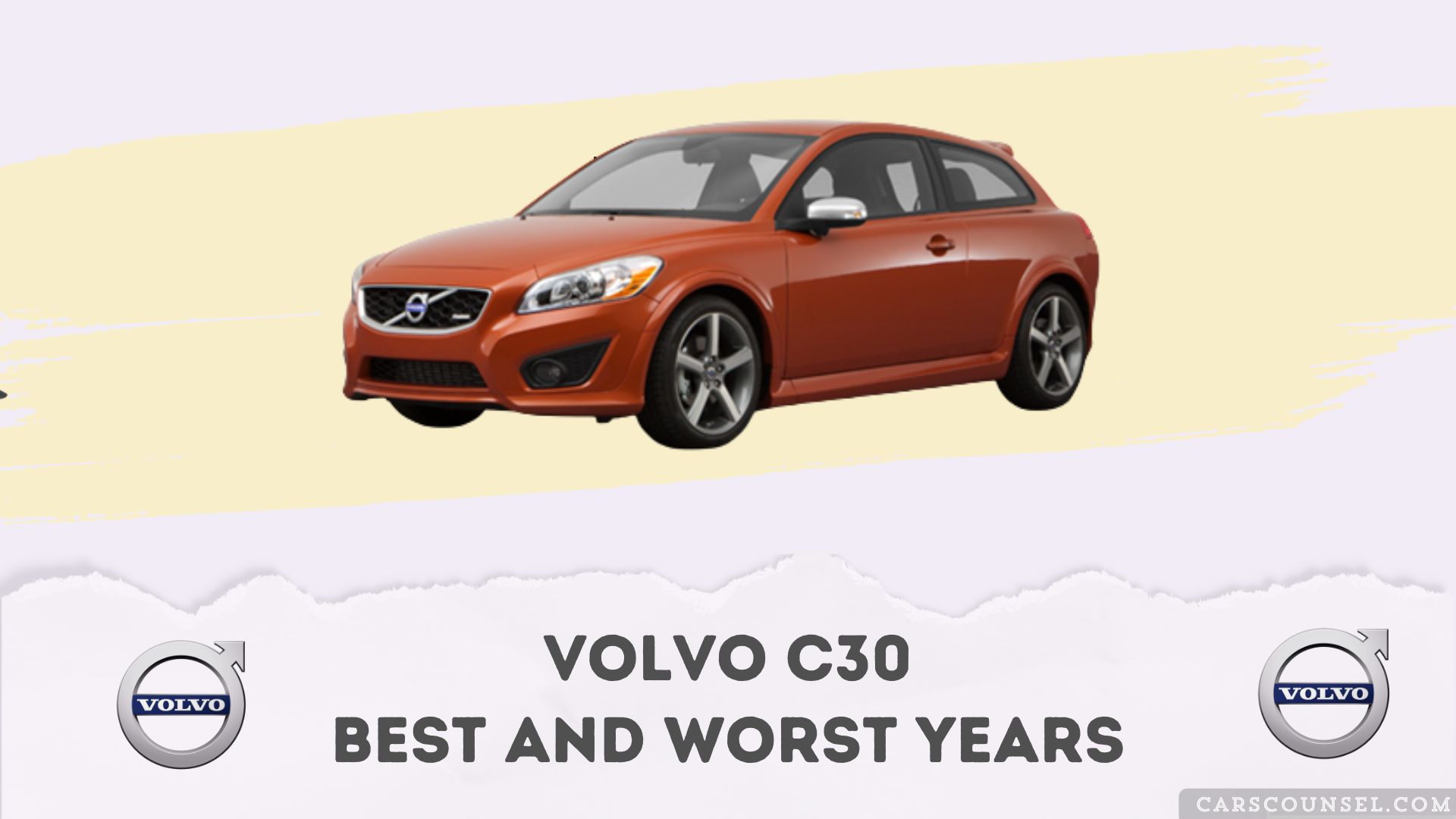
The Volvo C30 is a compact hatchback produced from 2006 to 2013, sharing its platform with the S40 and V50 models. It was available with inline-four and straight-five engines and marketed as a premium hatchback with sporty styling. This article breaks down the best and worst Volvo C30 model years based on reliability, performance, owner complaints, and long-term dependability. We analyze each generation, highlight key issues, and provide a year-by-year reliability guide to help buyers make informed decisions.
Quick Navigation
Volvo C30 Generational Overview
2006–2013 Volvo C30
The Volvo C30 was built for a single generation from 2006 to 2013. It featured front-wheel drive and was powered by four and five-cylinder petrol or diesel engines. The car was based on the Ford C1/Volvo P1 platform, which it shared with the S40/V50/C70 range. In 2010, Volvo updated the C30 with a redesigned front end, new wheel options, updated interior trims, and a fresh color palette. This facelift improved the car’s aesthetics but did not fundamentally change its engineering or reliability profile.
Best Years for the Volvo C30
The most reliable Volvo C30 years are generally considered to be the 2009, 2010, and 2013 model years. These models saw improvements in quality and fewer reported problems compared to earlier years.
2009: Owners reported fewer major mechanical issues, with most problems being minor and related to electrical components. Suspension and transmission reliability improved over previous years.
2010: This model year continued the trend of better reliability, with fewer complaints about suspension and electrical faults. The facelift brought minor improvements to build quality.
2013: The final production year is widely regarded as the most dependable, with most recurring problems from earlier years resolved. Owners report fewer complaints about engine, transmission, and electrical systems.
Worst Years for the Volvo C30
Certain model years of the Volvo C30 are best avoided due to recurring reliability and safety concerns.
2007: Early production issues included frequent suspension problems, particularly with rear suspension bushes. Electrical faults and air conditioning system failures were also common. Keyless entry system malfunctions were frequently reported.
2008: This year faced significant gearbox problems, including a recall for a jammed gear shift mechanism. Owners also reported issues with the anti-skid warning light and ABS pump module failures.
2011–2012: These years saw reports of engine overheating due to loose coolant hose connections. Brake assistance faults and occasional warning lights related to the brake system were also common. The 2012 model had issues with leaking windshields and DPF blockages in diesel variants.
Common Problems Across the Volvo C30 Lineup
Suspension Issues
Many C30s, especially 2007–2008 models, experience problems with rear suspension bushes, leading to unusual noises and compromised handling.
Electrical Faults
Electrical problems, including failures of the keyless entry system and sporadic dashboard warning lights, are reported across all model years but are most prevalent in early models.
Gearbox Problems
The 2008 model year is notable for gearbox issues, including a recall for a jammed gear shift mechanism.
Engine Overheating
2011 and 2012 models are prone to engine overheating due to loose coolant hose connections, which can lead to serious engine damage if not addressed promptly.
Brake Assistance Faults
Some 2011–2012 models have reported brake assistance faults, with warning lights and occasional reduced braking performance.
DPF Issues (Diesel Models)
Diesel C30s, especially from 2012 onward, may experience DPF blockages, leading to warning lights and potential engine damage.
Reliability Breakdown by Year
2013 Volvo C30 Reliability Rating
The 2013 model is considered the most reliable, with most recurring problems resolved. Owners report fewer complaints about engine, transmission, and electrical systems.
2012 Volvo C30 Reliability Rating
This year saw issues with engine overheating, brake assistance faults, and DPF blockages in diesel variants. Leaking windshields were also reported.
2011 Volvo C30 Reliability Rating
Owners reported engine overheating due to loose coolant hoses and occasional brake assistance faults. Electrical issues were less frequent than in earlier years.
2010 Volvo C30 Reliability Rating
This model year continued the trend of improved reliability. Minor electrical and suspension issues were reported, but major mechanical failures were rare.
2009 Volvo C30 Reliability Rating
Owners found this year to be dependable, with fewer complaints about suspension and electrical faults. Most problems were minor and easily resolved.
2008 Volvo C30 Reliability Rating
This year had significant gearbox problems, including a recall for a jammed gear shift mechanism. Suspension and electrical issues were also common.
2007 Volvo C30 Reliability Rating
Early production issues included frequent suspension and electrical faults. Air conditioning system failures and keyless entry malfunctions were reported.
Warranty & Ownership Costs
Maintenance costs for the Volvo C30 are generally higher than average, especially for older models or those requiring specialized parts and labor. Typical service intervals are every 10,000 miles or annually. Common repair expenses include suspension component replacement, timing belt changes, and DPF servicing for diesel models. Warranty coverage varied by generation, with most models receiving standard Volvo coverage for the first few years. Used buyers should consider the vehicle’s maintenance history and check for outstanding recalls or service bulletins.
Buying Guide: What to Look For
The best value is found in the 2009, 2010, and 2013 model years, which offer improved reliability and fewer reported problems.
Avoid 2007 and 2008 models due to frequent suspension, electrical, and gearbox issues.
Inspect suspension components, electrical systems, and coolant hoses for signs of wear or leaks.
Check for timing belt replacement records, especially on higher-mileage cars.
Expect mileage thresholds of 100,000–150,000 miles for well-maintained examples, but higher mileage is possible with proper care.
Look out for DPF issues in diesel models and ensure the system is functioning correctly.
When looking at performance cars, make sure to check out our guides on models like the Volvo 240, Volvo EX90, Volvo P1800 and Volvo XC90. Knowing which model years to target and which to avoid is crucial. Our expert reviews break down these models, providing insights into the years that are celebrated for their engineering excellence and driving satisfaction, as well as those that are best to avoid due to potential issues.
FAQs
Is the Volvo C30 reliable?
The Volvo C30 is generally reliable, especially in later model years (2009, 2010, 2013). Early models (2007–2008) are less dependable due to recurring mechanical and electrical issues.
What year of the Volvo C30 is most dependable?
The 2013 model year is widely regarded as the most dependable, with most recurring problems from earlier years resolved.
What year should you avoid?
Avoid 2007 and 2008 models due to frequent suspension, electrical, and gearbox issues.
What are the most common problems?
Common problems include suspension issues, electrical faults, gearbox problems, engine overheating, brake assistance faults, and DPF blockages in diesel models.
How long does a Volvo C30 last?
With proper maintenance, a Volvo C30 can last 150,000–200,000 miles or more. High-mileage examples are possible, especially with timely servicing.
Conclusion
The Volvo C30 offers a blend of style and safety, but certain model years are best avoided due to recurring reliability and safety concerns. The 2009, 2010, and 2013 model years are the most dependable, while 2007 and 2008 should be approached with caution. Maintenance costs can be higher than average, especially for older models. Buyers should prioritize thorough inspections and review service history to ensure long-term dependability.
