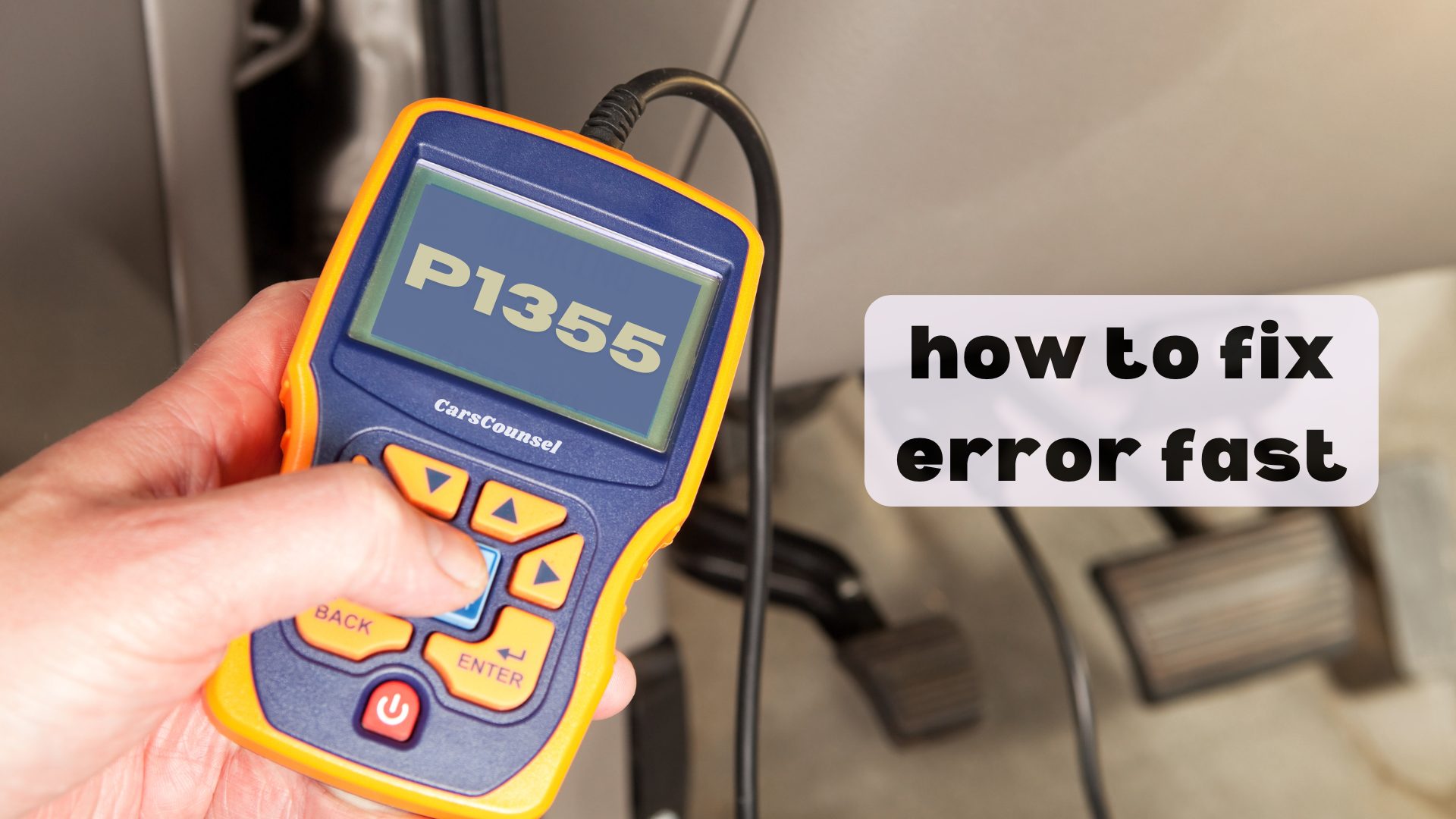
P1355 is a manufacturer-specific OBD-II diagnostic trouble code. Its exact definition depends on the vehicle application, commonly relating to an ignition coil primary circuit fault or a specific cylinder misfire.
Because definitions vary by manufacturer, the exact diagnostic path requires verifying your vehicle’s factory service information. The code identifies a detected condition, not necessarily a failed component.
Quick Navigation
Key Takeaways
- P1355 is a manufacturer-specific code indicating a fault in the ignition coil circuit or a specific cylinder misfire.
- Possible causes include a failed ignition coil, damaged wiring, poor electrical connections, or a faulty engine control module.
- Symptoms often include an illuminated check engine light, engine misfires, rough idling, and reduced power.
- Diagnosis requires verifying the exact factory definition and testing the relevant ignition circuits and components.
P1355 Code Description and Implications
P1355 is a manufacturer-specific code, meaning its exact definition varies by automaker. The powertrain control module uses this code to flag an anomaly within the ignition system.
Some Ford applications: P1355 indicates an Ignition Coil “D” primary circuit fault. The module detects an open or short circuit in the coil’s primary winding.
Some Volkswagen and Audi applications: This code points to a Cylinder 1 ignition activation circuit open. The module detects an open circuit in the ignition coil control circuit for cylinder 1.
Certain General Motors applications: P1355 may indicate an Ignition Coil 5 control circuit fault or an ignition control output high voltage condition.
Because the code is manufacturer-specific, you must verify the exact factory definition for your vehicle before beginning diagnosis. The specific trouble code meaning dictates the test.
Common Causes of the P1355 Code
Ignition coil failure: The internal winding of the ignition coil for the affected cylinder may be open or shorted, preventing the coil from generating a spark.
Wiring and connector issues: Damaged, chafed, or corroded wiring between the engine control module and the ignition coil can interrupt the control signal.
Poor electrical connections: Loose, corroded, or pushed-back pins at the ignition coil connector or the ECM connector can cause an open circuit condition.
Faulty engine control module: In rare cases, an internal failure within the ECM’s ignition driver circuit can prevent the coil from receiving the proper ground or signal.
Symptoms Associated With P1355
Because this code relates to the ignition system, a misfire on the affected cylinder is the primary symptom.
You may experience rough idling, hesitation during acceleration, and a noticeable lack of power.
An illuminated check engine light will appear when this code is stored. In severe cases, the engine may enter a fail-safe or limp mode to protect the powertrain and catalytic converter.
Diagnosing the P1355 Trouble Code
Diagnosis must begin by confirming the exact factory definition and wiring diagram for your specific make, model, and year. Retrieve freeze frame data to understand the conditions when the code set.
For ignition coil circuit faults, inspect the wiring harness and connectors at the affected ignition coil. Use a digital multimeter to check the primary circuit for opens or shorts to ground.
Swap the ignition coil from the affected cylinder to a different cylinder. Clear the codes and test drive. If the code moves to the new cylinder, the ignition coil is faulty.
Repairing the P1355 Issue
Repairs must follow confirmed diagnostic testing. Do not replace the ignition coil without verifying the wiring harness and control circuits first.
If the wiring is damaged or the connector is corroded, repair the harness and clean the terminals.
If the ignition coil fails testing, replace it with a component meeting the exact vehicle specification. If multiple coils are old, consider replacing them as a set to prevent future misfires.
Cost Considerations for P1355 Repairs
Repair costs depend on the confirmed root cause, component accessibility, and local labor rates. Replacing a single ignition coil is generally straightforward.
If the wiring harness requires extensive repair or the engine control module needs replacement, parts and labor costs will increase. Always factor in the cost of proper diagnostic time.
Prevention Strategies for Future Occurrences
Inspecting exposed wiring and electrical connectors during routine maintenance can help identify developing heat damage or corrosion before it causes an open circuit.
Replacing spark plugs at the manufacturer’s recommended intervals helps prevent excessive gap wear, which can overwork and prematurely fail the ignition coils.
Troubleshooting Tips and Best Practices
Always verify the exact definition of P1355 for your specific vehicle. Assuming it is always a cylinder 1 misfire can lead to misdiagnosis when an ignition coil “D” fault is the actual cause on a Ford application.
Do not ignore related misfire codes. If P1355 is accompanied by a specific cylinder misfire code (like P0301 or P0304), it strongly supports an ignition coil or wiring issue.
Check for technical service bulletins related to updated ignition coil part numbers or revised wiring harnesses for your specific model year.
More OBD-II Codes
| P1354 | P1353 | P1352 | P1351 |
| P1350 | P1349 | P1361 | P1362 |
| P1363 | P1364 | P1365 | P1366 |
| P0301 | P0302 | P0303 | P0304 |
| P0300 | P0305 | P0306 | P0335 |
| P0340 | P0351 | P0352 | P0353 |
Frequently Asked Questions
Is P1355 a generic or manufacturer-specific code?
No. P1355 is a manufacturer-specific code. Its exact definition and diagnostic procedure vary depending on the vehicle make, model, and year. Always consult factory service information.
Can a bad ignition coil cause a P1355 code?
Yes. On many applications, a failed ignition coil or an open circuit in the coil’s primary winding will trigger this code. Testing the coil and swapping it to another cylinder can confirm the failure.
Is it safe to drive with a P1355 code?
Driving is not recommended if the engine is misfiring severely. A continuous misfire can overheat and destroy the catalytic converter, while limp mode may limit acceleration and power.
Will replacing the ignition coil always fix P1355?
Not always. P1355 indicates a circuit fault. The root cause could be damaged wiring, a corroded connector, or a failed engine control module driver. Proper electrical testing is required first.
Can low battery voltage cause a P1355 code?
While low battery voltage can cause various electrical glitches, P1355 specifically points to an ignition coil circuit fault or open circuit. A voltage drop could theoretically starve the coil, but wiring and coil issues are more common.
What Should You Do About the P1355 Code?
Confirm the exact factory definition and wiring diagram for your specific vehicle application. Inspect the relevant ignition coils, wiring harnesses, and connectors for physical damage or circuit faults.
Perform targeted electrical testing on the relevant system and components to isolate the fault. Repair the confirmed root cause, then verify the repair by clearing the codes and monitoring live data.

