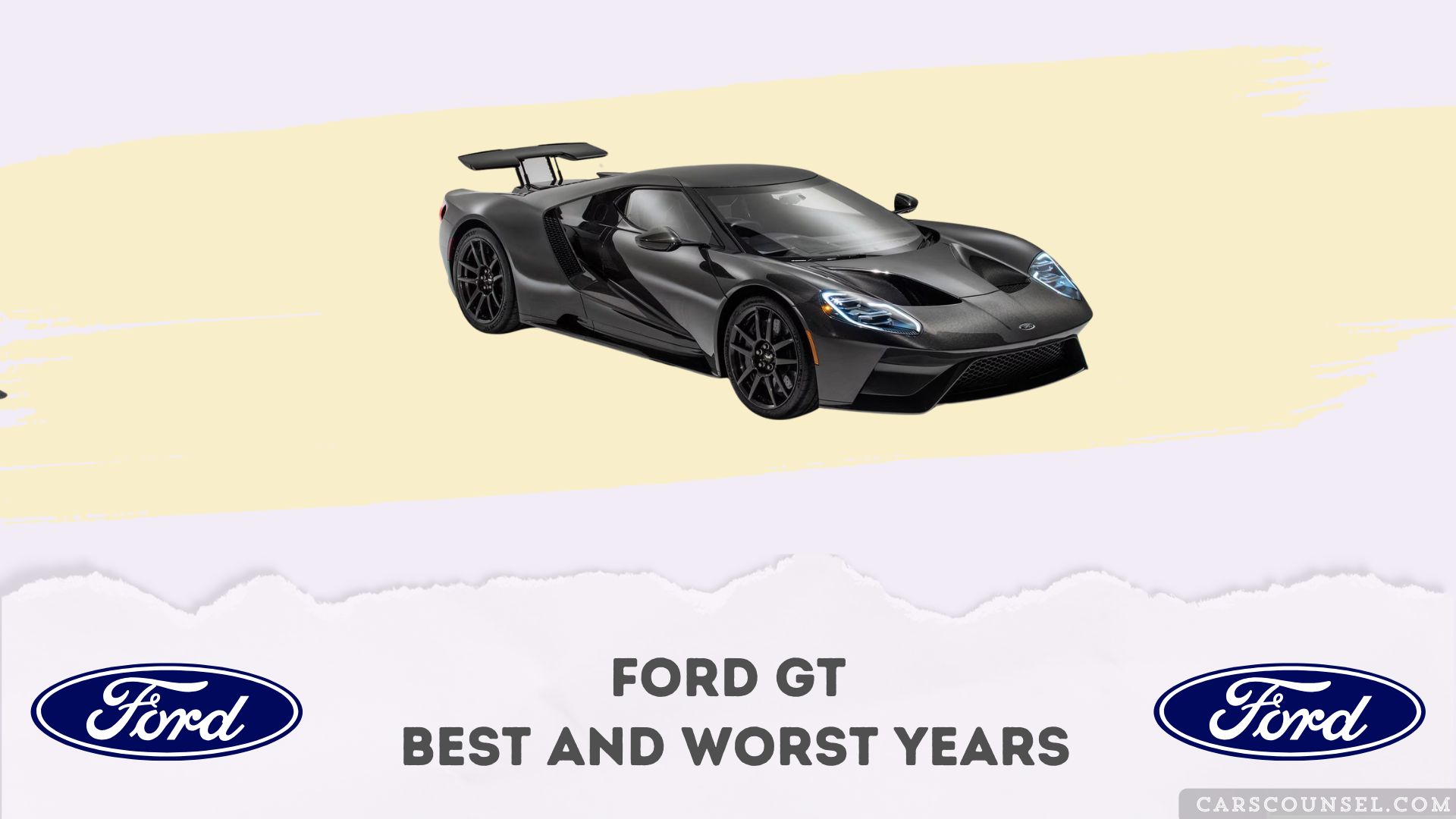
The 2005 and 2006 Ford GT models are the best older choices, featuring a robust supercharged V8. The 2020 through 2022 models represent the best late-generation choices with refined twin-turbo V6 performance. Early second-generation years require careful inspection.
These rankings are comparative. No exotic supercar is flawless, and long-term reliability heavily depends on strict maintenance, climate-controlled storage, and careful driving.
Meaningful differences exist between the mechanical feel of the first-generation supercharged V8 and the modern twin-turbocharged EcoBoost V6 found in the second generation.
Quick Navigation
Best and Worst Ford GT Years at a Glance
| Model Year or Range | Verdict | Main Reason | Buyer Guidance |
|---|---|---|---|
| 2005-2006 | Best Older Choice | Robust supercharged V8 | Verify spark plug threads and clutch hydraulics. |
| 2017-2019 | Approach Carefully | First years of EcoBoost V6 | Check for engine replacement history and track use. |
| 2020-2022 | Best Late-Generation Choice | Refined cooling and 660 hp | Review software updates and carbon fiber condition. |
Key Takeaways
- The 2005 and 2006 models offer exceptional supercharged V8 durability.
- Second-generation models (2017-2022) use a twin-turbo V6 with higher track cooling demands.
- First-year redesigns (2017) saw some engine replacements under warranty.
- Always verify open recalls and specialized supercar service history.
- Recent second-generation models have limited long-term ownership data.
How We Evaluated the Ford GT Model Years
Our analysis considers manufacturer service campaigns, specialized supercar registries, owner reports, and powertrain differences.
Complaints are not confirmed defects, and low production volumes mean traditional reliability metrics do not apply. A recall does not automatically ruin a year.
Recent models have less ownership history. Best means comparatively stronger within this exclusive, low-volume supercar segment.
Best Ford GT Years
2005 and 2006 (Best Older Choice)
The first-generation Ford GT features a 5.4-liter supercharged V8 producing 550 horsepower. This engine is based on a robust truck block, making it remarkably durable for a mid-2000s supercar.
These years compare favorably because they lack the extreme thermal demands of modern twin-turbo setups. Preferred configurations include cars with documented clutch master cylinder replacements.
Buyers should inspect the cylinder heads for previous spark plug thread repairs. Verification of the fuel pump module condition is also essential before purchase.
2020 through 2022 (Best Late-Generation Choice)
The final years of the second generation received a power bump to 660 horsepower and improved cooling systems. An available Akrapovic titanium exhaust also reduced weight.
These years compare favorably over the 2017 through 2019 models because Ford addressed early thermal management concerns. The infotainment system also received necessary software refinements.
Long-term evidence remains limited due to low production numbers. Buyers must verify that all specialized carbon fiber bodywork remains undamaged and properly aligned.
Best Year by Buyer Type
Best Enthusiast Choice
The 2005 and 2006 models remain the best enthusiast choices. The supercharged V8 delivers a raw, mechanical driving experience that modern twin-turbo engines cannot replicate.
Years to Approach Carefully
2017 through 2019 (Approach Carefully)
The initial second-generation years introduced the 3.5-liter twin-turbo EcoBoost V6. While incredibly fast, early examples experienced severe thermal stress during sustained track use.
Some owners reported catastrophic engine failures requiring complete block replacements under warranty. Ford addressed many cooling issues in later years, making these early builds riskier.
Approach these years carefully. Demand comprehensive service records proving whether the engine was replaced or updated with the latest thermal management components.
Worst Ford GT Years
The Ford GT does not have a traditional worst year due to its extremely low production volume and hand-built nature.
However, the 2017 model year is the most challenging. As the first year of a complex carbon-fiber supercar, it suffered from early teething issues and track cooling limitations.
Ford GT Reliability by Generation
First Generation (2005-2006)
This generation is celebrated for its mechanical simplicity and robust powertrain. The aluminum space frame and supercharged V8 age gracefully when properly maintained.
It shares no meaningful architecture with modern EcoBoost vehicles. Its primary vulnerabilities are age-related rubber components, hydraulic clutch lines, and specialized suspension bushings.
Second Generation (2017-2022)
The second generation utilizes a carbon fiber monocoque and a high-strung twin-turbo V6. It shares engine architecture with the Ford EcoBoost family, but heavily modified for track use.
Reliability depends entirely on strict adherence to factory track preparation protocols. Electrical gremlins and complex active aerodynamic systems require specialized diagnostic equipment.
Common Ford GT Problems
Spark Plug Thread Blowout
The 2005 and 2006 supercharged V8 engines can experience spark plugs blowing out of the cylinder head under heavy boost.
This requires installing specialized thread inserts to permanently repair the cylinder head. Buyers should check service records to see if this preventative fix was performed.
Clutch Master Cylinder Failure
First-generation models frequently suffer from failing clutch master cylinders. The internal seals degrade over time, leading to a soft pedal and difficult gear engagement.
Replacing the hydraulic components with upgraded aftermarket or refreshed OEM parts resolves the issue. It is a routine maintenance item for these specific years.
EcoBoost Track Cooling Limits
Early second-generation models (2017-2019) can overheat during sustained high-speed track sessions. The intercoolers and oil coolers struggle to manage the twin-turbo V6 thermal loads.
Ford introduced software updates and hardware revisions in later years. Owners tracking early models must strictly follow factory cooldown procedures to prevent engine damage.
What to Check Before Buying a Used Ford GT
- Verify the complete service history with a specialized supercar facility.
- Check for open recalls and completed warranty engine replacements.
- Inspect the carbon fiber bodywork for structural cracks or misaligned panels.
- Test the active aerodynamic systems and hydraulic suspension lifting mechanisms.
- Scan for lingering diagnostic codes in the complex electrical network.
- Arrange an independent pre-purchase inspection by a certified Ford GT technician.
Related Buying Guides
If you are exploring other high-performance supercars or expanding your Ford collection beyond the track, consider these alternative guides.
- Audi R8 best and worst years: A naturally aspirated V10 alternative with daily-driver usability.
- Porsche 911 best and worst years: The benchmark sports car offering immense track capability and reliability.
- Ferrari 488 best and worst years: A direct twin-turbo V8 rival from Maranello with exotic prestige.
- Ford F-350 best and worst years: For buyers needing heavy-duty towing capability instead of supercar performance.
- Ford Maverick best and worst years: A practical, fuel-efficient compact truck for daily utility.
- Ford Transit best and worst years: Essential research for commercial van and cargo transport needs.
- Ford Bronco Sport best and worst years: A compact crossover option for light off-road trails.
Frequently Asked Questions
Is the Ford GT a reliable daily driver?
No. The Ford GT is a low-volume, track-focused supercar. It requires specialized maintenance, climate-controlled storage, and frequent fluid changes, making it impractical for daily commuting.
Did Ford replace engines in the 2017 GT?
Yes. Some 2017 and 2018 models experienced engine failures during track use. Ford replaced several engines under warranty and implemented cooling updates to prevent future failures.
What is the most common first-generation issue?
The most common mechanical issue is the spark plug blowing out of the cylinder head. Installing thread inserts and replacing the clutch master cylinder are standard preventative fixes.
Are second-generation models too new to judge?
While the 2020 through 2022 models are the best late-generation choices, long-term ownership data remains limited. Their complex carbon fiber and hybrid-adjacent systems require specialized care.
Does the Ford GT hold its value?
Yes. Both generations are highly collectible. Well-maintained examples with low mileage and documented service history frequently appreciate or hold their value exceptionally well over time.
Should I avoid the 2017 model year?
You should approach the 2017 model year carefully. It is the first year of the second generation and experienced early thermal management issues that were refined in later years.
Which Ford GT Year Should You Buy?
The 2005 and 2006 models offer the best older choice for buyers seeking a robust, supercharged V8 experience. They are mechanically simpler and highly collectible.
For modern performance, the 2020 through 2022 models represent the best late-generation choices. They feature refined cooling systems and increased horsepower over the early second-generation cars.
Always verify the VIN for open recalls and demand comprehensive service records. An independent inspection by a specialized supercar technician is mandatory before purchasing any Ford GT.

