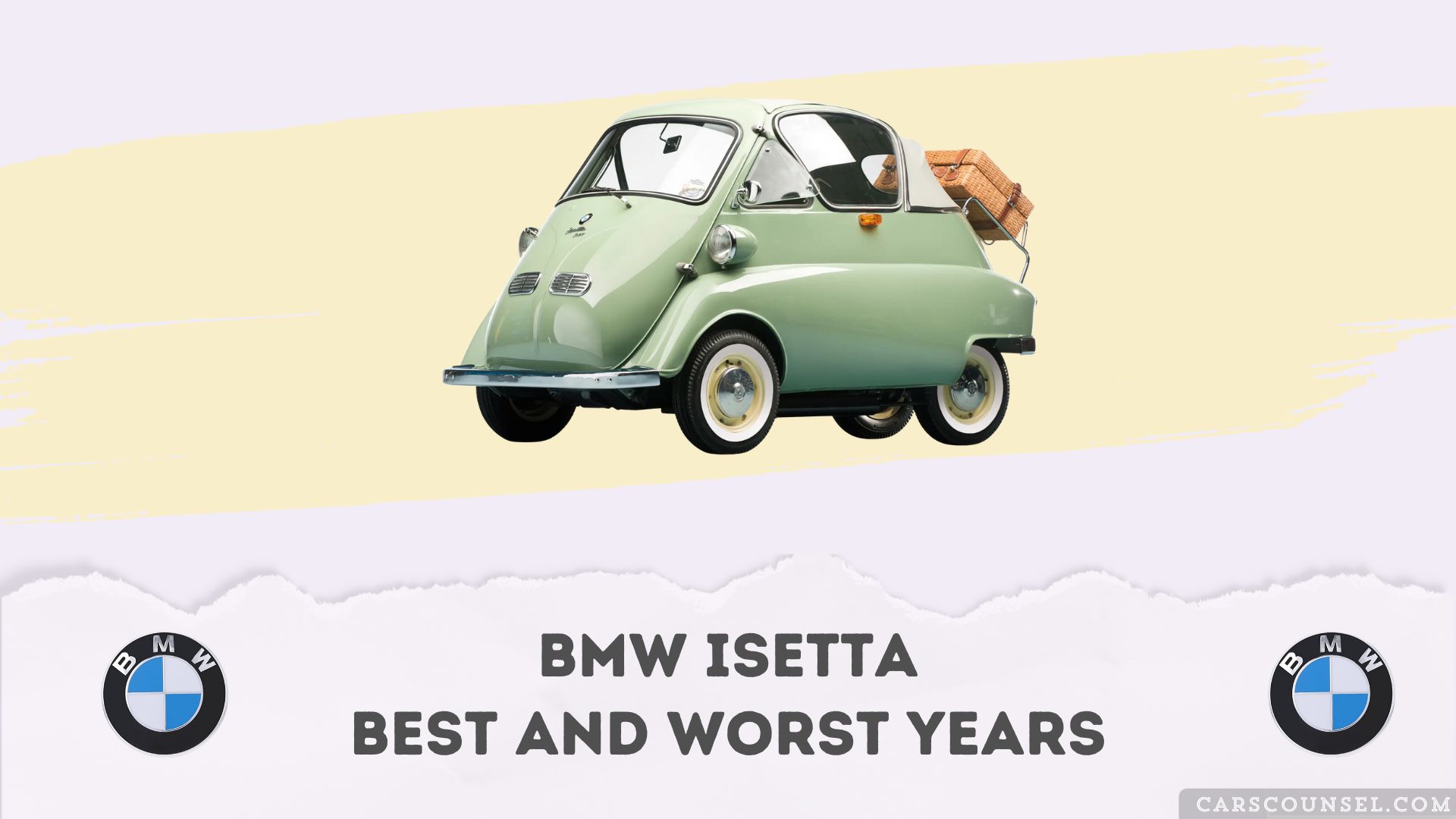
The best years for the BMW Isetta are 1957 through 1962, encompassing the Isetta 300 generation with its more capable engine and later sliding-window improvements. Buyers should approach the 1955 and 1956 Isetta 250 models with careful inspection due to their lower power output and early-production quirks.
Rankings are comparative, and no vintage microcar is flawless. Maintenance history, rust prevention, and proper storage matter far more than the specific model year when evaluating these classic vehicles.
Meaningful differences exist between the early 247cc single-cylinder engine and the later 298cc unit. Later models also feature updated window designs and improved drivetrain components that enhance everyday usability and collector appeal.
Quick Navigation
Best and Worst BMW Isetta Years at a Glance
| Model Year | Verdict | Main Reason | Buyer Guidance |
|---|---|---|---|
| 1955-1956 (Isetta 250) | Good With Inspection | Lower power and early drivetrain components | Verify engine compression and Hardy disc condition |
| 1957-1962 (Isetta 300) | Best Choice | Upgraded 298cc engine and sliding-window updates | Prioritize rust-free examples with documented maintenance |
Key Takeaways
- Strongest choices are the 1957-1962 Isetta 300 models.
- Early 1955-1956 models require careful mechanical vetting.
- The 298cc engine offers noticeably better flexibility than the 247cc unit.
- Rust is the primary enemy of the Isetta’s tubular frame and floor pans.
- The Dynastart starter-generator requires specialized knowledge to repair.
- Always verify the chassis number and check for completed drivetrain services.
- An independent pre-purchase inspection by a microcar specialist is essential.
How We Evaluated the BMW Isetta Model Years
Analysis considers manufacturer specifications, historical production changes, classic car ownership patterns, and common mechanical failure points.
Complaints and forum reports are not confirmed defects. A known issue does not automatically make a year unreliable.
Vintage vehicles have limited modern safety data. Best means comparatively stronger for classic ownership, not flawless.
Best BMW Isetta Years
1957-1962 (Isetta 300)
The Isetta 300 represents the peak of the model’s development. BMW introduced the 298cc engine in early 1956, but the 1957 through 1962 models benefit from settled production and the October 1956 introduction of the Moto Coupé DeLuxe.
This update replaced the bubble windows with longer sliding side windows, improving ventilation and structural rigidity. The 13-horsepower engine provides better low-end torque for climbing gradients.
Buyers should still inspect the rubber Hardy discs in the drivetrain and ensure the chain drive has been properly maintained in its oil bath.
Best Year by Buyer Type
Best Enthusiast Choice: 1957-1962 Sliding-Window Models
Collectors and enthusiasts generally prefer the later Moto Coupé DeLuxe versions. The sliding windows offer a more classic aesthetic and better airflow than the earlier bubble canopies.
Years to Approach Carefully
1955-1956 (Isetta 250)
The earliest BMW Isettas use a 247cc motorcycle engine producing 12 horsepower. While historically significant, these models struggle more on inclines and require more frequent mechanical attention.
Early production examples may also feature older suspension bushings and brake components that demand immediate restoration-level investment. Approach these years only if you are prepared for a thorough mechanical refresh.
Worst BMW Isetta Years
1955 (First-Year Production)
As the first year of BMW’s Isetta production, 1955 models feature the smallest 247cc engine and early manufacturing quirks. Parts availability for specific 1955 components can be more difficult than for the later 300 models.
These vehicles are best suited for dedicated restorers rather than buyers seeking a reliable weekend driver.
BMW Isetta Reliability by Generation
Standard Isetta 250 (1955-1956)
BMW re-engineered the original Iso design with a 247cc single-cylinder four-stroke engine. The cast-iron crankcase and aluminum head were robust, but the 12-horsepower output limited highway usability.
Isetta 300 (1956-1962)
Responding to changing German tax and licensing laws, BMW enlarged the engine to 298cc in February 1956. This bumped output to 13 horsepower and improved torque. The later sliding-window models are the most refined.
Common BMW Isetta Problems
Rust and Corrosion
The Isetta’s body and tubular frame are highly susceptible to rust. Inspect the floor pans, battery compartment, wheel arches, and the base of the front-hinged door. Poorly executed restorations often hide filler over rust holes.
Drivetrain and Hardy Disc Wear
Power travels from the gearbox through a rubber cardan joint known as a Hardy disc, then through a chain drive in an oil bath. The rubber discs degrade over time and can cause drivetrain clunking if not replaced.
Dynastart Unit Failures
The Isetta uses a combined starter and generator called a Dynastart. These units are complex, prone to internal wear, and require specialized vintage electrical knowledge to rebuild or replace.
Kingpin and Suspension Wear
The front suspension relies on kingpins that wear quickly if the vehicle is driven aggressively or stored improperly. Excessive play in the steering is a common sign of neglected front-end maintenance.
What to Check Before Buying a Used BMW Isetta
- Verify the chassis number and engine stampings match.
- Inspect the floor pan and door hinges for structural rust.
- Check the rubber Hardy discs for cracking or separation.
- Ensure the chain drive oil bath is clean and properly filled.
- Test the Dynastart unit for smooth starting and charging.
- Inspect the front kingpins for vertical play.
- Verify the operation of the three-wheel drum brake system.
- Arrange an inspection by a vintage microcar specialist.
Related Buying Guides
The Isetta is a specialized weekend classic. Buyers needing modern daily reliability, safety, and space should consider contemporary vehicles.
- BMW i3 best and worst years: A modern electric city car that captures BMW’s innovative spirit for urban commuting.
- BMW 3 Series best and worst years: Offers modern practicality, daily comfort, and classic BMW driving dynamics.
- BMW X4 best and worst years: Provides modern cargo space and all-weather capability for daily family use.
- BMW X6 best and worst years: Delivers contemporary luxury and performance for those outgrowing classic microcars.
- BMW i8 best and worst years: Showcases BMW’s modern hybrid performance engineering.
- BMW 4 Series best and worst years: A modern coupe alternative for buyers seeking contemporary handling and luxury.
Frequently Asked Questions
Is the BMW Isetta reliable?
The Isetta 300 is generally reliable for a vintage microcar, but the Standard 250 requires more frequent mechanical attention. Overall dependability relies entirely on proper storage and meticulous maintenance.
What year of the BMW Isetta is most dependable?
The 1957 through 1962 Isetta 300 models are the most dependable. They feature the upgraded 298cc engine and later sliding-window improvements that enhance both usability and structural longevity.
What year should you avoid?
Dedicated restorers appreciate all years, but casual buyers should approach 1955 models carefully. First-year production quirks and the smaller 247cc engine make them more demanding to own and maintain.
What are the most common problems?
Rust in the floor pans and frame is the primary concern. Owners also report wear on the rubber Hardy discs, Dynastart electrical failures, and front kingpin degradation.
How long does a BMW Isetta last?
With proper climate-controlled storage and regular mechanical refreshes, a BMW Isetta can last indefinitely. Longevity depends entirely on rust prevention and the owner’s willingness to source vintage components.
Are parts still available for the BMW Isetta?
Yes, a strong network of classic BMW specialists and microcar clubs reproduction many components. However, specific early 1955 parts and original Dynastart units can be expensive or require custom rebuilding.
Which BMW Isetta Year Should You Buy?
The 1957 through 1962 Isetta 300 models offer the best balance of usability, collector appeal, and mechanical refinement. The upgraded 298cc engine and sliding windows make them superior weekend drivers.
Early 1955 and 1956 models remain historically significant but demand a higher tolerance for mechanical quirks and restoration expenses. Regardless of the year, rust is the ultimate deciding factor.
Always verify the chassis number, inspect the drivetrain rubber components, and arrange a pre-purchase evaluation by a qualified microcar specialist before finalizing your purchase.

