The Ferrari FF is a grand touring car produced by Ferrari from 2011 to 2016. This four-seat shooting brake replaced the 612 Scaglietti and introduced Ferrari’s first four-wheel-drive system. This article breaks down the best and worst model years based on reliability, performance, owner complaints, and long-term dependability.
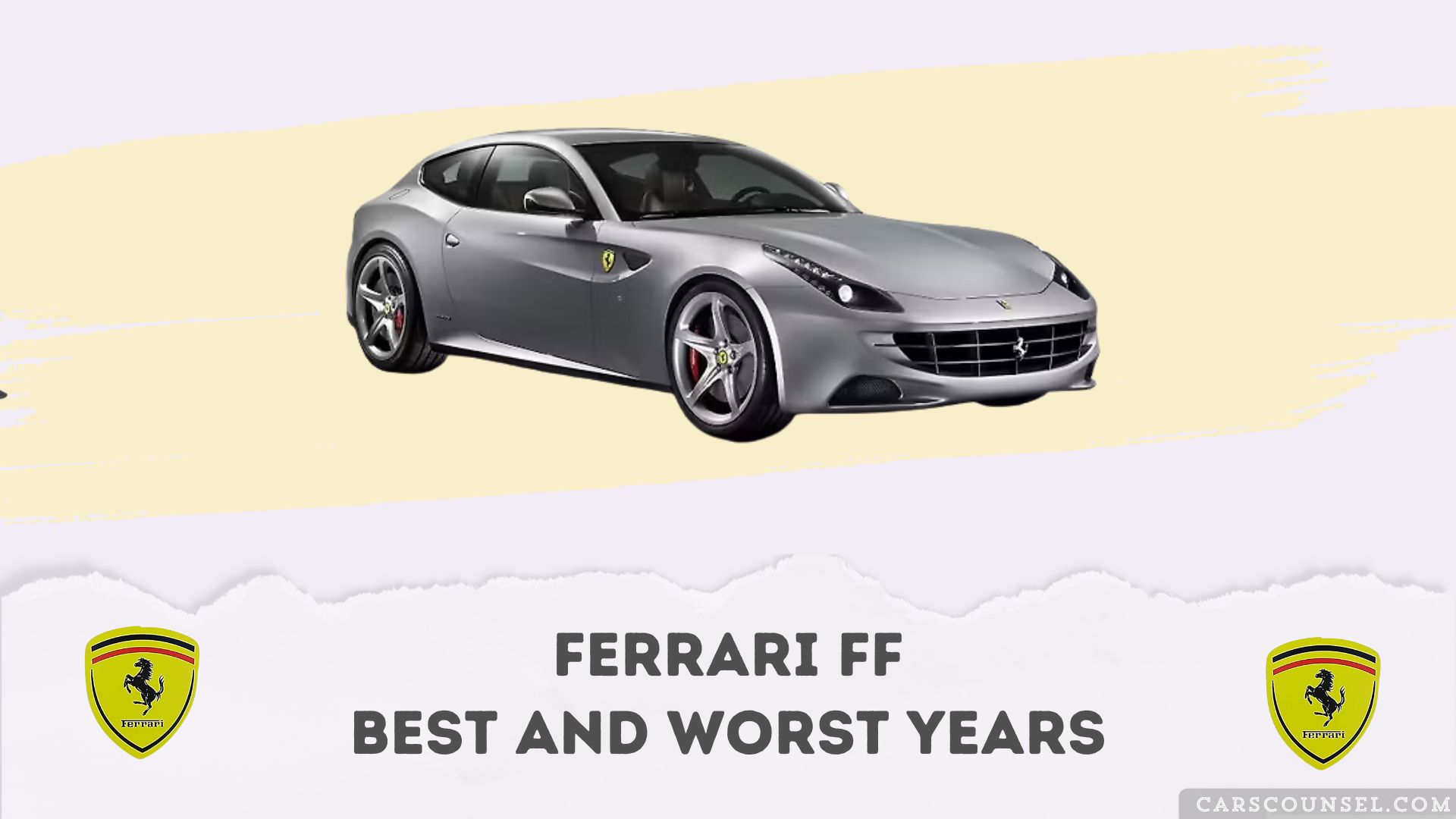
Ferrari manufactured 2,291 units of the FF during its five-year production run. The FF featured a 6.3-liter V12 engine and served as Ferrari’s flagship four-seater until the GTC4Lusso replaced it in 2016.
Quick Navigation
Ferrari FF Generational Overview
Single Generation (2011-2016)
The Ferrari FF maintained a single generation throughout its production life. Development began in 2007, and the car debuted at the Geneva International Motor Show in March 2011. Production started immediately at Ferrari’s Maranello facility, with the company announcing plans to build 800 units annually.
The FF featured a 6.3-liter V12 engine producing 651 horsepower and advanced four-wheel-drive technology through its patented PTU system. Upon release, it became the world’s fastest four-seater car and Ferrari’s second-fastest grand tourer after the 599 GTO. The model used a seven-speed dual-clutch automatic transmission and offered seating for four passengers.
Ferrari made minimal changes across model years, with most updates limited to custom finishes and minor refinements. The shooting brake design and mechanical specifications remained consistent from 2012 through 2016. All FF models featured the same powertrain, four-wheel-drive system, and core engineering throughout production.
Best Years for the Ferrari FF
The Ferrari FF maintained consistent engineering across its production run, making certain years more desirable based on accumulated improvements and reduced early-production issues.
2015-2016: These final production years represent the most refined versions of the FF. Ferrari had addressed early teething problems by this point, and these models command higher resale values in the used market. Build quality showed improvement, and any manufacturing inconsistencies from earlier years had been resolved.
2014-2015: Mid-production models offer a balance between initial depreciation and reliability improvements. These years avoided the first-year production concerns while maintaining better availability than final-year models. The mechanical systems had proven themselves by this point, and Ferrari service departments had developed better solutions for common maintenance needs.
2013: As the second full production year, 2013 models benefited from early feedback without the premium pricing of later years. These cars had moved past initial launch issues while offering better value than newer examples. The 2013 FF maintained all core features including four-wheel drive, V12 power, and the seven-speed dual-clutch transmission.
Worst Years for the Ferrari FF
Certain model years present higher risk due to early production challenges and specific mechanical concerns.
2012: The first production year carries typical launch-model risks. Early 2012 FF models were subject to multiple recalls, including a serious Takata airbag inflator recall affecting passenger safety. A brake fluid reservoir cap recall also affected 2012 models, which could result in partial or total loss of brake function. First-year cars may also exhibit build quality variations as Ferrari refined manufacturing processes.
Early 2013: Models from early 2013 production still fall within the initial manufacturing period and may share some first-year concerns. These cars lack the refinements and problem-solving that came with later production experience. PTU and transmission issues began appearing in these early models as they accumulated mileage.
Common Problems Across the Ferrari FF Lineup
PTU Failure
The Power Transfer Unit controlling the FF’s four-wheel-drive system is prone to failure due to fluid ingress, typically caused by a faulty crankcase seal. Replacement costs approximately $35,000, though specialists can repair and upgrade the unit for around $12,000. This represents the most significant and expensive failure point across all FF model years.
Dual-Clutch Transmission Issues
The seven-speed dual-clutch transmission can develop leaks and sensor failures requiring rebuilding or replacement. Owners should verify smooth shifting through all gears during test drives. Transmission problems often manifest as rough gear changes or error codes related to hydraulic pressure loss.
Brake System Recall
The brake fluid reservoir cap may not vent properly, creating a vacuum that results in brake fluid leaks. This defect can lead to partial or total loss of brake function, affecting all FF model years from 2012-2016. Ferrari issued recalls to replace the cap and update warning software.
Radiator and Oil Leaks
The radiator’s plastic tank is prone to leaking after approximately 100,000 miles. The oil pan can also develop drips over time. Both issues require monitoring during regular service intervals.
Battery and Electrical Problems
Lithium-based batteries are expensive to replace and prone to failure if the car sits idle. Dead batteries can trigger obscure error codes throughout the electrical system. The Manettino switch and tire pressure sensors also fail regularly.
Airbag Recall
2012 FF models were subject to a Takata airbag recall due to inflators that could explode during crashes from propellant degradation. Ferrari replaced passenger frontal airbag assemblies with alternate inflators to address this safety concern.
Reliability Breakdown by Year
2016 Ferrari FF Reliability Rating
The 2016 model represents the final production year with the most refined build quality. These cars benefited from five years of manufacturing experience and problem-solving. The PTU and transmission issues remain present but are well-documented, allowing buyers to budget for preventive maintenance or repairs.
2015 Ferrari FF Reliability Rating
2015 models offer strong reliability within the FF lineup and command premium pricing in the used market. These late-production cars avoided first-year issues while maintaining good parts availability. All 2015 models are subject to the brake fluid reservoir cap recall affecting the entire production run.
2014 Ferrari FF Reliability Rating
The 2014 FF represents mid-production reliability with established service procedures for common problems. These models maintained the same mechanical specifications as other years, including the V12 engine and four-wheel-drive system. PTU and transmission concerns apply equally to 2014 models.
2013 Ferrari FF Reliability Rating
2013 marked the second full production year with improvements over the launch model. These cars feature four seats, four-wheel drive, and the 6.3-liter V12 engine in the same configuration as other years. Early 2013 production units may still exhibit first-generation concerns, while later builds show better consistency.
2012 Ferrari FF Reliability Rating
The 2012 model year launched the FF with typical first-year production challenges. Multiple recalls affected 2012 models, including serious brake and airbag safety concerns. The 2012 FF introduced Ferrari’s first four-wheel-drive system and replaced the 612 Scaglietti. As the newest design at launch, these cars experienced the highest frequency of undiscovered issues.
Warranty and Ownership Costs
Annual maintenance for a Ferrari FF typically ranges from $1,500 to $3,000 for routine services including oil changes, inspections, and basic upkeep. Total annual ownership costs including insurance and maintenance reach $10,000 to $20,000. Diagnostic fees alone cost $300 to $500 before any repair work begins.
Dealership labor rates run $200 to $300 per hour on top of expensive parts costs. Major repairs like clutch or transmission replacements exceed $10,000. The PTU represents the single most expensive repair, with replacement units costing approximately $35,000 or specialist repairs around $12,000.
Ferrari FF models originally sold for $295,000 to $300,000 new. Early 2012-2013 models with low mileage now sell for significantly less than late-production 2015-2016 examples in similar condition. Buyers should budget substantial reserves for maintenance and repairs beyond typical ownership costs.
Temperature-controlled storage is recommended to preserve vehicle condition and protect battery life. Lithium batteries require trickle charging when cars sit idle to prevent expensive replacement needs and electrical system error codes.
Buying Guide: What to Look For
Best Value Years
The 2014-2015 model years offer the best balance between price and reliability. These mid-production cars avoided first-year issues while costing less than final-year 2016 models. Late 2013 production units also provide good value if build dates confirm they were manufactured after initial problem-solving.
Years to Avoid
Avoid 2012 models due to multiple safety recalls and first-year production concerns. Early 2013 production carries similar risks. Always verify recall completion on any FF, particularly the brake fluid reservoir cap and airbag recalls affecting safety.
Key Components to Inspect
Have a qualified Ferrari specialist inspect the PTU thoroughly before purchase, as repairs cost $12,000 to $35,000. Test the dual-clutch transmission for smooth shifts through all gears and check for leaks or error codes. Verify battery condition and ensure the car starts properly without electrical faults.
Inspect the radiator for leaks, particularly on cars approaching 100,000 miles. Check the oil pan and engine area for drips or seepage. Test all Manettino switch positions and verify tire pressure sensors function correctly.
Mileage Considerations
Ferrari FF models typically show low mileage due to their exotic car status and ownership patterns. Cars with documented service history from authorized Ferrari dealers or reputable specialists prove most reliable. Budget significantly more for high-mileage examples approaching 50,000 to 100,000 miles, as major services and component replacements become necessary.
When looking at performance cars, make sure to check out our guides on models like the Ferrari 812, Ferrari California, Ferrari 488 and Ferrari F40. Knowing which model years to target and which to avoid is crucial. Our expert reviews break down these models, providing insights into the years that are celebrated for their engineering excellence and driving satisfaction, as well as those that are best to avoid due to potential issues.
FAQs
Is the Ferrari FF reliable?
The Ferrari FF requires expensive maintenance and is prone to costly PTU and transmission failures. While the V12 engine proves durable, the complex four-wheel-drive system creates reliability challenges requiring specialist knowledge and substantial repair budgets.
What year of the Ferrari FF is most dependable?
The 2015-2016 model years represent the most refined and dependable FF examples. These late-production cars benefited from manufacturing improvements and problem-solving developed over the five-year production run.
What year should you avoid?
Avoid 2012 models due to multiple safety recalls including brake system and airbag issues. First-year production also carries typical launch-model risks with undiscovered problems and build quality variations.
What are the most common problems?
PTU failure represents the most serious issue, costing $12,000 to $35,000 to repair. Dual-clutch transmission problems, brake fluid reservoir cap failures, battery issues, and radiator leaks also affect multiple model years.
How long does a Ferrari FF last?
With proper maintenance and addressing known issues like PTU and transmission concerns, a Ferrari FF can last well beyond 100,000 miles. Annual ownership costs of $10,000 to $20,000 and expensive major repairs make long-term ownership costly.
What is the price range for a used Ferrari FF?
Used Ferrari FF prices vary significantly by model year and mileage. Early 2012-2013 models with 15,000 miles sell for approximately $150,000, while late 2015-2016 examples command $190,000 or more. Condition, service history, and recall completion affect pricing substantially.
Conclusion
The Ferrari FF produced from 2011 to 2016 offered Ferrari’s first four-wheel-drive grand tourer with V12 power in a practical shooting brake design. The best years include 2015-2016 models with refined build quality, while 2012 first-year production cars should be avoided due to recalls and early-production concerns.
Overall dependability remains challenging due to expensive PTU failures, transmission issues, and high maintenance costs. Buyers should budget $10,000 to $20,000 annually for ownership costs plus reserves for major repairs. Late-production 2014-2016 models with complete service history and verified recall completion represent the best buying opportunities for this unique Ferrari grand tourer.

