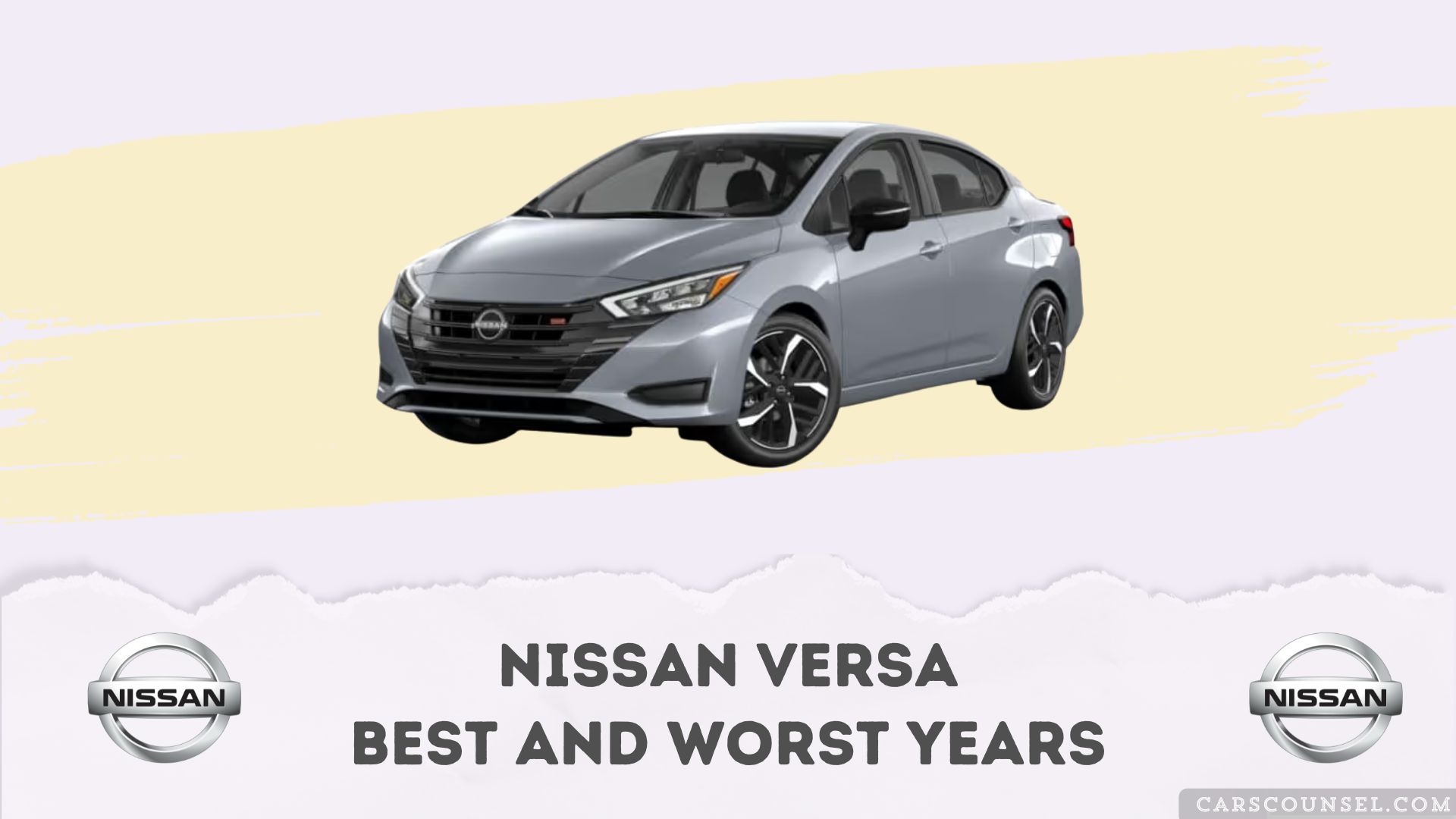
The Nissan Versa is a subcompact sedan that has been produced since 2006, offering buyers a budget-friendly option with modest features and fuel economy. Over its production run, the Versa has undergone several generational updates, each bringing changes in design, technology, and reliability. This article breaks down the best and worst model years for the Nissan Versa, focusing on reliability, performance, owner complaints, and long-term dependability.
Quick Navigation
Nissan Versa Generational Overview
First Generation (2006–2012)
The first-generation Versa debuted in 2006, featuring a 1.8L 4-cylinder engine and a choice of manual or automatic transmission. This model prioritized affordability and basic features, but early years saw reliability issues, particularly with the engine and transmission.
Second Generation (2012–2019)
Introduced in 2012, the second-generation Versa received updates to its platform and interior space. Trim levels expanded, and the CVT transmission became standard on higher trims. However, this generation continued to struggle with transmission and power steering reliability, especially in the early years.
Third Generation (2019–Present)
The third-generation Versa, launched for the 2020 model year, features a redesigned exterior, improved safety features, and a more modern interior. The engine was updated to a 1.6L 4-cylinder, and the CVT remains standard. This generation has shown marked improvements in reliability and safety compared to previous models.
Best Years for the Nissan Versa
The best Nissan Versa years are those with fewer owner complaints, better reliability ratings, and fewer major mechanical issues.
2018 Nissan Versa
The 2018 model marks a turning point for reliability, with fewer transmission problems compared to earlier years. Owner complaints are minimal, and the car offers solid fuel economy and a straightforward driving experience.
2019 Nissan Versa
The 2019 Versa benefits from the third-generation redesign, with improved safety ratings and fewer major mechanical failures. It has a reputation for dependable daily driving and low ownership costs.
2020–2025 Nissan Versa
The latest models continue the trend of improved reliability, with fewer recalls and better engineering. Owners report few issues, and the car maintains its reputation for affordability and efficiency.
Worst Years for the Nissan Versa
These model years are known for higher numbers of complaints, recalls, and reliability issues.
2007 Nissan Versa
The debut year saw a high number of engine failures and recalls, including issues with the Takata airbags. Many owners reported engine noise and premature failure, making this a year to avoid.
2008 Nissan Versa
Transmission problems are the main issue, with owners reporting noise, leaks, and shifting difficulties. The repair costs for transmission issues can be substantial.
2009 Nissan Versa
Coil spring breakage and fuel pump failures are common, along with a high number of recalls. This model year is frequently cited for reliability concerns.
2012 Nissan Versa
The 2012 model received the most complaints, with transmission issues and a dangerous shifter recall. Many sources recommend avoiding this year.
2014 Nissan Versa
Transmission problems persist, and some owners report loss of power during acceleration. Nissan issued extended warranties for transmission repairs on this year.
Common Problems Across the Nissan Versa Lineup
Transmission Issues
CVT transmission failures are a frequent complaint, especially in models from 2012 to 2017. Owners report jerky shifting, slipping, and expensive repairs.
Engine Problems
Engine failures and stalling have been reported in earlier models, particularly 2007–2009. Later years show fewer engine-related issues.
Electrical Faults
Electrical system problems, including malfunctioning sensors, climate control issues, and infotainment glitches, are common in recent models.
Rust Concerns
Some owners have noted rusting exhaust flanges, especially in 2008 models. Rust can lead to leaks and increased engine noise.
Suspension or Steering Problems
Steering drift and power steering failures are reported in multiple model years, with some recalls issued for affected vehicles.
Reliability Breakdown by Year
2025 Nissan Versa
The latest model year has a strong reliability rating, with few major defects and good safety scores.
2024 Nissan Versa
Minor engine and electrical issues are reported, but overall reliability remains high.
2023 Nissan Versa
Few complaints, with continued improvements in safety and dependability.
2022 Nissan Versa
Similar reliability to recent years, with occasional steering and electrical issues.
2021 Nissan Versa
Some steering and brake system recalls, but overall reliability is better than previous generations.
2020 Nissan Versa
Marked improvement over earlier models, with fewer major complaints.
2019 Nissan Versa
The start of the third generation brings fewer mechanical issues and better safety.
2018 Nissan Versa
Reliability improves significantly, with fewer transmission problems.
2017–2014 Nissan Versa
Transmission and power steering issues persist, with higher recall rates.
2013–2012 Nissan Versa
The worst reliability ratings, with frequent transmission and shifter problems.
2011–2007 Nissan Versa
Engine and transmission failures are common, with high recall rates.
Warranty & Ownership Costs
The Nissan Versa comes with a basic bumper-to-bumper warranty for three years or 36,000 miles and a powertrain warranty for six years or 60,000 miles. Maintenance costs average around $5,785 over ten years, which is slightly above average for the segment. Major repairs are most likely in the 2012–2014 models, while newer years have fewer major repair needs.
Buying Guide: What to Look For
Best Value Years: 2018–2025 models offer the best reliability and lowest repair risk.
Years to Avoid: 2007–2009 and 2012–2014 are known for frequent mechanical problems and recalls.
Key Components to Inspect: Transmission, engine, steering, and electrical systems. Check for any outstanding recalls.
Expected Mileage Thresholds: Most Versas reach 116,000 miles before major repairs are needed, with a small percentage exceeding 200,000 miles.
Known Trouble Spots: CVT transmission, power steering, and electrical issues in older models.
When looking at performance cars, make sure to check out our guides on models like the Nissan 350Z, Nissan Qashqai, Nissan 370Z and Nissan KICKS. Knowing which model years to target and which to avoid is crucial. Our expert reviews break down these models, providing insights into the years that are celebrated for their engineering excellence and driving satisfaction, as well as those that are best to avoid due to potential issues.
FAQs
Is the Nissan Versa reliable?
The Nissan Versa has a reliability score of 7.1 out of 10, with newer models scoring higher than older ones.
What year of the Nissan Versa is most dependable?
The 2018–2025 Nissan Versa models are the most dependable, with fewer mechanical issues and better safety ratings.
What year should you avoid?
Avoid the 2007–2009 and 2012–2014 model years due to high numbers of recalls and reliability problems.
What are the most common problems?
Transmission failures, engine stalling, electrical faults, and steering issues are the most commonly reported problems.
How long does a Nissan Versa last?
On average, a Nissan Versa lasts about 116,000 miles, with a small percentage reaching 200,000 miles.
Conclusion
The Nissan Versa is a budget-friendly subcompact sedan with a mixed reliability history. The best years are 2018–2025, which offer fewer mechanical problems and better safety ratings. The worst years, 2007–2009 and 2012–2014, are known for frequent recalls and reliability issues. For buyers seeking value and dependability, the latest models are recommended, while older years should be approached with caution.

