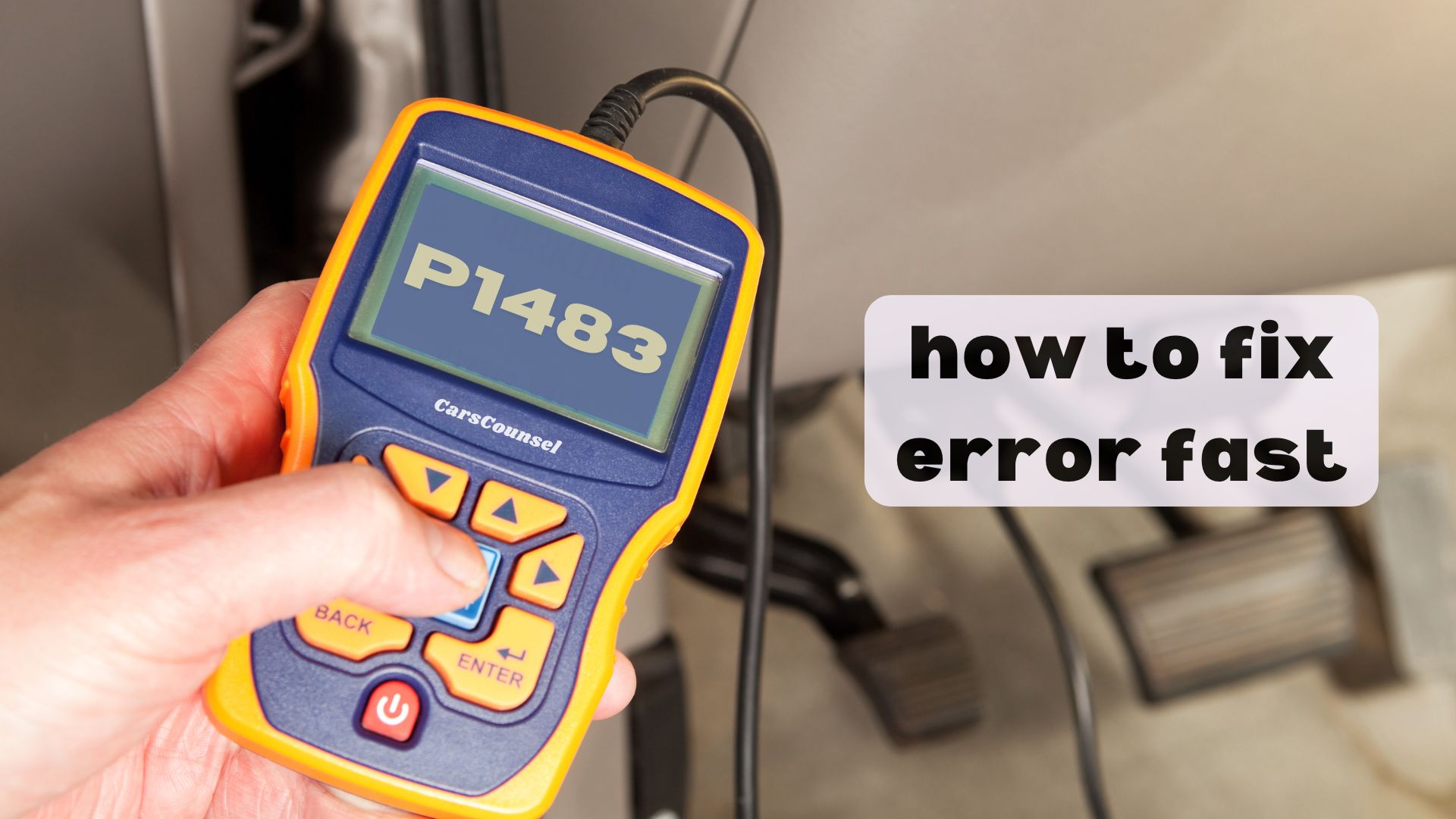
P1483 is a manufacturer-specific powertrain code. On many verified applications, it indicates a performance issue, excessive current draw, or speed discrepancy within the engine cooling fan system.
Because this code monitors the cooling fan circuit and operation, it does not automatically prove the fan motor has failed. Diagnosis requires inspecting the fan assembly, wiring, and control modules.
Quick Navigation
Key Takeaways
- P1483 indicates a performance issue, excessive current draw, or speed discrepancy in the engine cooling fan system on specific manufacturer applications.
- Possible causes include a failing cooling fan motor, damaged wiring, corroded connectors, or a faulty fan control module.
- Symptoms may include an illuminated Check Engine Light, engine overheating at idle, and the cooling fan failing to operate correctly.
- Diagnosis involves inspecting the cooling fan assembly, testing the fan motor current draw, and checking the control circuits.
- Repairs typically involve replacing the cooling fan assembly, repairing damaged wiring, or replacing a faulty relay or control module.
P1483 Code Description and Implications
P1483 is a manufacturer-specific diagnostic trouble code. Its exact definition depends on the vehicle application, but it is strongly associated with the engine cooling fan circuit.
Chrysler, Dodge, and Jeep applications: P1483 typically indicates an Engine Cooling Fan System Performance issue. The powertrain control module detects that the fan speed does not match the commanded speed or that the current draw is outside the expected range.
General Motors and Ford applications: P1483 often points to an Engine Cooling Fan Excessive Current Draw condition. The control module monitors the amperage supplied to the fan motor and flags a fault if the draw spikes due to mechanical binding or electrical shorts.
The cooling fan is essential for maintaining engine temperature at idle and low speeds. When the control module detects a performance fault, it may disable the air conditioning compressor to reduce engine load or command the fan to run continuously at high speed as a fail-safe.
The error code does not confirm that the fan motor itself is destroyed. It only confirms that the electrical or mechanical performance of the cooling fan circuit is outside the expected parameters.
Common Causes of the P1483 Code
Identifying the root cause requires a careful inspection of the cooling fan circuit and mechanical components.
- A failing or binding cooling fan motor drawing excessive amperage due to worn internal bearings.
- Damaged, shorted, or corroded wiring in the cooling fan control circuit or power supply.
- A faulty cooling fan relay, solid-state fan control module, or pulse-width modulation controller.
- Physical debris obstructing the cooling fan blades, causing mechanical binding and increased electrical load.
- Poor electrical grounds for the cooling fan assembly, leading to erratic current draw readings.
Symptoms Associated With P1483
When the control module detects a cooling fan performance fault, it illuminates the Check Engine Light. Depending on the application, the module may also trigger a warning message on the driver information center.
You may experience engine overheating, particularly when idling in traffic or driving at low speeds where natural ram-air is insufficient. The cooling fan may fail to operate entirely, or it may run continuously at maximum speed.
Air conditioning performance may also drop significantly, as the powertrain control module often disables the A/C compressor clutch when a cooling fan fault is detected to protect the engine from overheating.
Diagnosing the P1483 Trouble Code
Diagnosis must begin by confirming the exact factory definition for your specific make and model using manufacturer service information.
Visually inspect the cooling fan assembly and shroud. Look for physical damage, missing blades, or debris wedged between the fan and the radiator that could cause mechanical binding.
With the engine off and the key removed, attempt to spin the fan blades by hand. They should rotate freely with minimal resistance. Any grinding, clicking, or stiff resistance indicates a failed fan motor bearing.
Inspect the wiring harness and connectors at the fan motor and control module for heat damage, corrosion, or chafing. Use a scan tool to command the cooling fan on and monitor the current draw or fan speed data parameters.
Repairing the P1483 Issue
If mechanical binding or debris is found, clear the obstruction and verify the fan spins freely. If the fan motor bearings are seized or rough, the cooling fan motor or complete assembly must be replaced.
If the wiring and fan motor test correctly, diagnose the control side of the circuit. Replace any faulty cooling fan relays or solid-state control modules that fail to deliver the correct voltage or pulse-width signal.
After completing the repair, clear the diagnostic trouble codes. Use a scan tool to command the fan through all speed settings to verify the current draw remains within the manufacturer’s specifications.
Cost Considerations for P1483 Repairs
Repair costs depend heavily on whether a single fan motor, the entire integrated fan and shroud assembly, or just a control module needs replacement.
Replacing a cooling fan assembly involves moderate labor, as it often requires removing front bumper covers, splash shields, or air deflectors to access the fan shroud.
Electrical repairs, such as fixing a chafed wire or replacing a simple relay, will cost significantly less in parts and labor than replacing a complete OEM fan assembly.
Prevention Strategies for Future Occurrences
Keep the front of the vehicle, radiator, and condenser area clear of excessive road debris, leaves, and plastic bags that could be pulled into the cooling fan shroud.
Address unusual cooling fan noises, such as grinding, humming, or clicking, promptly before the motor physically binds and spikes the circuit current.
Troubleshooting Tips and Best Practices
Do not confuse P1483 with coolant temperature sensor codes or thermostat codes. P1483 specifically targets the cooling fan system’s electrical or mechanical performance, not the coolant flow.
Check for related cooling fan codes, such as P0480 or P0481, which might indicate a broader circuit failure or a secondary fan fault.
Verify the vehicle battery and charging system are healthy. Low system voltage can cause pulse-width modulation fan control modules to behave erratically and set false performance codes.
More OBD-II Codes
| P1482 | P1481 | P1480 | P1479 |
| P1478 | P1477 | P1484 | P1485 |
| P1486 | P1487 | P1488 | P1491 |
| P0480 | P0481 | P0526 | P0527 |
| P0528 | P0690 | P1291 | P1292 |
| P1293 | P1294 | P1226 | P1209 |
Frequently Asked Questions
Is P1483 a generic OBD-II code?
No. P1483 is a manufacturer-specific code. While associated with cooling fan systems on several domestic brands, you must verify the exact factory definition for your specific vehicle application.
Can I drive with a P1483 code?
Driving is risky, especially in stop-and-go traffic. Without a functioning cooling fan, the engine can overheat rapidly at idle, potentially causing severe mechanical damage. Limit driving and seek repairs promptly.
Will P1483 disable my air conditioning?
Yes. On many applications, the powertrain control module intentionally disables the A/C compressor clutch when a cooling fan fault is detected to reduce engine load and prevent overheating.
Does P1483 mean the radiator is bad?
No. P1483 specifically points to the cooling fan motor, wiring, or control module. It does not indicate a failure of the radiator, water pump, or thermostat.
Can a bad battery cause P1483?
Possibly. Low system voltage or a failing alternator can cause electronic fan control modules to operate erratically, leading to false current draw or performance faults. Always verify charging system health first.
What Should You Do About the P1483 Code?
Confirm the exact factory definition for your vehicle, then follow the applicable manufacturer diagnostic procedure. Inspect the relevant system and components for mechanical binding or electrical faults, and repair or replace the confirmed failed cooling fan parts to restore proper thermal management.

