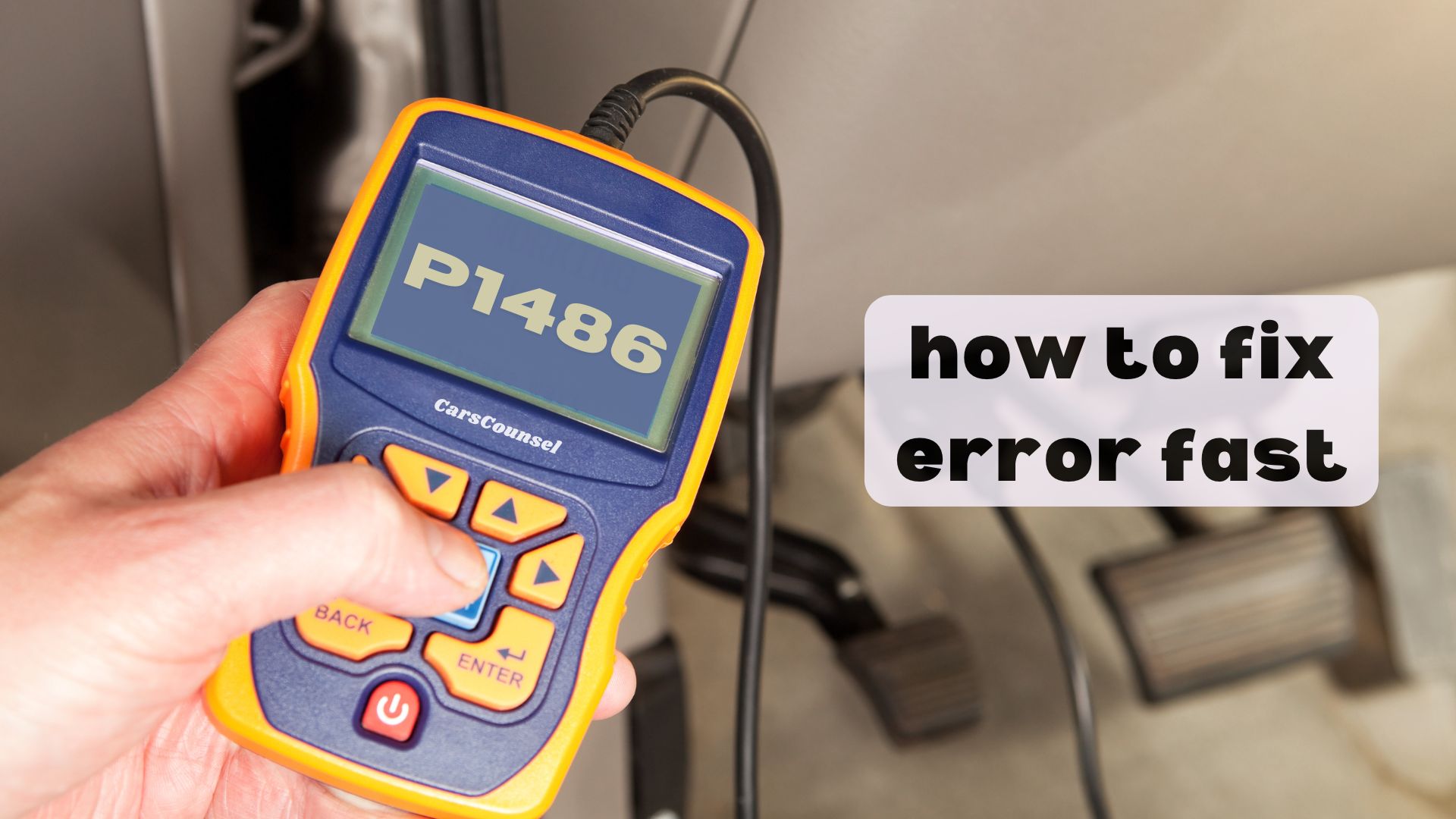
P1486 is a manufacturer-specific powertrain code, most strongly associated with Chrysler, Dodge, and Jeep vehicles. It indicates that the onboard diagnostic system detected a pinched or blocked hose condition within the evaporative emission control leak detection pump circuit.
Because this code relates to the EVAP system’s pressure monitoring, it does not prove a specific component has failed. Diagnosis requires inspecting the EVAP hoses for physical restrictions before replacing any parts.
Quick Navigation
Key Takeaways
- P1486 indicates a pinched or blocked hose condition in the EVAP leak detection pump system on specific manufacturer applications.
- Possible causes include kinked EVAP vent hoses, physical obstructions in the lines, or routing issues near the EVAP canister.
- Symptoms are typically limited to an illuminated Check Engine Light, with no noticeable drivability issues.
- Diagnosis involves a thorough visual inspection of the EVAP hoses and leak detection pump plumbing for physical restrictions.
- Repairs usually involve rerouting, un-pinning, or replacing the restricted EVAP hose rather than replacing major components.
P1486 Code Description and Implications
P1486 is a manufacturer-specific diagnostic trouble code. Its exact definition depends on the vehicle application, but it is strongly associated with specific domestic platforms.
Chrysler, Dodge, and Jeep applications: P1486 indicates an Evaporative Emission Control System Leak Detection Pump Pinched or Blocked Hose condition. The leak detection pump pressurizes the EVAP system to monitor for vapor leaks.
If the system detects an abnormal pressure decay rate that matches a physical restriction rather than a leak, it stores this code. The trouble code does not confirm that the pump itself has failed.
It only confirms that the control module detected a flow restriction in the EVAP plumbing during the self-test cycle.
Common Causes of the P1486 Code
Identifying the root cause requires a careful inspection of the EVAP system plumbing. The restriction can originate from several physical factors.
- Kinked or pinched EVAP hoses caused by improper routing or components pressing against the lines.
- Debris, dirt, or ice blocking the EVAP vent lines or the leak detection pump air filter.
- A collapsed internal hose structure that restricts vapor flow under pressure.
- Physical damage to the EVAP lines from road debris or improper previous undercarriage repairs.
Symptoms Associated With P1486
Because the EVAP system operates independently of the engine combustion process, this code rarely causes drivability issues.
The most common symptom is an illuminated Check Engine Light. The vehicle will likely run normally, but the onboard diagnostic monitor will fail to complete its EVAP self-test.
Consequently, the vehicle will typically fail an emissions inspection until the restriction is cleared and the monitor runs successfully.
Diagnosing the P1486 Trouble Code
Diagnosis must begin by confirming the exact factory definition for your specific make and model using manufacturer service information.
Perform a thorough visual inspection of all EVAP hoses. Pay close attention to the lines connecting the leak detection pump to the EVAP canister and the vent filter.
Look for sharp bends, kinks, or areas where a hose is trapped between chassis components. Check the pump air filter for heavy dirt accumulation.
If visual inspection reveals no obvious restrictions, a smoke test or manual actuation of the pump with a scan tool may be required to pinpoint the blockage.
Repairing the P1486 Issue
If a pinched or kinked hose is found, reroute the hose to eliminate the restriction. If the internal structure is collapsed, the hose must be replaced.
Clean or replace the leak detection pump air filter if it is clogged with debris. Ensure all lines are secured with proper clips to prevent future rubbing or pinching.
After completing the repair, clear the diagnostic trouble codes. Use a scan tool to command the leak detection pump test cycle to verify the repair was successful.
Cost Considerations for P1486 Repairs
Repair costs depend heavily on diagnostic time and the physical accessibility of the EVAP lines underneath the vehicle.
Rerouting a pinched hose requires minimal parts cost, consisting mostly of diagnostic and adjustment labor.
Replacing damaged EVAP hoses or a clogged air filter involves standard parts pricing and moderate labor time to access the undercarriage components.
Prevention Strategies for Future Occurrences
Ensure EVAP lines are properly secured and routed away from heat sources and moving components during any under-vehicle repairs.
Inspect the leak detection pump vent filter periodically if the vehicle frequently operates in dusty, muddy, or off-road environments.
Troubleshooting Tips and Best Practices
Do not immediately replace the leak detection pump. P1486 specifically flags a hose restriction, not an electrical or internal pump failure.
Pay close attention to the hose routing diagrams in the manufacturer service information. Even a slight deviation from the factory path can cause a kink.
Check for related EVAP codes, such as P0440 or P0455, which might indicate a broader system issue or multiple leaks.
More OBD-II Codes
| P1485 | P1484 | P1483 | P1482 |
| P1481 | P1480 | P1487 | P1488 |
| P1491 | P1498 | P1500 | P1504 |
| P0440 | P0441 | P0442 | P0455 |
| P0456 | P0446 | P0449 | P0450 |
| P0451 | P0452 | P0453 | P0444 |
Frequently Asked Questions
Is P1486 a generic OBD-II code?
No. P1486 is a manufacturer-specific code. While primarily associated with Chrysler, Dodge, and Jeep vehicles, you must verify the exact factory definition for your specific application.
Can I drive with a P1486 code?
You can generally drive the vehicle, as this code affects the emissions system rather than engine drivability. However, the vehicle will likely fail an emissions test until repaired.
Will P1486 cause a failed emissions test?
Yes. Any active EVAP monitor fault or stored EVAP diagnostic trouble code will typically result in an automatic failure during state or regional emissions inspections.
Does P1486 mean the EVAP canister is bad?
Not necessarily. The code specifically indicates a restricted or pinched hose in the leak detection pump circuit, not a failure of the charcoal canister itself.
Can a loose gas cap cause P1486?
No. A loose or faulty gas cap typically triggers a small or large EVAP leak code. P1486 specifically points to a physical restriction or pinched hose.
What Should You Do About the P1486 Code?
Confirm the exact factory definition for your vehicle, then follow the applicable manufacturer diagnostic procedure. Inspect the relevant system and components for physical restrictions, and repair or replace any confirmed damaged hoses to restore proper EVAP system operation.

