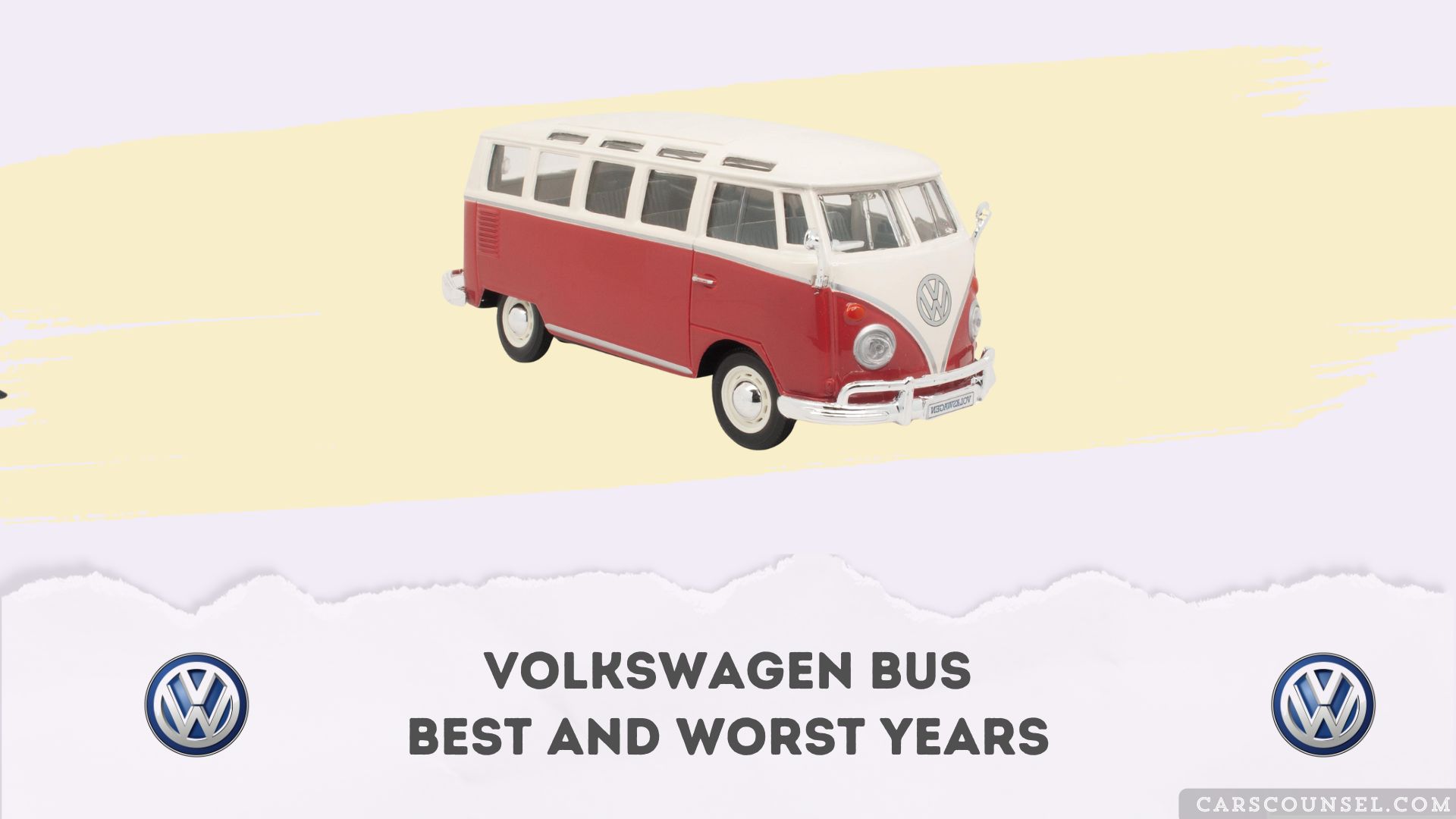
The best Volkswagen Bus years for US buyers are the 1964-1967 split-window models, the 1983-1991 Vanagons with the 2.1-liter engine, and the 2000-2003 Eurovans equipped with the VR6. Buyers should avoid the 1992-1999 Eurovan models due to sluggish performance and fragile automatic transmissions.
These rankings are comparative. No vintage or modern VW van is flawless. Maintenance history, rust prevention, and specialist care matter far more than the badge on the hood when evaluating these unique vehicles.
Meaningful differences exist between generations. Engine placements shifted from rear to front. Cooling systems evolved from air-cooled to water-cooled. Each chassis configuration demands a specific inspection approach.
Quick Navigation
Best and Worst Volkswagen Bus Years at a Glance
| Model Year Range | Verdict | Main Reason | Buyer Guidance |
|---|---|---|---|
| 1950–1963 | Approach Carefully | 6-volt electrics, low power, collector-only | Best for trailer-queen collectors |
| 1964–1967 | Best Enthusiast Choice | 12-volt system, 1.5L engine, iconic split-window | Verify rust and original parts |
| 1968–1979 | Good Choice | Bay-window design, improved engines, rust prone | Inspect front nose panel and sills |
| 1980–1982 | Approach Carefully | Heavy chassis with underpowered air-cooled engine | Look for later water-cooled swaps |
| 1983–1991 | Best Older Choice | 2.1L Wasserboxer, Westfalia campers | Watch for coolant and oil mixing |
| 1992–1999 | Avoid | 2.5L I5 engine is sluggish, fragile auto transmissions | Seek later VR6 models instead |
| 2000–2003 | Best Late-Generation Choice | 2.8L VR6 engine provides modern highway capability | Check timing chain and cooling plastics |
| 2004–2024 | Not Available | No official VW Bus sold in the US market | N/A |
| 2025–Present | Too New to Judge | ID. Buzz EV launch, long-term reliability unknown | Monitor early software and battery data |
Key Takeaways
- 1964-1967 models offer the best classic experience with 12-volt electrics.
- Avoid 1992-1999 Eurovans with the underpowered 2.5-liter five-cylinder engine.
- 1983-1991 Vanagons require strict cooling system monitoring.
- The 2004-2024 model years saw no official VW Bus sold in the US.
- The 2025 ID. Buzz is too new for long-term reliability data.
- Always verify the VIN and check for structural rust.
- Arrange an independent inspection by a vintage VW specialist.
How We Evaluated the Volkswagen Bus Model Years
Our analysis considers official manufacturer records, historical service bulletins, and long-term ownership patterns. We evaluate powertrain changes, structural vulnerabilities, and generation shifts.
Complaints are not failure rates. A recall does not automatically make a year unreliable. Recent models have limited ownership history. Best means comparatively stronger, not flawless.
Best Volkswagen Bus Years
1964–1967 (Best Enthusiast Choice)
These final split-window years transitioned to a 12-volt electrical system and a larger 1.5-liter engine. They remain highly collectible. Parts availability is strong, but buyers must accept vintage driving dynamics and minimal safety equipment.
1983–1991 (Best Older Choice)
The Vanagon generation introduced the 2.1-liter Wasserboxer engine. This water-cooled flat-four provided better highway manners. Westfalia camper conversions and Syncro all-wheel-drive models from this era are legendary, though coolant system maintenance is critical.
2000–2003 (Best Late-Generation Choice)
Volkswagen equipped the Eurovan with the 2.8-liter VR6 engine. This powertrain finally gave the heavy van adequate modern highway passing power. While more complex than earlier models, a well-maintained VR6 Eurovan is a capable classic tourer.
Best Year by Buyer Type
Best Enthusiast Choice: 1964–1967
Collectors seeking the ultimate vintage aesthetic should target the late split-window models. The 12-volt upgrade and 1.5-liter engine make them the most usable classic examples.
Best Camper Alternative: 1986–1991 Vanagon Westfalia
Adventure seekers wanting a vintage camper will appreciate the late-model Vanagon. The Westfalia pop-top and available Syncro all-wheel drive offer unmatched classic overlanding capability.
Best Modern Classic: 2000–2003 Eurovan VR6
Buyers needing highway speed and modern amenities should choose the VR6 Eurovan. It bridges the gap between classic van charm and modern touring comfort.
Years to Approach Carefully
1950–1963 (Approach Carefully)
Early T1 models feature 6-volt electrical systems and narrow windows. They are incredibly slow and best suited for trailer-queen collectors. Finding pristine original parts requires significant effort and budget.
1968–1979 (Good Choice)
The Bay Window generation improved safety and introduced larger engines. However, severe rust in the front nose panel and wheel arches remains a major threat. Inspect the metal thoroughly before purchasing.
1980–1982 (Approach Carefully)
These early Vanagons paired a heavy, modernized body with the older 2.0-liter air-cooled engine. The result is sluggish performance and overheating risks on long inclines. Later water-cooled models are much preferable.
Worst Volkswagen Bus Years
1992–1999 (Avoid)
Knowing which years to avoid is critical for Volkswagen buyers. The early US-market Eurovan used a 2.5-liter inline-five engine.
It is severely underpowered for the vehicle’s weight. The four-speed automatic transmission from this era is also notoriously fragile and expensive to rebuild. Seek the later VR6 models instead.
Volkswagen Bus Reliability by Generation
First Generation (T1: 1950–1967)
The original rear-engine, air-cooled design is simple but agricultural. Reliability depends entirely on meticulous maintenance and rust prevention. These are weekend classics, not daily drivers.
Second Generation (T2: 1968–1979)
The Bay Window added a larger windshield and improved suspension. While more usable than the T1, structural rust and aging fuel injection systems dictate their current reliability.
Third Generation (Vanagon: 1980–1991)
The Vanagon moved to a more squared-off design. The switch to the water-cooled Wasserboxer in 1983 vastly improved drivability. However, complex plumbing and aging wiring harnesses require constant vigilance.
Fourth Generation (Eurovan: 1992–2003)
The front-engine Eurovan featured a modern dashboard and improved horsepower. It operated more like a modern minivan than a vintage camper.
The early five-cylinder models are disappointing, but the later VR6 models are robust if the timing chain and cooling systems are addressed by a specialist.
Modern Era (ID. Buzz: 2025–Present)
After a long hiatus, the electric ID. Buzz arrived for the 2025 model year. As a brand-new platform, long-term reliability and battery degradation data remain entirely unknown.
Common Volkswagen Bus Problems
Structural Rust
Every air-cooled and early water-cooled generation suffers from severe rust. Floor pans, chassis seams, and front panels trap moisture. Structural compromise is expensive to repair and often totals the vehicle.
Wasserboxer Coolant Intrusion
The 2.1-liter engine in 1983-1991 Vanagons is prone to corrosion between the cylinder head and block. This allows coolant to mix with the oil, requiring a complete engine rebuild or replacement.
VR6 Cooling System Failures
The 2000-2003 Eurovan VR6 uses plastic cooling components that become brittle with age. Sudden coolant leaks can lead to catastrophic overheating and warped cylinder heads if not monitored.
Automatic Transmission Fragility
The automatic transmissions paired with both the late Vanagon and early Eurovan models are weak points. They struggle with the vehicle’s weight and often require complete rebuilds past 100,000 miles.
Repair-Cost Overview
| Problem | Commonly Affected Years | Approximate Repair Range | Important Notes |
|---|---|---|---|
| Wasserboxer Engine Rebuild | 1983–1991 | $4,000 – $7,000 | Parts scarcity increases labor time. |
| VR6 Timing Chain Guide | 2000–2003 | $1,500 – $2,500 | Requires specialized VW tools. |
| Automatic Transmission Rebuild | 1983–2003 | $3,000 – $4,500 | Few shops support vintage VW autos. |
| Structural Rust Remediation | 1950–1991 | $5,000 – $15,000+ | Highly dependent on metalwork quality. |
Repair costs vary significantly by region, specialist labor rates, parts availability, and vehicle configuration. Classic Volkswagen maintenance often requires independent specialists rather than standard dealerships.
What to Check Before Buying a Used Volkswagen Bus
- Verify the VIN and check for open classic-car recalls.
- Inspect the chassis, floor pans, and seams for structural rust.
- Check the oil for a milky substance indicating Wasserboxer coolant intrusion.
- Listen for timing chain rattle on cold-start VR6 engines.
- Test all vintage Bosch fuel injection components for smooth idle.
- Inspect the wiring harness for brittle insulation and previous 6-volt conversions.
- Arrange an independent inspection by a vintage VW specialist.
Related Buying Guides
- Volkswagen Beetle best and worst years: The air-cooled sibling that shares much of its early mechanical DNA with the T1 and T2 buses.
- Volkswagen Karmann Ghia best and worst years: A stylish classic alternative for buyers who want vintage VW air-cooled charm without the van footprint.
- Volkswagen Arteon best and worst years: A modern alternative for buyers seeking sleek highway comfort instead of vintage camper space.
- Volkswagen CC best and worst years: Another contemporary option for buyers prioritizing aerodynamic sedan styling over classic van utility.
Frequently Asked Questions
What is the most reliable VW Bus year?
The 2000-2003 Eurovan with the VR6 engine offers the most modern reliability, provided the cooling system is maintained. For classic models, the 1964-1967 split-window years are highly durable if kept rust-free.
Which VW Bus years should I avoid?
Avoid the 1992-1999 Eurovan models equipped with the 2.5-liter five-cylinder engine. They are severely underpowered and suffer from fragile automatic transmissions that are expensive to rebuild.
Is the VW Vanagon a good daily driver?
The 1983-1991 Vanagon can be a weekend driver, but it lacks modern safety and speed. Aging wiring, cooling system vulnerabilities, and parts scarcity make it challenging for daily commuting.
Why was the VW Bus not sold in the US recently?
Volkswagen did not sell the T5, T6, or T7 generations in the United States. High import tariffs, strict safety homologation costs, and low projected volumes kept these modern vans out of the US market.
What causes the Vanagon engine to fail?
The 2.1-liter Wasserboxer engine often fails due to corrosion between the cylinder head and block. This defect allows coolant to enter the oil passages, leading to catastrophic internal engine damage.
Is the new ID. Buzz reliable?
The 2025 ID. Buzz is too new to judge for long-term reliability. Early owners may experience software glitches or typical first-year EV teething issues, but long-term battery and motor data is unavailable.
Choosing the Right Volkswagen Bus Model Year
The best Volkswagen Bus depends on your goals. Collectors should target the 1964-1967 split-window models. Adventure seekers will appreciate the 1983-1991 Vanagon campers. Modern classic tourers should seek the 2000-2003 VR6 Eurovan.
Avoid the sluggish 1992-1999 Eurovans. Always prioritize structural rust inspection and verify the cooling system on water-cooled models. Hire a vintage VW specialist for a pre-purchase inspection to ensure your classic van is road-ready.