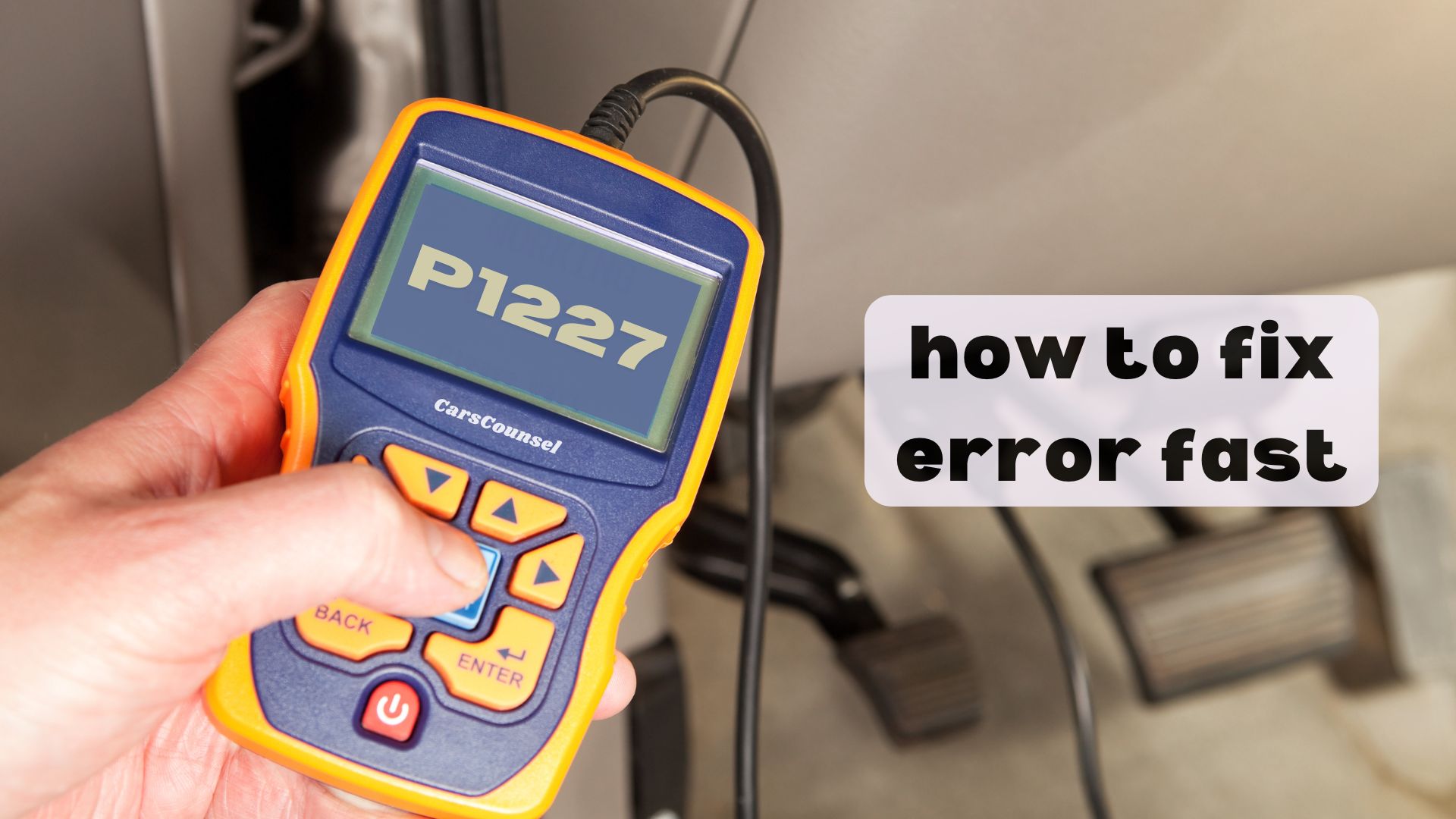
P1227 is a manufacturer-specific powertrain diagnostic trouble code, meaning its exact definition depends entirely on the vehicle application. It most commonly indicates a wastegate over-pressure condition, an accelerator pedal sensor fault, or a fuel injector circuit short.
Because this code is manufacturer-specific, you must verify the exact factory definition for your vehicle before beginning diagnosis. The code identifies a detected condition and does not automatically prove that a specific sensor, actuator, or injector has failed.
Quick Navigation
Key Takeaways
- P1227 is a manufacturer-specific code with different definitions depending on the vehicle make and system architecture.
- On certain Ford, Lincoln, and Jaguar applications, it indicates a turbocharger wastegate failed closed, causing over-boost pressure.
- On specific Nissan, Infiniti, and GM applications, it points to an Accelerator Pedal Position (APP) Sensor 2 circuit low input.
- On some VW and Audi applications, it indicates a fuel injector control circuit short to ground.
- Diagnosis requires verifying the exact factory definition and testing the relevant circuits or boost components using manufacturer service information.
P1227 Code Description and Implications
P1227 is a manufacturer-specific powertrain code, meaning its exact definition depends entirely on the vehicle application.
Certain Ford, Lincoln, Jaguar, and Peugeot applications: The code indicates Wastegate Failed Closed (Over Pressure). The control module detected that actual boost pressure is continuously higher than the desired target.
Certain Nissan, Infiniti, and GM applications: P1227 indicates an Accelerator Pedal Position (APP) Sensor 2 Circuit Low Input. The control module detected the sensor signal voltage dropped below the expected minimum threshold.
Certain VW and Audi applications: The code points to a Fuel Injector Control Circuit Short to Ground, indicating an electrical short in the wiring or injector coil.
Because the code identifies a monitored system condition, it does not automatically prove that the wastegate, pedal sensor, or injector has failed. You must verify the exact factory definition before attempting repairs. It is vital to address this trouble code promptly.
Common Causes of the P1227 Code
The underlying cause depends on which system the code monitors on your specific vehicle.
For wastegate and boost control applications:
- A mechanically stuck or binding turbocharger wastegate actuator.
- Damaged, disconnected, or leaking boost control vacuum hoses.
- A faulty boost control solenoid or wastegate position sensor.
For accelerator pedal sensor applications:
- A failed APP sensor assembly providing an artificially low voltage signal.
- Damaged wiring or corroded connectors in the pedal sensor harness.
- Poor ground connections at the sensor or control module.
For fuel injector applications:
- A short to ground in the injector control circuit wiring.
- An internally shorted fuel injector coil.
Symptoms Associated With P1227
Symptoms vary based on the monitored system and the severity of the fault.
Wastegate applications: You may experience severe engine hesitation, a limp mode, or an over-boost condition that triggers a flashing check engine light to protect the engine.
Accelerator pedal applications: You may notice poor acceleration, an unresponsive throttle pedal, or the vehicle entering a reduced-power failsafe mode.
Injector applications: You may experience a severe engine misfire, rough idling, and a flashing check engine light indicating unburned fuel entering the exhaust.
MIL behavior varies by application. Some vehicles illuminate the warning light immediately upon detecting the fault, while others may require multiple drive cycles.
Diagnosing the P1227 Trouble Code
Diagnosis must begin by confirming the exact factory definition for your make, model, year, and engine.
Retrieve the code and any accompanying codes using a scan tool.
For wastegate applications, monitor commanded versus actual boost pressure via live data. Inspect all vacuum lines and the wastegate actuator rod for binding or damage.
For pedal sensor applications, monitor the APP sensor live data while slowly depressing the throttle to check for signal dropouts. Inspect the harness for chafing.
For injector applications, test the injector circuit for a short to ground and measure the injector coil resistance against manufacturer specifications.
Never replace components based solely on the presence of the code. Confirm the exact mechanical or electrical failure before proceeding.
Repairing the P1227 Issue
Repairs must follow confirmed mechanical or electrical diagnosis.
If testing confirms a stuck wastegate or damaged boost hoses, repair the vacuum lines or replace the turbocharger wastegate actuator assembly.
If the accelerator pedal sensor fails the live data sweep or resistance test, replace the pedal assembly with a component meeting the correct vehicle specification.
For injector applications, repair any shorted wiring in the harness or replace the confirmed faulty fuel injector.
If all wiring and components test correctly, the manufacturer diagnostic procedure may direct further testing of the control module. Follow the applicable module service procedure only after strict confirmation.
Cost Considerations for P1227 Repairs
Exact repair costs depend heavily on the root cause, component accessibility, and your vehicle’s specific application.
Replacing a boost control hose or pedal sensor involves different parts and labor times compared to replacing a turbocharger wastegate actuator or fuel injector.
Cost depends on diagnostic time, component accessibility, required parts, programming requirements, and labor.
Prevention Strategies for Future Occurrences
Boost and electrical system faults are often difficult to predict, but some practices can help identify developing issues.
Inspecting turbocharger vacuum lines and boost hoses for cracking, brittleness, or heat damage can help identify developing leaks before they cause a wastegate control fault.
Keeping electrical connector seals intact and ensuring harness clips are properly secured may reduce moisture intrusion and chafing in pedal sensor and injector circuits.
Troubleshooting Tips and Best Practices
Always consult the exact manufacturer service information for your vehicle before testing circuits or boost components.
Do not assume a general fuel delivery issue or a bad mass airflow sensor is the primary cause of P1227 without verifying the specific definition for your make and model.
For wastegate applications, ensure you are reading absolute pressure or correct relative boost values on your scan tool to accurately diagnose over-pressure conditions.
If your vehicle is subject to an applicable technical service bulletin regarding boost control calibration or pedal sensor software updates, verify its applicability before replacing hardware.
More OBD-II Codes
| P1226 | P1225 | P1224 | P1223 |
| P1219 | P1218 | P1228 | P1231 |
| P1234 | P1237 | P1240 | P1243 |
| P0299 | P0220 | P0202 | P0203 |
| P0300 | P0171 | P0174 | P0420 |
| P0430 | P0455 | P0440 | P0101 |
Frequently Asked Questions
Is the P1227 code generic or manufacturer-specific?
No. P1227 is a manufacturer-specific code. Its exact definition depends on the vehicle make, commonly indicating a wastegate over-pressure fault, an accelerator pedal sensor issue, or an injector short.
Can a P1227 code cause my engine to over-boost?
On applications where P1227 indicates a wastegate failed closed, the turbocharger may produce excessive boost pressure, which can trigger a limp mode to protect the engine from mechanical damage.
Will P1227 cause my throttle to become unresponsive?
On applications where P1227 indicates an accelerator pedal position sensor circuit fault, the control module may disable the throttle response and enter a reduced-power failsafe mode.
Can I clear the P1227 code by disconnecting the battery?
Disconnecting the battery may temporarily erase the code, but it does not repair the underlying mechanical or electrical fault. The code will return once the monitor runs.
Is it safe to drive with a P1227 code?
Driving conditions depend on the symptoms. If the vehicle is over-boosting, misfiring severely, or lacks throttle response, continued driving could create a safety hazard or cause further component damage.
What Should You Do About the P1227 Code?
Confirm the exact factory definition for your specific vehicle application, then follow the applicable manufacturer diagnostic procedure.
Because P1227 is manufacturer-specific, it may point to a turbocharger wastegate issue, an accelerator pedal sensor fault, or a fuel injector circuit short. Do not assume a universal repair path.
Inspect the relevant system and components, perform targeted tests, and confirm the root cause before replacing any parts.

