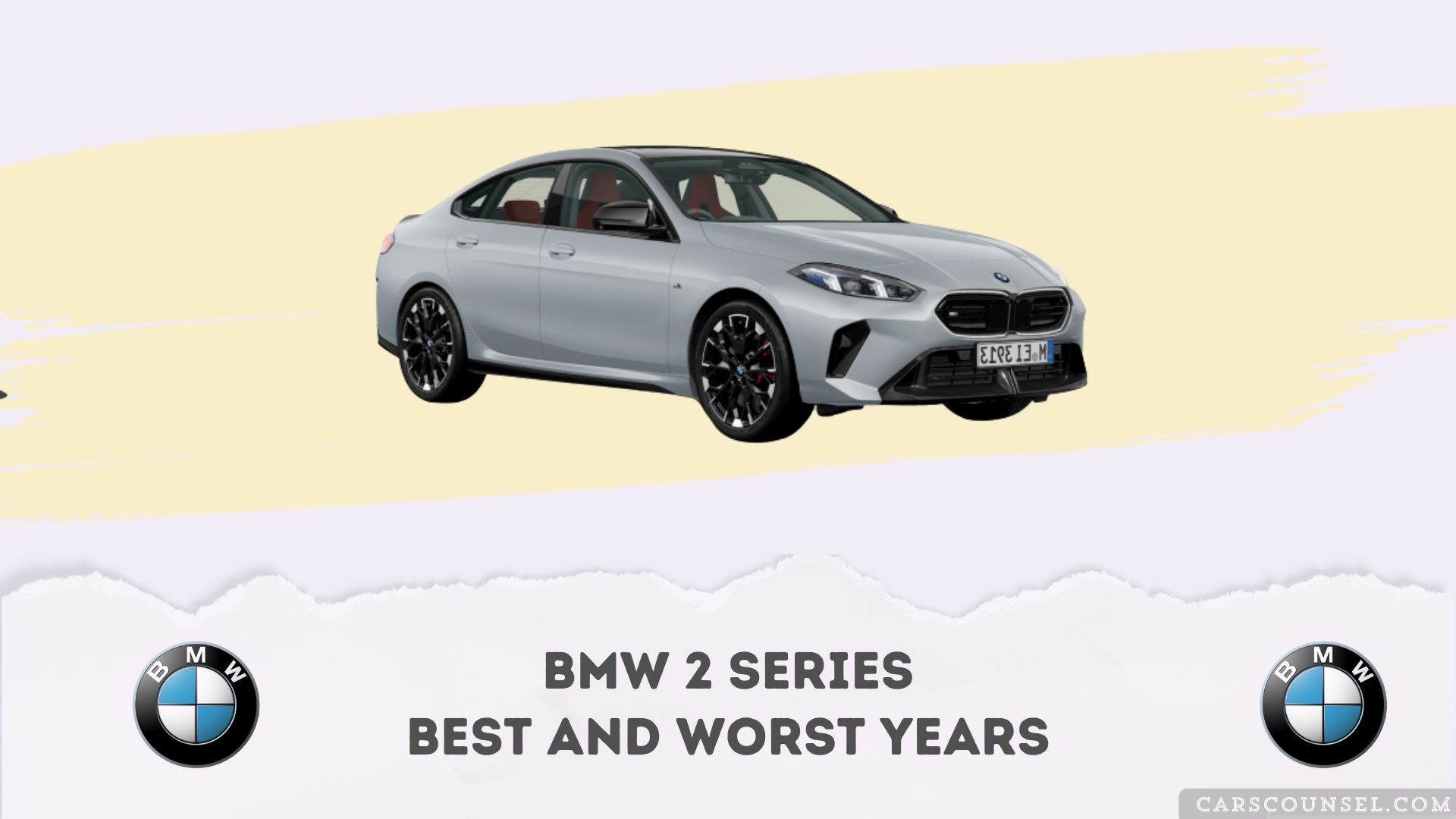
The best BMW 2 Series years are 2017 through 2021, featuring the reliable B48 and B58 engines. Buyers should strictly avoid the 2014 and 2015 228i models due to catastrophic timing chain guide failures.
These rankings are comparative. No used BMW is flawless, and maintenance history heavily influences long-term reliability and ownership costs.
Verdicts change significantly based on the engine. The early N20 four-cylinder is problematic, while the later B48 and B58 engines offer vastly improved durability.
Quick Navigation
Best and Worst BMW 2 Series Years at a Glance
| Model Year | Verdict | Main Reason | Buyer Guidance |
|---|---|---|---|
| 2023–2024 | Too New to Judge | New G42 generation | Wait for long-term data |
| 2017–2022 | Best Choice | B48 and B58 engines | Prioritize M240i or 230i |
| 2016 | Good With Inspection | Engine transition year | Verify exact engine code |
| 2014–2015 | Avoid | N20 timing chain defect | Avoid 228i models entirely |
Key Takeaways
- 2017–2021 models with B48 and B58 engines are the strongest choices.
- Avoid 2014–2015 228i models due to N20 timing chain defects.
- The M2 and M240i offer excellent performance and reliability.
- Always verify open recalls and service history before purchasing.
- Recent 2023+ models lack sufficient long-term ownership data.
How We Evaluated the BMW 2 Series Model Years
Our analysis considers official recalls, manufacturer service campaigns, and consumer complaints. We also weigh powertrain differences and generation changes heavily.
Complaints are not confirmed defects or failure rates. A recall does not automatically make a vehicle unreliable.
Recent models have limited long-term ownership data. Best means comparatively stronger, not completely flawless.
Best BMW 2 Series Years
2017–2021 (230i and M240i)
These years feature the B48 four-cylinder and B58 six-cylinder engines. Both powertrains represent a massive leap in reliability over earlier generations.
The B58 engine in the M240i is widely praised for its durability and tuning potential. It avoids the major flaws of older BMW six-cylinders.
Build quality and infotainment systems also improved during this period. These models offer a great balance of daily comfort and sports car dynamics.
2016–2021 (M2 and M2 Competition)
The F87 M2 is a modern classic. Early models used the N55 engine, while the 2019 M2 Competition upgraded to the track-focused S55.
These cars are built for enthusiasts. They hold their value exceptionally well and offer genuine track capability right from the factory.
Maintenance is still required, but the powertrains are robust when properly serviced. They remain some of the most desirable modern BMWs.
Best Year by Buyer Type
Best Overall: 2019 M240i
The 2019 M240i pairs the legendary B58 engine with mature chassis dynamics. It is fast, reliable, and comfortable enough for daily driving.
Best Enthusiast Choice: 2020 M2 Competition
The S55 engine and standard limited-slip differential make this a track weapon. It is the peak of the first-generation M2 lineup.
Best Budget Option: 2017 230i
The 2017 230i introduced the reliable B48 engine at a lower price point. It provides excellent fuel economy and solid everyday reliability.
Years to Approach Carefully
2016 Model Year
The 2016 model year is a transition period. Some early builds retained older engines, while later builds received the updated, more reliable powertrains.
Buyers must verify the exact engine code before purchasing. A 2016 model with a B48 or B58 is great, but an N20 is risky.
2020–2023 Gran Coupe (F44)
The Gran Coupe uses a front-wheel-drive-based platform. It lacks the traditional rear-wheel-drive dynamics that define the core 2 Series coupe experience.
While mechanically sound, it appeals to a different buyer. Enthusiasts seeking a traditional sports coupe should stick to the two-door F22 models.
Worst BMW 2 Series Years
2014–2015 (228i with N20 Engine)
You should strictly avoid the 2014 and 2015 228i models. These cars use the early N20 four-cylinder engine, which has a fatal flaw.
The plastic timing chain guides degrade prematurely. When they break, the chain snaps, destroying the engine and requiring a massive financial repair.
While the M235i from these years used the better N55 engine, the base 228i is simply too risky for most used car buyers.
BMW 2 Series Reliability by Generation
First Generation (F22/F23, 2014–2022)
This generation brought back the compact rear-wheel-drive coupe. Early years suffered from N20 engine issues, but the 2017 refresh solved most powertrain woes.
If you want a traditional BMW driving experience, the F22 coupe and F23 convertible are excellent choices when equipped with the B48 or B58.
Second Generation (G42, 2023–Present)
The current G42 generation shares architecture with the modern BMW 3 Series. It features advanced electronics and a curved widescreen display.
Because it is so new, long-term reliability data remains limited. However, the carryover B58 engine in the M240i provides a strong foundation.
Gran Coupe (F44, 2020–Present)
The Gran Coupe is essentially a lifted hatchback. It shares its front-wheel-drive platform with the MINI brand, prioritizing interior space over sports car handling.
It is a practical daily commuter. However, it does not share the mechanical DNA of the rear-wheel-drive 2 Series coupe.
Common BMW 2 Series Problems
Timing Chain Guide Failure (N20 Engine)
Found in 2014–2015 228i models, the plastic timing chain guides become brittle. They eventually shatter, causing the timing chain to fail catastrophically.
This results in complete engine destruction. The only safe approach is to avoid these specific model years entirely.
Charge Pipe Failure (N55 Engine)
The 2014–2016 M235i and early M2 use the N55 engine. The plastic charge pipe is prone to cracking under boost pressure.
When it cracks, the car loses power and throws a drivetrain warning. Replacing it with an aftermarket aluminum pipe is a common, inexpensive fix.
Coolant Leaks (Early B58 Engine)
Early versions of the B58 engine (2017–2018) featured a coolant loss issue. The EGR cooler or specific gaskets could develop slow leaks.
BMW addressed this with updated parts and recalls. Ensure any active recalls have been completed by a dealer before purchase.
Repair-Cost Overview
| Problem | Commonly Affected Years | Approximate Repair Range | Important Notes |
|---|---|---|---|
| Timing Chain Replacement | 2014–2015 (N20) | $2,500 – $4,500 | Often requires full engine replacement if guides fail |
| Charge Pipe Replacement | 2014–2016 (N55) | $300 – $600 | Aftermarket aluminum pipes prevent future failures |
| Coolant System Service | 2017–2018 (B58) | $800 – $1,500 | Check for open recalls regarding EGR or gaskets |
Repair costs vary widely by region, labor rates, and whether you use an independent BMW specialist or a dealership.
Performance parts and specialized tools often increase the price. Always get multiple quotes for major engine or transmission repairs.
What to Check Before Buying a Used BMW 2 Series
Always run the VIN to check for open recalls. Ensure critical updates, like coolant system revisions, have been performed.
Review the service history carefully. BMW engines require strict adherence to oil change intervals to prevent premature wear.
Inspect the undercarriage for fluid leaks. Pay special attention to the oil filter housing and valve cover gaskets.
Test the transmission through all gears. Look for hesitation or harsh shifts when the car is cold.
Hire an independent BMW specialist for a pre-purchase inspection. They can scan for hidden fault codes that generic readers miss.
Related Buying Guides
- BMW 4 Series best and worst years: The 4 Series offers similar luxury and performance but with more rear-seat space and a larger footprint.
- BMW M4 best and worst years: If you want track-focused performance from the factory, the M4 is the larger, more aggressive sibling to the M2.
- Porsche 718 best and worst years: The Cayman and Boxster are direct competitors, offering mid-engine balance and premium build quality at a higher price point.
- BMW M5 best and worst years: For buyers needing four doors and supercar-rivaling acceleration, the M5 represents the pinnacle of BMW’s performance sedan lineup.
Frequently Asked Questions
Which BMW 2 Series year is the most reliable?
The 2019 M240i is widely considered the most reliable. Its B58 engine is robust, and the first-generation platform had its early bugs resolved.
Should I avoid the BMW 228i?
You should avoid the 2014 and 2015 228i models due to timing chain defects. Later 230i models with the B48 engine are perfectly fine.
Is the BMW M2 a good daily driver?
The M2 is an excellent daily driver if you accept a firm ride. It offers modern infotainment and surprising comfort for a track car.
Do BMW 2 Series models hold their value?
Yes, especially the M2 and M240i models. Enthusiast demand for compact, rear-wheel-drive coupes keeps resale values remarkably strong compared to larger luxury sedans.
What is the difference between the Coupe and Gran Coupe?
The Coupe is rear-wheel-drive and built for sporty handling. The Gran Coupe is front-wheel-drive, prioritizing interior space and practicality over driving dynamics.
Are maintenance costs high for the 2 Series?
Maintenance costs are higher than average non-luxury cars. Budget for premium fluids, specialized tires, and potential out-of-warranty electronic or cooling system repairs.
Which BMW 2 Series Year Should You Buy?
The 2017 through 2021 model years represent the sweet spot for used buyers. They offer modern technology and highly reliable B48 and B58 engines.
Avoid the 2014 and 2015 228i models entirely. The risk of catastrophic engine failure makes them a poor financial decision.
Always verify the exact engine code and maintenance history. A well-serviced example from the later first-generation years will provide an excellent ownership experience.
Finally, always run a VIN check and arrange an independent pre-purchase inspection before signing any paperwork.

