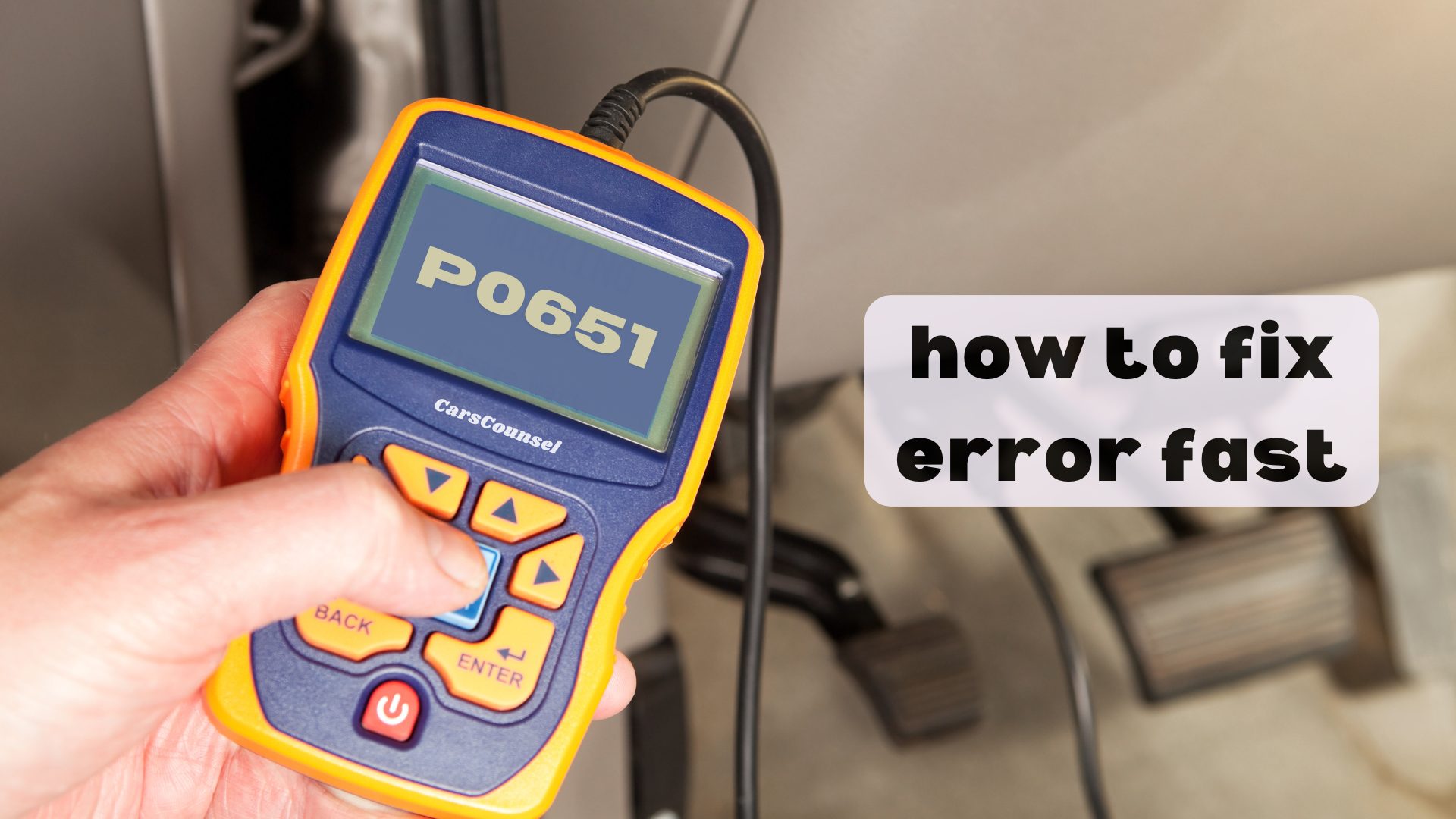
Among OBD-II trouble codes, P0651 is a generic SAE definition indicating a Sensor Reference Voltage “B” Circuit/Open fault. It means the control module detected an open circuit or loss of voltage on a specific 5-volt reference bus.
Because this circuit powers multiple sensors, exact application verification is required. The code indicates a circuit condition, and testing is necessary to isolate the fault to a specific sensor or wiring branch.
Quick Navigation
Key Takeaways
- Condition detected: The PCM identified an open circuit or voltage loss on the Sensor Reference Voltage “B” bus.
- Electrical checks required: Diagnosis involves isolating sensors on this circuit and testing the 5-volt reference wiring.
- System impacts: A loss of this reference voltage will disable all sensors connected to this specific bus, causing multiple drivability issues.
- Component testing: The wiring, connectors, and individual sensors on the circuit must be evaluated to find the short or open.
P0651 Code Description and Implications
P0651 is a generic SAE definition for Sensor Reference Voltage “B” Circuit/Open. The powertrain control module supplies a 5-volt reference to various engine and transmission sensors.
When the module detects that the voltage on the specific “B” reference bus is missing or outside the expected range, it stores P0651. This indicates an open circuit, a short to ground, or a short to voltage on that specific branch.
Common Causes of the P0651 Code
- Shorted sensor: One of the sensors connected to the “B” reference circuit may have failed internally, shorting the 5-volt supply to ground and pulling the entire bus down.
- Damaged or chafed wiring: The 5-volt reference wire may be broken, causing an open circuit, or rubbed through, causing a short to ground or voltage.
- Corroded or loose connectors: Moisture or corrosion at a sensor connector or the PCM connector can interrupt the reference voltage path.
- Failed PCM: The internal 5-volt voltage regulator within the control module may have failed, though this is less common than external wiring or sensor faults.
Symptoms Associated With P0651
Possible symptoms include:
- Illuminated Check Engine Light (MIL).
- Multiple other sensor-related diagnostic trouble codes stored simultaneously.
- Engine stalling, failure to start, or severe limp mode due to missing critical sensor data.
- Erratic gauge cluster readings or transmission shifting issues if transmission sensors share this bus.
Diagnosing the P0651 Trouble Code
Diagnosing a 5-volt reference circuit fault requires a digital multimeter, a scan tool, and the vehicle’s specific wiring diagrams to identify which sensors are on Circuit “B”.
- Identify Circuit “B” sensors: Use wiring diagrams to determine exactly which sensors share the 5-volt reference “B” bus.
- Monitor live data: Check the scan tool to see which sensors are reading 0.0V or 5.0V and are unresponsive.
- Isolate the fault: Disconnect the sensors on Circuit “B” one by one. If the 5-volt reference returns to normal when a specific sensor is unplugged, that sensor is likely shorted internally.
- Test the circuit: If disconnecting all sensors does not restore the 5-volt reference, test the wiring harness for opens or shorts between the PCM and the sensor connectors.
Repairing the P0651 Issue
Repairs must follow confirmed diagnosis. Never replace the PCM based solely on the presence of a P0651 code.
- Sensor replacement: If a specific sensor is confirmed to be pulling the 5-volt reference down, replace the failed sensor.
- Wiring repair: If the harness is chafed, broken, or shorted, repair the wires using solder and heat shrink tubing.
- Connector replacement: If the plug is corroded, replace the pigtail connector with a component meeting the correct vehicle specification.
- PCM replacement: If all external wiring and sensors are verified and the PCM is not outputting 5 volts, the module may require replacement and programming.
Cost Considerations for P0651 Repairs
Cost depends on diagnostic time, component accessibility, required parts, programming requirements, and labor. Finding a shorted sensor on a shared bus requires systematic isolation.
Prevention Strategies for Future Occurrences
- Protect wiring harnesses: Ensure sensor wiring is securely routed away from hot exhaust components and sharp chassis edges.
- Keep connectors dry: Verify that weather seals are intact on engine bay and transmission connectors to prevent moisture intrusion and corrosion.
Troubleshooting Tips and Best Practices
- Do not replace the PCM first: A P0651 code is frequently caused by a single failed sensor shorting out the shared 5-volt bus. Always isolate the sensors on the circuit before condemning the control module.
- Check for related codes: Because multiple sensors share this reference, you will likely see a cluster of codes for the sensors on Circuit “B”.
- Check for TSBs: Some manufacturers issue Technical Service Bulletins for revised wiring harness routing or updated sensor designs to address chronic 5-volt reference shorts.
More OBD-II Codes
| P0645 | P0643 | P0641 | P0638 |
| P0633 | P0629 | P0652 | P0654 |
| P0657 | P0660 | P0661 | P0670 |
| P0601 | P0602 | P0603 | P0604 |
| P0605 | P0606 | P0607 | P0600 |
| P0627 | P0628 | P0688 | P0690 |
Frequently Asked Questions
Can a bad sensor cause a P0651 code?
Yes. Since multiple sensors share the 5-volt reference “B” bus, a single sensor failing internally and shorting to ground will pull the voltage down for the entire circuit, triggering the code.
Is it safe to drive with a P0651 code?
Driving is not recommended. A loss of the 5-volt reference will disable all sensors on that circuit, which can cause the engine to stall, fail to start, or enter a severe limp mode.
Will replacing the PCM fix a P0651 code?
Not necessarily. While an internal PCM voltage regulator failure is possible, the root cause is usually an external shorted sensor or damaged wiring. Proper circuit isolation is required first.
Does P0651 mean my wiring harness needs to be replaced?
No. P0651 indicates an open or short on the reference circuit. The root cause is often a single failed sensor or a localized chafed wire that can be repaired without replacing the entire harness.
Can a 5-volt reference short cause other codes?
Yes. Because Circuit “B” powers multiple sensors, a short on this bus will typically cause the PCM to store multiple sensor circuit codes simultaneously alongside the P0651 code.
What Should You Do About the P0651 Code?
Because the P0651 code indicates an open or short on the sensor reference voltage “B” circuit, it requires systematically isolating the sensors and testing the wiring before replacing components. Confirm the exact factory definition for your vehicle.
Inspect the wiring harness for damage, check the sensors on the circuit, and test the relevant system and components. Follow the manufacturer’s diagnostic procedure to isolate the faulty component, repair the confirmed root cause, and verify the repair.

