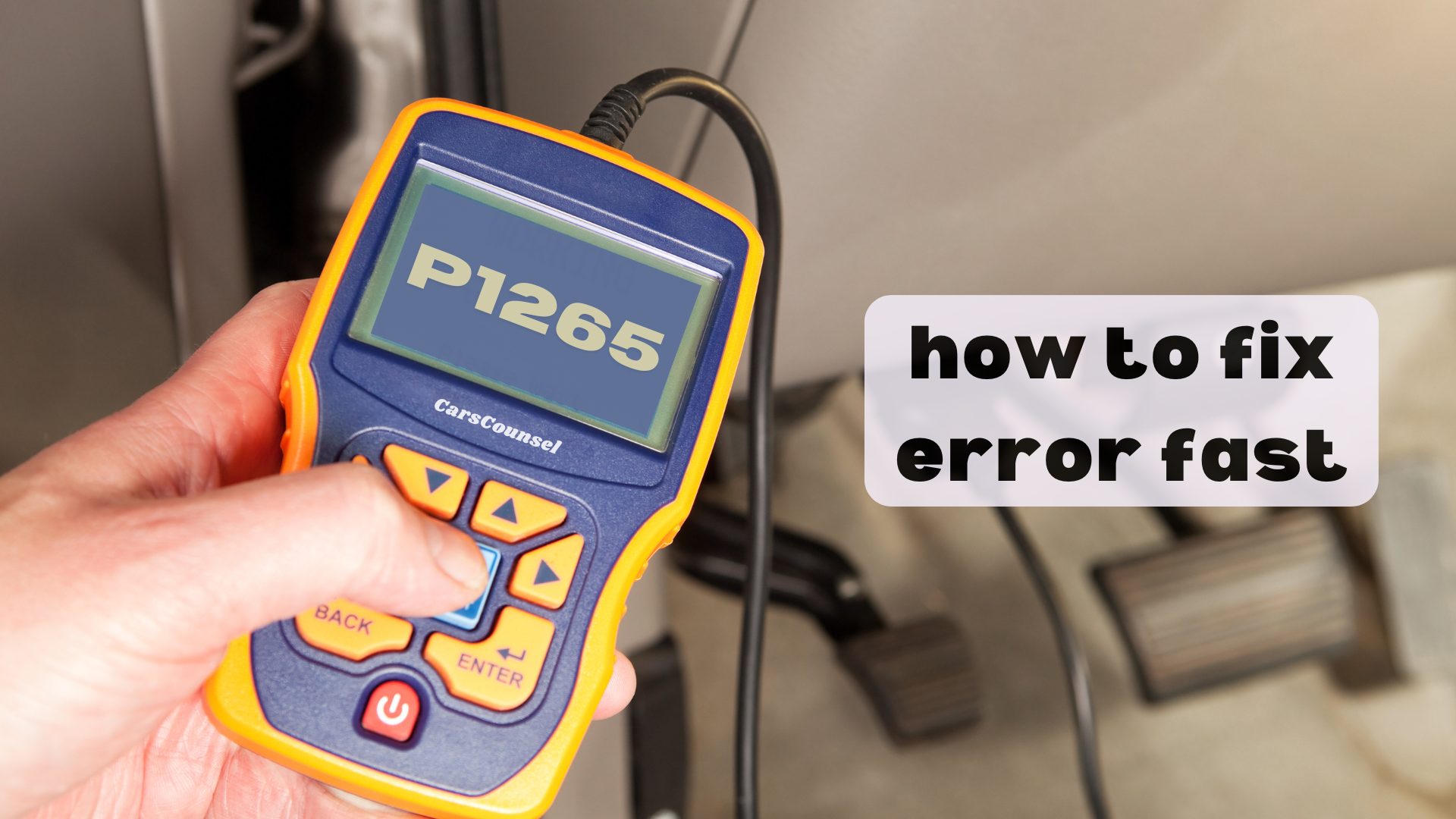
Diagnostic trouble code P1265 is a manufacturer-specific powertrain fault code. Because it is manufacturer-specific, its exact definition depends entirely on the vehicle make, model, and application.
Exact vehicle application must be verified before diagnosis. The code identifies a detected condition in the fuel injector circuit, but further testing is required to identify the root cause.
Quick Navigation
Key Takeaways
- P1265 is a manufacturer-specific code, meaning its definition varies between automakers like Ford, Mazda, and General Motors.
- On certain Ford and Mazda applications, it indicates a high to low side short in the cylinder 5 fuel injector circuit.
- On some GM Duramax applications, it indicates an injector circuit fault for a specific group of cylinders.
- Diagnosis requires verifying the exact factory definition and testing the injector circuit, wiring, and control modules.
- Repairs depend on the confirmed root cause and may involve repairing wiring, replacing the injector, or addressing the control module.
P1265 Code Description and Implications
Because P1265 is manufacturer-specific, there is no single universal definition. The exact monitored system and fault condition depend on the vehicle make and model.
This trouble code on some Ford and Mazda applications indicates a “Cylinder #5 High To Low Side Short,” meaning the control module detected an electrical short in the cylinder 5 fuel injector wiring.
On certain GM Duramax applications, P1265 indicates an injector circuit fault for a specific group of cylinders, which may include cylinder 5, often related to the Fuel Injection Control Module (FICM).
Common Causes of the P1265 Code
The underlying cause depends entirely on the verified factory definition for the specific vehicle application.
For Ford and Mazda applications, possible causes include a faulty fuel injector, damaged injector wiring harness, corroded connectors, or a failed powertrain control module.
For GM applications, causes may involve a failed fuel injector, damaged wiring harness, poor electrical grounds, or a failed Fuel Injection Control Module (FICM).
Symptoms Associated With P1265
Symptoms vary widely depending on the underlying system fault and the vehicle manufacturer.
On applications with an injector circuit short, symptoms can include an illuminated Check Engine Light, rough idling, engine misfires, or the engine entering a limp mode.
In some cases, the vehicle may hesitate during acceleration, experience a loss of power, or exhibit a hard start or no-start condition.
Diagnosing the P1265 Trouble Code
Diagnosis must begin by confirming the exact factory definition for the specific make, model, and year.
For injector circuit applications, technicians inspect the injector wiring and connectors for damage, corrosion, or shorts.
A multimeter is used to test the injector circuit for continuity and resistance, comparing the readings to manufacturer specifications.
On applications with a Fuel Injection Control Module, the module’s voltage output and operation must be tested.
Repairing the P1265 Issue
Repairs must follow confirmed diagnosis based on the specific vehicle application.
If testing confirms damaged injector wiring or corroded connectors, the wiring must be repaired or the connector replaced.
If the fuel injector fails resistance testing, the injector must be replaced.
If a Fuel Injection Control Module or PCM fault is confirmed, the module must be replaced and programmed.
Cost Considerations for P1265 Repairs
Repair costs depend entirely on the confirmed root cause, component accessibility, and local labor rates.
Repairing a section of wiring may require minimal parts and labor, while replacing a fuel injector or control module requires more labor and expensive parts.
Prevention Strategies for Future Occurrences
Some electrical failures cannot be reliably prevented.
Inspecting exposed engine wiring harnesses for chafing, heat damage, or oil contamination can help prevent circuit shorts.
Keeping electrical connectors sealed helps reduce the likelihood of moisture intrusion and corrosion.
Troubleshooting Tips and Best Practices
Never assume P1265 is a universal injector code. Always verify the exact definition for the specific vehicle before purchasing parts.
Do not ignore related codes. An injector circuit fault frequently appears alongside other injector or misfire codes, such as P0205 or P0305.
More OBD-II Codes
| P1264 | P1266 | P0205 | P0305 |
| P1263 | P1267 | P0201 | P0202 |
| P1262 | P1268 | P0203 | P0204 |
| P1261 | P1269 | P0300 | P0301 |
| P1260 | P1270 | P0302 | P0303 |
| P1259 | P1271 | P0304 | P0306 |
Frequently Asked Questions
Is P1265 a generic or manufacturer-specific code?
No. P1265 is a manufacturer-specific code. Its exact definition varies significantly between automakers, so the factory service information for the specific vehicle must be consulted.
Can I drive my car with a P1265 code?
It depends on the application. If P1265 indicates an injector circuit short, the engine may enter a limp mode that limits RPMs and causes rough running or misfires.
Will disconnecting the battery clear the P1265 code?
Disconnecting the battery may temporarily clear the code, but it does not repair the underlying electrical fault. The code will return once the module runs its self-test.
Can bad wiring cause a P1265 code?
Yes. On applications monitoring the injector circuit, damaged wiring, chafed harnesses, or corroded connectors can cause a short or open circuit, triggering the P1265 code.
Does P1265 always mean the injector is bad?
No. While a failed internal injector coil can cause this code, damaged wiring, poor grounds, or a failed control module are frequent causes that must be ruled out first.
What Should You Do About the P1265 Code?
Confirm the exact factory definition and diagnostic procedure for your specific vehicle application. Because P1265 is manufacturer-specific, identifying whether it relates to a specific cylinder short or a control module group fault is the mandatory first step.
Follow the applicable manufacturer diagnostic steps to test the relevant system and components. Once the root cause is confirmed, complete the necessary repairs and verify that the system operates correctly and the code does not return.

