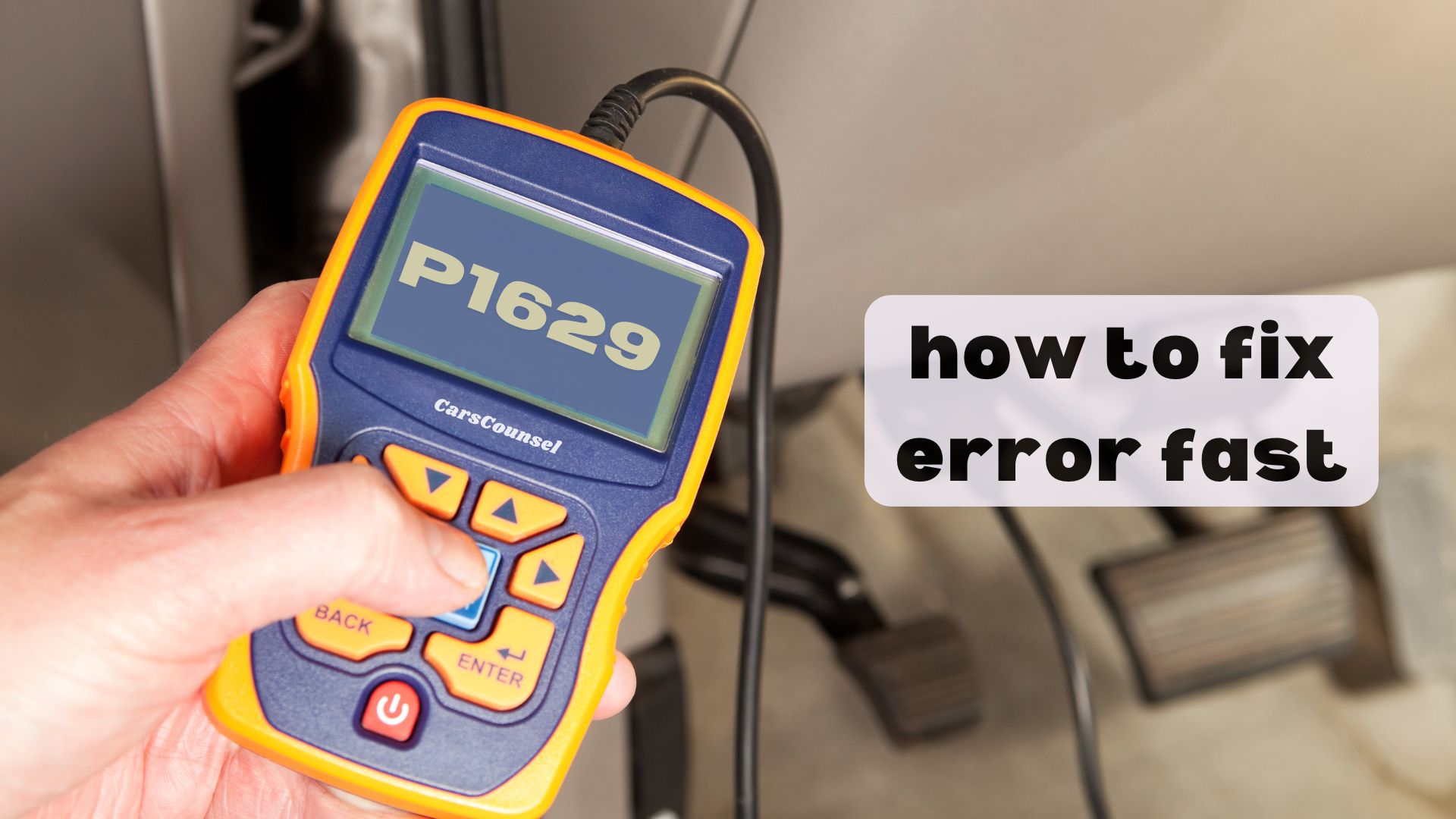
P1629 is a manufacturer-specific powertrain diagnostic trouble code, meaning its exact definition depends entirely on the vehicle application. It most commonly indicates a theft deterrent system communication fault or an immobilizer signal issue.
Because this code is manufacturer-specific, you must verify the exact factory definition for your vehicle before beginning diagnosis. The code identifies a detected condition and does not automatically prove that a specific module or key has failed.
Quick Navigation
Key Takeaways
- P1629 is a manufacturer-specific code with different definitions depending on the vehicle make.
- On certain GM applications, it indicates the PCM failed to receive the fuel enable signal from the theft deterrent module.
- On specific VW, Audi, and Ford applications, it points to an immobilizer system fault or transceiver signal issue.
- Possible causes include failed transponder keys, damaged transceiver rings, wiring faults, or module communication failures.
- Diagnosis requires verifying the exact factory definition and testing the relevant security circuits using manufacturer service information.
P1629 Code Description and Implications
P1629 is a manufacturer-specific powertrain code, meaning its exact definition depends entirely on the vehicle application.
Certain GM applications: The code indicates a Theft Deterrent Fuel Enable Signal Not Received condition. The powertrain control module failed to receive the correct serial data password from the body control module or theft deterrent module.
Certain VW, Audi, and Ford applications: P1629 indicates an immobilizer system fault, a transceiver signal issue, or a key adaptation failure. The control module detected a mismatch or communication loss with the key transponder.
Because the code identifies a monitored system condition, it does not automatically prove that the immobilizer module or key has failed. You must verify the exact factory definition before attempting repairs.
It is vital to address this fault code promptly using the correct service information.
Common Causes of the P1629 Code
The underlying cause depends on which system the code monitors on your specific vehicle.
For GM serial data applications:
- A loss of serial data communication between the PCM and the BCM or TDM.
- Damaged wiring or poor connections on the Class 2 serial data bus.
- An internally failed body control module or theft deterrent module.
For immobilizer and transceiver applications:
- An unprogrammed, damaged, or defective transponder key.
- A failed immobilizer ring antenna or transceiver module around the ignition lock cylinder.
- Wiring faults between the transceiver and the control module.
Symptoms Associated With P1629
Symptoms vary based on the monitored system and the severity of the fault.
Most security system applications: The engine may crank normally but fail to start because the control module disables the fuel injectors. Alternatively, the engine may start and immediately stall.
You will likely notice a flashing or steady security warning light on the dashboard. MIL behavior varies by application. Some vehicles illuminate the check engine light, while others only use the security indicator.
Diagnosing the P1629 Trouble Code
Diagnosis must begin by confirming the exact factory definition for your make, model, year, and engine.
Retrieve the code and any accompanying communication or security codes using a scan tool capable of accessing the immobilizer or body control modules.
For GM applications, check the serial data bus for communication. Verify the BCM is awake and transmitting the correct password to the PCM.
For immobilizer applications, test the transceiver ring antenna and verify the transponder key signal. Try a known-good programmed spare key to rule out a damaged key.
Never replace components based solely on the presence of the code. Confirm the exact circuit or communication failure before proceeding.
Repairing the P1629 Issue
Repairs must follow confirmed electrical or communication diagnosis.
If testing confirms a damaged transponder key, replace and program a new key to the vehicle using the manufacturer’s security procedure.
If the serial data bus or transceiver wiring is damaged, repair the harness and clear the codes.
If the control module fails communication tests, replace and program the BCM, TDM, or immobilizer module according to the exact service procedure.
Cost Considerations for P1629 Repairs
Exact repair costs depend heavily on the root cause, component accessibility, and your vehicle’s specific application.
Programming a new key involves different costs compared to diagnosing a serial data communication fault or replacing a body control module.
Cost depends on diagnostic time, component accessibility, required parts, programming requirements, and labor.
Prevention Strategies for Future Occurrences
Security system faults are often difficult to predict, but some practices can help identify developing issues.
Protect your ignition keys from physical damage, extreme moisture, and strong magnetic fields that could degrade the internal transponder chip.
Keeping electrical connector seals intact around the ignition cylinder and control modules may reduce moisture intrusion and corrosion in security circuits.
Troubleshooting Tips and Best Practices
Always consult the exact manufacturer service information for your vehicle before testing security circuits or attempting module programming.
Before condemning the vehicle’s immobilizer module or PCM, always test a known-good spare key to rule out a simple transponder failure.
Do not assume a general battery or starter issue is the primary cause of a no-start condition without verifying the security system status.
If your vehicle is subject to an applicable technical service bulletin regarding immobilizer software updates or transceiver wiring repairs, verify its applicability.
More OBD-II Codes
| P1628 | P1199 | P1197 | P1196 |
| P1195 | P1194 | P1631 | P1632 |
| P1633 | P1635 | P1637 | P1638 |
| P1610 | P1611 | P1612 | P1614 |
| P1504 | P1506 | P1514 | P1516 |
| P1518 | P1520 | P1521 | P1524 |
Frequently Asked Questions
Is the P1629 code generic or manufacturer-specific?
No. P1629 is a manufacturer-specific code. Its exact definition depends on the vehicle make, commonly indicating a theft deterrent communication fault or an immobilizer signal issue.
Can a bad key cause a P1629 code?
Yes. On applications where P1629 indicates an immobilizer fault, a damaged transponder chip inside the key can prevent the system from recognizing it, triggering the code.
Will P1629 allow my engine to crank?
On many applications, the engine will crank normally but fail to start because the control module disables the fuel injectors or spark as a security measure.
Can I clear the P1629 code by disconnecting the battery?
Disconnecting the battery may temporarily erase the code, but it does not repair the underlying security communication fault. The no-start condition will likely persist.
Is it safe to drive with a P1629 code?
You cannot drive the vehicle if the theft deterrent system is actively preventing the engine from starting or causing it to stall immediately after starting.
What Should You Do About the P1629 Code?
Confirm the exact factory definition for your specific vehicle application, then follow the applicable manufacturer diagnostic procedure.
Because P1629 is manufacturer-specific, it may point to a theft deterrent communication issue or an immobilizer system fault. Do not assume a universal repair path.
Inspect the relevant system and components, perform targeted communication tests, and confirm the root cause before replacing any parts.

