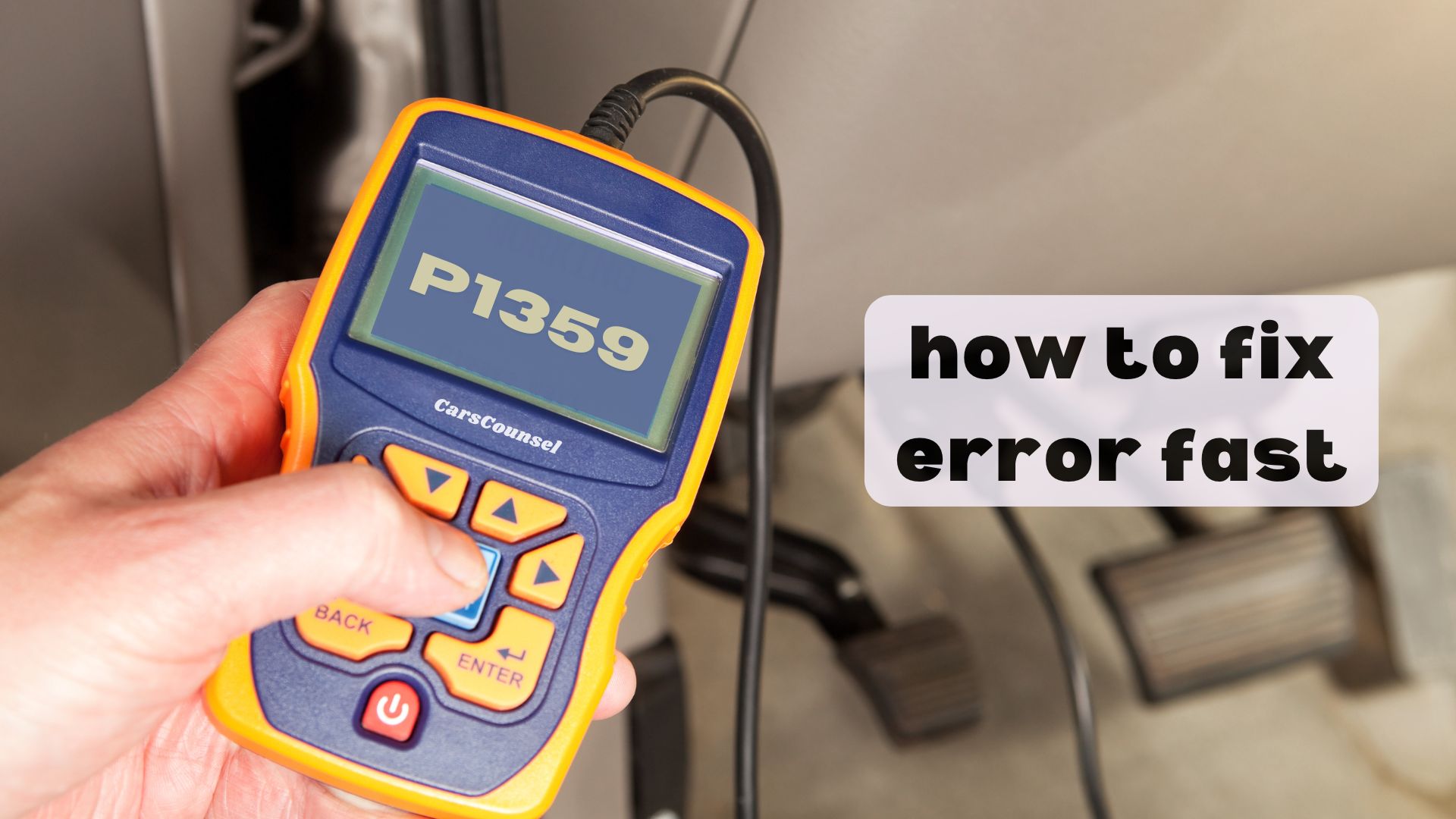
The P1359 code is a manufacturer-specific powertrain code. Its exact definition depends entirely on the vehicle application, relating to crankshaft position sensors, ignition control circuits, or coil power stages.
This code identifies a detected electrical circuit condition or signal fault, not necessarily a failed sensor. Proper diagnosis requires verifying the exact factory definition and testing the relevant circuits.
Quick Navigation
Key Takeaways
- The P1359 code is manufacturer-specific, indicating a CKP/TDC sensor, SPOUT, or ignition coil power stage circuit fault.
- Possible causes include damaged wiring, poor electrical connections, failed sensors, or faulty ignition control modules.
- Symptoms typically include an illuminated Check Engine Light, engine misfires, stalling, or a no-start condition.
- Diagnosis requires confirming the exact factory definition and testing the specific ignition or sensor circuits.
- Repairs depend on the confirmed fault and may involve wiring repair, sensor replacement, or module replacement.
P1359 Code Description and Implications
P1359 is a manufacturer-specific trouble code. Its exact definition depends entirely on the vehicle application.
Some Honda and Acura applications: The code indicates a “CKP/TDC Sensor Connector Disconnected” or circuit malfunction, where the PCM detects a fault in the crankshaft position or top dead center sensor signal.
Certain Ford applications: The code indicates a “Spark Output (SPOUT) Circuit” malfunction, where the PCM detects an issue with the ignition timing control signal sent to the ignition module.
Some Volkswagen and Audi applications: The code may relate to an “Ignition Coil Power Output Stage” fault, indicating a short or open circuit in the coil driver module.
Common Causes of the P1359 Code
Several conditions can trigger this manufacturer-specific malfunction code. Identifying the exact cause requires electrical testing of the specific circuit.
- For Honda/Acura applications: A disconnected or corroded CKP/TDC sensor connector, damaged wiring, or a failed sensor.
- For Ford applications: Wiring faults in the SPOUT circuit, a failed ignition control module, or a PCM driver issue.
- For VW/Audi applications: A faulty ignition coil power output stage, damaged wiring, or poor ground connections.
- Blown fuses supplying power to the ignition or sensor circuits.
Symptoms Associated With P1359
Symptoms vary depending on the specific system design and the underlying fault condition.
- Illuminated Check Engine Light.
- Engine misfires, rough idle, or hesitation during acceleration.
- On some applications, a complete no-start condition or engine stalling immediately after starting.
- Reduced engine power or the vehicle entering a fail-safe mode.
Diagnosing the P1359 Trouble Code
Diagnosis must begin by confirming the exact factory definition and inspecting the physical system components.
- Verify the exact manufacturer definition and locate the wiring diagram for the specific sensor or ignition circuit.
- For Honda/Acura applications: Inspect the CKP/TDC sensor connector for corrosion, looseness, or damaged pins. Test the sensor resistance and signal circuit.
- For Ford applications: Check the SPOUT circuit wiring between the PCM and the ignition module for opens or shorts.
- For VW/Audi applications: Test the ignition coil power stage module and its power, ground, and control circuits.
- Use a digital multimeter or oscilloscope to verify signal waveforms and circuit continuity.
Repairing the P1359 Issue
Repairs depend entirely on the confirmed root cause of the system malfunction.
- If wiring damage or an open/short circuit is found, repair or replace the affected harness sections and secure the routing.
- Clean or replace corroded connectors to restore proper electrical contact and circuit integrity.
- If the CKP/TDC sensor, ignition control module, or power output stage fails electrical or functional testing, replace it using a component meeting the correct vehicle specification.
- If testing confirms the PCM is faulty and all external circuits are intact, follow the manufacturer procedure for module replacement.
Cost Considerations for P1359 Repairs
Cost depends on diagnostic time, component accessibility, required parts, programming requirements, and labor.
Replacing an externally mounted sensor or repairing a wire is generally less expensive than diagnosing and replacing an ignition control module or performing complex wiring repairs.
Prevention Strategies for Future Occurrences
While electrical and mechanical failures are not always preventable, some practices can reduce the risk of sensor and ignition issues.
- Inspecting exposed wiring and connectors can help identify developing damage from heat exposure, chafing, or road debris.
- Keeping electrical connections clean and sealed helps prevent moisture intrusion and corrosion.
- Ensuring the sensor connectors are fully seated and locked during previous maintenance prevents intermittent signal loss.
Troubleshooting Tips and Best Practices
Always consult the exact manufacturer service information for your vehicle’s wiring diagram and expected signal waveforms.
- Do not assume the crankshaft position sensor is faulty simply because the code points to the CKP/TDC circuit; wiring damage and poor connections must be ruled out first.
- Check for related codes, such as P0335 or specific ignition coil codes, which may indicate a broader system issue.
- Verify technical service bulletins for your specific make and model, as some manufacturers issue updated wiring harnesses or revised sensor part numbers for recurring signal faults.
More OBD-II Codes
| P1358 | P1357 | P1356 | P1355 |
| P1354 | P1353 | P1360 | P1361 |
| P1362 | P1363 | P1364 | P1365 |
| P0335 | P0336 | P1300 | P1389 |
| P0300 | P0301 | P0302 | P0303 |
| P0304 | P0305 | P0306 | P0340 |
Frequently Asked Questions
Is the P1359 code generic or manufacturer-specific?
No. P1359 is a manufacturer-specific code. Its exact definition varies by vehicle make, indicating a CKP/TDC sensor, SPOUT, or ignition coil circuit fault.
Can I drive my car with a P1359 code?
It depends on the application and symptoms. If the engine is stalling, misfiring severely, or failing to start, the vehicle is unsafe or impossible to drive.
Will a bad crankshaft position sensor cause a P1359 code?
Yes. On Honda and Acura applications, a failing or disconnected CKP/TDC sensor will disrupt the engine timing signal, triggering this specific circuit malfunction code.
Can a wiring issue trigger the P1359 code?
Yes. An open circuit, short to ground, or high resistance in the sensor signal wire, SPOUT circuit, or ignition coil control wire will cause a signal fault and trigger the code.
Will a P1359 code cause an emissions test failure?
Yes. Any code that illuminates the Check Engine Light or indicates an active misfire or ignition system fault will cause an automatic failure during an OBD-II emissions inspection.
What Should You Do About the P1359 Code?
Confirm the exact factory definition for your specific vehicle application. Follow the applicable manufacturer diagnostic procedure to test the relevant sensor, ignition, or electrical circuits.
Repair or replace the confirmed failed component or fix the identified wiring fault, then retest the system to ensure proper operation.

