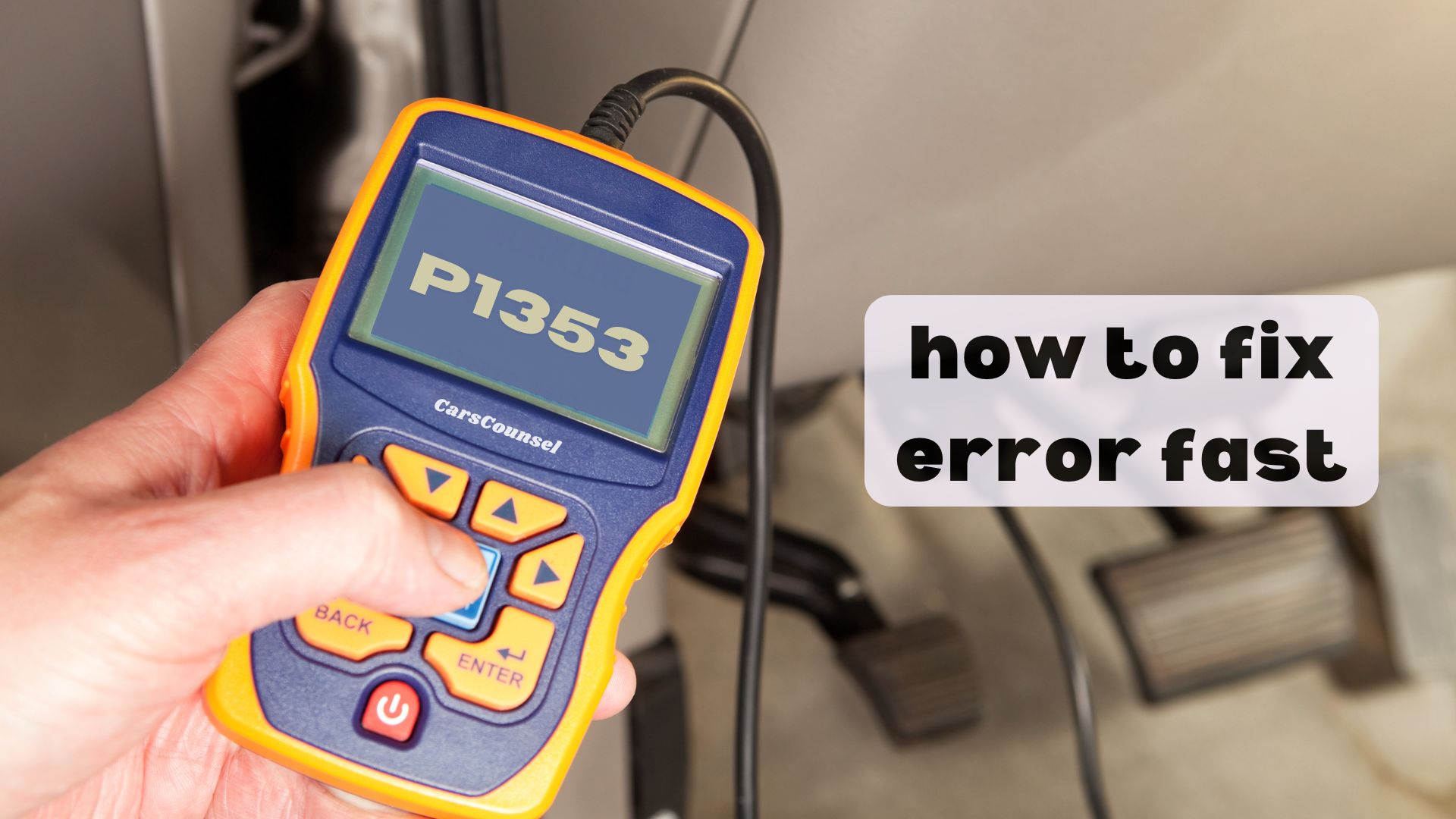
The P1353 trouble code is a manufacturer-specific powertrain code. Its exact definition depends entirely on the vehicle application, primarily indicating a specific cylinder misfire or an ignition coil primary circuit fault.
Because it is manufacturer-specific, the exact application must be verified. The code identifies a detected condition, and testing is required to identify the root cause before replacing any components.
Quick Navigation
Key Takeaways
- P1353 is a manufacturer-specific code with definitions varying significantly between automakers.
- On BMW applications, it indicates a misfire in cylinder 6 with fuel cut-off.
- On Ford applications, it points to an ignition coil B primary circuit malfunction.
- On General Motors applications, it indicates an ignition control output high or pulse detected when grounded on cylinder 3.
- Proper diagnosis requires verifying the exact factory definition and testing the relevant ignition or fuel system components.
P1353 Code Description and Implications
The P1353 code is a manufacturer-specific powertrain definition. Because it is not a generic SAE code, its exact meaning depends entirely on the vehicle application.
BMW applications: P1353 indicates a misfire in cylinder 6 with fuel cut-off. The engine control module detects severe misfiring and disables the fuel injector to protect the catalytic converter from unburned fuel damage.
Ford applications: P1353 indicates an ignition coil B primary circuit malfunction. The powertrain control module detects an open, short, or out-of-range voltage condition in the primary control circuit for ignition coil B.
General Motors applications: P1353 indicates an ignition control output high or pulse detected when grounded on cylinder 3. The control module detects an irregularity in the ignition control signal for the third cylinder.
Common Causes of the P1353 Code
Electrical faults, ignition component degradation, and mechanical engine issues are the primary triggers, though the specific causes vary by manufacturer.
For BMW applications: The issue stems from a failed ignition coil on cylinder 6, a fouled spark plug, a clogged fuel injector, or a mechanical engine problem such as low compression.
For Ford applications: The fault is caused by a failed ignition coil B, damaged wiring harnesses, or a poor electrical connection at the coil connector causing an open or short circuit.
For GM applications: The issue is caused by a failing ignition control module, damaged wiring between the control module and the ignition coil for cylinder 3, or poor electrical connections.
Symptoms Associated With P1353
When the control module detects a fault in these specific monitoring systems, it illuminates the Check Engine Light.
BMW applications: You will likely experience rough idling, severe engine hesitation, and a noticeable loss of power. The engine control module may also command a flashing Check Engine Light to warn of potential catalytic converter damage.
Ford and GM applications: You may experience engine misfires, rough idling, hesitation during acceleration, or an illuminated Check Engine Light if the ignition control signals are missing or erratic.
Diagnosing the P1353 Trouble Code
Accurate diagnosis begins by confirming the exact factory definition for your specific vehicle make and model, as this is a manufacturer-specific error code.
BMW diagnosis: Inspect the spark plug and ignition coil on cylinder 6. Swap the coil to another cylinder to see if the misfire code follows the coil. Check the fuel injector operation and perform a compression test if ignition components test normal.
Ford and GM diagnosis: Inspect the ignition coil wiring for damage or melting. Use a multimeter to measure the primary circuit resistance and check the signal circuit for a short to voltage or an open condition. Verify the integrity of the ignition control module signals.
Repairing the P1353 Issue
Repairs must address the specific root cause identified during testing.
BMW repair: If the ignition coil or spark plug on cylinder 6 fails testing, replace the confirmed failed component. If a mechanical issue like low compression is found, address the internal engine repair.
Ford and GM repair: If the ignition coil primary circuit is open or shorted and the wiring is intact, replace the confirmed failed ignition coil or control module. Repair any chafed wires and clear the codes to verify the repair.
Cost Considerations for P1353 Repairs
Cost depends on diagnostic time, component accessibility, required parts, programming requirements, and labor.
Replacing a single ignition coil or spark plug is generally a straightforward repair with moderate parts and labor costs. Addressing internal engine mechanical issues or replacing an integrated ignition control module may require significantly more labor.
Prevention Strategies for Future Occurrences
Replacing spark plugs at the manufacturer’s recommended intervals can help prevent misfire-related codes from developing due to worn electrodes or excessive gap wear.
Inspecting ignition coil wiring harnesses for early signs of melting, chafing, or degradation near hot exhaust components can help prevent primary circuit faults.
Troubleshooting Tips and Best Practices
Do not immediately replace the fuel injector or engine control module just because a P1353 code is present. A failed ignition coil or a simple wiring fault will produce the exact same misfire or circuit fault reading.
Always verify the manufacturer-specific definition first. A code that means a cylinder 6 misfire on a BMW means an ignition coil B circuit fault on a Ford.
Check for Technical Service Bulletins for your specific vehicle. Manufacturers occasionally release updated ignition coil part numbers or revised wiring harness routing procedures to address chronic misfire and circuit issues.
More OBD-II Codes
| P1352 | P1351 | P1350 | P1349 |
| P1348 | P1347 | P1354 | P1355 |
| P1356 | P1357 | P1358 | P1359 |
| P0306 | P0303 | P0300 | P0301 |
| P0302 | P0304 | P0305 | P0313 |
| P0325 | P0335 | P0340 | P0330 |
Frequently Asked Questions
Is P1353 a generic or manufacturer-specific code?
No. P1353 is a manufacturer-specific powertrain code. It indicates a cylinder 6 misfire on BMW, an ignition coil B circuit fault on Ford, and an ignition control issue on GM.
Can I drive my car with a P1353 code?
Driving is not recommended if the code indicates a severe misfire with fuel cut-off. Continued driving with an active misfire can overheat and damage the catalytic converter.
Will disconnecting the battery clear the P1353 code?
Disconnecting the battery may temporarily erase the code, but it will not repair a failed ignition coil, damaged wiring, or a mechanical engine issue. The code will return once the monitor runs.
Can a bad catalytic converter cause a P1353 code?
No. P1353 monitors the ignition coil circuit or specific cylinder misfire conditions depending on the make. A catalytic converter efficiency issue triggers different codes, such as P0420 or P0430.
Does P1353 always mean the ignition coil is bad?
No. The code identifies a detected circuit or misfire condition. This is frequently caused by a worn spark plug, damaged wiring, or a clogged injector. The coil should only be replaced after testing confirms failure.
What Should You Do About the P1353 Code?
Confirm the exact factory definition for your vehicle, then follow the applicable manufacturer diagnostic procedure. Because P1353 is manufacturer-specific, the diagnostic path for a cylinder 6 misfire differs entirely from an ignition coil primary circuit fault.
Inspect the relevant system and components, including ignition coils, spark plugs, fuel injectors, and wiring circuits. Repair any confirmed wiring damage or mechanical issues, or replace the relevant system components only after testing verifies the failure.

