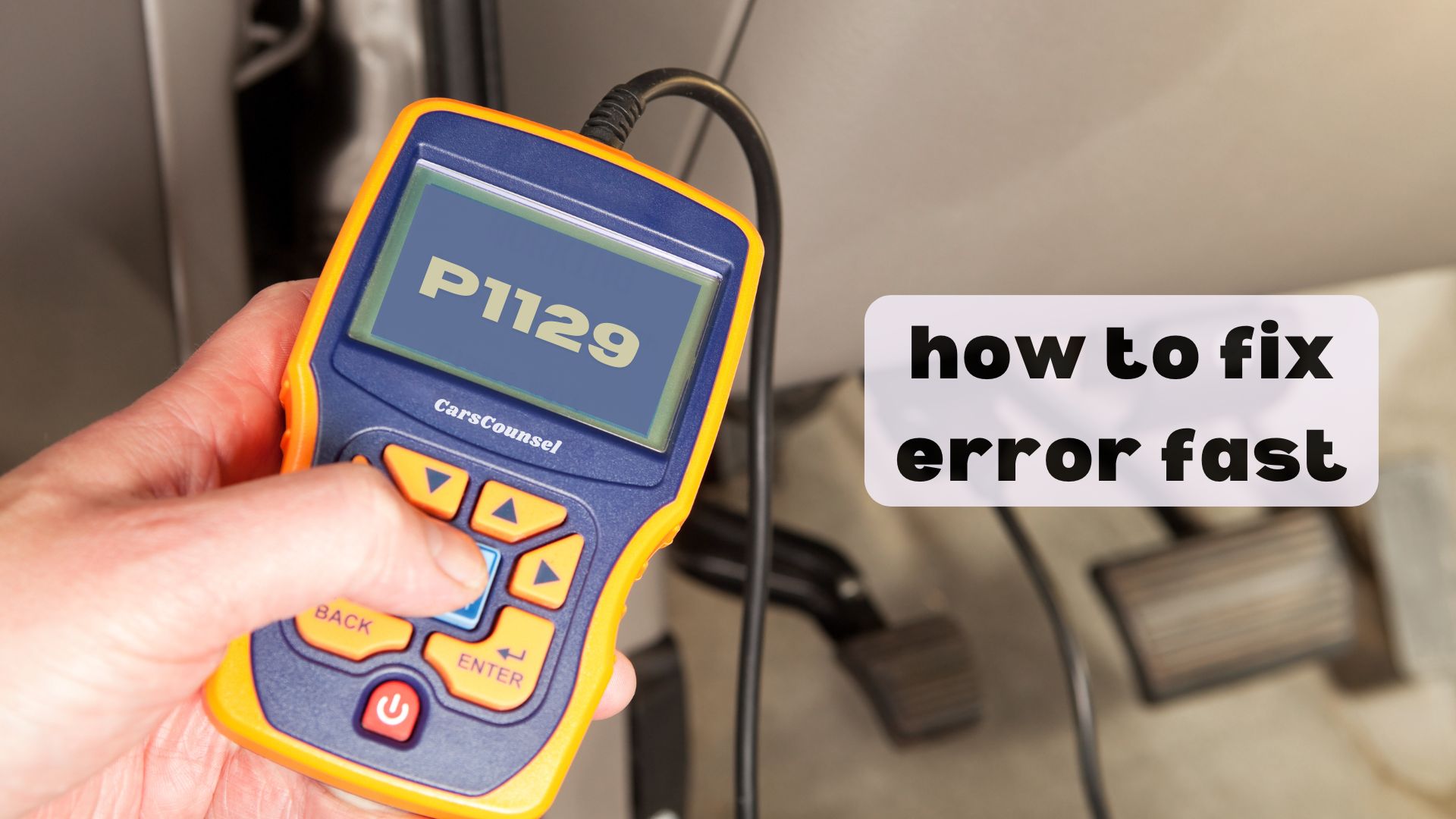
The P1129 code is a manufacturer-specific powertrain diagnostic trouble code. Its exact definition depends entirely on the vehicle application, ranging from manifold absolute pressure faults to throttle control or oxygen sensor issues.
Because this code is manufacturer-specific, you must verify the exact factory definition for your vehicle. The code indicates a detected fault condition in a monitored system, but it does not automatically prove that any specific component has failed.
Quick Navigation
Key Takeaways
- P1129 is a manufacturer-specific code, meaning its exact definition varies significantly by vehicle make and model.
- On Honda and Acura applications, it indicates a Manifold Absolute Pressure (MAP) sensor signal higher than expected.
- Other manufacturers assign this code to entirely different systems, such as reversed downstream oxygen sensor signals or electronic throttle control faults.
- Proper diagnosis requires confirming the exact factory definition before testing any components or circuits.
- Repair procedures and potential costs vary depending on the specific system monitored by your vehicle’s computer.
P1129 Code Description and Implications
P1129 is a manufacturer-specific powertrain code, meaning its exact definition depends entirely on the vehicle application. There is no single universal definition for this code across all automotive brands.
Honda and Acura applications: The code indicates a Manifold Absolute Pressure (MAP) sensor circuit higher than expected. The module detects the sensor is reporting too high a pressure, which can affect fuel delivery and engine performance.
Certain Ford applications: The code may refer to downstream heated oxygen sensor signals being reversed or swapped between banks, causing incorrect exhaust monitoring.
Some Toyota applications: The code can indicate an Electric Throttle Control System (ETCS) malfunction, pointing to an issue with the throttle body or accelerator pedal position sensors.
Specific Dodge, Chrysler, and Jeep applications: The code may point to a “Closed Loop Fueling Not Achieved” condition on Bank 2, meaning the engine fails to enter efficient closed-loop operation.
Because the monitored system varies, this error code can range from intake vacuum faults to throttle response or fuel control issues. Always verify the exact factory definition for your specific vehicle before proceeding with diagnosis.
Common Causes of the P1129 Code
The causes of a P1129 code depend entirely on which system your vehicle’s manufacturer assigned this identifier to. Diagnostic testing is required to identify the root cause.
For MAP sensor applications (such as Honda or Acura): Possible causes include a failing MAP sensor, severe intake manifold vacuum leaks, damaged sensor wiring, or a restricted exhaust causing excessive manifold pressure.
For reversed oxygen sensor applications (such as Ford): Potential causes involve the downstream oxygen sensor connectors being physically plugged into the wrong harness sides during a previous repair, or damaged wiring causing signal crossover.
For throttle control applications (such as Toyota): Causes may include a failing electronic throttle body assembly, poor electrical connections at the throttle motor, or accelerator pedal position sensor faults.
For closed loop fueling applications (such as Dodge or Chrysler): Causes may include failing upstream oxygen sensors, severe exhaust leaks, or underlying fuel delivery problems preventing the engine from reaching operating temperature or proper fuel trims.
Symptoms Associated With P1129
Because P1129 applies to different systems across various manufacturers, the symptoms you experience will depend on the exact application. MIL behavior also varies; some vehicles may illuminate the Check Engine Light immediately, while others may require repeated monitor failures.
MAP sensor applications: You may notice poor acceleration, a rough idle, or the engine entering a reduced-power limp mode. The Check Engine Light will typically illuminate.
Oxygen sensor applications: Symptoms might be minimal aside from the Check Engine Light, though you could experience slightly reduced fuel efficiency if the downstream sensors are used for catalyst monitoring adjustments.
Throttle control applications: You might experience severe drivability issues, including erratic idle, stalling, or the vehicle entering a fail-safe mode that limits engine RPM.
Closed loop fueling applications: You may notice decreased fuel economy and increased emissions as the engine computer remains stuck in open-loop fuel mapping.
Diagnosing the P1129 Trouble Code
Diagnosis must begin by confirming the exact factory definition of P1129 for your specific make, model, year, and engine. Using the wrong diagnostic path will lead to incorrect testing.
For MAP sensor implementations: A scan tool capable of displaying live data is necessary. Monitor the MAP sensor reading at idle and compare it to the barometric pressure sensor reading. Inspect the intake manifold for vacuum leaks and verify the sensor reference voltage and ground circuits.
For reversed oxygen sensor implementations: Physically trace the wiring harness from the downstream oxygen sensors to the ECM to verify they are connected to the correct bank circuits. Check for crossed wires or recent exhaust repair work that may have mixed up the connectors.
For throttle control implementations: Inspect the throttle body connector for corrosion or loose pins. Monitor the throttle position sensor data while slowly depressing the accelerator pedal to check for signal dropouts.
Repairing the P1129 Issue
Repairs must follow confirmed diagnosis. Never replace components based solely on the presence of the code.
If testing confirms a failed MAP sensor or a severe vacuum leak on a Honda or Acura application, replace the sensor with a component meeting the correct vehicle specification or repair the leaking intake gasket.
If diagnosis confirms the oxygen sensor connectors are swapped on a Ford application, route the wiring correctly and secure the harness to prevent future damage.
If the fault is isolated to the electronic throttle body on a Toyota application, replace the confirmed failed throttle body assembly and perform any required manufacturer relearn procedures.
Cost Considerations for P1129 Repairs
The cost to resolve a P1129 code varies because the underlying system differs by manufacturer. Exact pricing depends on diagnostic time, component accessibility, required parts, programming requirements, and labor.
For a MAP sensor replacement or vacuum leak repair, parts and labor costs are generally moderate. If the root cause is an electronic throttle body replacement, the repair cost will be higher due to parts pricing and potential calibration requirements. Always verify the exact cause before authorizing repairs.
Prevention Strategies for Future Occurrences
Preventing a P1129 code depends on the specific failure mechanism verified during diagnosis.
For MAP sensor applications, ensuring the air intake tubing is securely fastened and free of cracks can prevent unmetered air from skewing manifold pressure readings. Keeping the engine bay reasonably clean may also help prevent connector corrosion.
For throttle control applications, avoiding excessive force on the accelerator pedal and keeping moisture away from the throttle body connector can help preserve the electronic components.
For applications involving oxygen sensor wiring, care should be taken during any exhaust system repairs to ensure sensor connectors are routed safely away from high-heat components.
Troubleshooting Tips and Best Practices
Always verify the exact manufacturer definition before ordering parts. A P1129 code on a Honda requires entirely different diagnostic steps than the same code on a Toyota or Ford vehicle.
Do not assume a sensor has failed simply because it is named in the code description on a generic database. Wiring faults, vacuum leaks, and connector corrosion are known culprits in manufacturer-specific circuit codes.
If your vehicle is equipped with relevant technical service bulletins or software updates, check for their applicability to your exact model. Some throttle control logic or fuel mapping issues are addressed through manufacturer software recalibrations rather than hardware replacement.
Clearing the code without performing repairs does not fix the root cause and may remove valuable freeze-frame data needed for accurate diagnosis.
More OBD-II Codes
| P1128 | P1130 | P0130 | P0171 |
| P1127 | P1131 | P0131 | P0172 |
| P1126 | P1132 | P0132 | P0174 |
| P1125 | P1133 | P0133 | P0170 |
| P1124 | P1134 | P1147 | P1148 |
| P1123 | P1135 | P1149 | P1150 |
Frequently Asked Questions
Is the P1129 code a generic OBD-II code?
No. P1129 is a manufacturer-specific code. Its exact definition and the monitored system depend entirely on your vehicle’s make, model, and engine configuration.
Will a P1129 code cause my vehicle to fail an emissions test?
If your vehicle uses this code for a MAP sensor, throttle control, or fuel system fault, it will likely cause an emissions test failure. The Check Engine Light illumination alone is grounds for automatic failure in testing regions.
Can an intake vacuum leak trigger a P1129 code?
Yes, on applications where P1129 monitors the MAP sensor. A severe intake vacuum leak can cause the manifold absolute pressure to read higher than expected at idle, triggering the fault.
Does clearing the battery fix a P1129 code?
Disconnecting the battery may temporarily clear the code from the computer’s memory, but it does not repair the underlying electrical or mechanical fault. The code will return once the monitor runs again.
Can I drive my car with a P1129 code?
It depends on the application. If the code relates to an electronic throttle control fault, the vehicle may enter a reduced-power limp mode, making driving unsafe. If it relates to a MAP sensor, it should be diagnosed promptly.
What Should You Do About the P1129 Code?
Confirm the exact factory definition for your specific vehicle, then follow the applicable manufacturer diagnostic procedure. Because P1129 is manufacturer-specific, the relevant system and components must be verified before any testing begins. Proper diagnosis ensures you address the actual root cause.

