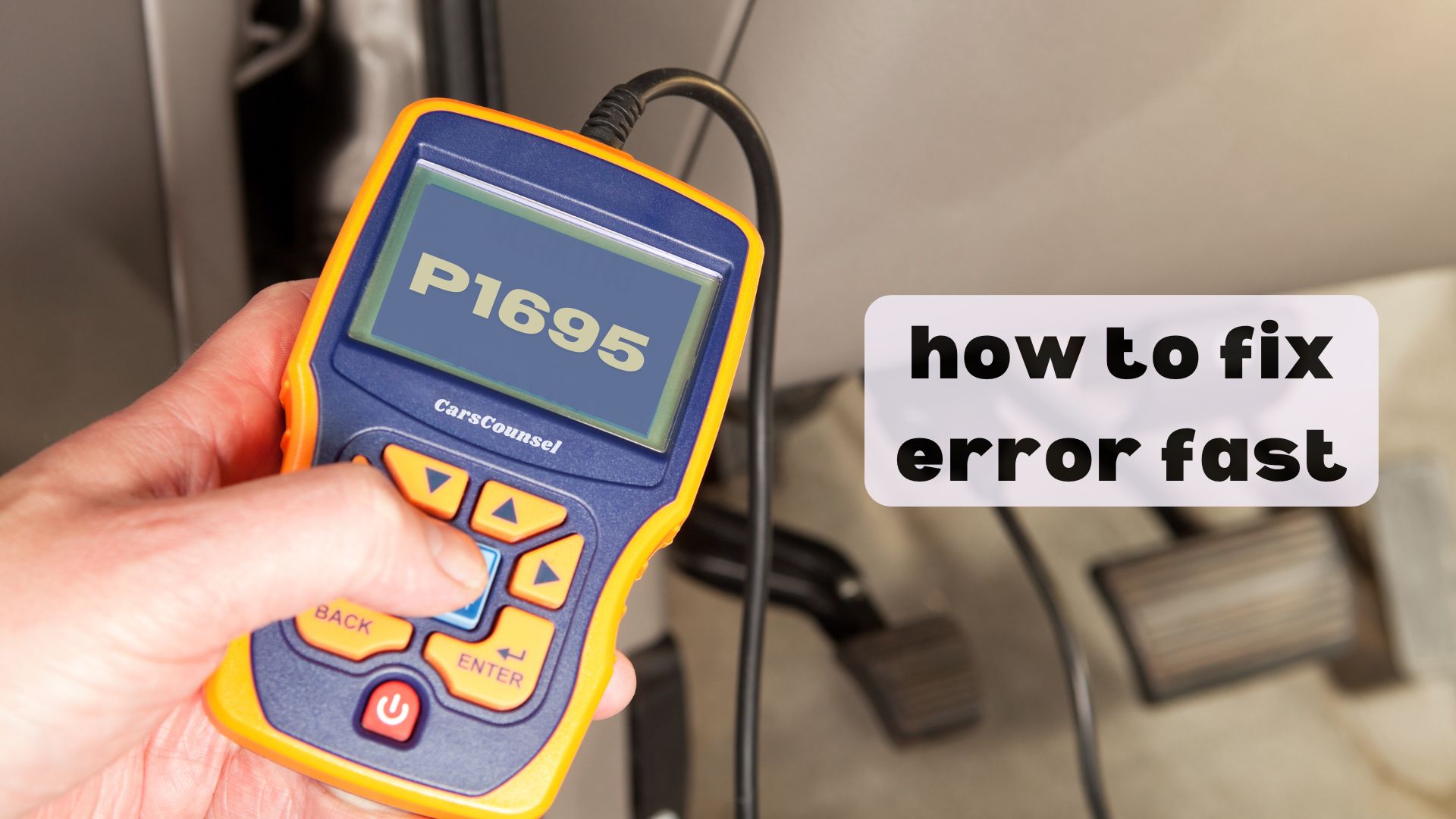
The P1695 diagnostic trouble code is a manufacturer-specific powertrain code. Its exact definition depends heavily on the vehicle make, pointing to a remote keyless entry circuit fault, a communication network issue, or an immobilizer memory error.
Because this code targets entirely different systems across manufacturers, the exact vehicle application must be verified before diagnosis. The code alone does not prove a specific component has failed without proper testing.
Quick Navigation
Key Takeaways
- P1695 is a manufacturer-specific powertrain code with differing definitions depending on the vehicle make.
- On GM and Chevrolet applications, it indicates a Remote Keyless Entry Circuit Low fault.
- On Chrysler, Dodge, and Jeep applications, it points to a No CCD/J1850 Message From the Body Control Module (BCM).
- On Hyundai applications, it indicates an Immobilizer EMS Memory Error.
- Diagnosis requires verifying the exact factory definition and testing the relevant circuit, communication network, or immobilizer system.
P1695 Code Description and Implications
The P1695 code indicates that a control module has detected a specific fault within the body control, security, or communication systems. Because it is a manufacturer-specific code, the exact monitored component varies significantly by brand.
Some GM and Chevrolet applications: P1695 indicates a Remote Keyless Entry Circuit Low fault. The Body Control Module (BCM) or PCM detects that the voltage in the keyless entry circuit is below the expected parameters.
Certain Chrysler, Dodge, and Jeep applications: The code indicates a No CCD/J1850 Message From BCM fault. The Powertrain Control Module (PCM) detects that it is not receiving the expected communication messages from the Body Control Module over the vehicle’s data bus.
Some Hyundai applications: P1695 indicates an Immobilizer EMS Memory Error, meaning the Engine Management System (EMS) has detected a fault in its internal permanent memory related to the immobilizer system.
Common Causes of the P1695 Code
Because P1695 applies to different systems across different brands, the root cause depends on the verified vehicle application.
GM and Chevrolet Causes: A failing remote keyless entry module, damaged wiring harness, poor electrical connections, or a blown fuse causing a low voltage condition in the circuit.
Chrysler, Dodge, and Jeep Causes: A failing Body Control Module (BCM), damaged communication bus wiring, poor electrical grounds, or a PCM communication fault preventing data exchange.
Hyundai Causes: An internal fault within the Engine Control Module (ECM) memory, a failing immobilizer antenna, or a corrupted immobilizer software calibration.
Symptoms Associated With P1695
When the control module detects a critical system fault, it illuminates a warning light and may alter vehicle operation.
Warning Lights: The Check Engine Light or Security Light will illuminate. On some applications, the instrument cluster may also lose communication or fail to display correctly.
Drivability: On communication fault applications, the vehicle may experience a no-start condition, stalling, or loss of accessory functions. On immobilizer applications, the engine may crank but fail to start.
Diagnosing the P1695 Trouble Code
Accurate diagnosis begins by verifying the exact vehicle application and reviewing manufacturer-specific service information.
For GM and Chevrolet applications: Inspect the remote keyless entry wiring and connectors. Verify the applicable power, ground, and signal circuits according to the manufacturer procedure to identify the low voltage condition.
For Chrysler, Dodge, and Jeep applications: Use a scan tool capable of communicating with multiple modules to check for communication errors. Inspect the data bus wiring for opens, shorts, or poor connections between the PCM and BCM.
For Hyundai applications: Check for immobilizer-related codes and verify the operation of the immobilizer antenna and key transponder. If the ECM internal memory is confirmed faulty, follow the manufacturer procedure for module replacement or reprogramming.
Repairing the P1695 Issue
Repairs must follow the confirmed root cause identified during diagnosis.
Circuit and Wiring Repairs: If the keyless entry or data bus wiring is damaged, repair the circuit and clear any corrosion from the connectors to restore proper voltage and communication.
Module and Component Repairs: If the remote keyless entry module, BCM, or immobilizer antenna fails testing, replace the confirmed failed component. If an ECM internal memory fault is confirmed, replace or reprogram the module according to the manufacturer procedure.
Cost Considerations for P1695 Repairs
Cost depends on diagnostic time, component accessibility, required parts, programming requirements, and labor.
Replacing a simple fuse or repairing a wire involves minimal labor. However, replacing and programming a BCM, ECM, or diagnosing complex data bus communication faults requires significant diagnostic time and specialized equipment.
Prevention Strategies for Future Occurrences
Inspecting exposed wiring harnesses and module connectors for damage or moisture intrusion helps prevent low voltage conditions and communication bus faults.
Keeping the vehicle’s battery voltage stable helps prevent module memory corruption and communication errors across the vehicle’s data network.
Troubleshooting Tips and Best Practices
Follow these practices to avoid misdiagnosis and ensure accurate repairs.
Do not assume the PCM or BCM has failed just because a communication code is present: A simple wiring break, poor ground, or weak battery is a frequent cause of missing data bus messages. Always verify the communication circuit integrity first.
Check for related codes: Look for accompanying module communication or immobilizer trouble codes, which might help pinpoint a broader network or security system issue.
Verify your definition: Always confirm whether your specific vehicle uses the keyless entry, BCM communication, or immobilizer definition before ordering parts.
More OBD-II Codes
| P1694 | P1693 | P1691 | P1689 |
| P1688 | P1687 | P1700 | P1701 |
| P1702 | P1703 | P1704 | P1705 |
| U0140 | U0155 | U0100 | U0101 |
| U1000 | U0073 | P1684 | P1685 |
| P1686 | P1690 | P1692 | P1662 |
Frequently Asked Questions
Is P1695 a generic or manufacturer-specific code?
No. P1695 is a manufacturer-specific powertrain code. Its definition varies significantly by brand, indicating a keyless entry circuit fault, a BCM communication issue, or an immobilizer memory error.
Can I drive my vehicle with a P1695 code?
The vehicle may remain drivable on some applications, but a BCM communication or immobilizer fault can cause a no-start condition or stalling. Driving should be limited until the root cause is repaired.
Will disconnecting the battery clear the P1695 code?
Disconnecting the battery might temporarily clear the code. However, it does not repair the underlying wiring fault, failing module, or memory error, and the code will return upon the next monitor cycle.
Can a weak battery cause a P1695 code?
Yes. On applications where P1695 indicates a communication bus or module fault, low system voltage can disrupt data bus messages or cause module memory errors, triggering the code.
Does P1695 affect the transmission?
On some applications, a missing BCM message can disrupt network communication, potentially affecting transmission shift strategies or causing a limp mode, depending on the exact vehicle architecture.
What Should You Do About the P1695 Code?
When a P1695 code appears, confirm the exact factory definition for your specific vehicle make and model. Because this code targets entirely different security, communication, and body control systems depending on the manufacturer, applying the wrong diagnostic path will lead to misdiagnosis.
Follow the applicable manufacturer diagnostic procedure to test the relevant system and components. Once the root cause is confirmed, complete the necessary electrical repairs, module replacements, or network corrections before returning the vehicle to normal service.

