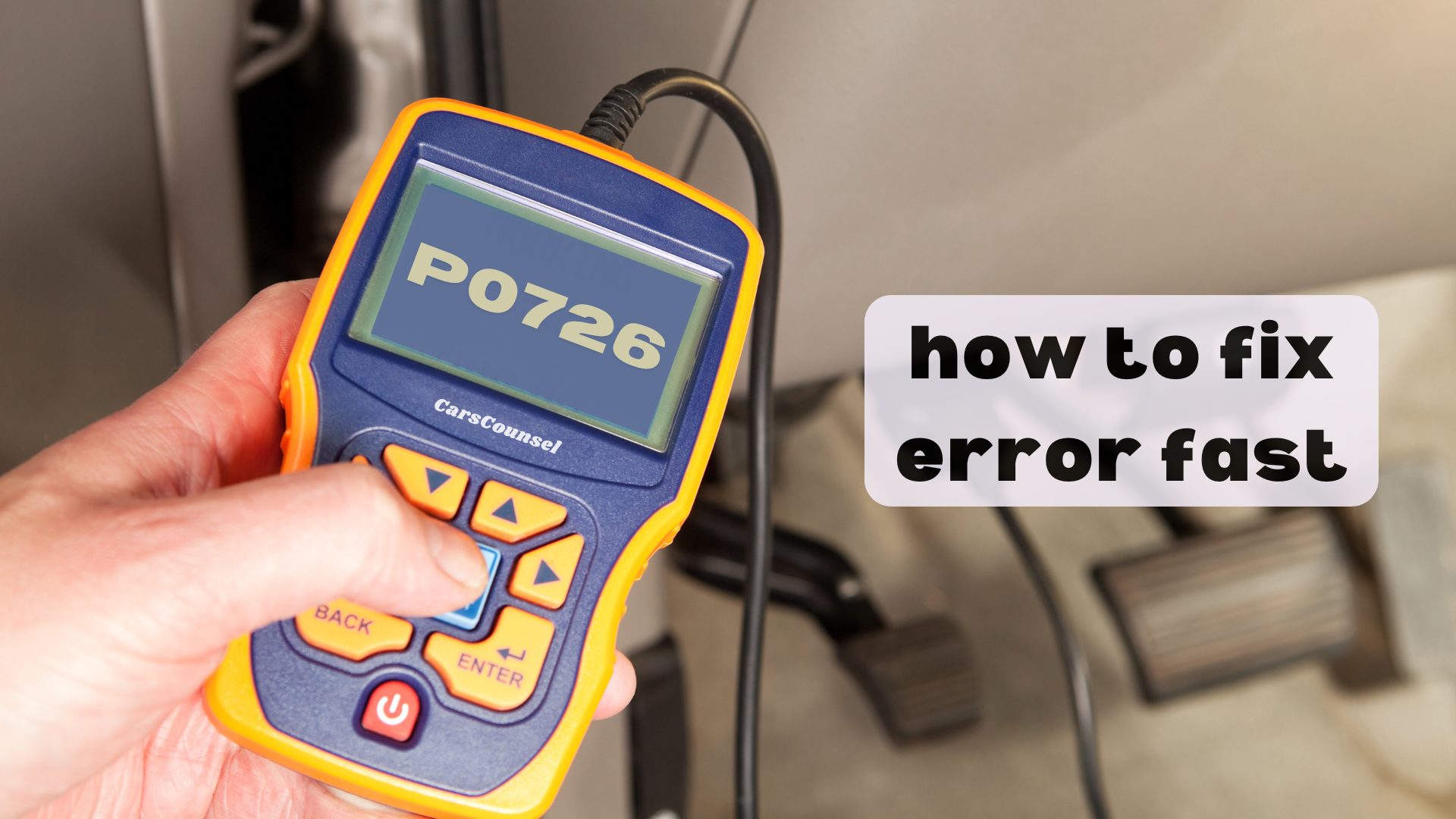
The P0726 code is a generic OBD-II trouble code indicating a range or performance fault in the engine speed input circuit. This signal is critical for transmission control and engine management.
Because this is a generic code, the exact diagnostic procedure varies by vehicle. The code indicates a detected signal irregularity, but testing is required to identify the root cause before replacing any components.
Quick Navigation
Key Takeaways
- P0726 is a generic OBD-II code indicating a range or performance fault in the engine speed input circuit.
- The code signals an erratic or illogical signal detected by the control module, but does not automatically prove the sensor has failed.
- Possible causes include a failing crankshaft position sensor, damaged wiring, corroded connectors, or a damaged reluctor wheel.
- Diagnosis requires monitoring live RPM data and testing the sensor signal circuit before replacing components.
P0726 Code Description and Implications
The P0726 code indicates that the Powertrain Control Module (PCM) or Transmission Control Module (TCM) has detected an erratic, noisy, or illogical signal from the engine speed sensor.
This sensor, often the crankshaft position sensor (CKP), monitors engine RPM. The control module uses this data to manage transmission shifting, torque converter clutch operation, and fuel injection.
When the monitored signal fluctuates unexpectedly or does not correlate with other speed sensors, the module stores this generic range/performance code.
Common Causes of the P0726 Code
- A failing or intermittent crankshaft position sensor (CKP) or dedicated engine speed sensor.
- Damaged, chafed, or shorted wiring and corroded connectors in the sensor circuit.
- A damaged, cracked, or debris-covered reluctor ring or tone wheel on the crankshaft.
- Excessive crankshaft end-play or mechanical engine issues causing erratic sensor readings.
- In rare cases, an internal fault within the PCM or TCM.
Symptoms Associated With P0726
- Illuminated Check Engine Light.
- Erratic, harsh, or delayed transmission shifting.
- Torque converter clutch failing to engage or disengage properly.
- Engine stalling, rough idle, or a no-start condition if the signal is lost entirely.
- Activation of a fail-safe or limp mode to protect the transmission.
Diagnosing the P0726 Trouble Code
Diagnosis begins by verifying the exact sensor type and wiring diagram for the vehicle. Using a scan tool capable of viewing live data is necessary to monitor the RPM signal.
The diagnostic path generally involves:
- Inspecting the wiring harness and connector at the engine speed or CKP sensor for physical damage, heat exposure, or corrosion.
- Monitoring live RPM data while the engine is running to check for erratic drops or signal dropouts.
- For sensor-circuit implementations, verifying the applicable reference, signal, and ground circuits according to the manufacturer procedure.
- Inspecting the reluctor wheel or tone ring for damaged teeth or metallic debris if accessible.
Repairing the P0726 Issue
Repairs must follow the confirmed root cause identified during the diagnostic procedure. If wiring damage or connector corrosion is found, repairing the harness and securing the connections is necessary.
If the sensor fails the manufacturer’s electrical tests or the live data confirms an erratic signal with intact wiring, replacing the confirmed failed sensor is required.
If the reluctor wheel is damaged, mechanical repair or component replacement is necessary.
Cost Considerations for P0726 Repairs
Repair costs for a P0726 code vary based on the exact vehicle application, the confirmed root cause, and local labor rates.
If the issue is limited to a wiring repair or cleaning a corroded connector, costs may be minimal. Replacing a crankshaft position sensor involves moderate parts and labor expenses, though accessibility varies greatly by engine layout.
Prevention Strategies for Future Occurrences
Because P0726 relates to the engine speed signal circuit, preventing the code depends on the exact failure mechanism.
Keeping connector seals intact and ensuring wiring harnesses are properly secured away from hot exhaust components can help prevent heat damage and moisture intrusion.
Troubleshooting Tips and Best Practices
Always verify whether your application uses a dedicated engine speed sensor or relies on the crankshaft position sensor (CKP) for this data. The diagnostic approach and component location will differ.
Avoid replacing the sensor without first inspecting the wiring and checking the live RPM data. An intermittent wire break will cause a performance code even if the sensor itself is functioning perfectly.
Ensure that any electrical repairs use proper soldering or crimping techniques, as exposed splices can allow moisture to re-enter the circuit and trigger the code again.
More OBD-II Codes
| P0725 | P0723 | P0722 | P0721 |
| P0720 | P0717 | P0727 | P0730 |
| P0731 | P0732 | P0733 | P0734 |
| P0715 | P0716 | P0335 | P0340 |
| P0700 | P0705 | P0706 | P0707 |
| P0708 | P0740 | P0741 | P0745 |
Frequently Asked Questions
Is the P0726 code generic or manufacturer-specific?
Yes. P0726 is a generic OBD-II code used across multiple manufacturers. However, the exact diagnostic procedure and sensor location depend on the specific vehicle application.
Can I drive my car with a P0726 code?
Driving is not recommended. An erratic engine speed signal can cause severe transmission shifting issues, torque converter failure, or engine stalling, which can be dangerous in traffic.
Will clearing the code fix a P0726 fault?
No. Clearing the code will not repair an intermittent open circuit, damaged reluctor wheel, or failing sensor. Because P0726 is a hard performance fault, the code will return when the signal fluctuates again.
Can a bad crankshaft position sensor cause a P0726 code?
Yes. On many vehicles, the crankshaft position sensor (CKP) provides the engine speed input signal to the transmission control module. A failing CKP sensor will trigger this code.
Does P0726 always mean the speed sensor is broken?
No. The code indicates a detected signal irregularity. The root cause could be a chafed wire, a corroded connector, or metallic debris on the reluctor wheel, requiring diagnosis before replacing any component.
What Should You Do About the P0726 Code?
Confirm the exact factory definition and wiring diagram for your specific vehicle application. Because P0726 is a generic code, the pinout for the engine speed input sensor and the expected signal parameters will vary between different platforms.
Follow the applicable manufacturer diagnostic procedure to test the relevant system and components. Once the root cause is confirmed, complete the necessary repairs and verify the sensor operation before returning the vehicle to service.

