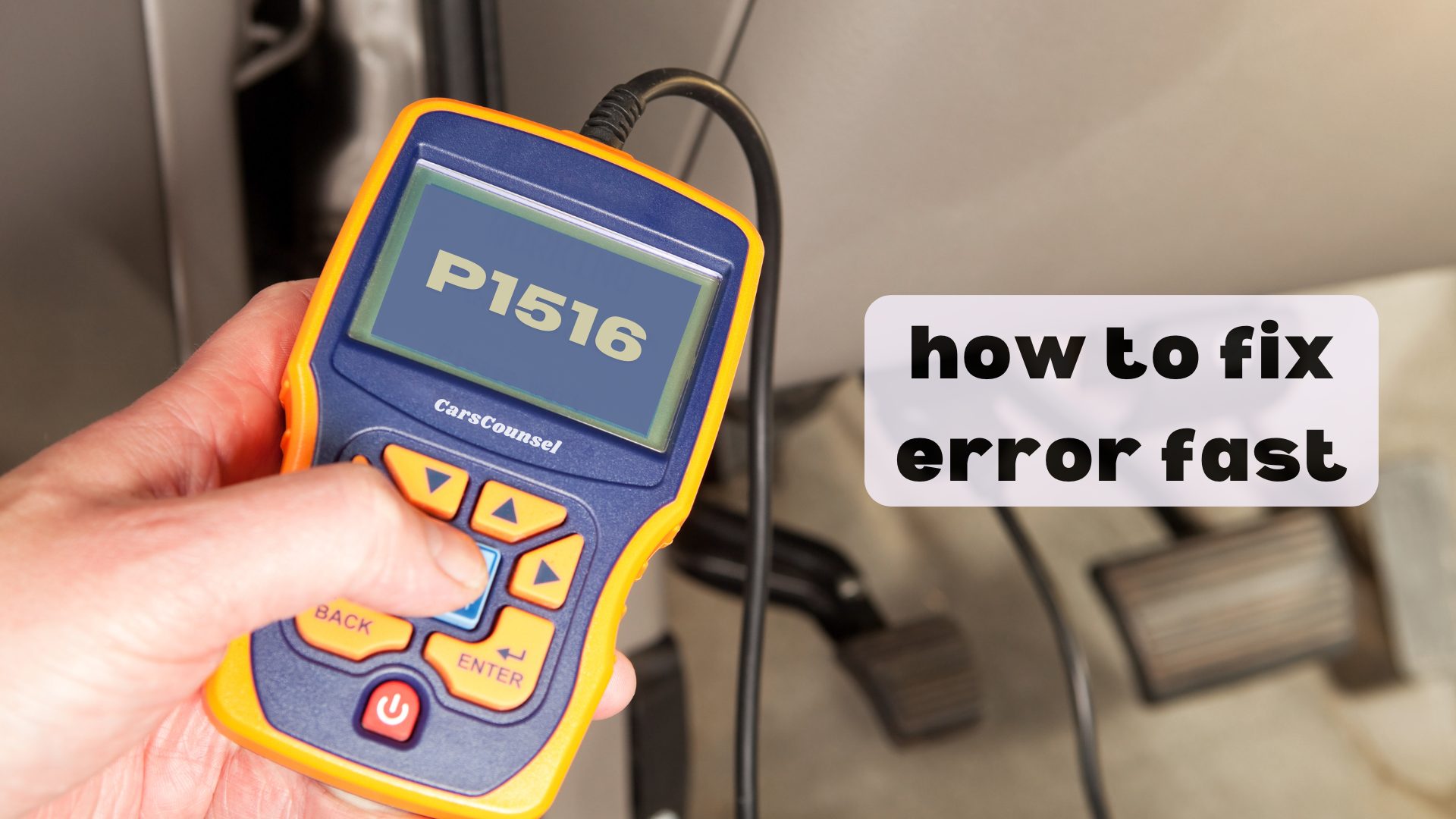
The P1516 code is a manufacturer-specific powertrain code. Its exact definition depends on the vehicle application, commonly indicating a throttle actuator or intake manifold runner issue among various OBD2 Codes.
This code does not automatically mean a specific module or valve has failed. Possible causes include wiring faults, carbon buildup, or sensor issues. Exact diagnosis requires verifying your vehicle’s factory definition.
Quick Navigation
Key Takeaways
- P1516 is a manufacturer-specific code with different definitions across automakers.
- General Motors applications typically define it as a Throttle Actuator Control (TAC) module performance fault.
- Ford and Hyundai applications often define it as an Intake Manifold Runner Control (IMRC) input error.
- Diagnosis requires verifying the exact factory definition before testing circuits or replacing components.
P1516 Code Description and Implications
The P1516 code is manufacturer-specific, meaning its exact definition and monitored system vary by automaker.
Some General Motors applications: P1516 indicates Throttle Actuator Control (TAC) Module Performance. The control module detects that the actual throttle blade position does not match the commanded position.
Certain Ford and Hyundai applications: P1516 indicates an Intake Manifold Runner Control (IMRC) Input Error or performance fault. The module detects an issue with the IMRC valve position feedback.
Because definitions differ, the diagnostic path and affected components depend entirely on the verified vehicle application.
Common Causes of the P1516 Code
Multiple conditions can trigger this code. The underlying cause must be confirmed through testing rather than assuming a single component has failed.
GM TAC Applications: Carbon buildup binding the throttle blade, a faulty throttle actuator motor, or damaged wiring in the TAC circuit.
Ford and Hyundai IMRC Applications: Carbon buildup preventing the intake manifold runners from moving freely, a faulty IMRC solenoid, or broken vacuum lines.
Universal causes: Corroded connectors, chafed wiring harnesses, or poor electrical grounds affecting the relevant actuator circuit.
Symptoms Associated With P1516
Symptoms depend on whether the fault affects the electronic throttle body or the intake manifold runners.
- Illuminated Check Engine Light: The MIL will turn on once the fault is detected and confirmed over consecutive drive cycles.
- Reduced engine power: On GM applications, the control module may command limp mode to protect the engine from unintended acceleration.
- Hesitation or poor acceleration: On IMRC applications, stuck intake runners can severely restrict airflow during specific RPM ranges.
- Rough idle or stalling: Incorrect airflow management can disrupt the air-fuel mixture at low speeds.
Diagnosing the P1516 Trouble Code
Proper diagnosis begins by verifying the exact vehicle application and checking the most accessible components first.
- Verify the code and check for TSBs: Confirm the exact factory definition for your vehicle. Look for technical service bulletins regarding known carbon buildup or software calibration issues.
- Inspect for mechanical binding: For GM applications, check the throttle body for carbon buildup. For IMRC applications, inspect the manifold linkage and valves for restriction.
- Test the actuator circuit: Use a scan tool to command the actuator while monitoring position sensor data. Measure circuit resistance and verify power and ground signals.
- Check vacuum supply: On older vacuum-operated IMRC systems, verify that the solenoid is receiving vacuum and that the lines are intact.
Repairing the P1516 Issue
Repairs must follow confirmed diagnostic testing. The exact repair path depends on whether the fault is mechanical, electrical, or pneumatic.
- Carbon cleaning: If mechanical binding is confirmed, carefully clean the throttle blade or intake manifold runners using appropriate solvents.
- Component replacement: Replace the throttle body assembly, TAC module, or IMRC actuator if internal electrical or mechanical failures are confirmed.
- Wiring repair: Repair or replace any damaged wiring, corroded pins, or loose connectors in the control circuit.
- Vacuum line repair: Replace cracked or disconnected vacuum hoses on applicable IMRC systems.
Cost Considerations for P1516 Repairs
Repair costs vary significantly based on the root cause, vehicle make, and labor accessibility.
- Carbon cleaning: Induction or throttle body cleaning is the least expensive option if it resolves the mechanical binding.
- Wiring repair: Costs depend on the time required to trace and repair the damaged circuit.
- Component replacement: Replacing a complete throttle body assembly or an integrated IMRC actuator involves higher parts costs and significant labor time.
Prevention Strategies for Future Occurrences
While electrical faults cannot always be prevented, maintaining the intake system’s cleanliness can reduce the risk of mechanical binding.
- Use quality fuel: Top-tier detergents help prevent varnish and carbon buildup on throttle blades and intake manifold runners.
- Perform induction service: Periodic intake system cleaning can remove developing carbon deposits before they restrict mechanical movement.
- Inspect vacuum lines: On applicable systems, check rubber vacuum hoses for dry rot or cracking during routine maintenance.
Troubleshooting Tips and Best Practices
- Do not force mechanical linkages: Forcing a stuck throttle blade or IMRC valve by hand can damage internal gears or position sensors.
- Check for related codes: Codes like P2101 or P1515 provide more specific electrical clues than the general P1516 performance code.
- Verify aftermarket modifications: Cold air intakes or performance tunes can alter airflow characteristics and cause false actuator codes if not calibrated correctly.
- Use exact specifications: Always refer to the factory service manual for the correct pinout diagrams and actuator test procedures for your specific vehicle.
More OBD-II Codes
| P1514 | P1513 | P1512 | P1511 |
| P1507 | P1506 | P1518 | P1519 |
| P1520 | P1521 | P1524 | P1525 |
| P2100 | P2101 | P2102 | P2103 |
| P2104 | P0121 | P0101 | P0505 |
| P0506 | P0500 | P1542 | P1529 |
Frequently Asked Questions
Is P1516 a generic OBD-II code?
No. P1516 is a manufacturer-specific code. Its exact definition depends on the automaker, commonly relating to throttle actuator control on GM vehicles or intake manifold runner control on Ford and Hyundai models.
Can I drive with a P1516 code?
Driving is not recommended. On GM vehicles, this code often triggers reduced engine power or limp mode. On other applications, it can cause severe hesitation or stalling, creating a safety hazard.
Will cleaning the throttle body fix P1516?
It might, if carbon buildup is mechanically binding the throttle blade on a GM application. However, if the internal actuator motor or position sensor has failed, cleaning will not resolve the electrical fault.
Can a vacuum leak cause P1516?
On older Ford or Hyundai applications that use vacuum-operated intake manifold runner control systems, a leaking vacuum line or faulty solenoid can prevent the runners from moving, triggering this code.
How much does it cost to fix a P1516 code?
Costs vary widely. Throttle body cleaning is inexpensive, while replacing a complete throttle body assembly, TAC module, or IMRC actuator requires significant parts and labor, increasing the total repair cost.
What Should You Do About the P1516 Code?
Confirm the exact factory definition for your specific vehicle application. Begin by inspecting the relevant mechanical linkages for carbon buildup, then verify the actuator circuits and sensor data.
Do not replace the throttle body or intake manifold components without verified diagnostic evidence. Follow the manufacturer’s pinpoint tests to isolate the fault before authorizing repairs.

