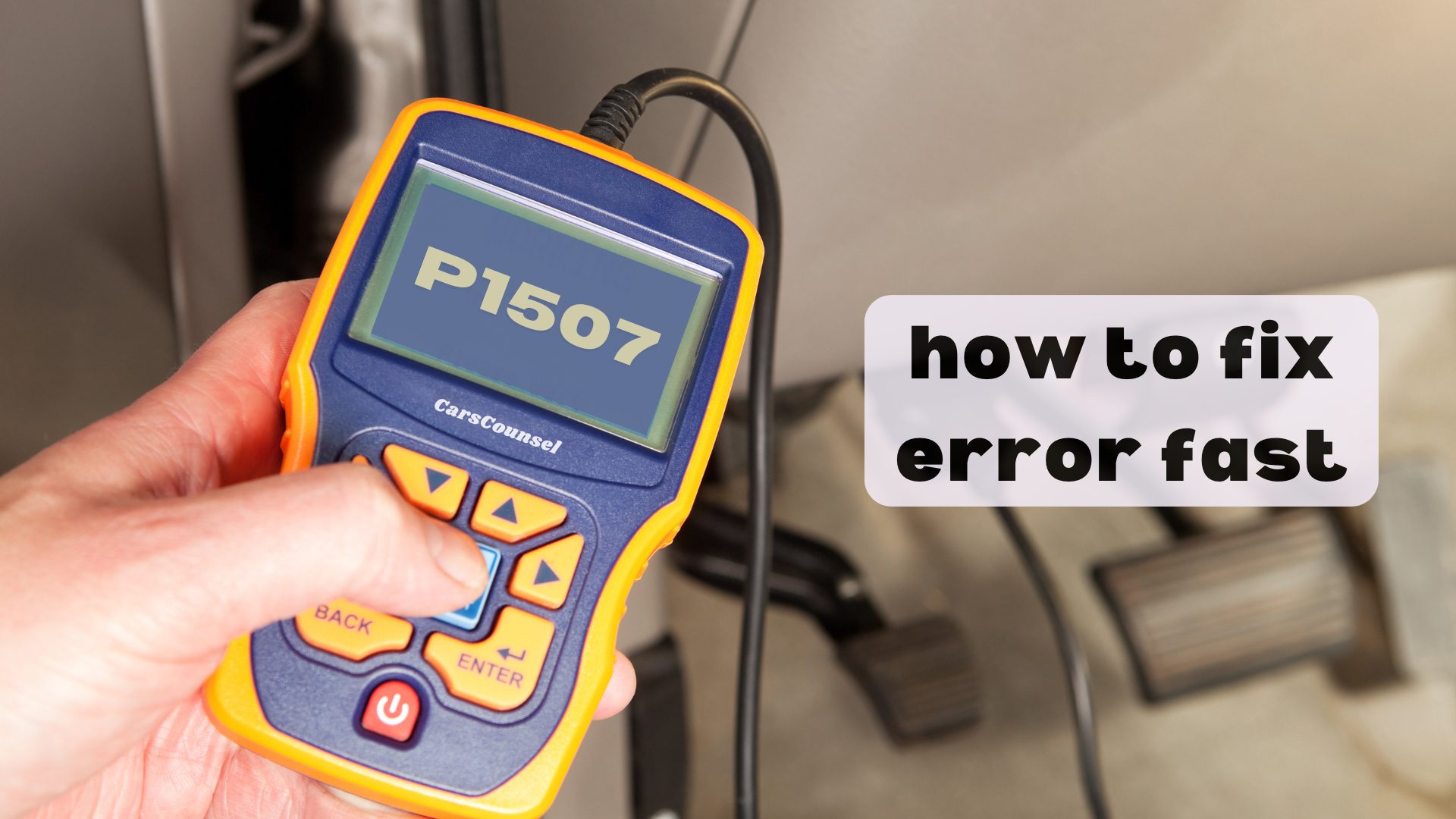
The P1507 code is a manufacturer-specific powertrain diagnostic trouble code. Its exact definition depends on the vehicle application, but it frequently indicates a fault in the idle speed control system or idle air control circuit.
This code does not automatically prove the idle air control valve has failed. Diagnosis requires verifying the exact factory definition, inspecting for vacuum leaks, and testing the circuit before replacing components.
Quick Navigation
Key Takeaways
- The P1507 code indicates the control module detected a performance or electrical fault in the idle speed control system on certain verified applications.
- Possible causes include a dirty or failed idle air control valve, vacuum leaks, a dirty throttle body, or damaged wiring.
- Diagnosis involves inspecting the intake for vacuum leaks, cleaning the throttle body and idle air control valve, and testing the control circuit.
- Repairs may involve repairing vacuum leaks, cleaning components, or replacing the confirmed failed idle air control valve.
P1507 Code Description and Implications
The P1507 code indicates that the powertrain control module detected a fault in the idle speed control system. Because this is a manufacturer-specific code, the exact definition depends on the vehicle application.
On many verified applications, including certain Ford, Subaru, and Mazda models, this manufacturer-specific trouble code specifically points to an idle air control system failure, a fail-safe mode trigger, or an idle RPM lower than expected.
When the module detects that the actual idle speed does not match the target speed, or if it detects an electrical fault in the control circuit, it stores this code and may trigger a fail-safe mode.
Common Causes of the P1507 Code
A dirty or mechanically jammed idle air control valve is a primary cause on applications using this component. Carbon buildup can prevent the valve pintle from moving correctly, disrupting idle airflow.
Unmetered air entering the engine through cracked vacuum hoses, a failed intake manifold gasket, or a damaged PCV hose can cause a lean condition that the idle control system cannot compensate for.
Damaged wiring, corroded connectors, or an internally failed idle air control valve motor or solenoid will interrupt the control signal and cause an electrical circuit fault.
Symptoms Associated With P1507
An illuminated Check Engine Light is expected once the monitor detects the idle control fault. MIL behavior varies by application, but the light commands when the fault is verified.
You may experience a rough, surging, or abnormally low idle speed. The engine may stall when coming to a stop or when the throttle is closed.
In some applications, the engine may enter a fail-safe or limp mode, locking the idle speed at a fixed, elevated RPM to prevent stalling.
Diagnosing the P1507 Trouble Code
Diagnosis must begin by confirming the exact factory definition for your specific make, model, and engine. Manufacturer-specific codes vary significantly between different automakers.
Perform a thorough visual inspection of the intake tract and all vacuum hoses. Look for cracked, disconnected, or degraded hoses that could allow unmetered air into the engine.
Inspect the throttle body and idle air control valve for heavy carbon buildup. Clean the components using an appropriate throttle body cleaner and verify the valve pintle moves freely.
Use a multimeter to test the idle air control valve’s internal resistance and compare it to the exact manufacturer specification. Test the control circuit for an open or short.
Repairing the P1507 Issue
Repairs must follow confirmed diagnosis. If vacuum leaks are found, replace the damaged hoses, gaskets, or PCV components to restore a sealed intake system.
If the throttle body or idle air control valve is heavily carbon-fouled, clean the components thoroughly. If the valve remains mechanically jammed after cleaning, replace it using a component meeting the exact vehicle specification.
If electrical testing confirms the idle air control valve is internally open or shorted, replace the valve. If the wiring harness is damaged, repair the circuit and secure it away from hot components.
Cost Considerations for P1507 Repairs
Cost depends on diagnostic time, component accessibility, required parts, programming requirements, and labor.
Cleaning the throttle body and idle air control valve or repairing a simple vacuum hose involves minimal parts and moderate labor expenses.
If the idle air control valve requires replacement, the cost of the component and the labor to access it on the intake manifold will dictate the overall repair price.
Prevention Strategies for Future Occurrences
Inspecting exposed intake and vacuum hoses during routine under-hood service can help identify developing cracks or degradation before they cause an unmetered air leak.
Keeping the throttle body and idle air control passages clean by using quality fuel and replacing the air filter at specified intervals helps prevent excessive carbon buildup.
Some electrical component failures occur due to normal aging and cannot be reliably prevented.
Troubleshooting Tips and Best Practices
Do not attempt to fix a P1507 code by simply replacing the idle air control valve without checking for vacuum leaks first. Unmetered air is a frequent cause of idle faults.
Always verify the exact definition of the P1507 code for your specific vehicle. Using a generic code definition for a manufacturer-specific code will lead to incorrect diagnostic steps.
Check for technical service bulletins for your exact vehicle application, as some manufacturers release revised idle air control valves or updated software calibrations to address chronic idle stability issues.
More OBD-II Codes
| P1506 | P1504 | P1500 | P1498 |
| P1491 | P1488 | P1511 | P1512 |
| P1513 | P1514 | P1516 | P1518 |
| P0171 | P0174 | P0506 | P0504 |
| P0502 | P0500 | P0300 | P0420 |
| P0430 | P0135 | P0141 | P0205 |
Frequently Asked Questions
Is the P1507 code generic or manufacturer-specific?
No. P1507 is a manufacturer-specific powertrain code. Its exact definition and diagnostic procedure depend entirely on the vehicle make, model, and engine configuration.
Will a P1507 code cause my engine to stall?
It can. The idle air control system regulates engine speed when the throttle is closed. A malfunction can cause the idle speed to drop too low, leading to stalling at stops.
Does a P1507 code mean my idle air control valve is broken?
Not necessarily. While the valve can fail, the code is also frequently caused by vacuum leaks, a dirty throttle body, or damaged wiring. Proper testing is required first.
Can a vacuum leak cause a P1507 code?
Yes. Unmetered air entering the engine through a vacuum leak can cause the idle speed to fluctuate or drop, which the control module may detect as an idle control system malfunction.
Can I clear the P1507 code without fixing the problem?
Clearing the code only resets the warning light. If the underlying vacuum leak, carbon buildup, or electrical fault remains, the monitor will detect the condition immediately and turn the light back on.
What Should You Do About the P1507 Code?
Confirm the exact factory definition for your specific vehicle application, then follow the applicable manufacturer diagnostic procedure. Once testing confirms the root cause, repair or replace the confirmed failed component in the relevant system and components, then retest the engine idle operation.

