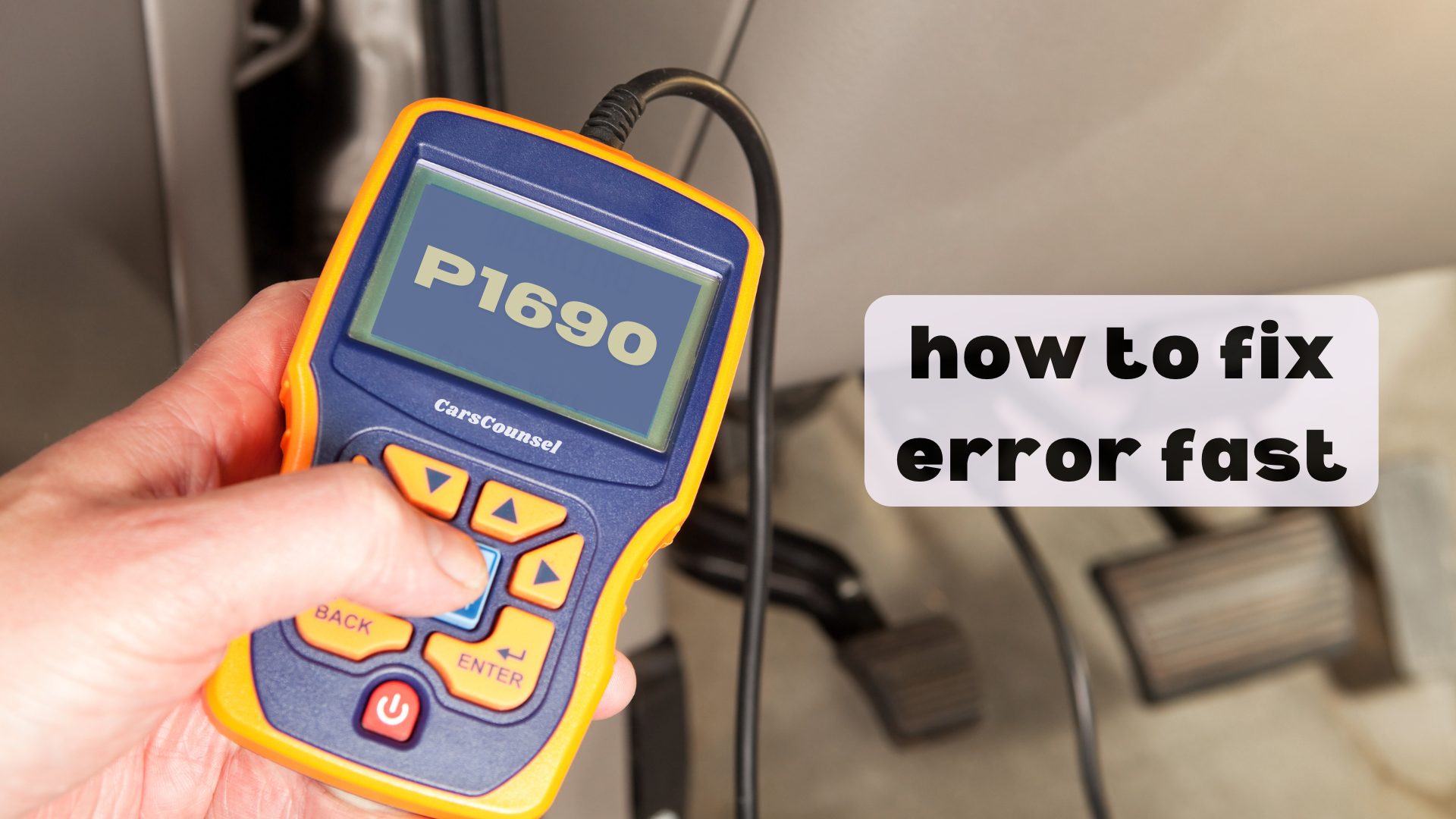
Diagnostic trouble code P1690 is a manufacturer-specific powertrain fault code. Because it is manufacturer-specific, its exact definition depends entirely on the vehicle make, model, and application.
Exact vehicle application must be verified before diagnosis. The code identifies a detected condition in a specific subsystem, but further testing is required to identify the root cause.
Quick Navigation
Key Takeaways
- P1690 is a manufacturer-specific code, meaning its definition varies between automakers like Dodge, Ford, Hyundai, and General Motors.
- On certain Dodge Cummins applications, it indicates the fuel injection pump crankshaft position sensor does not agree with the ECM crankshaft position sensor.
- Other applications may monitor the wastegate solenoid circuit, immobilizer communication, or ECM internal loop overruns.
- Diagnosis requires verifying the exact factory definition for the specific vehicle before testing any sensors or circuits.
- Repairs depend on the confirmed root cause and may involve addressing wiring, replacing a solenoid, or resolving immobilizer communication faults.
P1690 Code Description and Implications
Because P1690 is manufacturer-specific, there is no single universal definition. The exact monitored system and fault condition depend on the vehicle make and model.
Some Dodge and Ram Cummins diesel applications: P1690 indicates that the fuel injection pump crankshaft position sensor signal does not agree with the engine control module crankshaft position sensor signal.
Certain Ford Powerstroke applications: P1690 designates a wastegate solenoid circuit malfunction, where the powertrain control module detects an electrical fault in the boost control circuit.
Specific Hyundai and Kia applications: P1690 can indicate an immobilizer system fault, specifically that the immobilizer antenna or SMARTRA unit is not responding to the engine control module.
Some General Motors applications: P1690 may refer to an engine control module internal loop overrun or a malfunction indicator lamp circuit fault.
Common Causes of the P1690 Code
The underlying cause depends entirely on the verified factory definition for the specific vehicle application.
For Cummins diesel applications, possible causes include a failed fuel injection pump, damaged wiring between the injection pump and ECM, excessive AC noise from a failing alternator, or a faulty ECM crankshaft position sensor.
For Ford wastegate applications, causes involve a failed wastegate solenoid, damaged wiring harness, blown fuse, or poor electrical grounds.
For Hyundai and Kia immobilizer applications, causes may include a failed transponder key, damaged immobilizer antenna coil, or a communication failure between the SMARTRA unit and ECM.
Symptoms Associated With P1690
Symptoms vary widely depending on the underlying system fault and the vehicle manufacturer.
On Cummins applications with a fuel injection pump sensor disagreement, symptoms can include rough idling, white smoke, engine misfires, stalling, or a dead pedal condition.
On Ford applications with a wastegate solenoid fault, the vehicle may experience reduced boost pressure, lack of power under heavy load, or an illuminated Check Engine Light.
On Hyundai and Kia applications with an immobilizer fault, the primary symptom is a no-start condition, as the immobilizer system prevents the engine from cranking or receiving fuel.
Diagnosing the P1690 Trouble Code
Diagnosis must begin by confirming the exact factory definition for the specific make, model, and year. Attempting to diagnose a wastegate solenoid on a vehicle where P1690 indicates an immobilizer fault will lead to misdiagnosis.
For Cummins fuel injection applications, technicians measure AC noise at the ECM to rule out alternator interference, then compare the fuel injection pump sensor signal with the ECM crankshaft position sensor signal using an oscilloscope.
For Ford wastegate applications, diagnosis involves checking the solenoid coil resistance, verifying the reference voltage, and inspecting the vacuum lines and mechanical wastegate actuator.
Repairing the P1690 Issue
Repairs must follow confirmed diagnosis based on the specific vehicle application.
If testing confirms excessive AC noise from the alternator on a Cummins application, the alternator must be replaced. If the fuel injection pump internal sensor is faulty, the injection pump assembly may require replacement or rebuilding.
If a wastegate solenoid or wiring fault is confirmed on a Ford application, the failed solenoid or damaged wires must be replaced, and boost pressure must be retested.
If an immobilizer communication fault is confirmed on a Hyundai or Kia application, replacing the transponder key, antenna coil, or performing an immobilizer relearn procedure may be required.
Cost Considerations for P1690 Repairs
Repair costs depend entirely on the confirmed root cause, component accessibility, and local labor rates.
Replacing a wastegate solenoid or an immobilizer antenna coil may require minimal parts and labor. Conversely, replacing a high-pressure fuel injection pump on a diesel engine requires significant diagnostic time, specialized equipment, and expensive components.
Prevention Strategies for Future Occurrences
Some electrical or mechanical failures cannot be reliably prevented. However, inspecting exposed engine wiring harnesses for chafing, heat damage, or oil contamination can help prevent sensor and solenoid circuit shorts.
For diesel applications, ensuring the charging system is healthy and free of excessive AC ripple voltage helps prevent electrical interference that can corrupt sensitive crankshaft position sensor signals.
Troubleshooting Tips and Best Practices
Never assume P1690 is a universal fuel injection or immobilizer code. Always verify the exact definition for the specific vehicle before purchasing parts or beginning electrical testing.
Do not ignore related codes. A fuel injection pump disagreement appears alongside camshaft position sensor codes or misfire codes, while an immobilizer fault may trigger additional security system warnings.
Check for technical service bulletins applicable to your exact vehicle application, as manufacturers release updated wiring harnesses, revised solenoids, or software recalibrations for recurring circuit faults.
More OBD-II Codes
| P1689 | P1691 | P0335 | P0700 |
| P1688 | P1693 | P0340 | P0420 |
| P1687 | P1694 | P0299 | P0171 |
| P1686 | P1695 | P0031 | P0300 |
| P1685 | P1702 | P0455 | P0442 |
| P1684 | P1703 | P0174 | P0440 |
Frequently Asked Questions
Is P1690 a generic or manufacturer-specific code?
No. P1690 is a manufacturer-specific code. Its exact definition varies significantly between automakers, so the factory service information for the specific vehicle must be consulted.
Can I drive my car with a P1690 code?
It depends on the application. If P1690 indicates an immobilizer fault, the vehicle will not start. If it indicates a wastegate or fuel injection fault, driving could cause severe power loss or engine damage.
Will disconnecting the battery clear the P1690 code?
Disconnecting the battery may temporarily clear the code, but it does not repair the underlying electrical or mechanical fault. The code will return once the module runs its self-test.
Can a bad alternator cause a P1690 code?
On certain Cummins diesel applications, a failing alternator producing excessive AC ripple voltage can interfere with the crankshaft position sensor signals, triggering the fuel injection pump disagreement code.
Does P1690 always mean the ECM is bad?
No. While a failed control module can cause internal loop or communication faults, damaged wiring, failed solenoids, faulty sensors, or immobilizer key issues must be ruled out first.
What Should You Do About the P1690 Code?
Confirm the exact factory definition and diagnostic procedure for your specific vehicle application. Because P1690 is manufacturer-specific, identifying whether it relates to the fuel injection pump, wastegate solenoid, or immobilizer system is the mandatory first step.
Follow the applicable manufacturer diagnostic steps to test the relevant system and components. Once the root cause is confirmed, complete the necessary repairs and verify that the system operates correctly and the code does not return.

