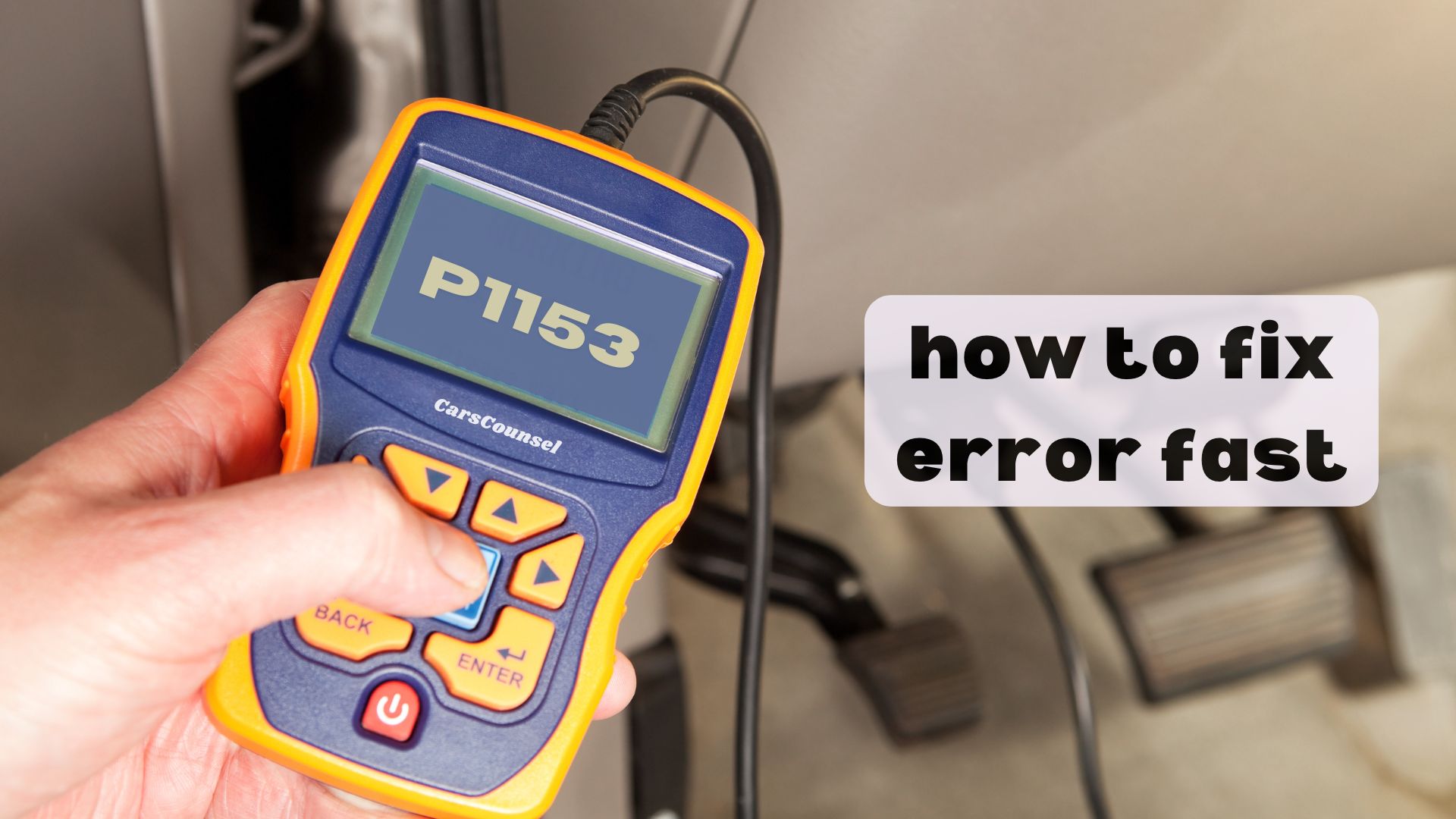
The P1153 diagnostic trouble code is a manufacturer-specific powertrain code. It generally indicates that the upstream oxygen or air-fuel ratio sensor on Bank 2 is responding too slowly or failing to switch properly.
Because definitions vary slightly by automaker, the exact vehicle application must be verified. The code alone does not prove the sensor has failed without proper circuit and performance testing.
Quick Navigation
Key Takeaways
- P1153 is a manufacturer-specific code indicating a slow response or insufficient switching from the Bank 2 Sensor 1 oxygen or air-fuel ratio sensor.
- On GM applications, it points to insufficient sensor switching during closed-loop fuel control.
- On Toyota and Lexus applications, it indicates an Air-Fuel Ratio (A/F) sensor circuit slow response.
- Possible causes include a degraded sensor, exhaust leaks, wiring issues, or fuel system faults.
- Diagnosis requires verifying the exact definition and testing the sensor signal, heater circuit, and exhaust integrity.
P1153 Code Description and Implications
The P1153 code indicates that the engine control module has detected a performance issue with the upstream sensor on Bank 2, which is the engine bank that does not contain cylinder 1.
Some GM and Chevrolet applications: P1153 indicates Heated Oxygen Sensor Insufficient Switching. The module monitors how often the sensor crosses the voltage threshold during closed-loop operation and detects too few transitions.
Certain Toyota and Lexus applications: The code indicates an Air-Fuel Ratio Sensor Circuit Slow Response. The module detects that the sensor takes too long to adjust to changes in the exhaust gas oxygen content.
Some Ford applications: P1153 points to a Heated Oxygen Sensor Switching Time fault, where the lean-to-rich or rich-to-lean transition time exceeds the calibrated threshold.
Common Causes of the P1153 Code
Sensor Degradation: The internal elements of the Bank 2 Sensor 1 oxygen sensor may be contaminated by oil, coolant, or silicone, slowing its response time.
Exhaust Leaks: A leak in the exhaust manifold or near the sensor can introduce outside air, skewing the sensor readings and causing slow or erratic switching.
Wiring and Connector Issues: Damaged wiring, poor electrical connections, or excessive resistance in the sensor signal or heater circuits can degrade the signal sent to the control module.
Fuel System or Vacuum Leaks: A leaking fuel injector or unmetered air entering the intake can cause actual fuel trim extremes that the sensor accurately reads but cannot correct quickly enough.
Symptoms Associated With P1153
Warning Lights: The Check Engine Light will illuminate. MIL behavior varies by application, but a confirmed slow response fault will command the light on.
Drivability: The vehicle may experience rough idling, hesitation during acceleration, or decreased fuel economy. In some cases, drivability remains normal, and the code is only detected during specific monitor testing.
Diagnosing the P1153 Trouble Code
Accurate diagnosis begins by verifying the exact vehicle application and reviewing manufacturer-specific service information.
Inspect the Exhaust System: Check the exhaust manifold and piping near the Bank 2 Sensor 1 location for cracks, leaks, or soot trails that could introduce false air.
Review Live Data: Use a scan tool capable of displaying the relevant data to monitor the Bank 2 Sensor 1 waveform. Compare the switching frequency against the Bank 1 Sensor 1 data.
Test the Sensor and Wiring: If the exhaust is sealed and live data confirms a slow response, verify the sensor signal, ground, and heater circuits according to the manufacturer procedure.
Repairing the P1153 Issue
Repairs must follow the confirmed root cause identified during diagnosis.
Exhaust Repairs: If an exhaust leak is found near the sensor, repair or replace the affected manifold or piping to restore proper gas sampling.
Sensor Replacement: If the sensor fails performance testing and the wiring is intact, replace the Bank 2 Sensor 1 component with a part meeting the correct vehicle specification.
Wiring Repairs: If the signal or heater circuit has excessive resistance or physical damage, repair the harness and clear the codes.
Cost Considerations for P1153 Repairs
Cost depends on diagnostic time, component accessibility, required parts, programming requirements, and labor.
Replacing an upstream sensor involves moderate labor, though accessibility can be limited on transverse engines where Bank 2 is located near the firewall.
Prevention Strategies for Future Occurrences
Addressing engine oil consumption or coolant leaks promptly helps prevent sensor contamination that degrades response times.
Repairing minor exhaust leaks early prevents outside air from skewing upstream sensor readings and triggering slow response codes.
Troubleshooting Tips and Best Practices
Do not replace the sensor just because a slow response code is present: An exhaust leak upstream of the sensor is a frequent cause. Always verify exhaust integrity first.
Compare Bank 1 and Bank 2: Use live data to compare the switching patterns of both upstream sensors. If Bank 1 switches normally while Bank 2 is slow, the issue is isolated.
Verify your definition: Always confirm whether your specific vehicle uses a narrowband sensor or a wideband sensor, as testing procedures and replacement parts differ significantly.
Check for related trouble codes: Look for accompanying fuel trim or misfire codes, which might indicate a mechanical engine issue affecting the air-fuel mixture rather than a failed sensor.
More OBD-II Codes
| P1147 | P1148 | P1149 | P1150 |
| P1032 | P1154 | P1155 | P1156 |
| P1157 | P1158 | P1159 | P1161 |
| P0133 | P0130 | P0155 | P0156 |
| P1163 | P1164 | P1165 | P1166 |
| P1167 | P1168 | P1170 | P1171 |
Frequently Asked Questions
Is P1153 a generic or manufacturer-specific code?
No. P1153 is a manufacturer-specific powertrain code. Its definition varies by brand, indicating an insufficient switching fault, a slow response issue, or an extended transition time for the Bank 2 upstream sensor.
Can I drive my vehicle with a P1153 code?
The vehicle may remain drivable, but a slow-responding sensor can cause poor fuel economy and increased emissions. Driving should be limited until the underlying exhaust or sensor issue is diagnosed and repaired.
Will disconnecting the battery clear the P1153 code?
Disconnecting the battery might temporarily clear the code. However, it does not repair the underlying contaminated sensor, exhaust leak, or wiring fault, and the code will return upon the next monitor cycle.
Can an exhaust leak cause a P1153 code?
Yes. An exhaust manifold leak upstream of the sensor allows outside air to enter the exhaust stream. This skews the oxygen readings, causing the sensor to react slowly or fail to switch properly.
Does P1153 affect the transmission?
No. The P1153 code relates strictly to the engine fuel and air metering system, specifically the upstream Bank 2 oxygen or air-fuel ratio sensor. It does not directly affect transmission operation.
What Should You Do About the P1153 Code?
When a P1153 code appears, confirm the exact factory definition for your specific vehicle make and model. Because this code targets different sensor technologies and monitoring criteria depending on the manufacturer, applying the wrong diagnostic path will lead to misdiagnosis.
Follow the applicable manufacturer diagnostic procedure to test the relevant system and components. Once the root cause is confirmed, complete the necessary exhaust repairs, sensor replacements, or wiring corrections before returning the vehicle to normal service.

