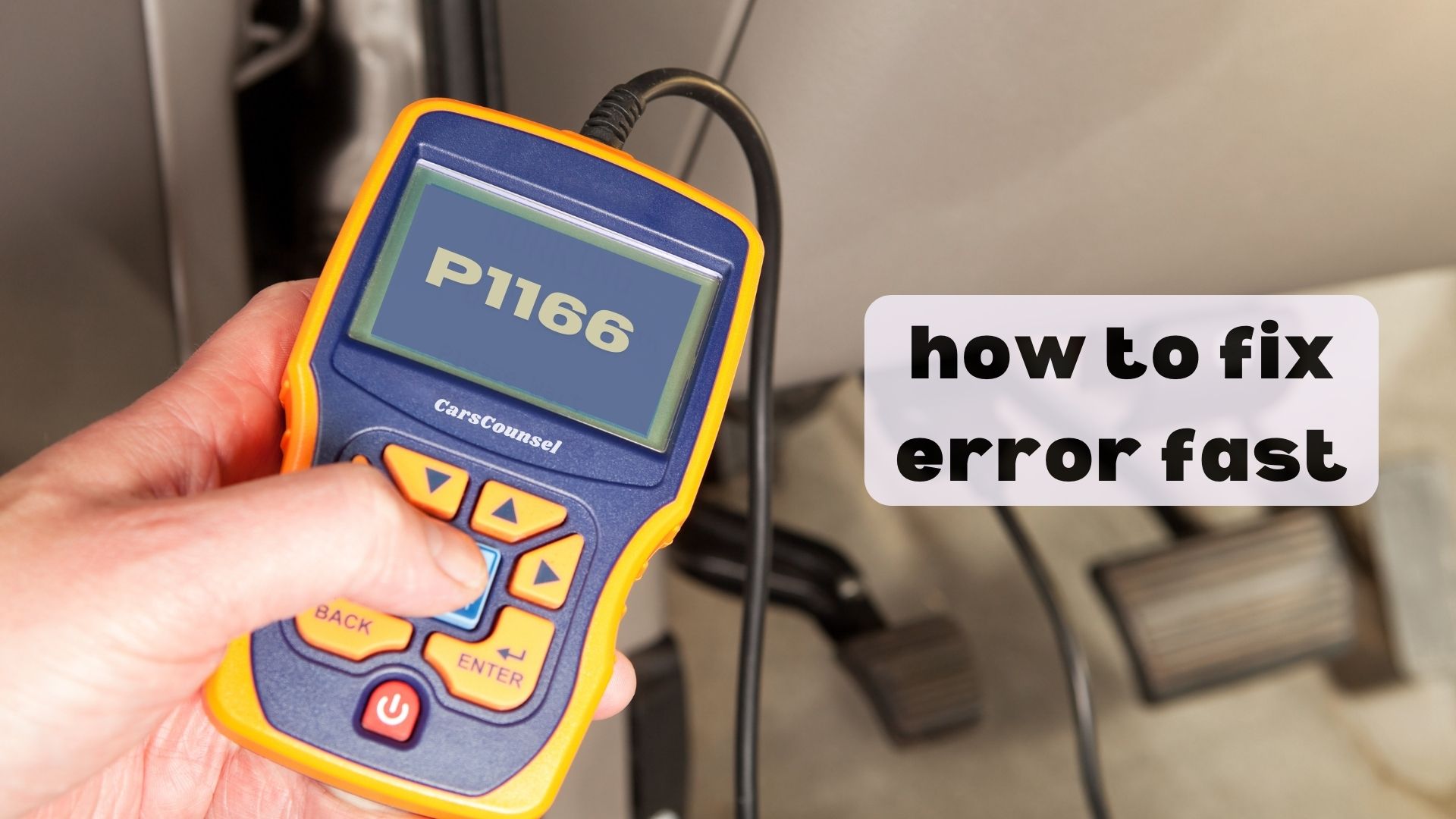
The P1166 diagnostic trouble code is a manufacturer-specific powertrain code that primarily indicates a malfunction in the Air/Fuel Ratio (A/F) Sensor 1 or Primary Heated Oxygen Sensor (HO2S) heater circuit.
This code does not automatically prove the sensor has failed. The issue could stem from wiring damage, blown fuses, or control module faults. Proper electrical testing is required to identify the root cause.
Quick Navigation
Key Takeaways
- P1166 is a manufacturer-specific code indicating the control module detected a fault in the Air/Fuel Ratio Sensor 1 or Primary HO2S heater circuit.
- Possible causes include a blown heater fuse, wiring short or open, poor connector contact, or a failed internal sensor heater element.
- Symptoms often include an illuminated Check Engine Light, decreased fuel efficiency, and potential rough idling if the sensor fails to reach operating temperature.
- Diagnosis requires verifying the exact sensor type and measuring heater circuit resistance and voltage against manufacturer specifications.
- Repairs depend on the confirmed fault and may involve fuse replacement, wiring repair, or sensor replacement.
P1166 Code Description and Implications
The P1166 code indicates that the engine control module (ECM) or powertrain control module (PCM) has detected a fault in the heater circuit for the primary upstream exhaust oxygen sensor.
Some Honda and Acura applications: This code refers to a Primary Heated Oxygen Sensor (HO2S-1) or Air/Fuel Ratio (A/F) Sensor 1 heater circuit malfunction. The heater element brings the sensor up to operating temperature quickly for closed-loop fuel control.
Certain Hyundai and Kia applications: P1166 indicates an Air/Fuel Ratio Sensor 1 heater circuit fault or a lambda controller limit issue, preventing the sensor from reaching the necessary temperature to accurately monitor exhaust oxygen.
Common Causes of the P1166 Code
Because P1166 is an electrical circuit code, the root cause involves the wiring, fuses, or the sensor itself.
- Blown heater circuit fuse: A short in the wiring or a failing sensor element can draw excessive current and blow the dedicated heater fuse.
- Wiring faults: Open or shorted wiring in the sensor heater power or ground circuits can interrupt power to the heating element.
- Connector issues: Corroded, loose, or damaged electrical connectors at the sensor or ECM can prevent proper current flow.
- Failed sensor element: An internal failure of the sensor’s heating element will cause the circuit resistance to fall outside the expected range.
- ECM issues: Rarely, an internal fault within the ECM’s heater control driver circuit may prevent it from grounding the heater circuit.
Symptoms Associated With P1166
When the control module detects a critical sensor heater fault, it alters engine operation to protect the emissions system.
- Illuminated Check Engine Light: The malfunction indicator lamp will turn on immediately upon detecting the heater circuit fault.
- Decreased fuel efficiency: The engine may remain in open-loop operation longer or default to a rich fuel map while the sensor remains cold.
- Rough idling: Potential hesitation or rough idling may occur if the sensor fails to provide accurate fuel trim data during warm-up.
- Emissions test failure: The vehicle will likely fail an emissions test due to incomplete readiness monitors or elevated exhaust emissions.
Diagnosing the P1166 Trouble Code
Accurate diagnosis begins by verifying the exact vehicle application and reviewing manufacturer-specific service information.
- Check fuses and relays: Inspect the under-hood fuse box for a blown oxygen sensor heater fuse or a faulty relay.
- Visual inspection: Examine the sensor wiring harness for chafing, melted insulation near exhaust components, or rodent damage.
- Measure resistance: Disconnect the sensor and measure the resistance of the heater element pins using a digital multimeter. Compare the reading to manufacturer specifications.
- Verify power and ground: With the key on or engine running, verify that battery voltage is reaching the sensor heater power wire and that the ground circuit is intact.
Repairing the P1166 Issue
Repairs must follow the confirmed root cause identified during diagnosis.
- Fuse and wiring repair: Replace any blown fuses and investigate the cause of the overload. Repair or replace damaged wiring harness sections and clean corroded connectors.
- Sensor replacement: If the wiring and fuses are intact but the heater element resistance is out of specification, replace the Air/Fuel Ratio or Oxygen Sensor.
- Module service: If the sensor and wiring test correctly but the ECM fails to provide a ground signal, follow the manufacturer diagnostic procedure for ECM service.
Cost Considerations for P1166 Repairs
Cost depends on diagnostic time, component accessibility, required parts, and labor.
A simple fuse replacement or minor wiring repair involves minimal costs. If the upstream Air/Fuel Ratio sensor requires replacement, parts and labor costs will be moderate, varying based on sensor location and exhaust system accessibility.
Prevention Strategies for Future Occurrences
While electronic sensor failures cannot always be predicted, you can reduce the risk of circuit-related faults.
- Inspect exposed wiring harnesses near the exhaust manifold for signs of heat damage or melting during routine service.
- Avoid using harsh chemicals or high-pressure water directly on electrical connectors when cleaning the engine bay to prevent moisture intrusion and corrosion.
Troubleshooting Tips and Best Practices
Follow these practices to avoid misdiagnosis and ensure accurate repairs.
- Do not assume sensor failure: A blown fuse or damaged wire is a frequent culprit. Test the heater circuit power and ground before replacing the sensor.
- Check for related codes: Look for generic codes like P0135 or P0141, which also indicate oxygen sensor heater circuit faults and can help confirm the diagnosis.
- Verify your definition: When researching this trouble code, always verify whether your specific vehicle uses the Honda HO2S definition or the Hyundai A/F sensor definition before ordering parts.
More OBD-II Codes
| P1158 | P1159 | P1161 | P1163 |
| P1164 | P1165 | P1167 | P1168 |
| P1170 | P1171 | P1172 | P1173 |
| P0135 | P0141 | P0155 | P0161 |
| P0130 | P0136 | P0171 | P0174 |
| P0172 | P0300 | P0420 | P0430 |
Frequently Asked Questions
Is P1166 a generic or manufacturer-specific code?
P1166 is a manufacturer-specific powertrain code. Its exact definition varies by brand, indicating an Air/Fuel Ratio Sensor or Primary Heated Oxygen Sensor heater circuit fault on Honda, Acura, and Hyundai vehicles.
Can I drive my vehicle with a P1166 code?
Driving is conditionally possible, but fuel efficiency may decrease. The engine may remain in open-loop fuel control longer, and the vehicle will likely fail an emissions test due to monitor readiness issues.
Will disconnecting the battery clear the P1166 code?
Disconnecting the battery might temporarily clear the code. However, it does not repair the underlying heater circuit fault, and the code will return once the ECM runs its self-tests.
Can an exhaust leak cause a P1166 code?
An exhaust leak causes rationality or mixture codes. P1166 specifically indicates an electrical fault in the sensor’s internal heater circuit, pointing to a fuse, wiring, or sensor element issue.
Does P1166 affect the transmission?
No. The P1166 code relates strictly to the upstream exhaust sensor heater circuit. It does not directly affect transmission operation, though severe engine running issues could indirectly alter shift feel.
What Should You Do About the P1166 Code?
When a P1166 code appears, confirm the exact factory definition for your specific vehicle make and model. Because this code targets the primary exhaust sensor heater circuit, accurate diagnosis requires verifying electrical power and ground before replacing parts.
Follow the applicable manufacturer diagnostic procedure to test the relevant system and components. Once the root cause is confirmed, complete the necessary electrical repairs or sensor replacements before returning the vehicle to normal service.

