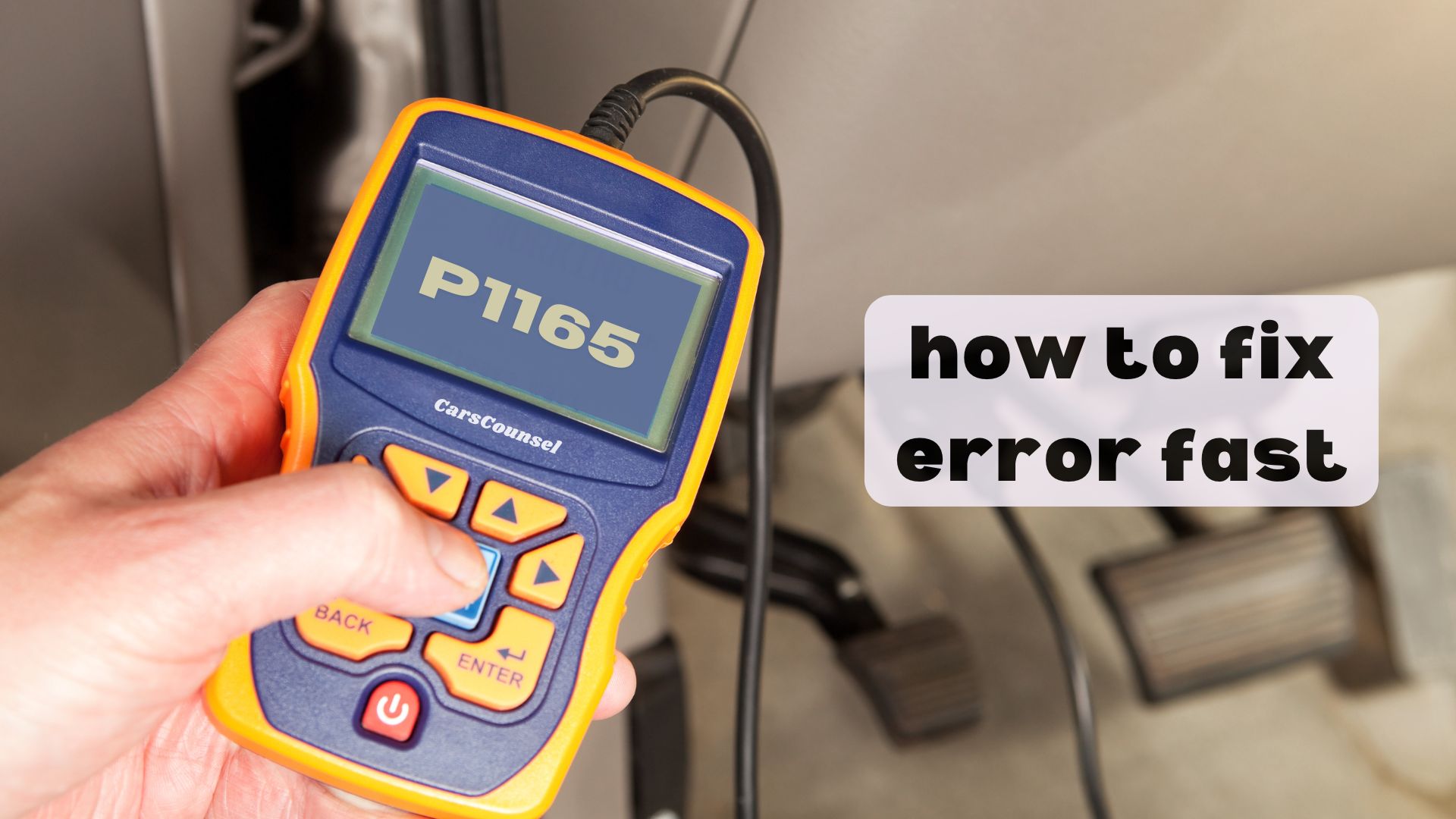
The P1165 code is a manufacturer-specific powertrain code. Its exact definition depends on the vehicle application, commonly indicating an Air/Fuel Ratio Sensor 1 circuit range or performance fault.
This code identifies a detected performance condition, not necessarily a failed sensor. Proper diagnosis requires verifying the exact factory definition and testing the relevant circuits and exhaust conditions.
Quick Navigation
Key Takeaways
- The P1165 code is manufacturer-specific, commonly indicating an Air/Fuel Ratio Sensor 1 circuit range or performance fault on Honda, Nissan, and Toyota applications.
- Possible causes include exhaust leaks, sensor contamination, damaged wiring, or underlying fuel delivery issues.
- Symptoms may include an illuminated Check Engine Light, reduced fuel efficiency, or rough engine operation.
- Diagnosis requires confirming the exact factory definition, inspecting for exhaust leaks, and testing the sensor circuit.
- Repairs depend on the confirmed fault and may involve fixing exhaust leaks, repairing wiring, or replacing the sensor.
P1165 Code Description and Implications
P1165 is a manufacturer-specific error code. Its exact definition depends entirely on the vehicle application.
Some Honda, Acura, Nissan, and Infiniti applications: The code indicates an Air/Fuel Ratio (A/F) Sensor 1 Circuit Range/Performance problem. The PCM detects that the sensor signal is outside the expected range or responding too slowly.
Certain Toyota and Lexus applications: The code indicates an Air/Fuel Mixture Ratio Imbalance or A/F sensor circuit performance issue, where the fuel control system cannot maintain the target ratio.
Common Causes of the P1165 Code
Several conditions can trigger this manufacturer-specific malfunction code. Identifying the exact cause requires inspecting the exhaust and testing the sensor circuit.
- Exhaust leaks upstream of or near the Air/Fuel Ratio Sensor 1, allowing outside air to skew the oxygen reading.
- Sensor contamination from oil, silicone, or coolant entering the exhaust stream.
- Damaged wiring, poor electrical connections, or corrosion at the sensor connector.
- Underlying fuel delivery issues, such as a restricted fuel injector or low fuel pressure, preventing the system from achieving the target air/fuel ratio.
- A failed Air/Fuel Ratio Sensor 1, though this is only confirmed after circuit and mechanical conditions are ruled out.
Symptoms Associated With P1165
Symptoms vary depending on the specific system design and the underlying fault condition.
- Illuminated Check Engine Light.
- Reduced fuel efficiency due to the PCM defaulting to a richer or conservative fuel map.
- Rough idle, hesitation, or poor engine performance if the fuel trim limits are reached.
- In some applications, no noticeable drivability symptoms may be present other than the stored code.
Diagnosing the P1165 Trouble Code
Diagnosis must begin by confirming the exact factory definition and inspecting the physical system components.
- Verify the exact manufacturer definition and locate the wiring diagram for the specific A/F sensor circuit.
- Inspect the exhaust manifold and piping near Sensor 1 for any signs of soot or exhaust leaks, which can falsely lean out the sensor reading.
- Check the sensor connector for corrosion, pushed-back pins, or damaged wiring.
- Use a scan tool to monitor the A/F sensor live data and fuel trims while the engine is fully warmed up and in closed-loop operation.
- Test the sensor heater circuit and signal circuit according to the manufacturer’s pinpoint tests.
Repairing the P1165 Issue
Repairs depend entirely on the confirmed root cause of the system malfunction.
- If an exhaust leak is found, repair or replace the affected exhaust gaskets or piping to restore proper exhaust gas sampling.
- Repair or replace damaged wiring and corroded connectors to restore proper circuit integrity.
- If a mechanical fuel delivery issue is confirmed, address the underlying cause, such as cleaning or replacing the affected fuel injectors.
- If the sensor fails electrical testing and all external factors are ruled out, replace the Air/Fuel Ratio Sensor 1 using a component meeting the correct vehicle specification.
Cost Considerations for P1165 Repairs
Cost depends on diagnostic time, component accessibility, required parts, programming requirements, and labor.
Replacing an upstream A/F sensor or repairing a minor exhaust leak is generally less expensive than diagnosing complex wiring faults or addressing internal engine mechanical issues causing contamination.
Prevention Strategies for Future Occurrences
While sensor degradation is a normal wear item, some practices can reduce the risk of premature failure.
- Addressing engine oil consumption or coolant leaks promptly prevents contaminants from coating and poisoning the sensor element.
- Ensuring exhaust repairs use proper gaskets and torque specifications prevents unmetered air from entering the exhaust stream near the sensor.
Troubleshooting Tips and Best Practices
Always consult the exact manufacturer service information for your vehicle’s wiring diagrams and expected sensor values.
- Do not assume the A/F sensor is faulty simply because the code points to its circuit; exhaust leaks and fuel delivery issues must be ruled out first.
- Avoid using silicone-based sealants or unapproved fuel additives, as these can easily contaminate and destroy sensitive A/F sensor elements.
- Verify technical service bulletins for your specific make and model, as manufacturers occasionally issue updated sensor part numbers or revised PCM software calibrations for range/performance faults.
More OBD-II Codes
| P1149 | P1158 | P1159 | P1161 |
| P1163 | P1164 | P1166 | P1167 |
| P1168 | P1170 | P1171 | P1172 |
| P0131 | P0132 | P0133 | P0135 |
| P0137 | P0138 | P0140 | P0171 |
| P0172 | P0174 | P0420 | P0430 |
Frequently Asked Questions
Is the P1165 code generic or manufacturer-specific?
No. P1165 is a manufacturer-specific code. Its exact definition varies by vehicle make, commonly indicating an Air/Fuel Ratio Sensor 1 circuit range or performance fault.
Can I drive my car with a P1165 code?
It depends on the symptoms. While the vehicle may remain drivable, prolonged operation with an inaccurate air/fuel ratio can reduce fuel efficiency and potentially damage the catalytic converter.
Will an exhaust leak cause a P1165 code?
Yes. An exhaust leak upstream of or near the Air/Fuel Ratio Sensor 1 allows outside oxygen to enter the exhaust stream, skewing the sensor reading and triggering a range/performance fault.
Can a bad fuel injector trigger the P1165 code?
Yes. If a fuel injector is clogged or failing, the engine may not be able to achieve the target air/fuel ratio, causing the PCM to set a range or performance code.
Will a P1165 code cause an emissions test failure?
Yes. Any code that illuminates the Check Engine Light or indicates an active air/fuel ratio or fuel trim fault will cause an automatic failure during an OBD-II emissions inspection.
What Should You Do About the P1165 Code?
Confirm the exact factory definition for your specific vehicle application. Follow the applicable manufacturer diagnostic procedure to test the relevant sensor circuits, inspect for exhaust leaks, and verify fuel delivery.
Repair or replace the confirmed failed component or fix the identified leak, then retest the system to ensure proper operation.

