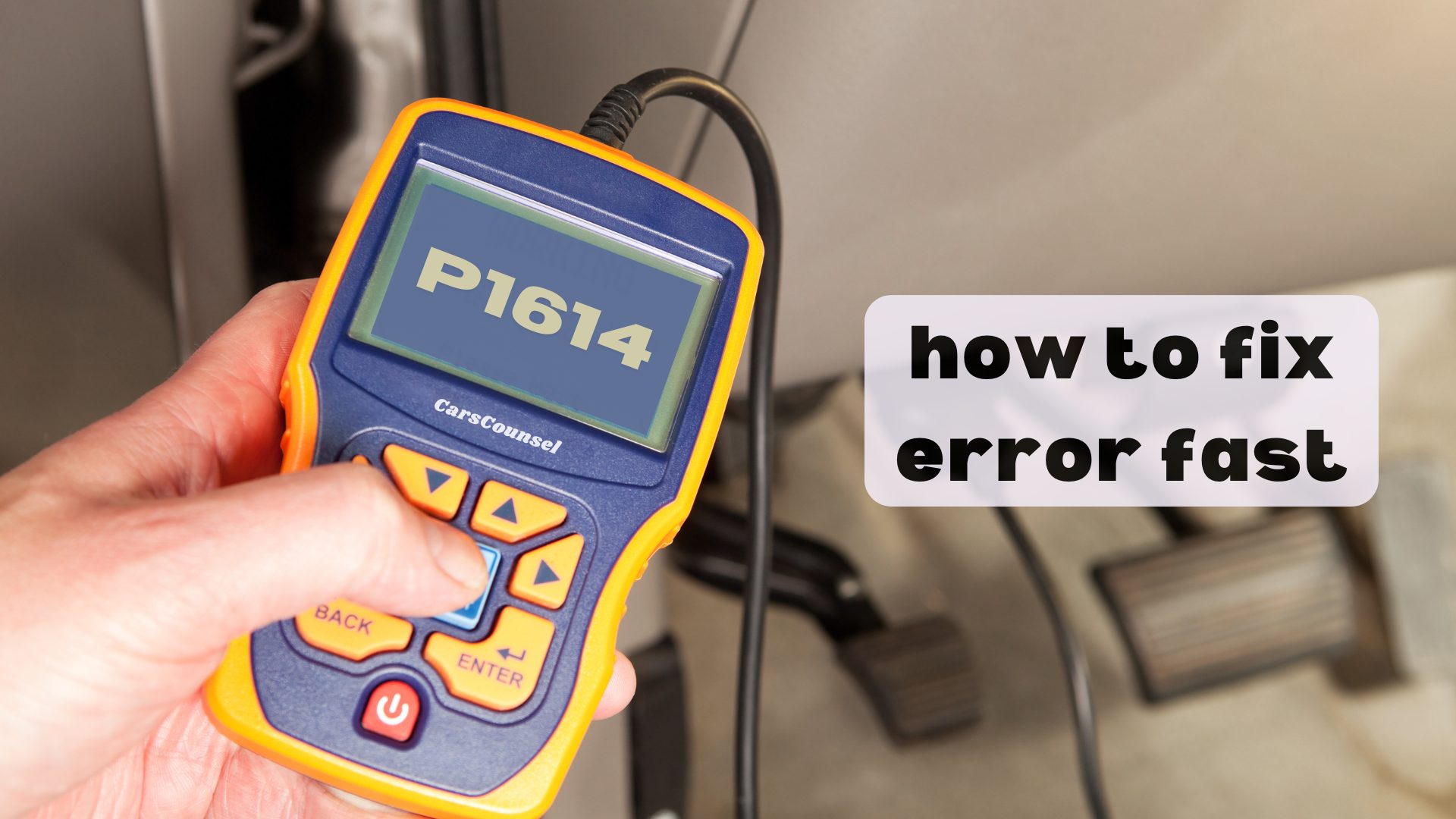
The P1614 code is a manufacturer-specific diagnostic trouble code that typically indicates an immobilizer or anti-theft system communication fault. Because it is manufacturer-specific, the exact definition and monitored system depend entirely on the vehicle application.
The exact factory definition must be verified before starting diagnosis, as this code does not prove that a single specific component has failed. The diagnostic path will vary significantly depending on whether the vehicle uses a transponder key system, a steering sensor circuit, or another manufacturer-specific protocol.
Quick Navigation
Key Takeaways
- P1614 is a manufacturer-specific code, often related to the immobilizer or anti-theft system on many verified applications.
- The code indicates a detected communication or authentication fault, but does not automatically confirm a failed key or control module.
- Diagnosis requires verifying the exact factory definition for the specific make, model, and year before testing components.
- On applications using a transponder system, possible causes include the key, the antenna amplifier, or the wiring between security modules.
P1614 Code Description and Implications
Because P1614 is a manufacturer-specific powertrain code, its exact definition depends on the vehicle application. The code generally points to a fault within a security, authentication, or specific control circuit, but the monitored system varies by automaker.
Nissan and Infiniti applications: P1614 often relates to the Nissan Anti-Theft System (NATS) or Immobilizer system. It typically indicates that the immobilizer control unit or Body Control Module (BCM) is not receiving the correct identification signal from the ignition key transponder.
General Motors and Opel/Vauxhall applications: On certain verified platforms, this code can indicate a fault within the theft deterrent system, transponder communication, or specific engine control module internal logic circuits.
Other applications: Depending on the manufacturer, P1614 may reference entirely different systems, such as steering angle sensor circuits or specific fuel injection control modules. Always consult the exact service information for the vehicle in question.
Common Causes of the P1614 Code
The underlying cause of a P1614 code depends entirely on the verified manufacturer definition. On applications where the code relates to an immobilizer or anti-theft system, possible causes include:
- A damaged, unprogrammed, or faulty key transponder.
- A failed immobilizer antenna amplifier or ring antenna.
- Wiring issues or poor connections between the immobilizer unit, BCM, and Engine Control Module (ECM).
- A software calibration error or internal fault within the immobilizer control module or ECM.
On applications where P1614 references a different system, such as a steering sensor or fuel injection circuit, the causes will instead involve the relevant sensors, actuators, or discrete signal circuits for that specific subsystem.
Symptoms Associated With P1614
When P1614 is stored, the symptoms depend on the monitored system and the manufacturer’s fail-safe strategies.
On verified immobilizer applications, the engine may crank but refuse to start, or it may start and immediately stall. The security warning light on the dashboard may illuminate or flash, and the Check Engine Light may also be commanded on.
Depending on the application, the vehicle may enter a lock mode that prevents fuel delivery or injector pulse until the system is reset with a capable scan tool. If the code relates to a different subsystem on another manufacturer’s platform, symptoms may include steering-related warnings or drivability issues specific to that circuit.
Diagnosing the P1614 Trouble Code
Diagnosis must begin by confirming the exact factory definition of P1614 for the specific vehicle make, model, year, and engine configuration. Assuming the code relates to an immobilizer without verifying the application can lead to incorrect testing.
For verified immobilizer and anti-theft applications, the diagnostic path generally involves:
- Using a scan tool capable of accessing the immobilizer or body control modules to read security system data and status.
- Testing a second, known-good programmed key to rule out a damaged transponder in the primary key.
- Inspecting the wiring harness and connectors between the ignition antenna, immobilizer control unit, and ECM for damage or corrosion.
- Following the manufacturer’s specific signal and continuity tests for the antenna amplifier and communication circuits.
If the verified definition points to a different subsystem, the diagnostic procedure must follow the exact wiring diagrams and pinpoint tests outlined in the factory service information for that specific circuit.
Repairing the P1614 Issue
Repairs must follow the confirmed root cause identified during the manufacturer-specific diagnostic procedure.
If testing confirms a faulty key transponder, the key may need to be replaced and professionally programmed to the vehicle’s immobilizer system. If the antenna amplifier or ring antenna fails the manufacturer’s electrical tests, replacing the confirmed failed component is required.
If wiring damage or connector corrosion is found, repairing the harness and securing the connections is necessary. In cases where the immobilizer control module or ECM is confirmed as the fault through the factory diagnostic tree, follow the applicable module replacement and programming procedures.
Cost Considerations for P1614 Repairs
Repair costs for a P1614 code vary based on the exact vehicle application, the confirmed failed component, and local labor rates.
If the issue is a simple wiring repair or a connector cleaning, costs may be minimal. Replacing and programming a new transponder key or an immobilizer antenna amplifier generally involves moderate parts and labor expenses.
If the diagnosis confirms that the Engine Control Module or a dedicated immobilizer control module requires replacement and dealership-level programming, the repair will involve higher component costs and specialized labor.
Prevention Strategies for Future Occurrences
Because P1614 relates to manufacturer-specific security or control circuits, preventing the code depends on the exact failure mechanism.
For applications using a transponder key, avoiding physical damage to the key and keeping it away from strong electromagnetic interference may help preserve the internal chip. Inspecting exposed wiring harnesses near the steering column and ignition cylinder during routine service can also help identify developing damage before it causes a communication fault.
Troubleshooting Tips and Best Practices
Always verify the exact application before purchasing parts. A P1614 code on a Nissan Sentra involves a completely different diagnostic path than a P1614 on a different manufacturer’s platform.
Check for related security codes, such as P1610 or P1615 on certain Nissan applications, as these can provide additional context regarding the anti-theft system’s status. Avoid attempting to clear the code or disconnect the battery as a repair, as this will not fix an authentication fault and may erase valuable freeze-frame or security data.
Ensure that any replacement control modules are correctly programmed to the vehicle, as unprogrammed modules will trigger immediate security faults.
More OBD-II Codes
| P1607 | P1608 | P1609 | P1610 |
| P1611 | P1612 | P1626 | P1628 |
| P1629 | P1631 | P1632 | P1633 |
| P1600 | P1602 | P1603 | P1604 |
| P1500 | P1504 | P1511 | P1512 |
| P1106 | P0420 | P0300 | P0171 |
Frequently Asked Questions
Is the P1614 code generic or manufacturer-specific?
No. P1614 is a manufacturer-specific code. Its exact definition, monitored system, and diagnostic procedure depend entirely on the vehicle make, model, and year.
Can I drive my car with a P1614 code?
If the code relates to an immobilizer fault, the vehicle may not start or may stall immediately, making driving impossible. If the vehicle runs, consult the factory service information to determine if the fault affects critical safety or drivability systems.
Will disconnecting the battery reset the P1614 code?
Disconnecting the battery may temporarily clear the code, but it does not repair the underlying communication or authentication fault. It may also erase valuable security data or reset module adaptations.
Can an aftermarket key trigger a P1614 code?
Yes. On applications where P1614 relates to the immobilizer system, an improperly programmed, damaged, or incompatible aftermarket transponder key can prevent the control module from verifying the key’s identity.
Does P1614 always mean the immobilizer module is broken?
No. The code indicates a detected communication or authentication condition. The root cause could be a faulty key, a damaged antenna, wiring issues, or a software error, requiring diagnosis before replacing any module.
What Should You Do About the P1614 Code?
Confirm the exact factory definition for your specific vehicle application before attempting any repairs. Because P1614 is manufacturer-specific, the diagnostic path will differ significantly between an immobilizer system, a steering sensor circuit, or another control module network.
Follow the applicable manufacturer diagnostic procedure to test the relevant system and components. Once the root cause is confirmed, complete the necessary repairs and verify the system operation before returning the vehicle to service.

