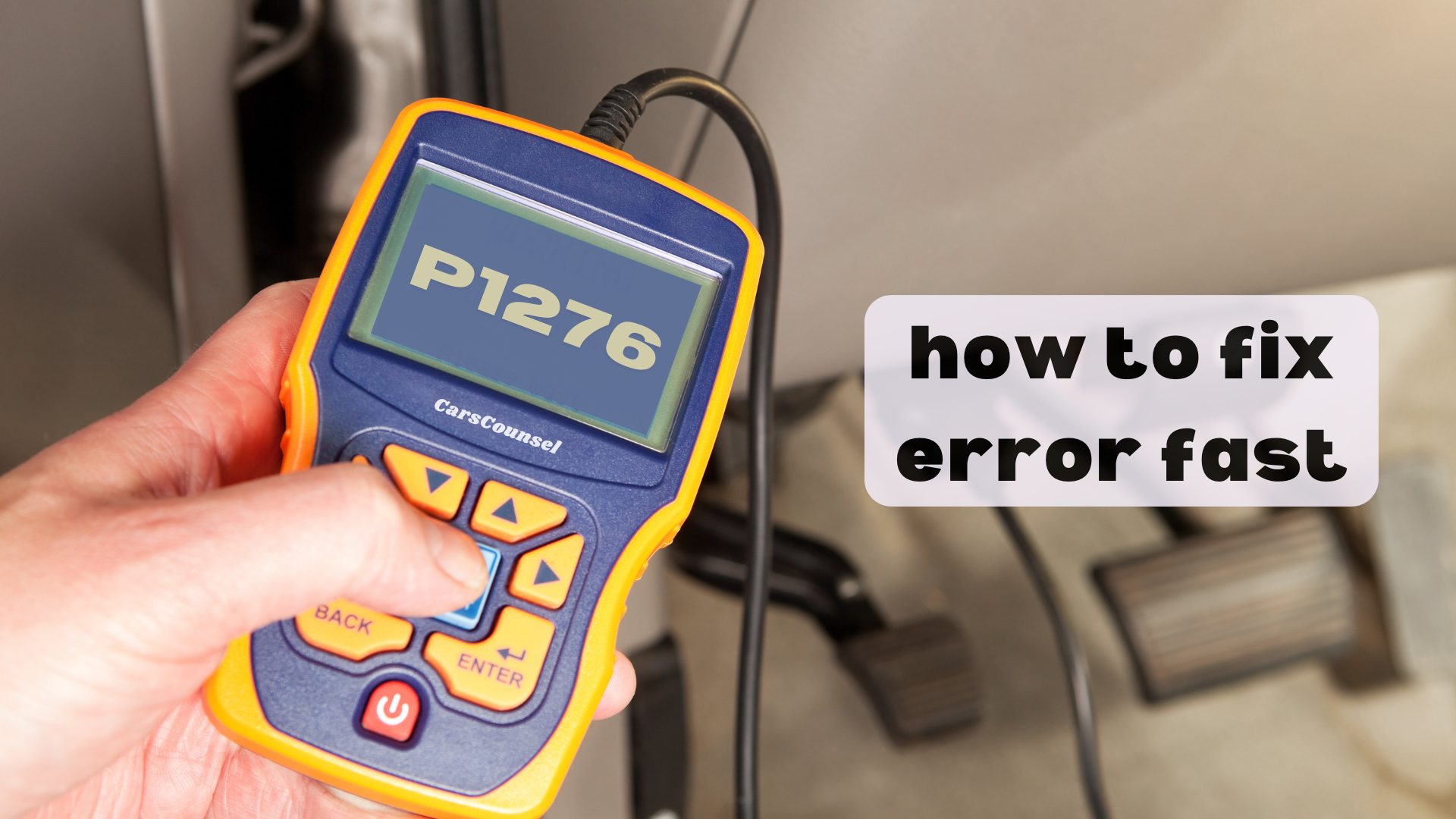
P1276 is a manufacturer-specific OBD-II diagnostic trouble code. Its exact definition depends on the vehicle application, commonly relating to an air/fuel ratio sensor circuit fault or a specific fuel injector circuit issue.
Because definitions vary by manufacturer, the exact diagnostic path requires verifying your specific vehicle’s factory service information. The code identifies a detected condition, not necessarily a failed part.
Quick Navigation
Key Takeaways
- P1276 is a manufacturer-specific code indicating a fault in the air/fuel ratio sensor circuit, a fuel injector circuit, or related wiring.
- Possible causes include damaged wiring, corroded connectors, exhaust leaks, or internal sensor and injector failures.
- Symptoms may include decreased fuel efficiency, rough idling, engine misfires, and an illuminated check engine light.
- Diagnosis requires verifying the exact factory definition and testing the relevant fuel or exhaust systems.
P1276 Code Description and Implications
P1276 is a manufacturer-specific code, meaning its exact definition varies by automaker. The powertrain control module uses this code to flag an anomaly within a specific fuel delivery or emissions monitoring system.
Some Nissan and Infiniti applications: P1276 indicates an Air/Fuel Ratio Sensor 1 Bank 1 high voltage or lean shift condition. The module detects that the sensor signal is outside the expected parameters.
Certain Ford applications: This code points to an open circuit in the fuel injector for cylinder #6. The module detects a lack of continuity in the injector control wiring.
Because the code is manufacturer-specific, you must verify the exact factory definition for your vehicle before beginning diagnosis. The specific trouble code meaning dictates the test.
Common Causes of the P1276 Code
Wiring and connector damage: Harnesses routing to the air/fuel ratio sensor or fuel injectors are exposed to extreme heat. Chafed wires or corroded pins can interrupt the signal or create an open circuit.
Exhaust leaks (A/F sensor applications): Unmetered air entering the exhaust stream before the sensor can cause the module to detect a false lean or high voltage condition.
Component failure: The internal heating element or sensing element of the air/fuel ratio sensor may fail, or a fuel injector coil may open internally, triggering the circuit fault.
Symptoms Associated With P1276
Because this code affects fuel delivery monitoring, symptoms depend on the vehicle’s specific implementation.
On air/fuel ratio sensor applications, you may experience decreased fuel efficiency, rough idling, or hesitation during acceleration as the module struggles to adjust fuel trims.
On injector circuit applications, you may notice a severe engine misfire on cylinder #6, loss of power, and excessive vibrations.
You will see an illuminated check engine light across most applications when this code is stored.
Diagnosing the P1276 Trouble Code
Diagnosis must begin by confirming the exact factory definition and wiring diagram for your specific make, model, and year. Retrieve freeze frame data to understand the conditions when the code set.
For A/F sensor applications, inspect the exhaust system for leaks upstream of the sensor. Check the sensor wiring harness and connectors for heat damage, then monitor live fuel trim and sensor data.
For injector circuit applications, use a multimeter or noid light to test the cylinder #6 injector circuit resistance and verify the control signal from the module.
Repairing the P1276 Issue
Repairs must follow confirmed diagnostic testing. Do not replace the air/fuel ratio sensor or fuel injector without verifying the wiring harness and checking for exhaust leaks first.
If an exhaust manifold leak is found, repair the gasket or cracked component to restore proper sealing.
If the sensor or injector fails electrical testing, replace it with a component meeting the exact vehicle specification, then clear the codes and perform any required relearn procedures.
Cost Considerations for P1276 Repairs
Repair costs depend on the confirmed root cause, component accessibility, and local labor rates. Sealing an exhaust leak can be labor-intensive depending on manifold access.
If an air/fuel ratio sensor or fuel injector requires replacement, parts and labor costs will increase. Always factor in the cost of proper diagnostic time.
Prevention Strategies for Future Occurrences
Inspecting exposed wiring and sensor connectors during routine maintenance can help identify developing heat damage or corrosion before it causes a circuit fault.
Addressing minor exhaust leaks or engine oil leaks promptly helps prevent contamination and heat damage to nearby oxygen and air/fuel ratio sensors.
Troubleshooting Tips and Best Practices
Always verify the exact definition of P1276 for your specific vehicle. Assuming it is always a failed sensor can lead to misdiagnosis when a simple exhaust leak or wiring issue is the actual cause.
Do not ignore related fuel trim or misfire codes. If P1276 is accompanied by lean fuel trim codes, it strongly supports an exhaust leak or failing sensor on Nissan applications.
Check for technical service bulletins related to air/fuel ratio sensor updates or injector harness repairs for your specific model year.
More OBD-II Codes
| P1275 | P1274 | P1273 | P1272 |
| P1271 | P1270 | P1277 | P1278 |
| P1280 | P1281 | P1282 | P1283 |
| P0131 | P0132 | P0133 | P0134 |
| P0135 | P0171 | P0174 | P0206 |
| P0306 | P0172 | P0173 | P0137 |
Frequently Asked Questions
Is P1276 a generic or manufacturer-specific code?
No. P1276 is a manufacturer-specific code. Its exact definition and diagnostic procedure vary depending on the vehicle make, model, and year. Always consult the factory service information.
Can an exhaust leak cause a P1276 code?
On Nissan applications where P1276 relates to the air/fuel ratio sensor, an exhaust leak introduces unmetered air. This causes the sensor to detect a lean or high voltage condition, triggering the code.
Is it safe to drive with a P1276 code?
Driving is generally safe for short distances, but a severe lean condition or misfire can cause engine damage or overheating. On injector applications, limp mode may activate to protect the engine.
Will replacing the A/F sensor always fix P1276?
Not always. P1276 indicates a system condition. The root cause could be an exhaust leak, damaged wiring, or a failing fuel pump. Proper electrical and mechanical testing is required first.
Can a bad fuel injector trigger P1276?
On certain Ford applications, P1276 specifically identifies an open circuit in the cylinder #6 fuel injector. A failed injector coil or wiring issue will trigger this code.
What Should You Do About the P1276 Code?
Confirm the exact factory definition and wiring diagram for your specific vehicle application. Inspect the relevant air/fuel ratio sensors, fuel injectors, and exhaust systems for physical damage or leaks.
Perform targeted electrical and mechanical testing on the relevant system and components to isolate the fault. Repair the confirmed root cause, then verify the repair by clearing the codes and monitoring live data.

